Functional trainer
Two adjustable cable columns in one frame, usually each with its own weight stack. Lets you train both sides at once from any height.
In short
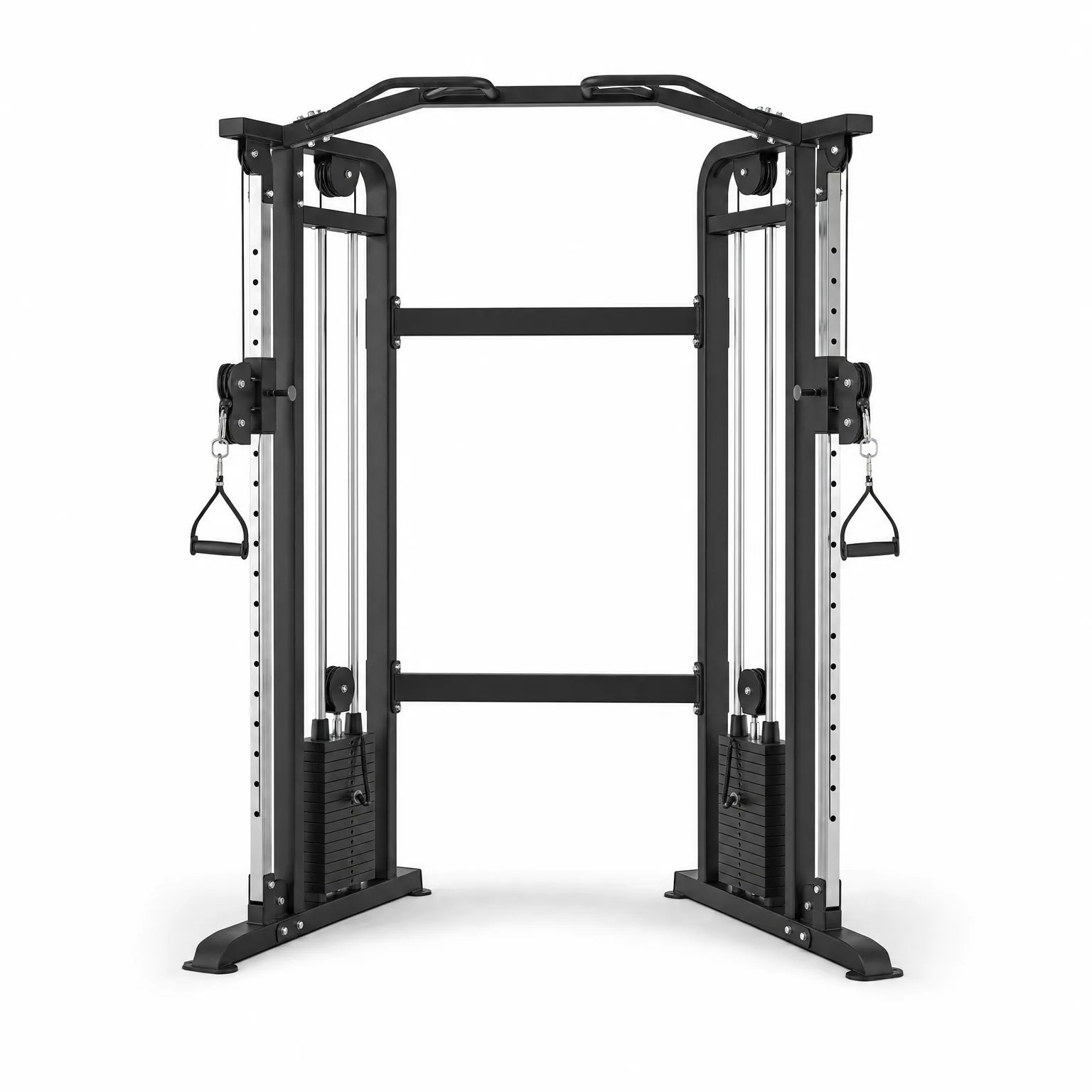
A functional trainer is a frame with two cable columns, usually each with its own weight stack, and a pulley that slides up and down. You set both pulleys to the same height, take a handle in each hand and press, pull, fly or rotate. Because the two sides are loaded separately, both arms work at once and neither can do the other's share.
It differs from a single cable machine in exactly that: one column can only pull from one side, so two-handed flyes, presses and crossovers are not possible on it. A functional trainer covers the whole body and suits beginners and experienced lifters alike.
- Category
- Gym machines
- Where
- Gym, Home
- Level
- Beginner and up
- Space
- Needs a dedicated area
- Typical sizes
- Compact units about 1.2–1.6 m (4–5 ft) wide; crossover frames 3–4 m (10–13 ft) wide; height about 2.1–2.4 m (7–8 ft)
- Also called
- dual adjustable pulley, cable crossover machine, dual cable machine, dual pulley machine, cable crossover, dap machine, double cable machine
Muscles it works
- Also works
- Abs, Obliques, Glutes, Side delts, Front delts
What it is used for
- Cable flyes and crossovers for the chest from high, middle or low pulleys
- Two-arm standing presses and rows with a handle in each hand
- Face pulls, reverse flyes and lateral raises for the shoulders
- Chops, lifts and anti-rotation presses for the trunk
- Curls, pushdowns, kickbacks and pull-throughs for arms and glutes
Types
Compact functional trainer. Two columns close together in one frame, often with a pull-up bar on top. The usual type in home gyms and small studios.
Cable crossover. Two columns 3–4 m apart joined by a top beam. The wide spacing gives a long path for flyes and room to stand in the middle.
Swivel-arm trainer. The pulleys sit on arms that move up, down and sideways, so the width between the cables changes as well as the height.
Plate-loaded or rack-mounted. Weight plates on carriages instead of stacks, or a pulley pair bolted to a power rack. Cheaper, slower to change load.
How to choose
Set both pulleys to the same number
The columns have numbered holes. Check that left and right match before every exercise. High positions suit pushdowns and high-to-low flyes, chest height suits presses and rows, and the lowest positions suit curls and low-to-high flyes.
Know the pulley ratio
On many functional trainers the cable runs through an extra pulley, so the handle feels like half the number on the stack. On others it is one to one. The same pin setting can feel very different on two machines, so test with a light set first.
Pick the handle for the exercise
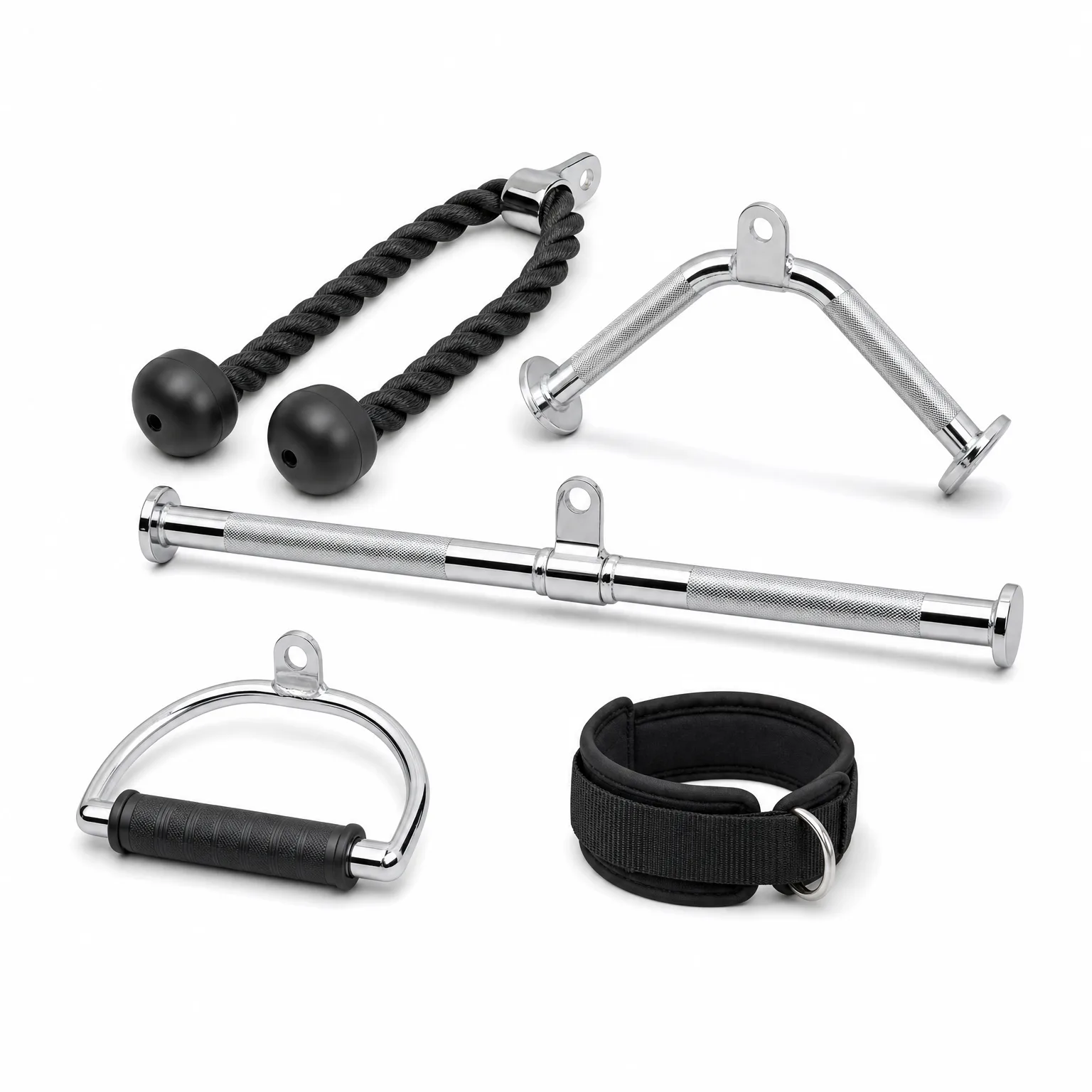
Single D-handles cover most two-arm work. Use a rope for face pulls and pushdowns, an ankle cuff for kickbacks, and a bar clipped to one side for curls. Clip both carabiners fully closed.
Decide where you stand
For flyes and presses stand centered between the columns, one step in front of the line between the pulleys. For single-arm work stand side-on or facing one column, far enough that the stack does not touch down between reps.
How to start using it
- Take the handles one at a time. Grab one handle, step to the middle, then reach for the other. Before the first rep, both stacks should already be lifted slightly so there is tension at the start.
- Use a stable stance. A staggered stance with one foot forward keeps you from being pulled back during presses and flyes. Keep the ribs down and the trunk still. The cables should move, not your torso.
- Start with a light pin. Begin near the top of the stack and do 10–12 slow reps. Standing cable work is limited by balance and trunk control, so the load is lower than on a seated machine for the same muscle.
- Follow the line of the cable. Move your hand along the direction the cable pulls from. In a fly, bring the hands together in a wide arc with a soft bend in the elbows. In a row, pull the elbow straight back toward the hip.
- Return the handles under control. Walk back toward the columns and let the stacks down gently, one side at a time. Do not let go of a loaded handle.
Common mistakes
Pulleys at different heights
One pin a hole higher than the other makes the two sides work at different angles. Check the numbers on both columns each time you move them.
Stack touching down between reps
If the plates rest at the end of each rep, the muscle unloads and the range is cut. Step a little farther from the column so the stack stays lifted the whole set.
Leaning the whole body into the press
Falling forward into a cable press or fly turns it into a body-weight lean. Reduce the load and keep the torso in one position.
Turning flyes into presses
Bending the elbows more and more as the set gets hard shifts the work from the chest to the triceps. Keep the same slight elbow bend from the first rep to the last.
Comparing numbers between machines
Pulley ratios and friction differ, so 20 kg on one machine is not 20 kg on another. Track your loads per machine.
What to use instead
A single cable machine covers every one-arm exercise and anything done with a bar or rope; you just train one side at a time. A multi-gym with a high and a low pulley covers pushdowns, curls and rows. At home, resistance bands anchored in a door at two heights, or a suspension trainer for rows, flyes and presses with body weight, stand in for most of the movements.
-
Cable machine
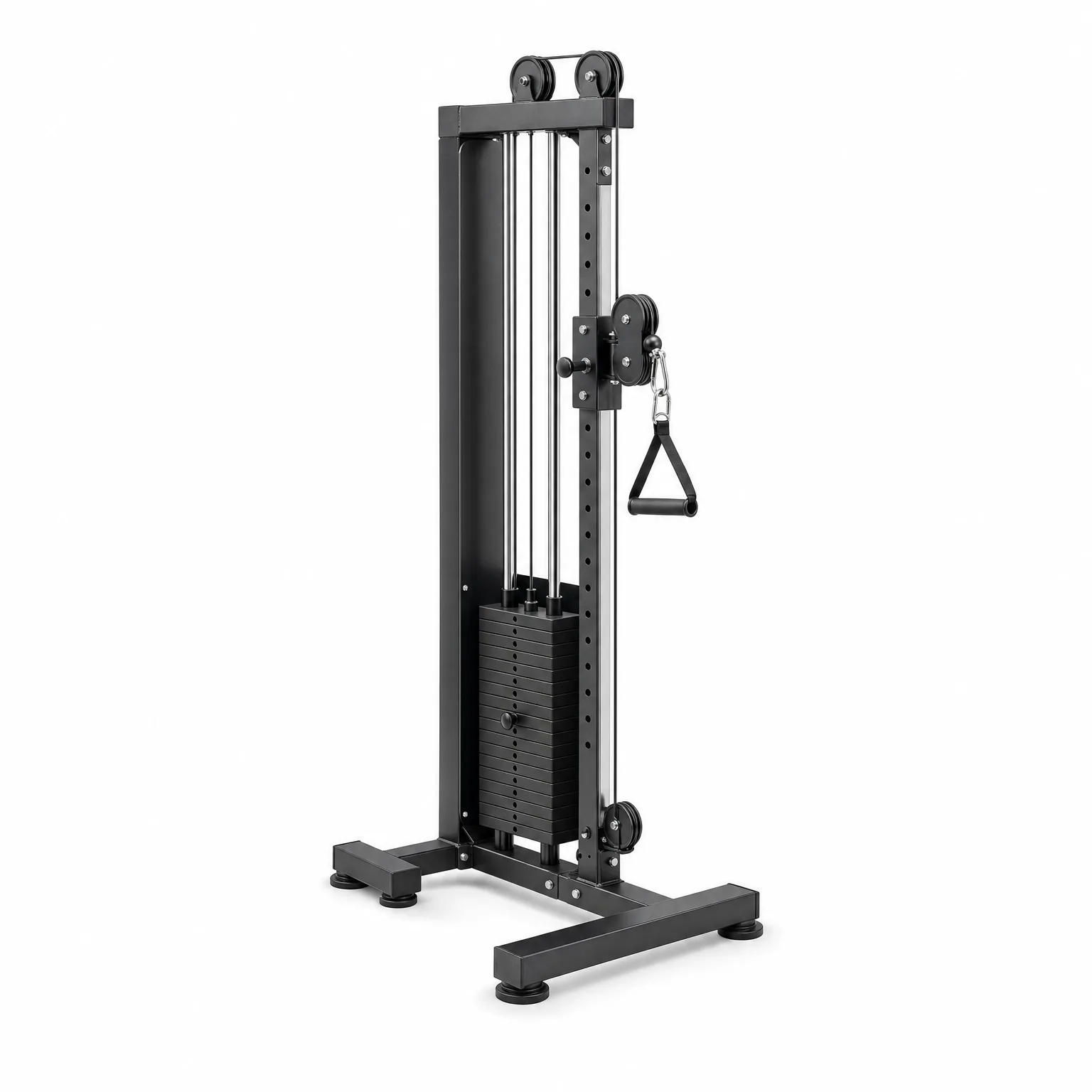
A weight stack on a pulley with a handle you can set at any height. It keeps tension on the muscle through the whole movement. -
Multi-gym
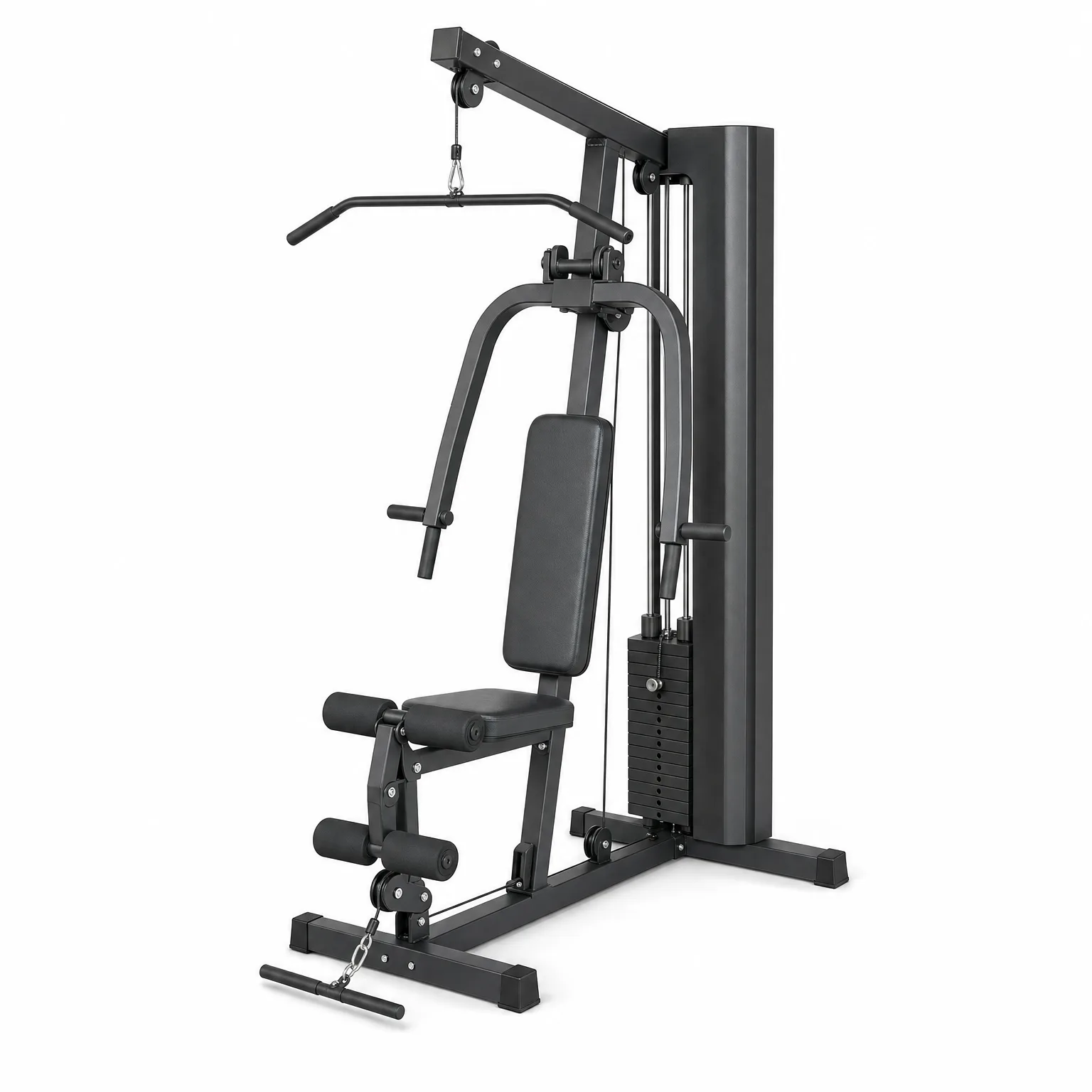
One frame with a weight stack and several stations: press, pulldown, row, leg extension. A whole-body machine for the home. -
Resistance bands
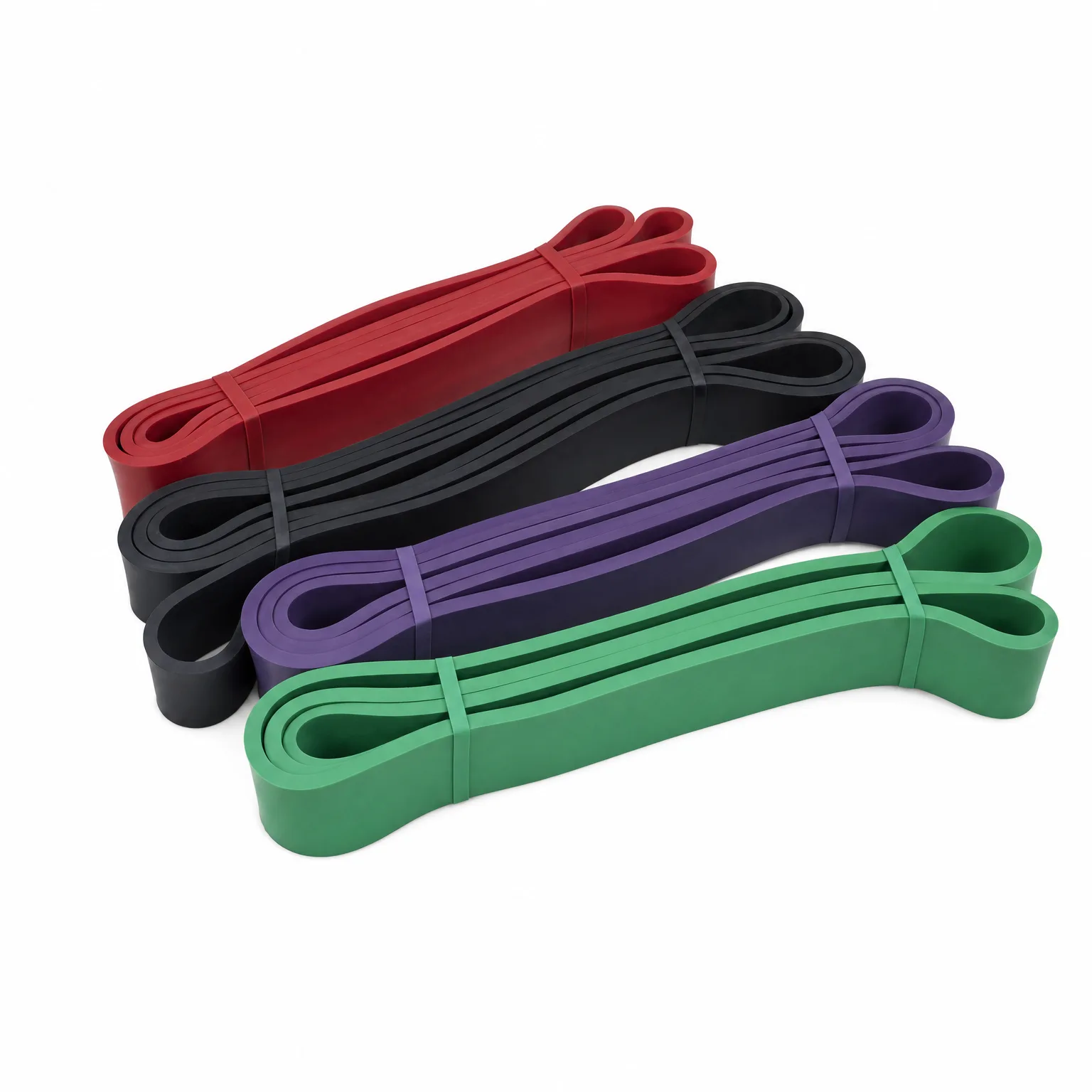
Long closed loops of thick rubber. They add resistance to rows, presses and squats, or take weight off in pull-ups and dips. -
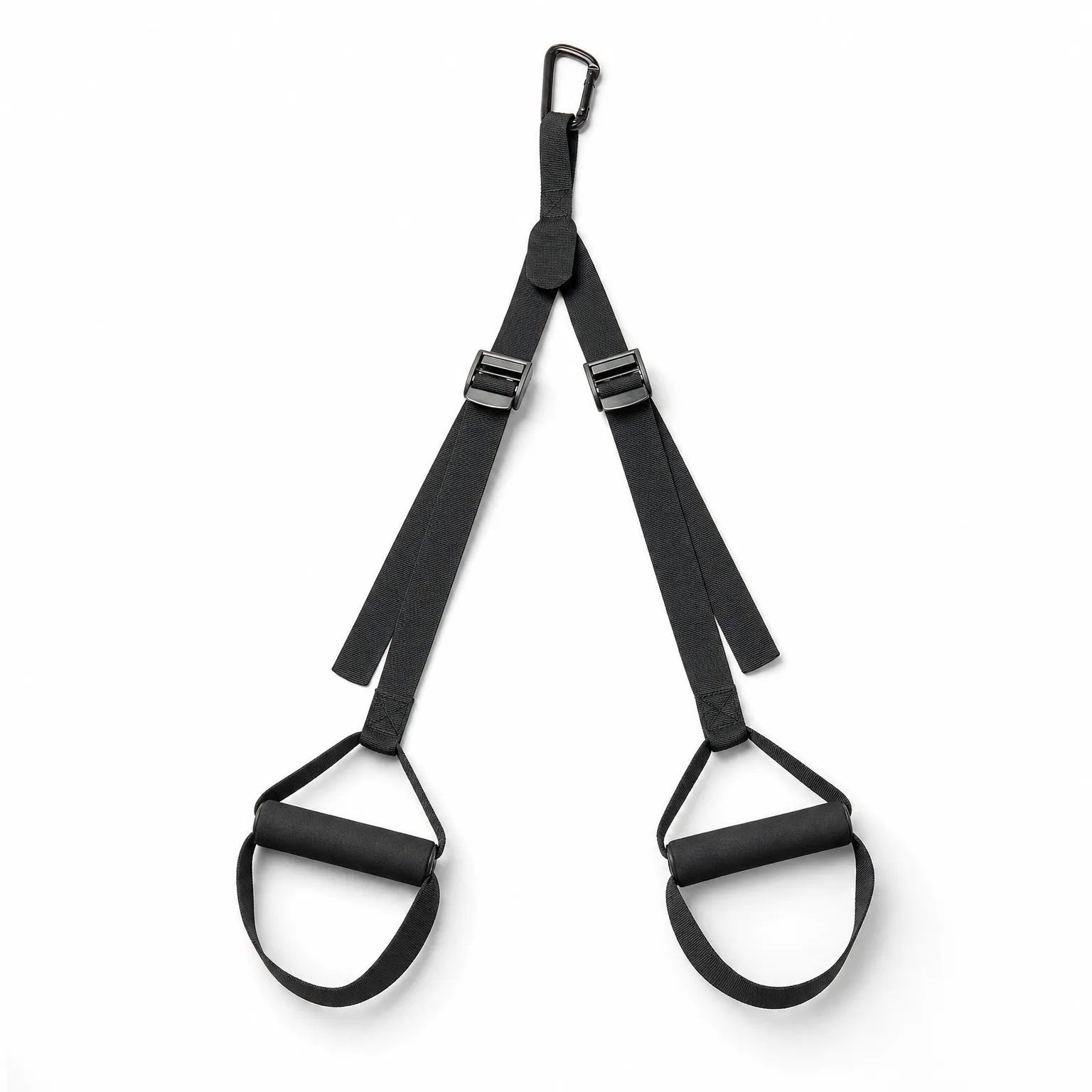
Suspension trainer
Two adjustable straps with handles, hung from one anchor point. You lean or hang on them and use your own body weight as the load.
Often used with
Questions about functional trainer
What is the difference between a functional trainer and a cable machine?
A functional trainer has two adjustable cable columns with separate weight stacks, so you can hold a handle in each hand and train both sides together. A single cable machine has one column. It does one-arm work and bar or rope exercises, but not two-handed flyes, crossovers or presses.
Functional trainer vs cable crossover: are they the same?
They work the same way. A cable crossover is the wide version, with the columns 3–4 m apart and a beam on top. A functional trainer is usually the compact version with the columns closer together, often with a 2:1 pulley ratio that gives longer cable travel and smaller load steps.
Why does the weight feel lighter than the number on the stack?
Many functional trainers use a 2:1 pulley ratio: the cable travels twice as far as the stack, and the handle feels like half the selected weight. A 20 kg (44 lb) setting on one column then feels like about 10 kg (22 lb) at that handle. The ratio is usually printed on the frame or in the manual.
Can you build muscle with only a functional trainer?
Yes for most of the body. Presses, flyes, rows, pulldowns from the top pulley, raises, curls and pushdowns are all well covered. Heavy leg work is the weak point: stacks run out for squats and deadlift patterns, so add a leg press, a barbell or dumbbells for the legs.
What exercises should a beginner start with on a functional trainer?
A simple first session: standing two-arm chest press, two-arm row, pulldown from the high pulleys while kneeling, face pull with a rope, and an anti-rotation press for the trunk. Do 2–3 sets of 10–12 reps with a light pin and learn where to stand for each.
Build programs around what your client has
This guide comes from OnlineFitness.app, the app online coaches run their clients in.
Free for life for the first 100 coachesNo card