Barbell pad
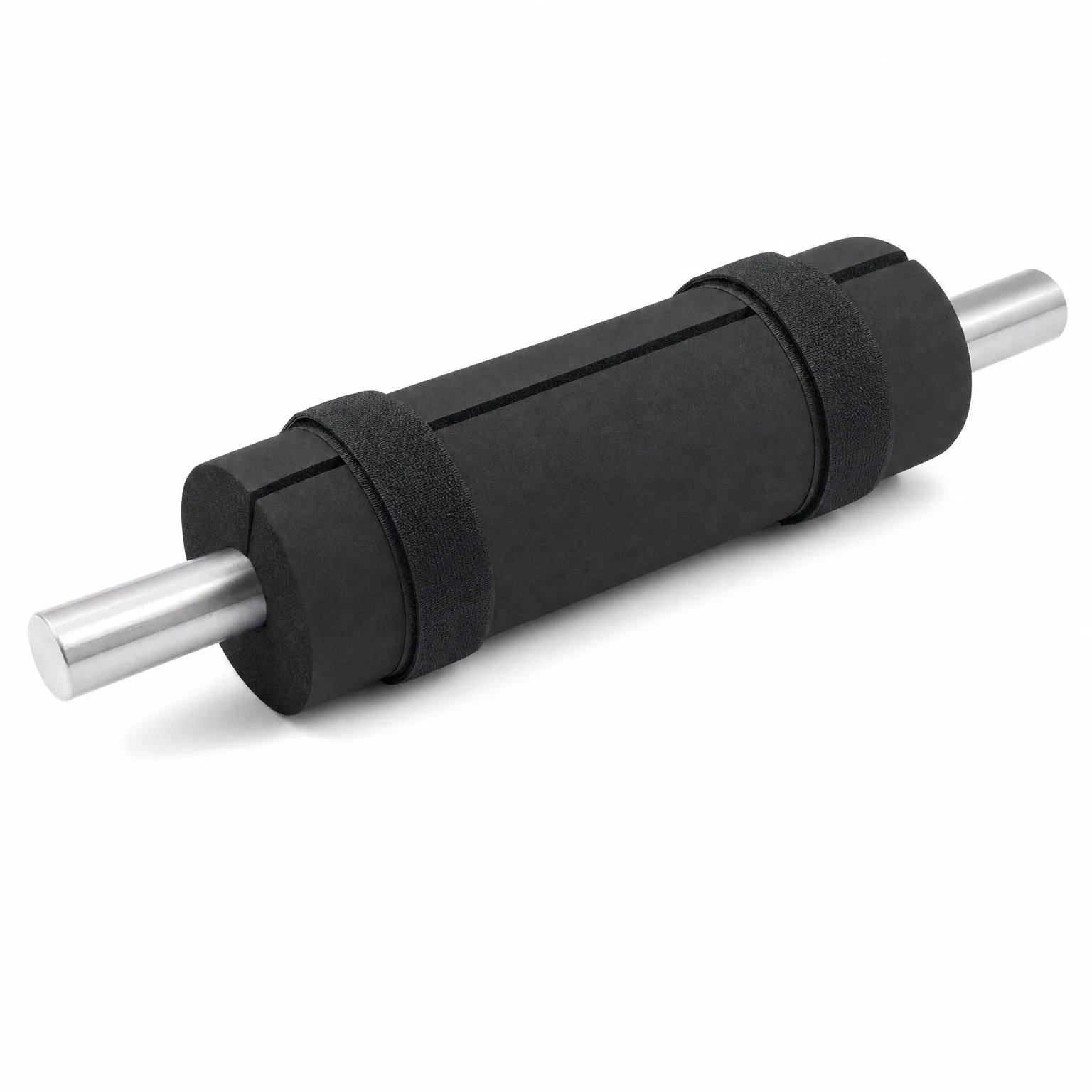
A thick foam sleeve that wraps around the middle of a barbell to cushion the hips in hip thrusts or the upper back in squats and lunges.
In short
A barbell pad is a tube of dense foam with a slit along its length that snaps over the middle of a bar. It spreads the bar's pressure over a wider, softer area. Its main use today is the hip thrust and glute bridge, where a loaded bar rests directly on the hip bones and is painful without padding.
It is also used on the upper back for squats and lunges, mostly by beginners and on a Smith machine. There it is more debatable: the pad raises the bar and lets it roll, so many coaches teach placing the bare bar on the muscles of the upper back instead. For hip thrusts, almost everyone uses some kind of pad.
- Category
- Lifting accessories
- Where
- Gym, Home
- Level
- Beginner and up
- Space
- Fits in a drawer or a bag
- Typical sizes
- About 40–45 cm (16–18 in) long with foam 2–3 cm (about 1 in) thick; fits standard and Olympic bars
- Also called
- bar pad, squat pad, hip thrust pad, barbell neck pad, barbell cushion, squat sponge, foam bar pad
Muscles it works
- Main
- Glutes
What it is used for
- Barbell hip thrusts and glute bridges, with the pad over the hip crease
- Smith machine hip thrusts and squats
- Lunges and split squats with the bar on the upper back
- Padding a landmine or bar end against the shoulder in some pressing and squatting variations
Types
Slit foam sleeve. A plain foam tube with a slit, sometimes covered in nylon. Snaps on in seconds. The most common type.
Pad with straps. The same sleeve with hook-and-loop straps that close the slit so the pad cannot spin or open on the bar.
Contoured neck pad. A shaped pad with a channel in the middle and thicker sides. Made for squats: it keeps pressure off the spine at the base of the neck and sits on the shoulders.
Hip thrust pad. A wider, flatter, denser pad, sometimes a folded rectangular cushion. Spreads the load across the pelvis and compresses less under heavy bars.
How to choose
Choose by the exercise
For hip thrusts, a thick, dense pad or a dedicated hip thrust pad matters most, because the loads get heavy quickly. For squats and lunges, a contoured pad sits more securely than a round one.
Check the foam density
Squeeze it. Soft foam feels pleasant in the hand and flattens to nothing under a loaded bar. Firm, high-density foam keeps its thickness and springs back.
Look at how it closes
A tight slit or straps stop the pad from rotating around the bar. A pad that spins lets the bar roll on your hips or back mid-set.
Check the bar diameter
Most pads fit both 25 mm (1 in) standard bars and 28–29 mm (about 1.1 in) Olympic bars. On a thinner bar a loose pad slides sideways, so straps help.
How to start using it
- Center it on the bar. Open the slit and press the pad onto the middle of the bar, equal distance from both sleeves. Turn the slit away from your body, so the solid side of the foam is against you.
- For hip thrusts, set it in the hip crease. Sit on the floor with your upper back against a bench, roll the bar over your legs and place the pad just below the hip bones, where the body folds. Hold the bar with both hands so it cannot roll during the set.
- For squats, keep it on the muscle. Place the padded bar across the upper traps and shoulders, not on the neck. Pull the bar down into the back with your hands, as you would without a pad.
- Check it before each set. Make sure the pad has not slid off center or rotated. An off-center pad shifts the bar to one side.
Common mistakes
Resting the bar on the neck
A pad makes it tempting to carry the bar high on the bony part at the base of the neck. Set it lower, across the muscles of the upper back and shoulders.
Relying on a pad for heavy squats
A round pad raises the bar and gives it a soft surface to roll on, which makes it less stable as loads grow. Learn to hold the bare bar on a tight upper back for squats, and keep the pad for hip thrusts.
Using a worn-out pad
Foam that has gone flat or torn no longer spreads the load. If you can feel the bar through it, replace it or double it up.
Placing it too high for hip thrusts
A bar on the lower stomach presses into soft tissue and slides toward the ribs. It belongs in the hip crease, held in place by your hands.
What to use instead
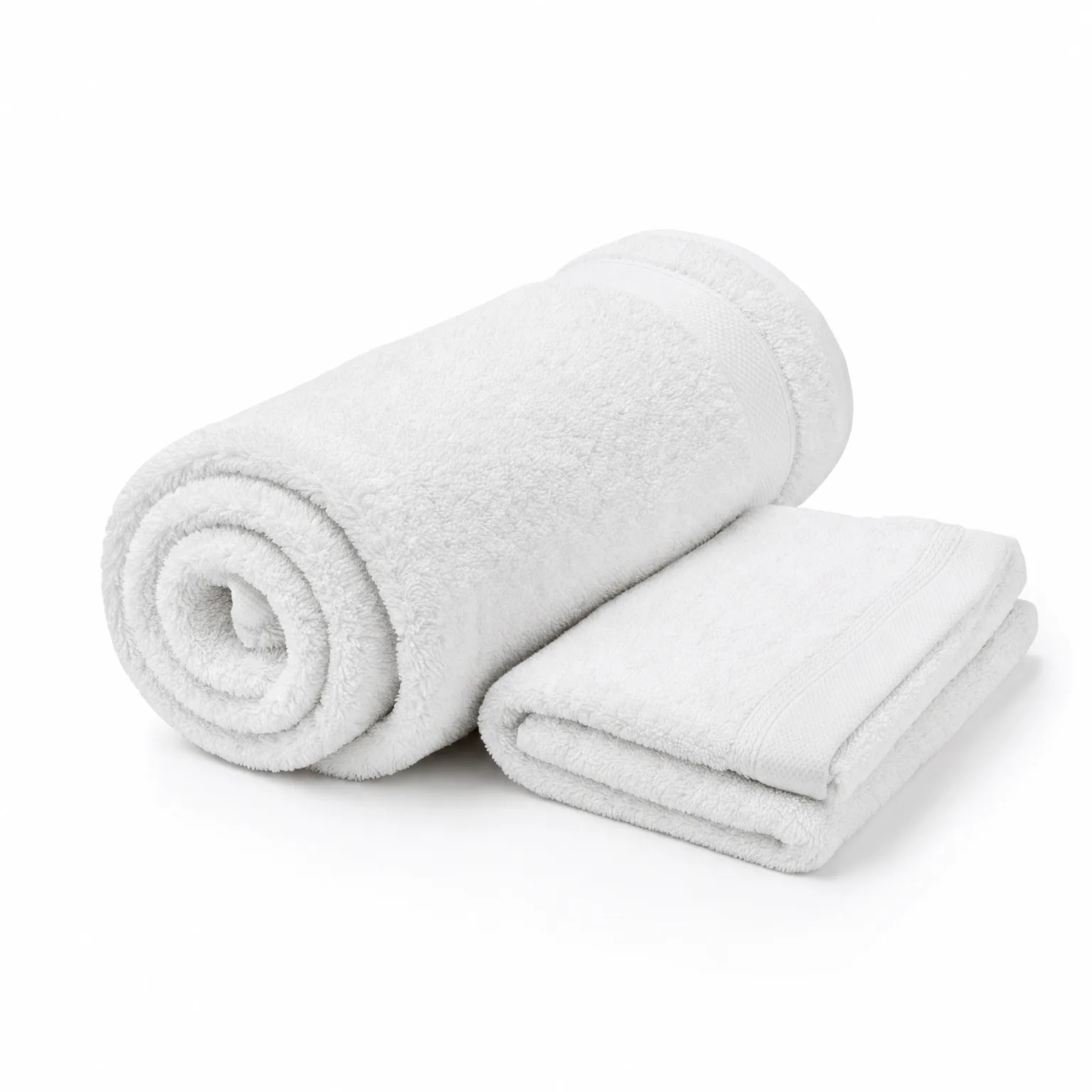
A folded towel wrapped around the bar works for light and moderate hip thrusts. A yoga or exercise mat folded several times, or rolled around the bar, gives thicker padding for heavier sets. Some people use a folded sweatshirt. For squats, the better substitute is no pad at all: squeeze the shoulder blades together to form a shelf of muscle and rest the bar there. A safety squat bar, which has built-in pads, is another option where a gym has one.
-
Towel
A towel doubles as sliders on a smooth floor, a stretching strap, a pulling tool for isometric exercises and padding for the knees. -

Exercise mat
A cushioned, non-slip surface for floor exercises, stretching and yoga. The first thing most people need to train at home.
Often used with
-
Barbell
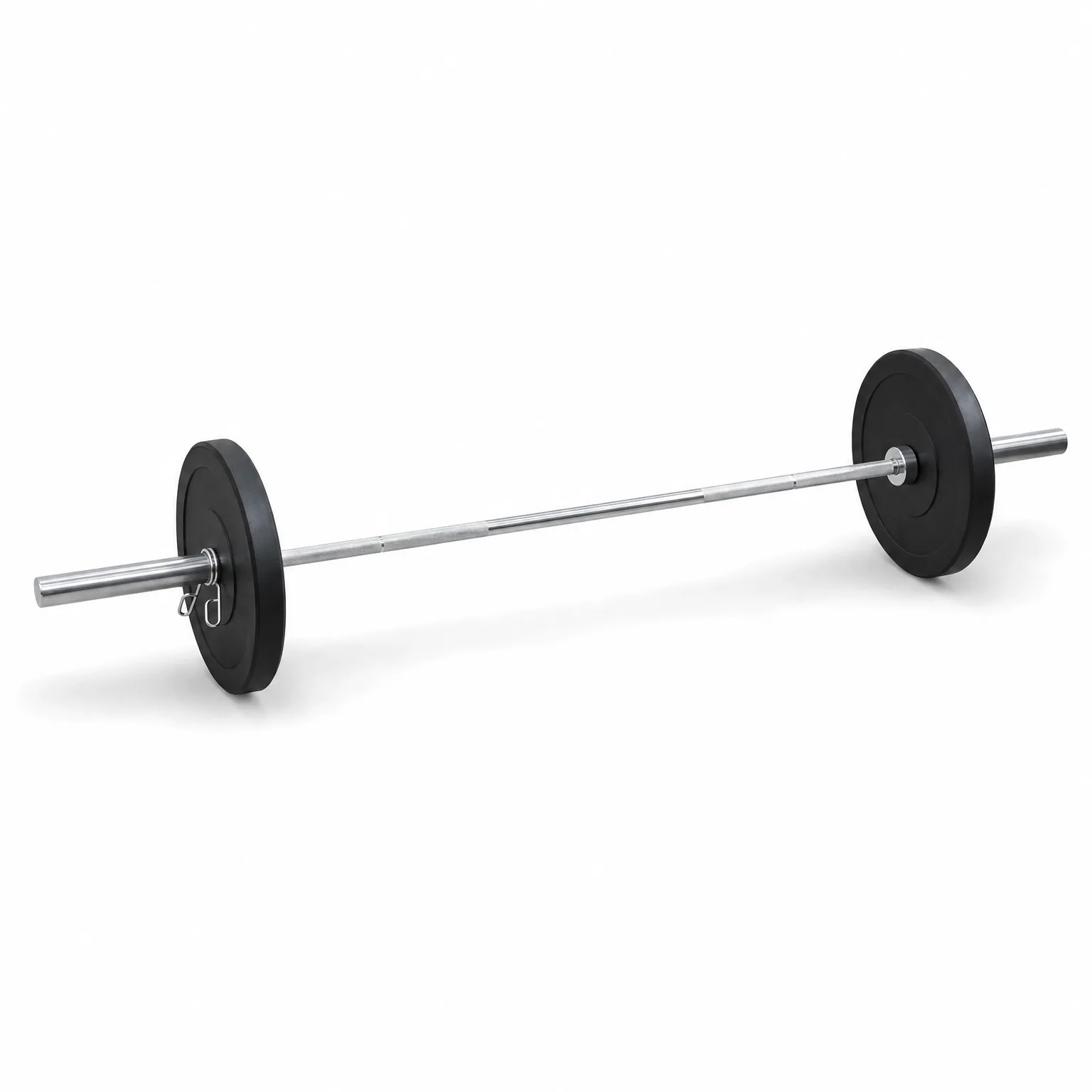
A long steel bar loaded with plates at both ends. The standard tool for squats, deadlifts, presses and rows with heavy weight. -
Hip thrust bench
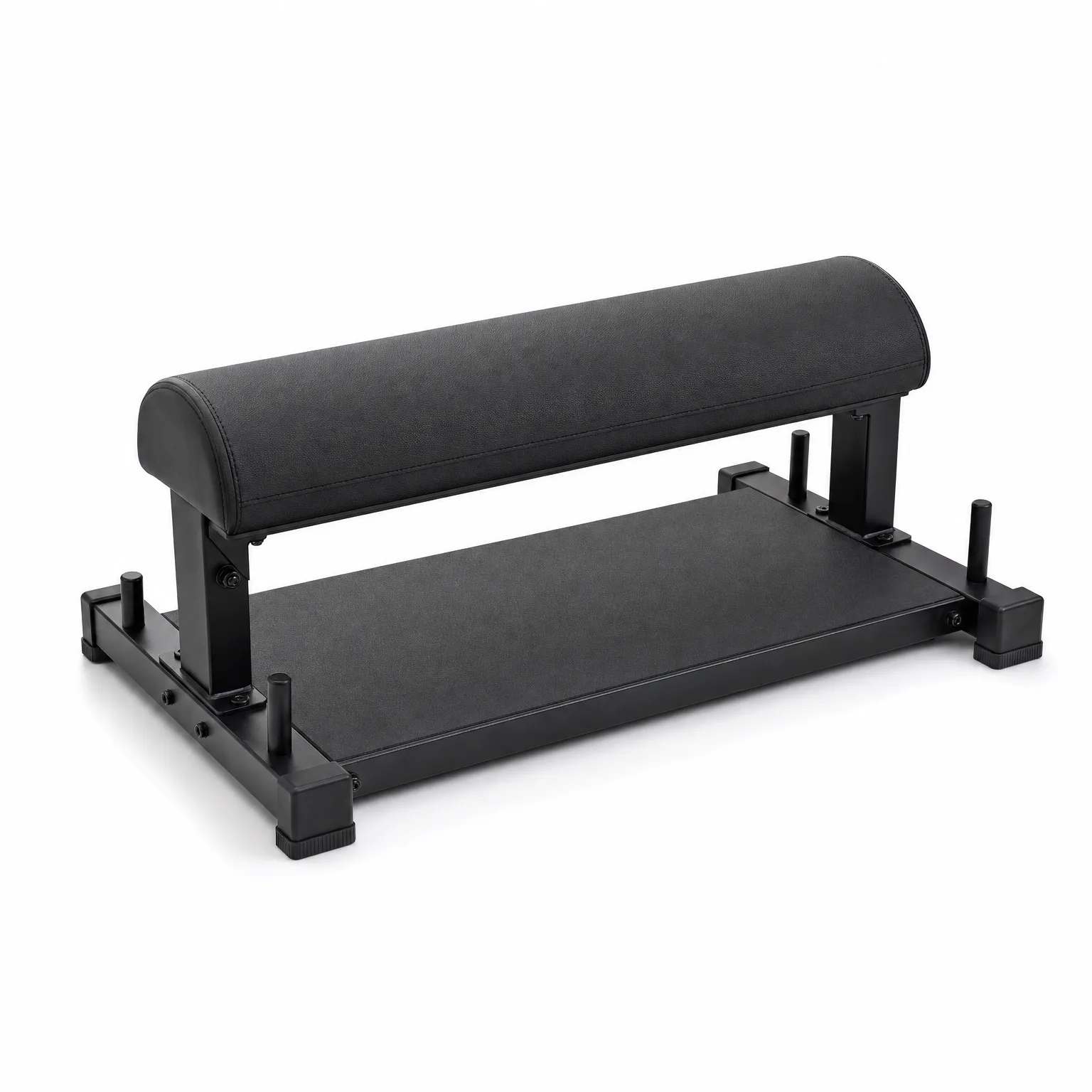
A low padded bench at the right height for barbell hip thrusts, often on a platform with band pegs. Trains the glutes. -

Weight bench
A padded bench you lie, sit or lean on while lifting. It supports the body for presses, rows, hip thrusts and seated work. -
Smith machine
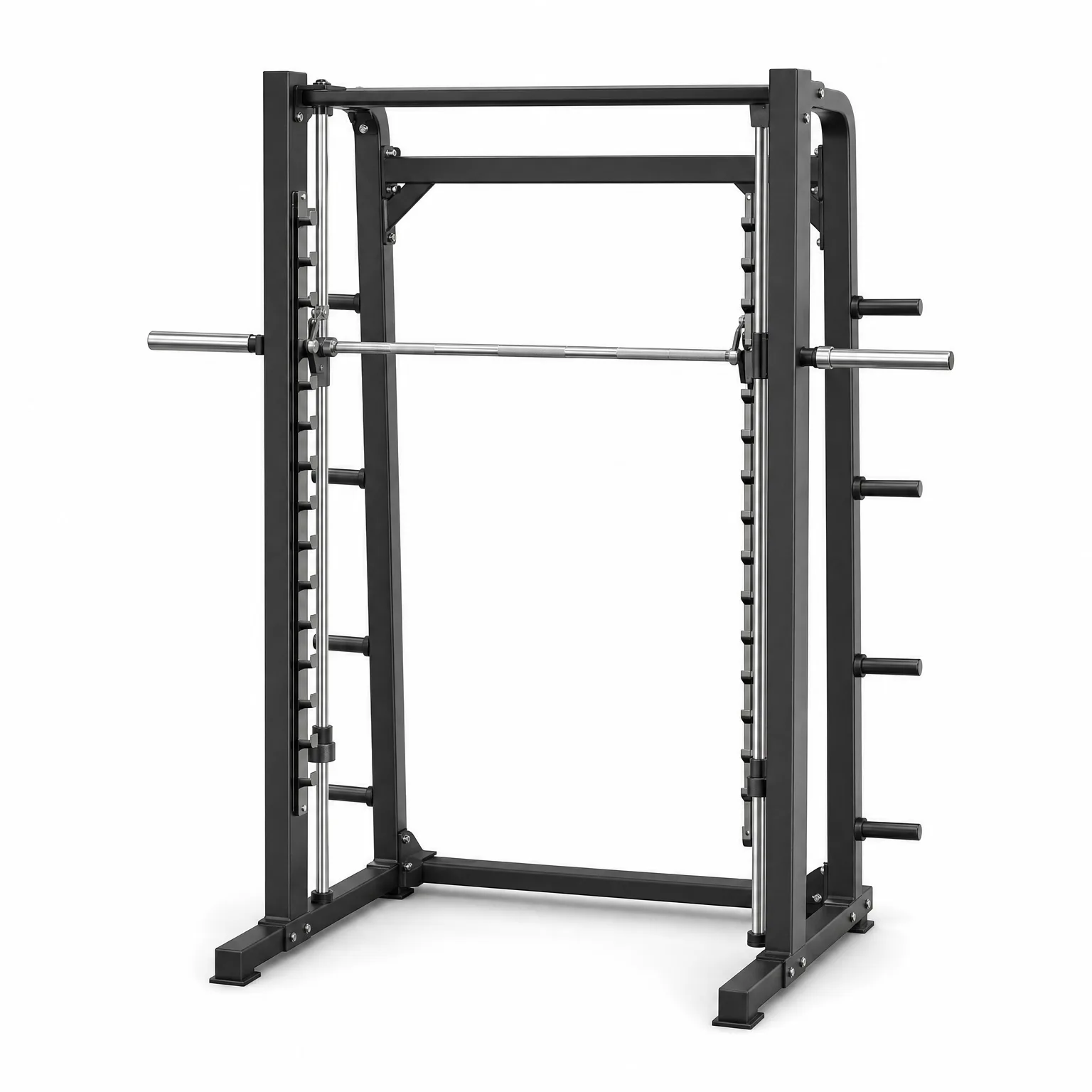
A barbell that slides on fixed guide rails, with hooks that lock at many heights. Used for squats, presses and rows without a spotter.
Questions about barbell pad
What is a barbell pad used for?
Mostly for hip thrusts and glute bridges, where the bar lies across the front of the hips and hurts without cushioning. It is also used on the upper back for squats and lunges, especially by beginners and on Smith machines.
Should you use a barbell pad for squats?
You can while you are learning, if a bare bar is too uncomfortable. Many coaches advise moving away from it, because the pad lifts the bar off the back and makes it less stable. A bar set on tight upper-back muscles is usually comfortable without padding.
Do you need a pad for hip thrusts?
In practice, yes. Without padding, the bar presses on the hip bones and the discomfort limits the load long before the glutes are worked. A barbell pad, a folded mat or a thick towel all solve this.
Barbell pad or hip thrust pad?
A round barbell pad is fine for moderate weights and also works for squats. A dedicated hip thrust pad is wider and denser, so it spreads heavy loads better and does not flatten. If hip thrusts are a main lift for you, the dedicated pad is more comfortable.
Build programs around what your client has
This guide comes from OnlineFitness.app, the app online coaches run their clients in.
Free for life for the first 100 coachesNo card