Equipment Benches, racks and bars
Hip thrust bench
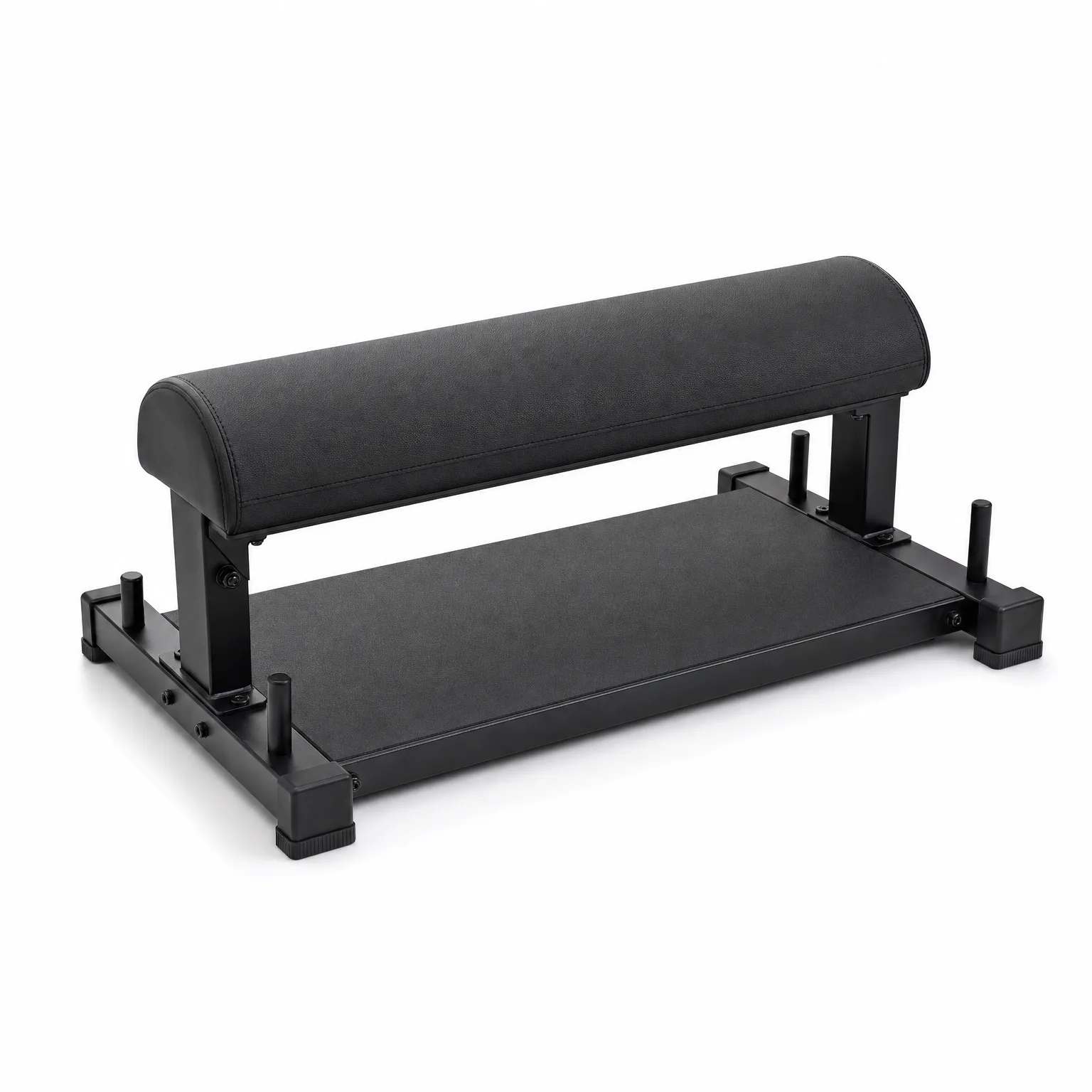
A low padded bench at the right height for barbell hip thrusts, often on a platform with band pegs. Trains the glutes.
In short
A hip thrust bench is a low, padded support, about 30–40 cm high, that you rest your upper back against while driving the hips up under a barbell. Dedicated models sit on a platform with a footplate, so the bench cannot slide, and have pegs for resistance bands. The height is the key difference from a normal weight bench, which is too tall for many people.
It is a free-weight setup: you bring the bar, plates and a pad. A hip thrust machine does the same movement with a padded belt and a lever, which is quicker to get into. The bench is cheaper, takes any bar, and also works for single-leg and banded thrusts.
- Category
- Benches, racks and bars
- Where
- Gym, Home
- Level
- Beginner and up
- Space
- Needs a dedicated area
- Typical sizes
- Pad height about 30–40 cm (12–16 in); platform models roughly 1.5 m by 0.6–1 m (5 ft by 2–3.3 ft)
- Also called
- hip thruster, glute bench, hip thrust platform, glute bridge bench, booty bench, thrust bench
Muscles it works
- Main
- Glutes
- Also works
- Hamstrings, Quads, Adductors
What it is used for
- Barbell hip thrusts
- Single-leg and B-stance hip thrusts
- Band-only or band-plus-bar thrusts using the pegs
- Feet-elevated glute bridges with the heels on the pad
- Bulgarian split squats with the rear foot on the pad
Types
Platform with band pegs. Bench, footplate and pegs in one frame. You sit on the platform, so your weight keeps the bench from moving.
Stand-alone low bench. A short padded bench or block at thrust height. Light and easy to store, but must be braced against a wall or rack.
Rack attachment. A padded roller or backrest that pins into a power rack upright at the height you choose.
Rounded or pivoting pad. The pad is curved or rotates with your back as you thrust, so the edge does not dig in.
How to choose
Get the height right
Sitting on the floor, the top of the pad should meet the bottom of your shoulder blades. For most adults that is 30–40 cm. Shorter people need the low end, taller people the high end or an adjustable model.
Make sure it cannot slide
A platform you sit on is the steadiest. A stand-alone bench needs rubber feet and a wall or rack behind it. A bench that scoots back under load is the most common problem.
Look at the pad edge
A rounded, firm front edge is more comfortable against the back than a square one. Very soft padding lets you sink and changes the height.
Band pegs if you train at home
Pegs let you thrust against bands alone when you have few plates, and add resistance at the top of the rep when you have plenty.
How to start using it
- Set the bar and pad. Sit with your back to the bench and roll a loaded bar over your legs into the hip crease. Plates of full diameter give room to roll it. Put a thick barbell pad or folded mat between bar and hips.
- Place the back and feet. The pad edge sits just under the shoulder blades. Feet are flat, about hip width, at a distance that makes the shins vertical when the hips are up.
- Drive through the heels. Tuck the chin, keep the ribs down and push the hips up until the torso is level with the knees. The upper back pivots on the pad edge. Pause for a second at the top.
- Lower under control and reset. Bring the hips down until the plates almost touch the floor, then go again. Start with the empty bar or bodyweight and add load in small steps.
Common mistakes
Arching the lower back at the top
Pushing past level by bending the spine moves the work from the glutes to the lower back. Finish with the pelvis tucked slightly under and the ribs down.
Feet too far or too close
Feet far out shift work toward the hamstrings. Feet tucked in shift it toward the quads. Adjust until the shins are vertical at the top.
Looking at the ceiling
Throwing the head back encourages the back to arch. Keep the chin tucked and your eyes on the bar or the wall ahead.
No pad under the bar
A bare bar on the hip bones makes people cut sets short because of the pressure, not the muscles. Use a proper pad.
A bench that is too high
On a standard bench the pad may hit mid-back or the neck, and you slide down it. Use a lower surface or raise your feet on plates.
What to use instead
A regular flat bench works if its height suits you and it is pushed against a wall, and so does a low plyo box with a mat over the edge. At home the front edge of a sofa is about the right height for bodyweight, band and dumbbell thrusts. A hip thrust machine in a gym gives the same movement with no bar to roll into place. On the floor, glute bridges train the same muscles through a shorter range.
-
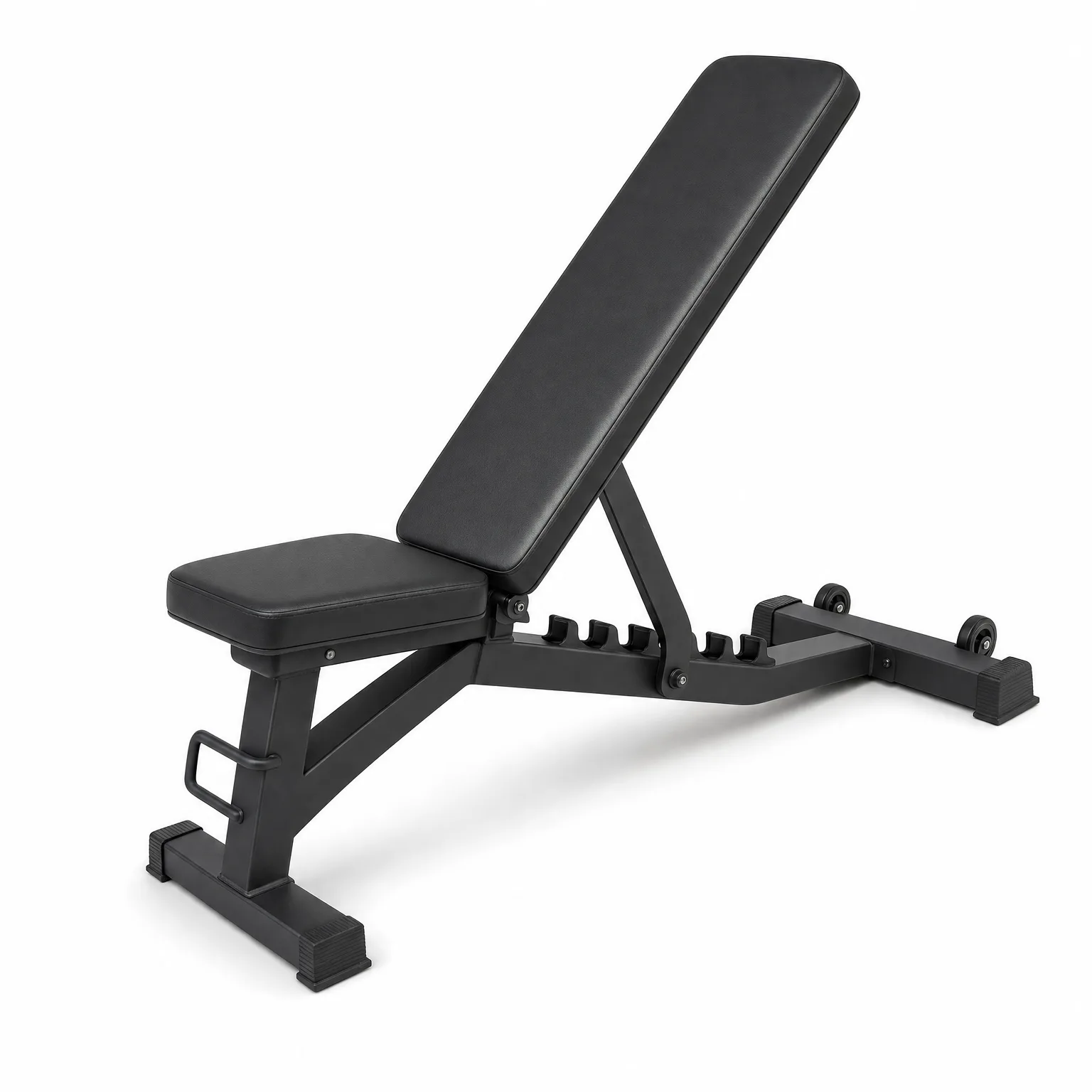
Weight bench
A padded bench you lie, sit or lean on while lifting. It supports the body for presses, rows, hip thrusts and seated work. -
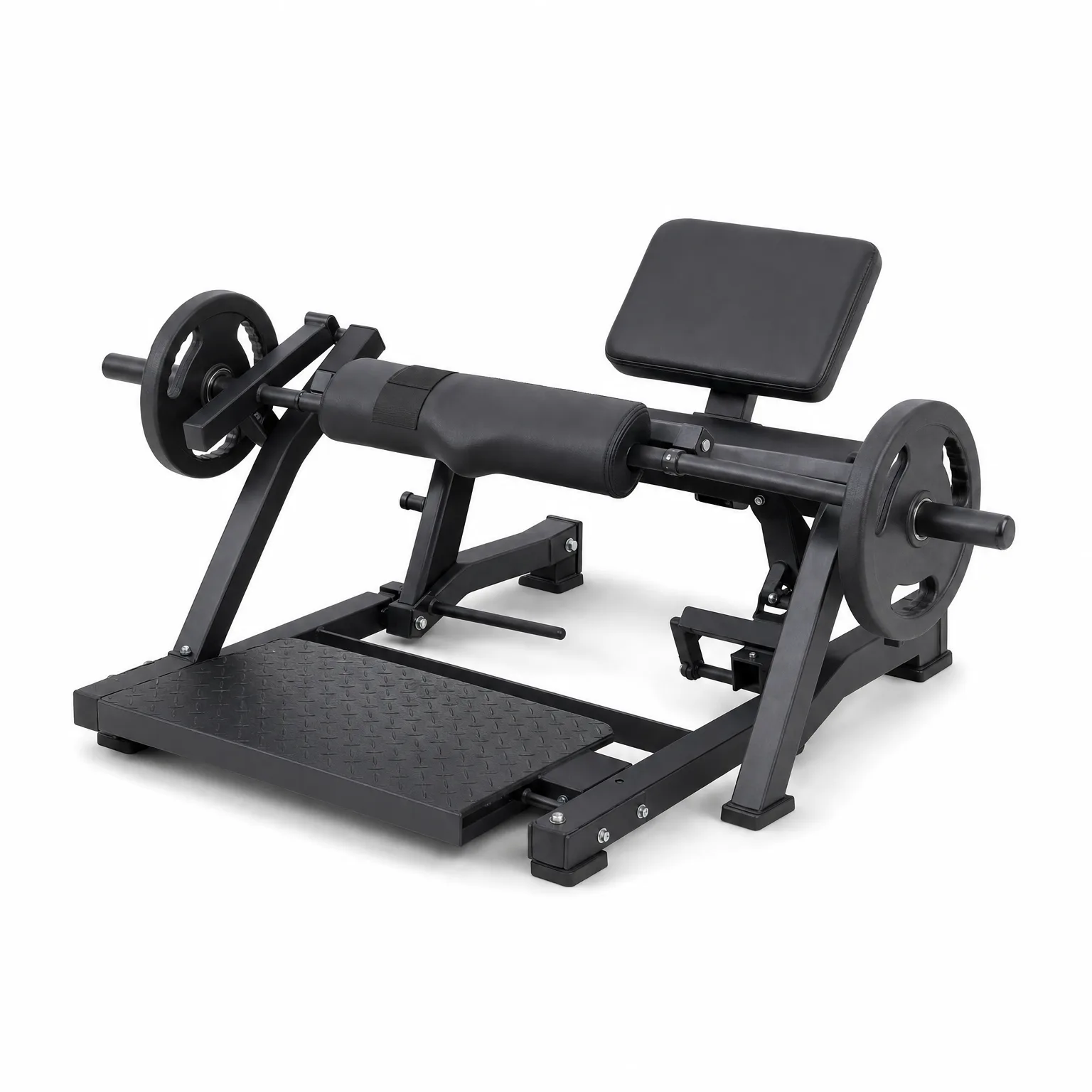
Hip thrust machine
A machine with a back pad, a footplate and a padded belt or bar across the hips. It loads the hip thrust without a barbell setup. -
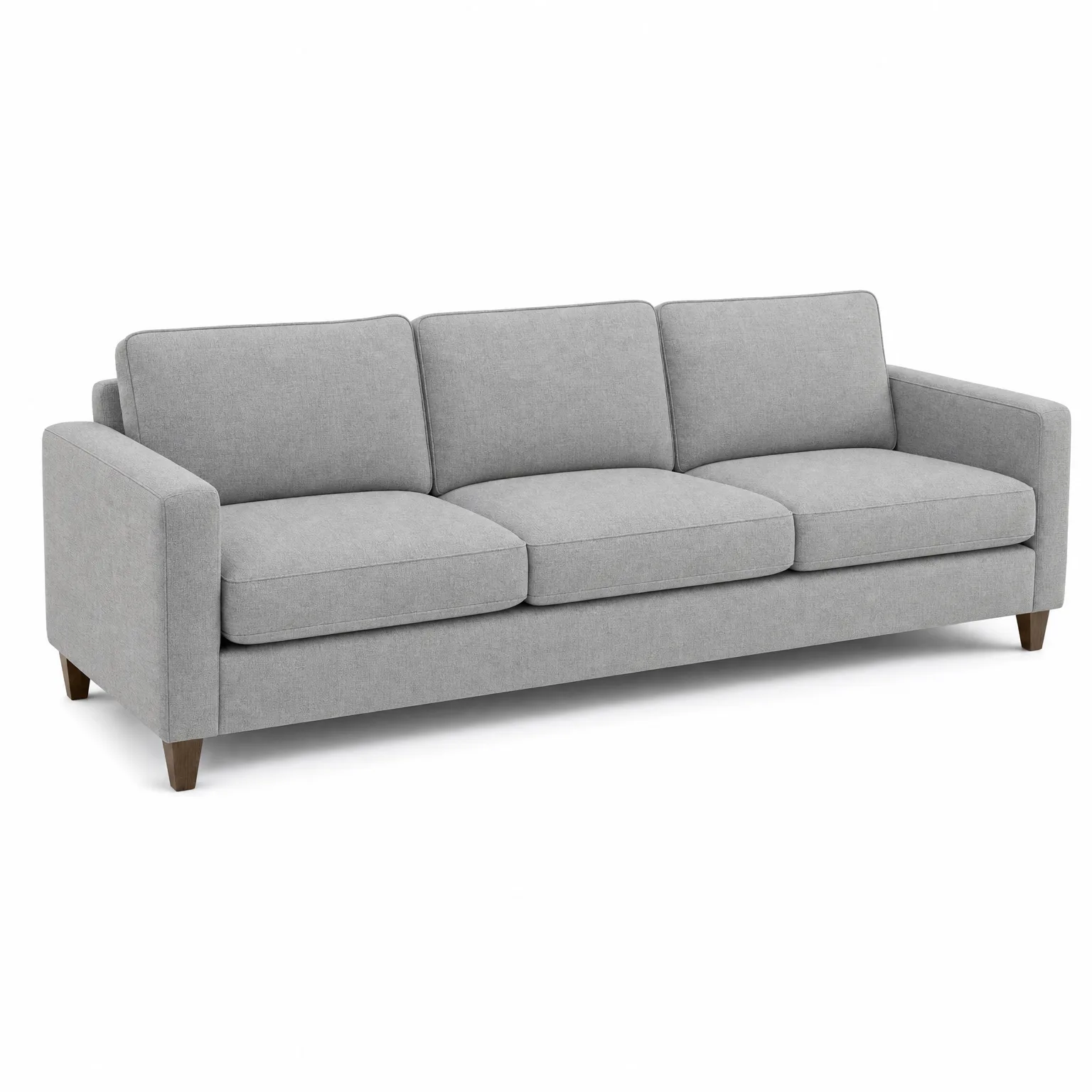
Sofa
A sofa is a heavy, padded, knee-high platform: good for hip thrusts, split squats, incline push-ups and anchoring the feet for ab work. -
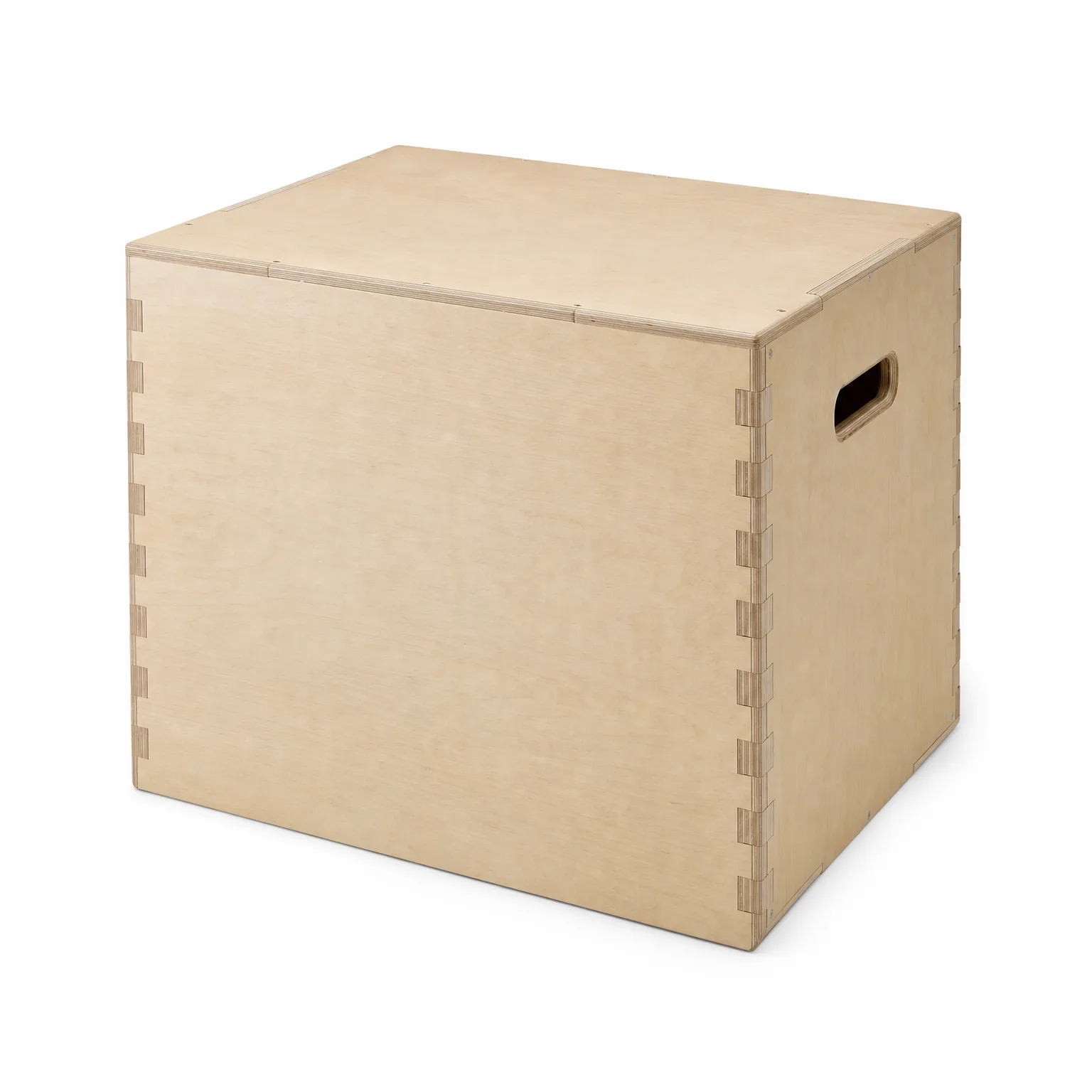
Plyo box
A sturdy box for jumping onto and stepping up on. Used for box jumps, step-ups, box squats and raised push-ups.
Often used with
-

Barbell
A long steel bar loaded with plates at both ends. The standard tool for squats, deadlifts, presses and rows with heavy weight. -
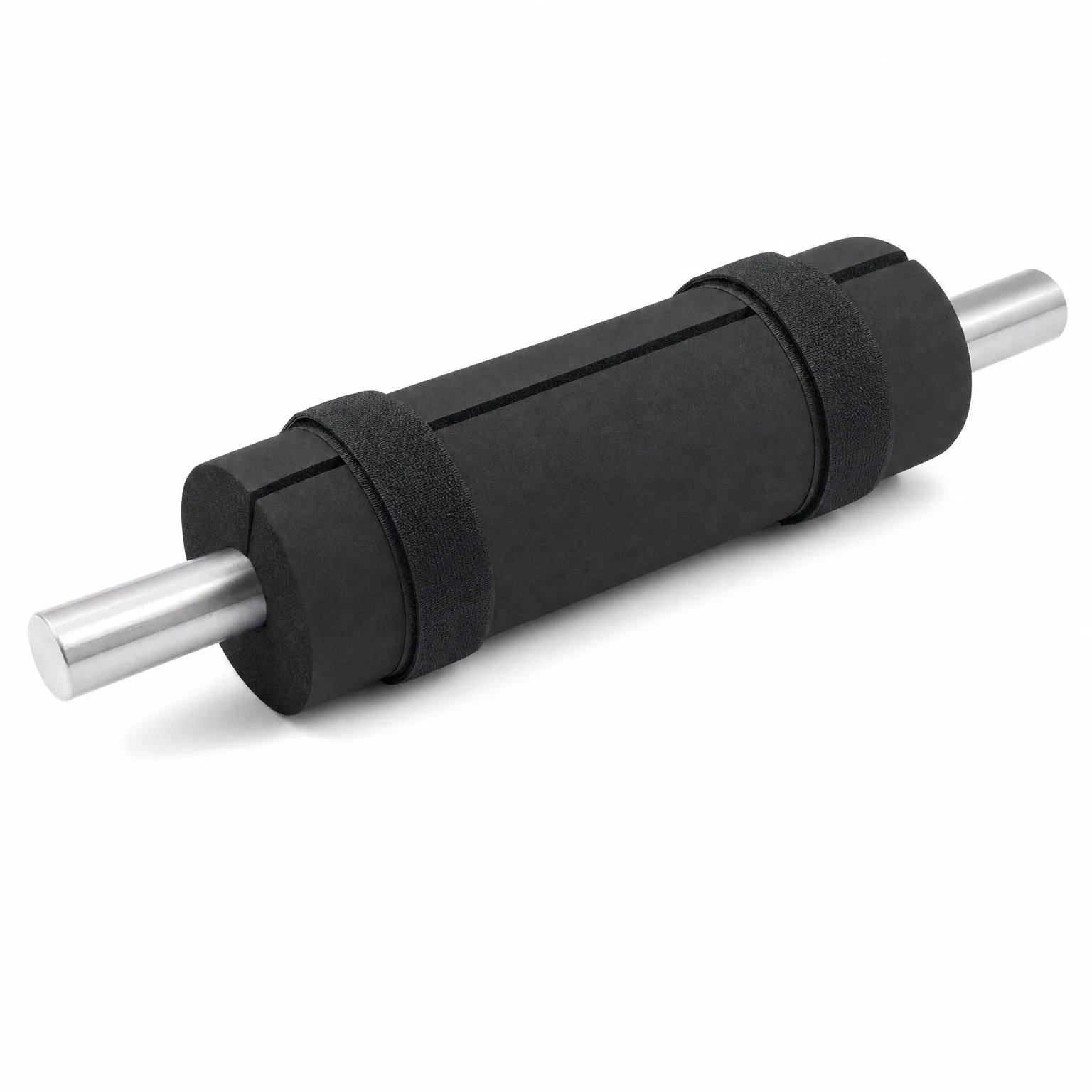
Barbell pad
A thick foam sleeve that wraps around the middle of a barbell to cushion the hips in hip thrusts or the upper back in squats and lunges. -
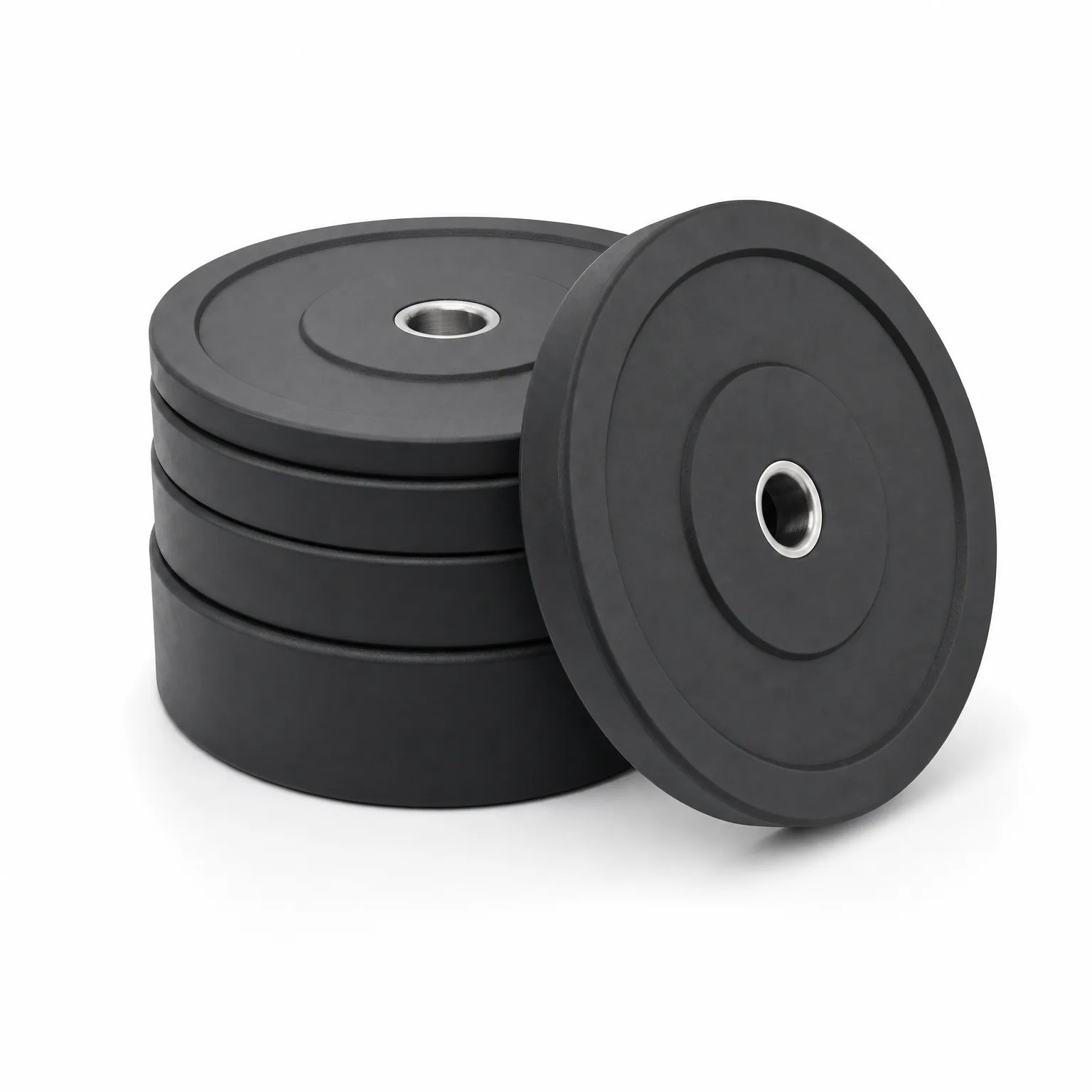
Weight plates
Flat discs that slide onto a barbell or machine to set the load. A single plate also works as a hand-held weight. -
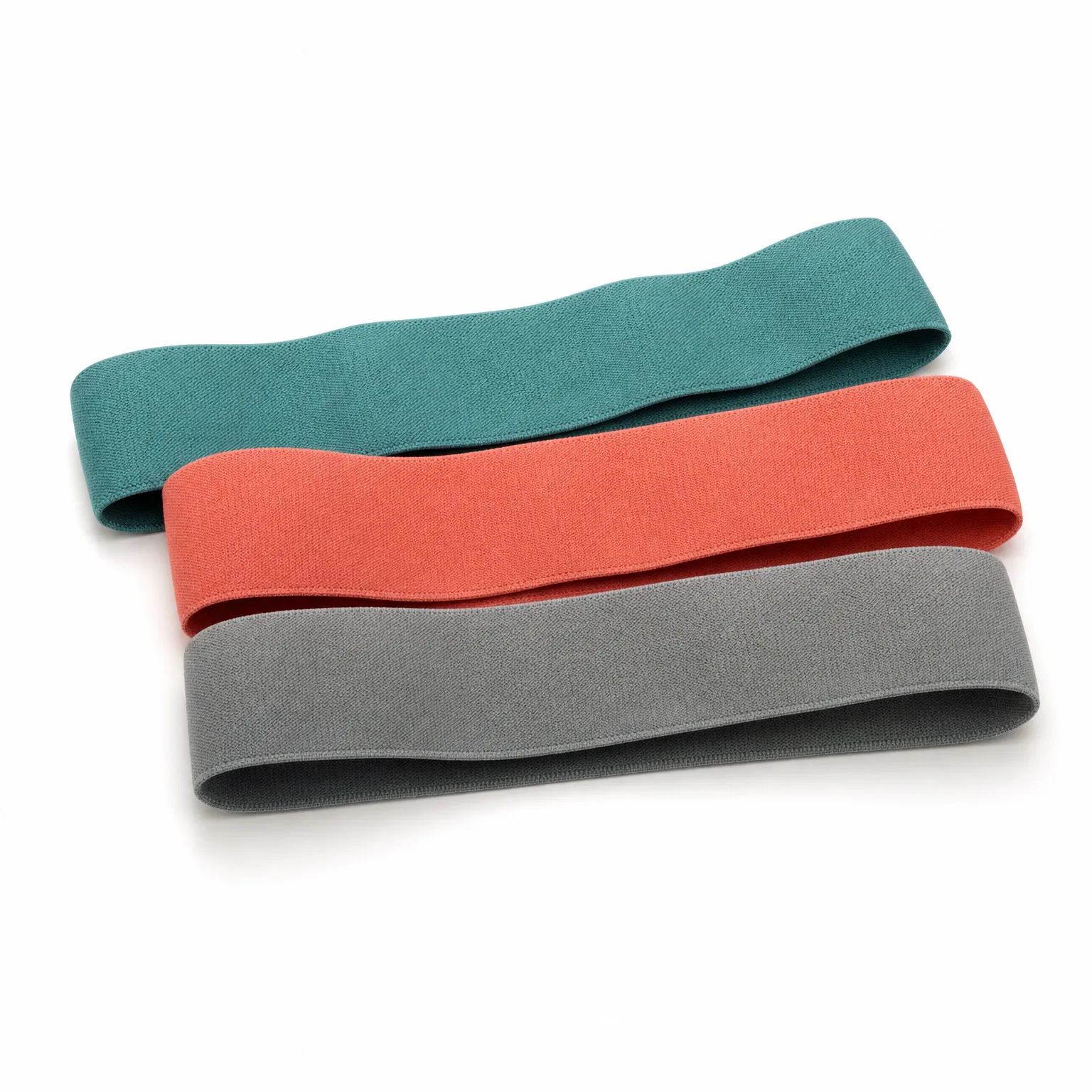
Mini bands
Short elastic loops worn around the thighs, knees or ankles. Used for glute and hip exercises and for warm-ups.
Questions about hip thrust bench
What height should a hip thrust bench be?
About 30–40 cm (12–16 in) for most adults, a little lower than a standard weight bench. The test: sitting on the floor against it, the top edge should touch the bottom of your shoulder blades.
Hip thrust bench vs hip thrust machine: which is better?
They train the same movement. A machine is faster to set up and more comfortable under heavy load, because a padded belt replaces the bar. A bench is cheaper, fits a home gym, and allows single-leg and banded versions. Use whichever you have access to and can load progressively.
Can I do hip thrusts on a regular bench?
Yes, if the bench is stable and not too tall for you. Standard benches are around 42–45 cm high, which is fine for taller people. If it is too high, stand your feet on a pair of plates. Brace the bench against a wall or rack so it cannot slide.
What muscles do hip thrusts work?
Mainly the gluteus maximus, which extends the hips. The hamstrings, quads and inner thighs assist, and their share changes with foot position.
Build programs around what your client has
This guide comes from OnlineFitness.app, the app online coaches run their clients in.
Free for life for the first 100 coachesNo card