Biceps curl machine
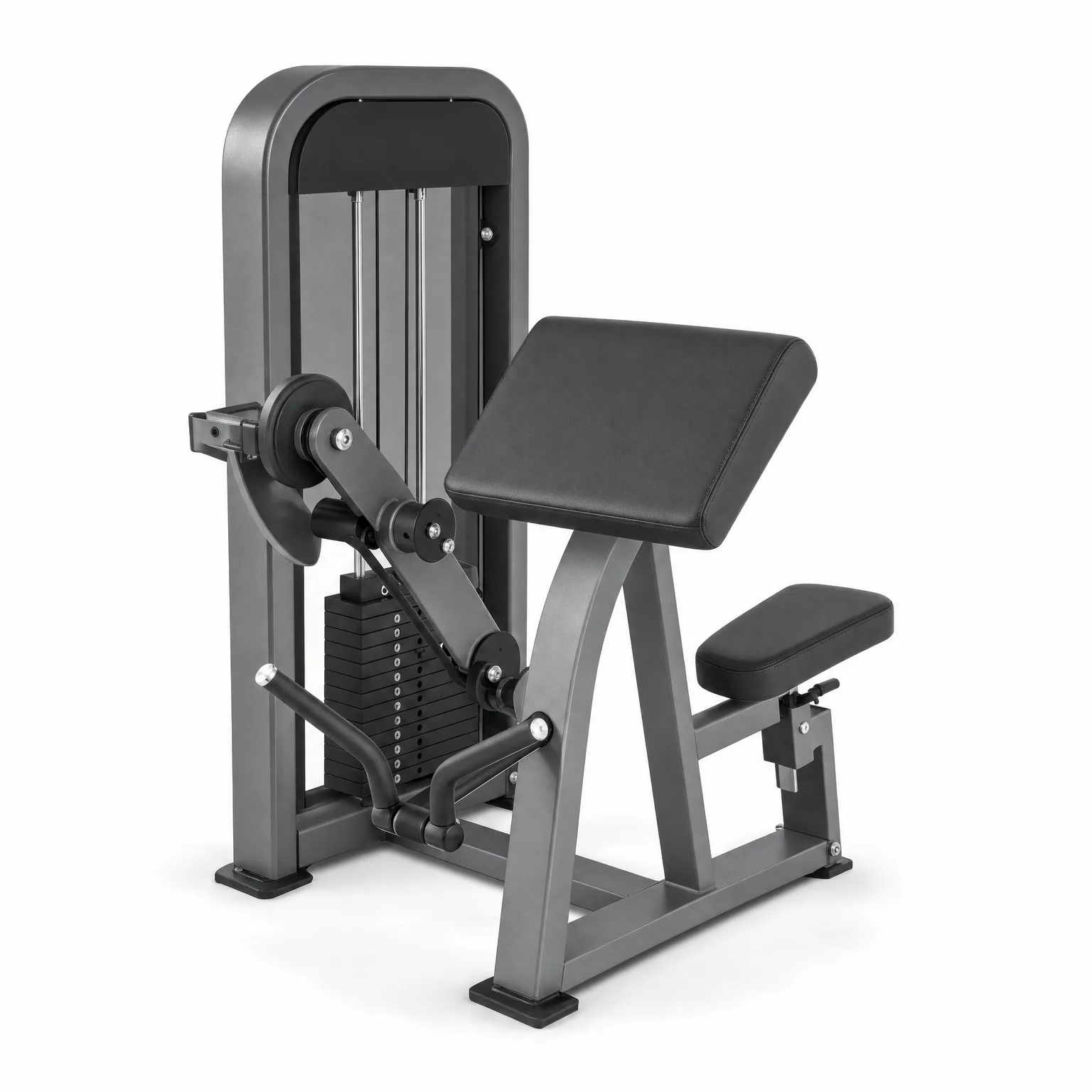
A seated machine with an arm pad and handles that curl up in a fixed arc. It isolates the biceps and stops the body from swinging.
In short
A biceps curl machine is a seat with an angled arm pad and a pair of handles on a pivot. You rest the upper arms on the pad and bend the elbows to curl the handles toward your shoulders against a weight stack or plates. It trains the biceps, with the forearm muscles helping.
The pad holds the upper arms still, so you cannot lean back or swing the weight the way people do in standing curls. That makes it simple to learn and useful for hard sets at the end of an arm or back session. It suits beginners and anyone who wants direct biceps work without balancing a bar.
- Category
- Gym machines
- Where
- Gym
- Level
- Beginner and up
- Space
- Needs a dedicated area
- Typical sizes
- Footprint about 1.0–1.4 m x 0.9–1.2 m (3.3–4.6 x 3–4 ft); stack or plate load varies by model
- Also called
- bicep curl machine, arm curl machine, preacher curl machine, machine curl, seated curl machine, biceps machine
What it is used for
- Strict two-arm curls with no help from the back or hips
- One-arm curls to compare and even out the two sides
- Slow lowering reps and drop sets, which are quick with a pin
- Direct biceps work after rows and pulldowns
Types
Selectorized preacher curl. A weight stack with a pin and an angled pad like a preacher bench. The most common type on a gym floor.
Plate-loaded. The lever arm takes weight plates. Often has separate arms for the left and right hand.
Independent arms. Each handle moves on its own, so the stronger arm cannot take over. Can be used one arm at a time.
Biceps and triceps combo. One station that curls in one direction and extends in the other, with a switch or a different grip. Common in smaller gyms.
How to choose
Set the seat height
Adjust the seat so the whole back of the upper arm lies on the pad and the armpit sits close to the pad's top edge. Too low and your shoulders hunch up to reach. Too high and you lean over the pad with only the elbows touching.
Line up the elbows with the pivot
The machine's axis is usually marked with a colored dot or a bolt on the side. Your elbow joint should sit level with it. When the two are in line, the handles stay in your hands through the rep without the wrists being pulled or pushed.
Choose the grip
Most machines have angled handles like an EZ bar. Hold them with the palms up and the wrists straight. If there are two grip options, the slightly turned-in one is usually easier on the wrists.
Pick a starting load
Start at one of the lightest pin settings and do 12 reps. The number is not comparable between machines, because the cam and lever change how heavy the stack feels.
How to start using it
- Sit down and place the arms. Sit with the chest lightly against the pad and the feet flat. Lay both upper arms on the pad, shoulder width apart, and take the handles with the elbows slightly bent.
- Curl without lifting the elbows. Bend the elbows and bring the handles toward the shoulders. Keep the upper arms pressed into the pad and the wrists straight. Stop when the forearms are close to vertical and squeeze for a moment.
- Lower slowly. Take two to three seconds to straighten the arms. Go almost to full extension and stop just before the stack touches down, then begin the next rep.
- Progress in small steps. When you reach 12–15 clean reps in every set, move the pin down one plate. If the jump is too large, many stacks have a small add-on weight for half steps.
Common mistakes
Elbows coming off the pad
Lifting the elbows or raising the hips off the seat to finish a rep brings the shoulders and body weight in. Stay seated, keep the arms on the pad and lower the load.
Dropping into the bottom
Letting the weight fall and bounce out of the straight-arm position loads the elbow and the biceps tendon suddenly. Control the last part of the way down.
Half reps at the top
Moving only through the top third lets you use more weight and trains the muscle less. Lower until the arms are nearly straight on every rep.
Bent wrists
Curling the wrists in toward you makes the forearms do part of the work and can irritate the wrists. Keep the knuckles in line with the forearm.
Seat left where the last person had it
A seat set for someone else puts your elbows off the pivot and makes the movement awkward. Adjust it every time before you load the machine.
What to use instead
A preacher bench with an EZ bar or a dumbbell gives the same supported-arm curl with free weights. Standing curls with an EZ bar or dumbbells train the same muscle and ask you to keep the body still yourself. At home, a resistance band under the feet covers curls with the load rising toward the top of the rep.
-
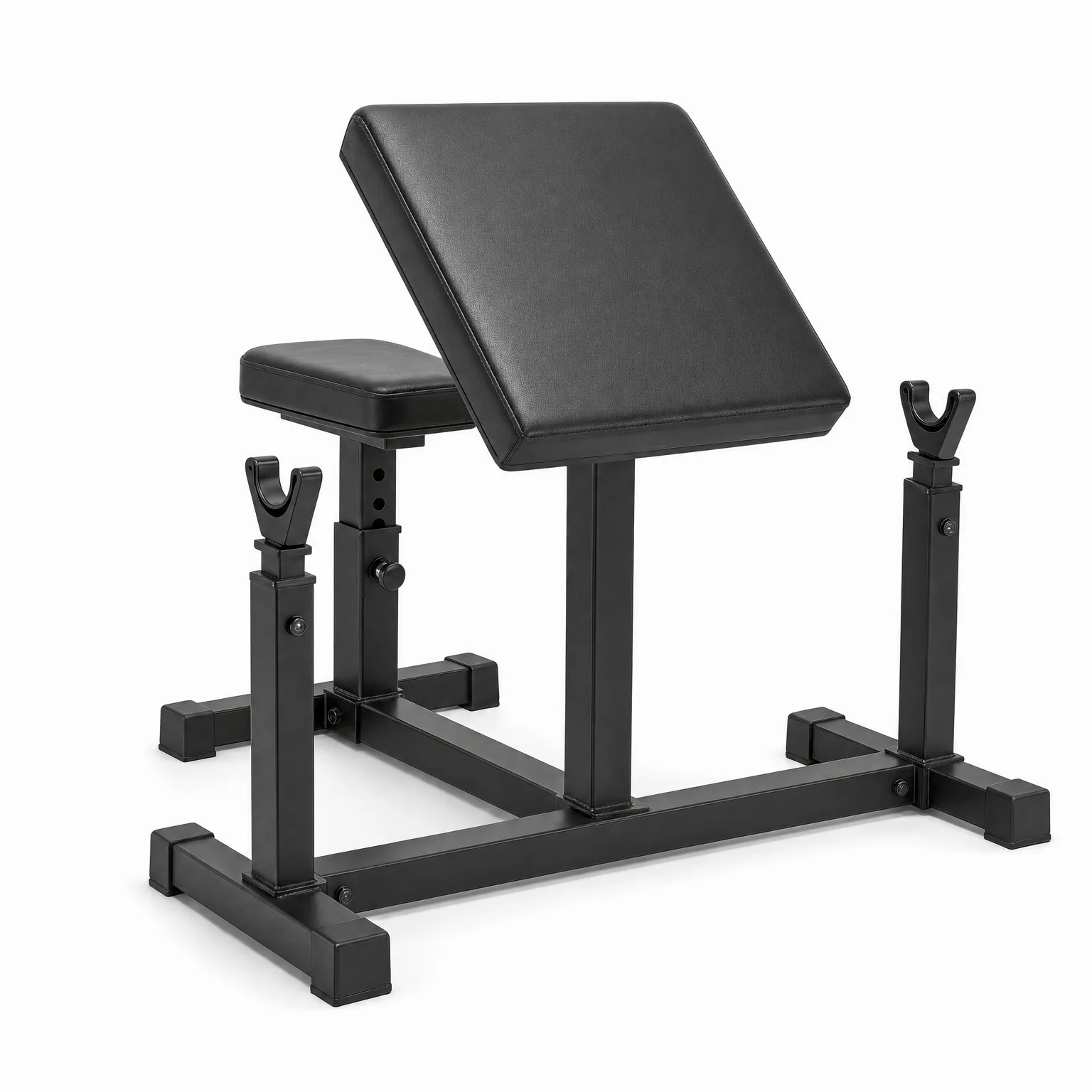
Preacher curl bench
A seat with a sloped arm pad that fixes the upper arms in front of the body, so curls are done by the biceps without swinging. -
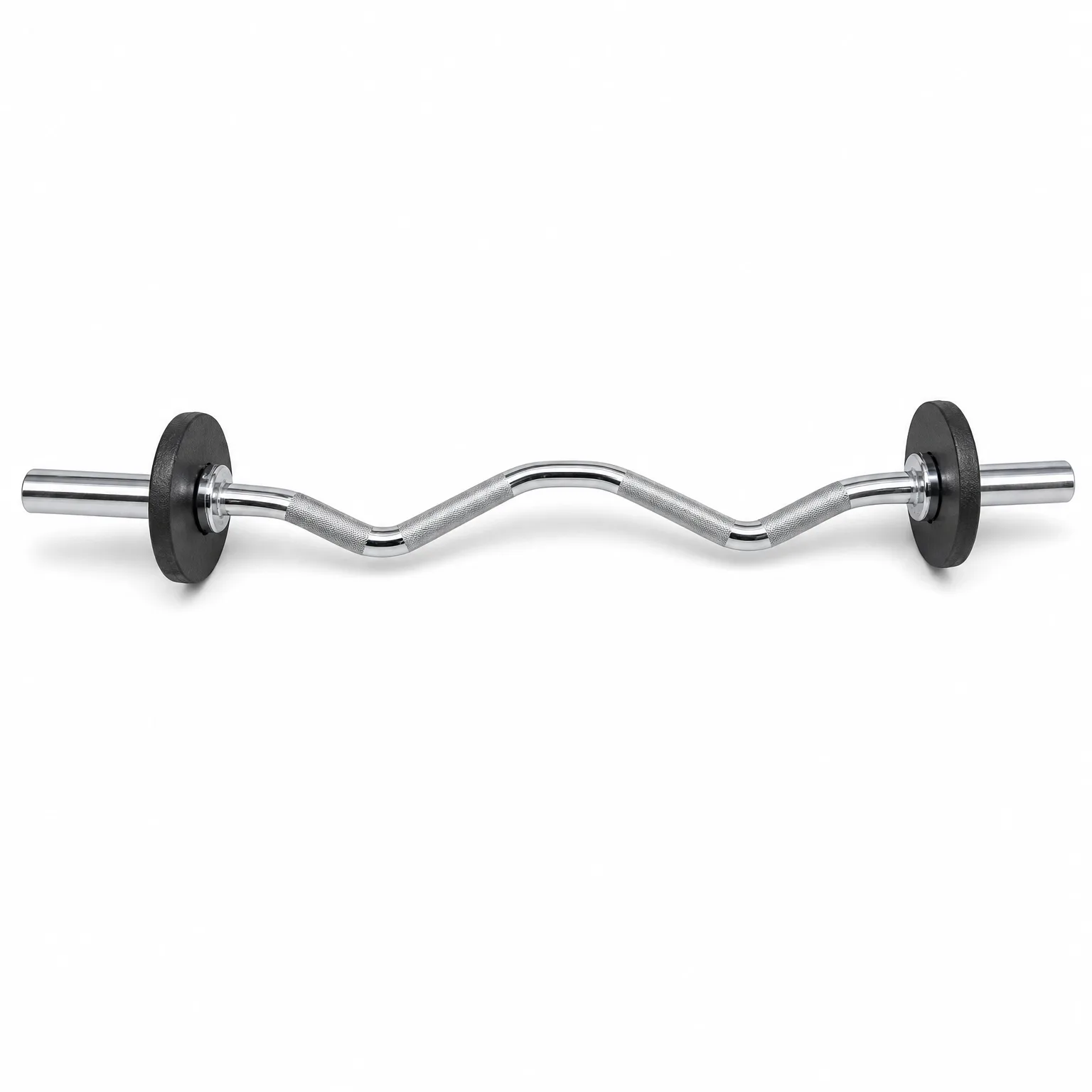
EZ curl bar
A short barbell with a zigzag grip section. The angled handles turn the wrists slightly inward for curls and triceps extensions. -

Dumbbells
A pair of short handles with a weight at each end. One pair trains every major muscle group, at home or in a gym. -
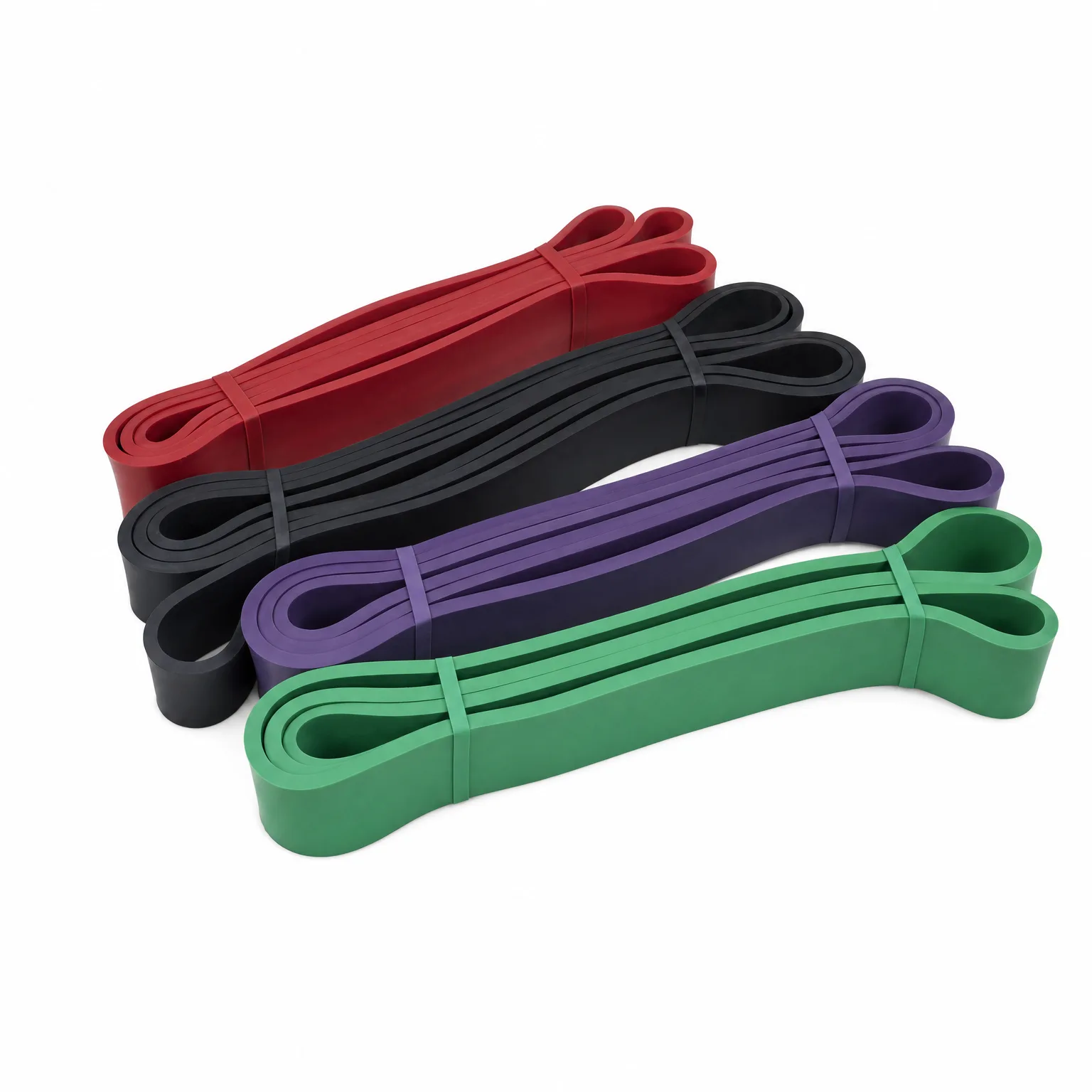
Resistance bands
Long closed loops of thick rubber. They add resistance to rows, presses and squats, or take weight off in pull-ups and dips.
Often used with
-
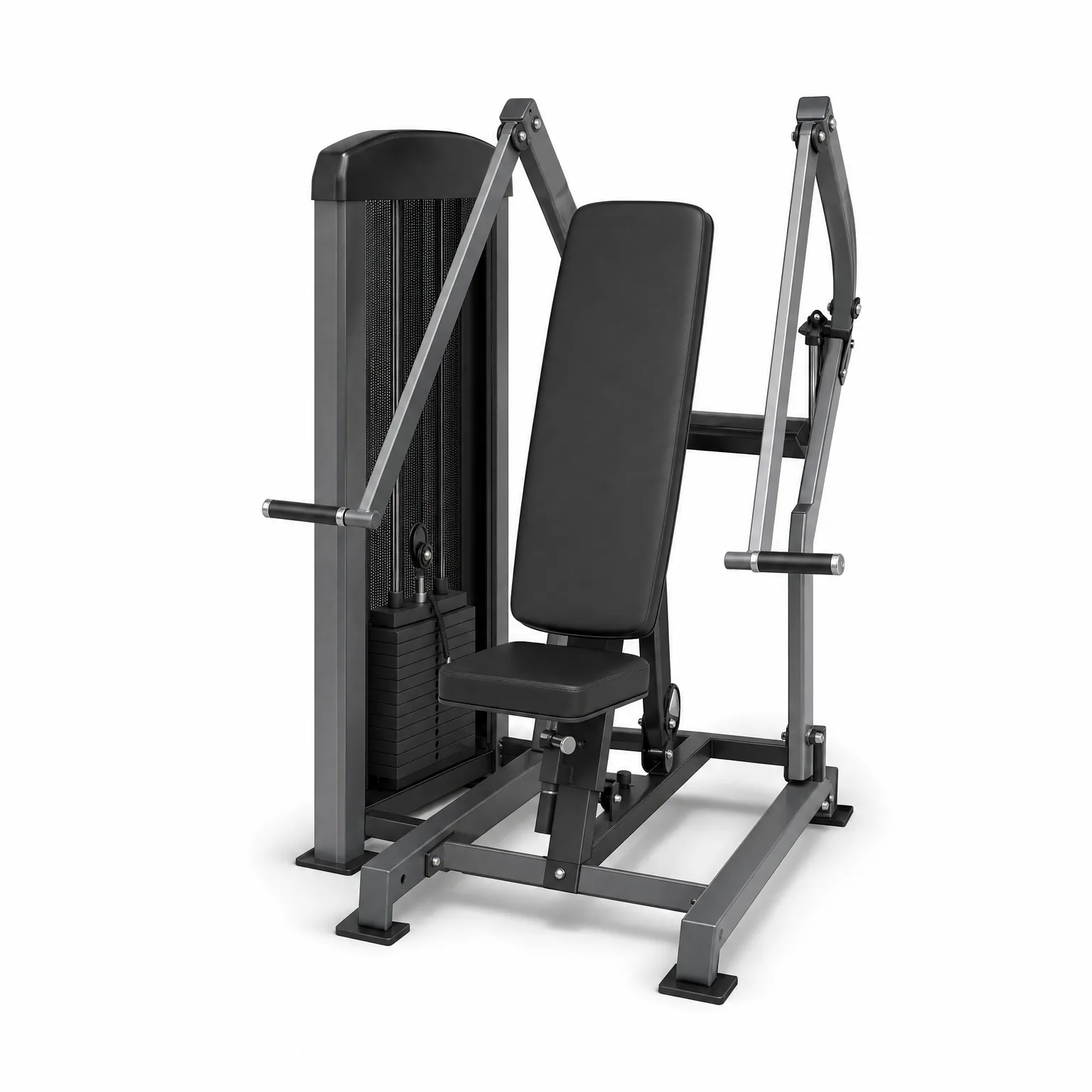
Triceps machine
A seated machine for the back of the arm. One type presses handles down like a dip, the other straightens the elbows over a pad. -
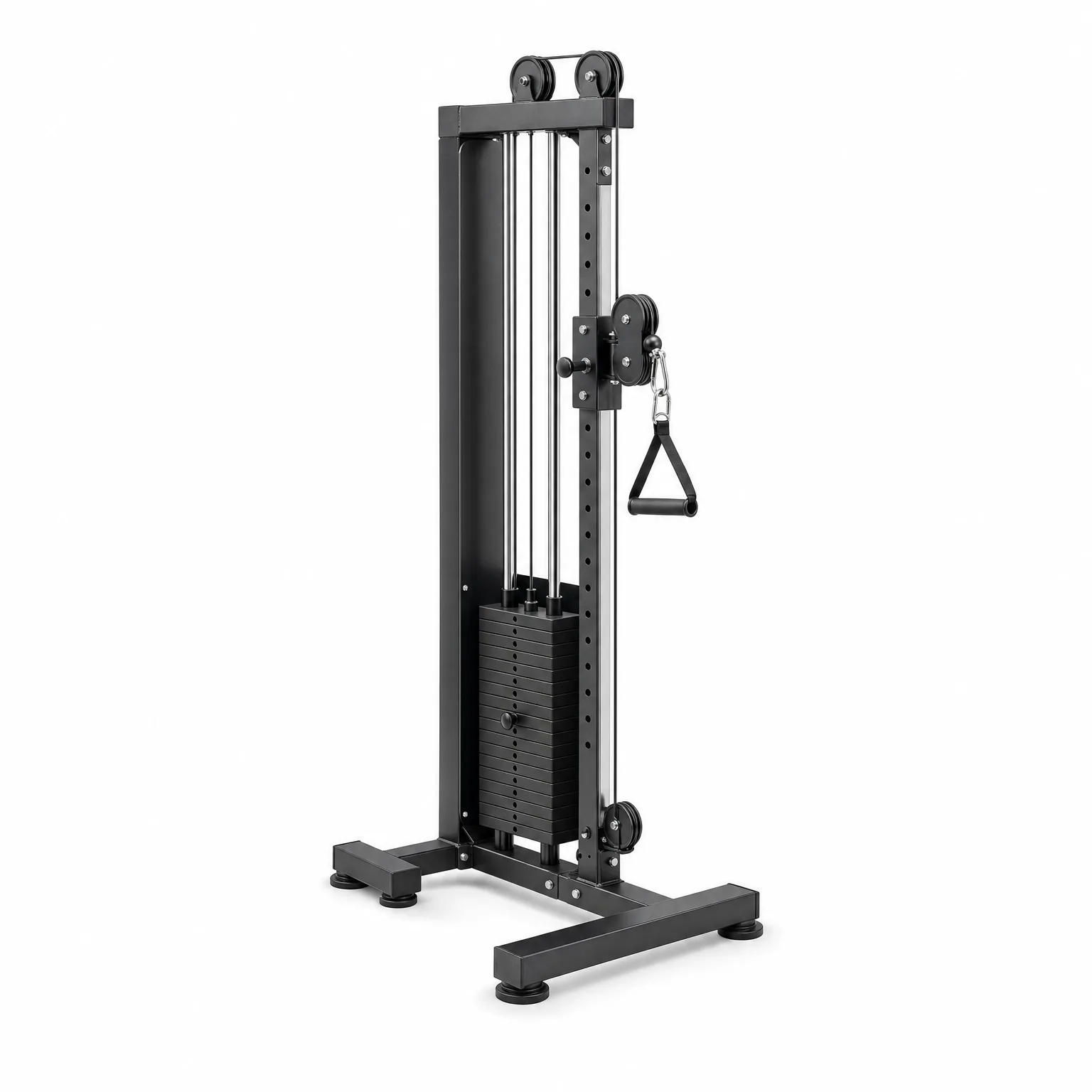
Cable machine
A weight stack on a pulley with a handle you can set at any height. It keeps tension on the muscle through the whole movement. -
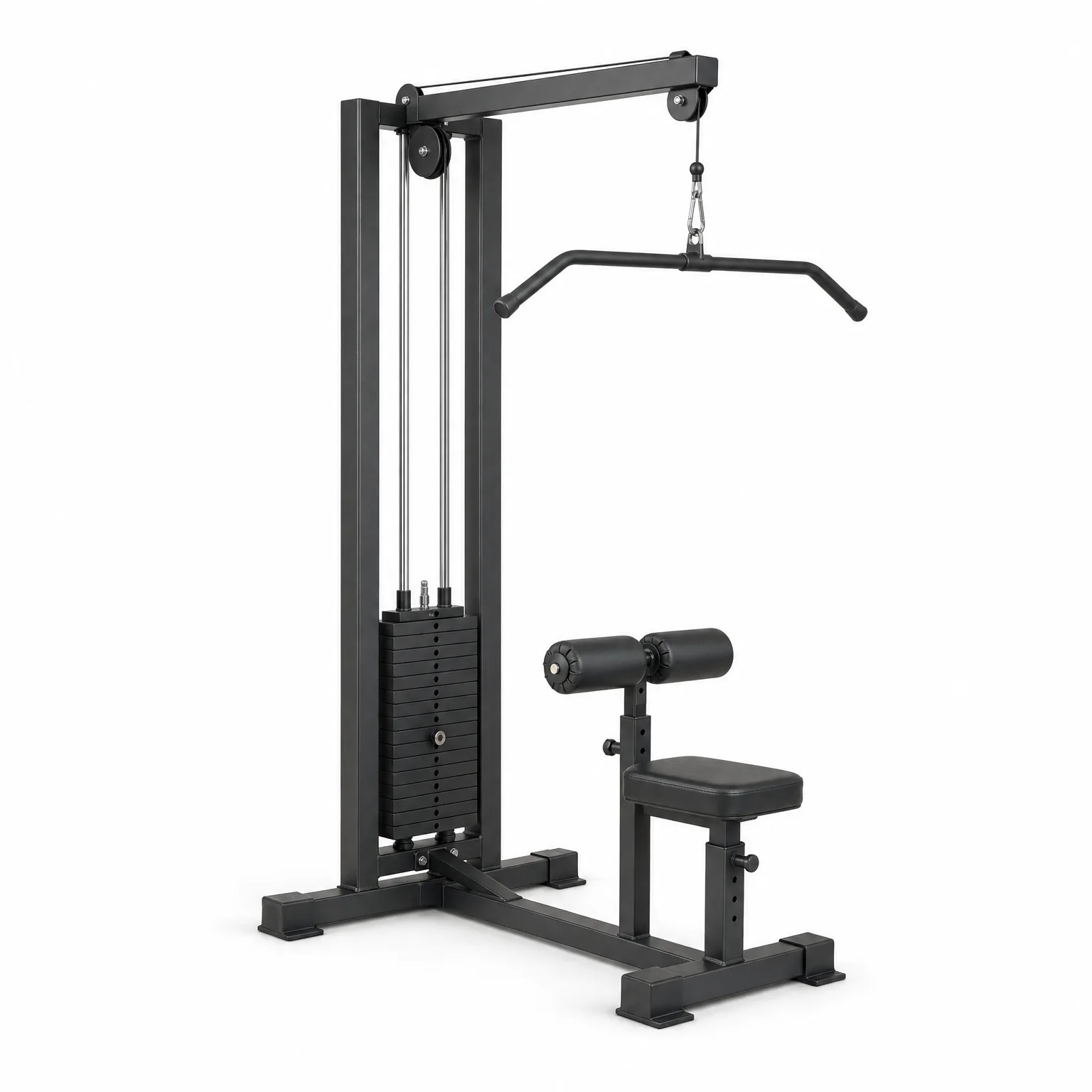
Lat pulldown machine
A seat with thigh pads under a high pulley and a wide bar. You pull the bar to your chest to train the lats and upper back.
Questions about biceps curl machine
Is the biceps curl machine effective?
Yes. It loads the biceps through a full range and makes it hard to cheat, so sets can be taken close to failure with little skill. It does not train the grip and stabilizing muscles as much as free weights do, so many people use both.
Biceps curl machine vs dumbbell curls: which is better?
Neither is clearly better for muscle growth. The machine fixes the arm and keeps tension more even through the rep. Dumbbells let the wrist rotate, train each arm fully on its own and need no setup. Use the one you can do with good form and progress on, or alternate.
How do you set up a biceps curl machine?
Adjust the seat so the backs of your upper arms lie flat on the pad and your elbows are level with the machine's pivot point. Select a light weight, sit with the chest against the pad, grip the handles palms up and curl without lifting the elbows.
How many sets and reps on the curl machine?
A common range is 2–4 sets of 8–15 reps, one or two times a week, after your rows and pulldowns. Choose a weight where the last two reps are hard but the elbows stay on the pad.
Build programs around what your client has
This guide comes from OnlineFitness.app, the app online coaches run their clients in.
Free for life for the first 100 coachesNo card