Ab crunch machine
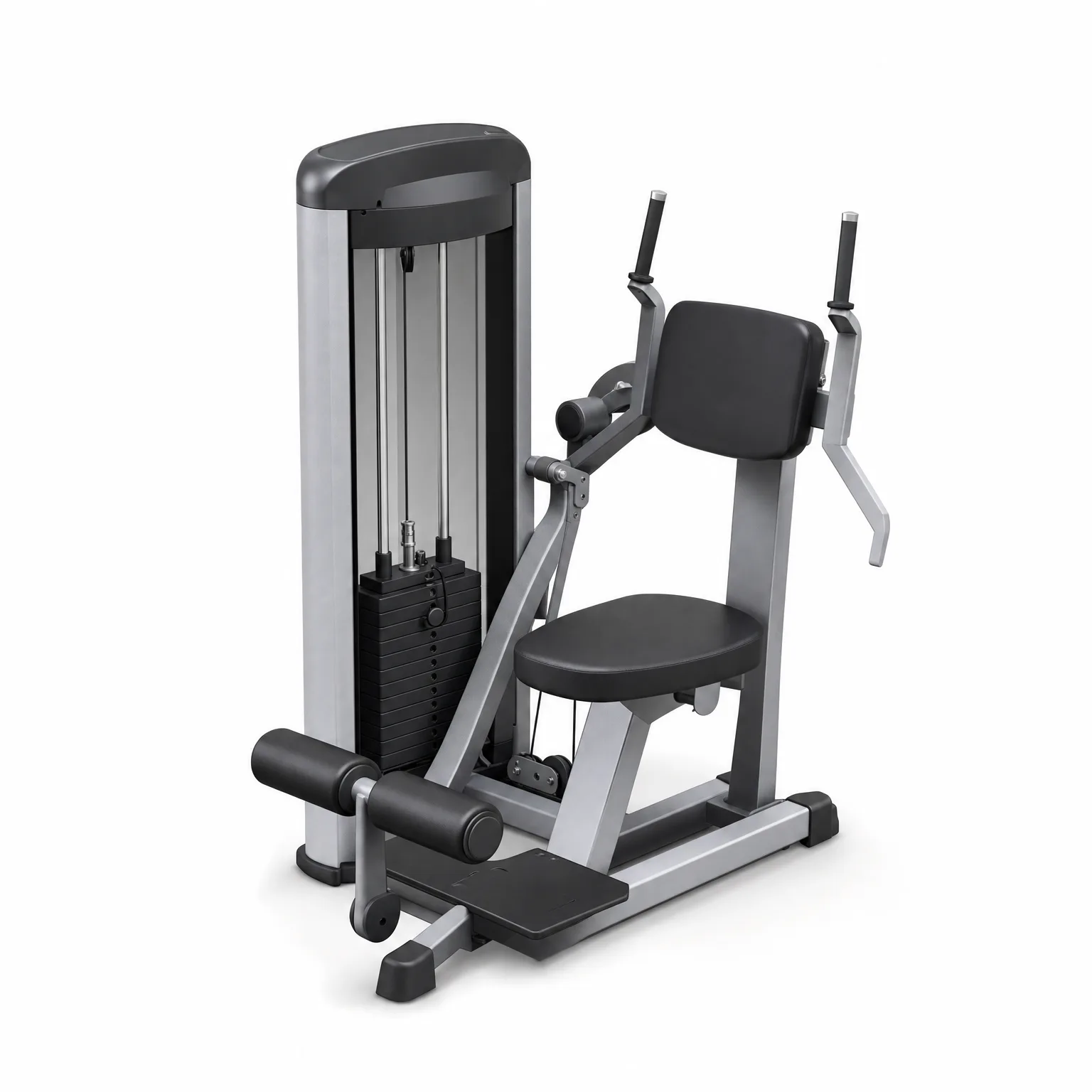
A seated machine that adds adjustable weight to the crunch. You curl the ribs toward the hips against a pad or handles.
In short
An ab crunch machine is a seat with a chest pad or overhead handles linked to a weight stack. You hook your feet under rollers, hold the handles and curl your torso forward, bringing the ribs toward the hips. It trains the rectus abdominis, the long muscle on the front of the stomach, with the obliques helping.
Its point is adjustable load. A floor crunch is mostly made harder with more reps, while the machine lets you add weight in steps, as with any other muscle. It suits beginners because the path is guided, and it suits experienced lifters who want heavy sets of 8–15.
- Category
- Gym machines
- Where
- Gym
- Level
- Beginner and up
- Space
- Needs a dedicated area
- Typical sizes
- Footprint about 1.0–1.3 m x 1.0–1.2 m (3.3–4.3 x 3.3–4 ft); stack or plate load varies by model
- Also called
- abdominal crunch machine, seated crunch machine, ab machine, abdominal machine, machine crunch, ab curl machine, seated ab crunch
What it is used for
- Weighted crunches with a load you can raise step by step
- Lower-rep ab work for strength and muscle size
- Crunches for people who find getting down on the floor awkward
- Twisting crunches on machines with a rotating seat
Types
Seated with chest pad. A pad across the upper chest that you push forward and down. Arms are not involved, so it is hard to pull with them.
Seated with overhead handles. Handles or straps beside the head. You hold them and curl down. The most common type, and the easiest to cheat on with the arms.
Dual-pivot. The upper pad and the leg pad move toward each other, so the torso curls from both ends at once.
Plate-loaded lever. A lever arm with weight plates. Small plates allow finer steps than some stacks.
How to choose
Set the seat to the pivot
Adjust the seat so the machine's pivot, usually marked on the side, is roughly level with the middle of your torso, around the lowest ribs. With handles, they should sit beside your head or just above the shoulders. With a chest pad, it rests across the upper chest.
Fix the feet
Hook the feet or shins behind the lower rollers and adjust them so the knees are bent to about 90 degrees. The rollers keep you on the seat. They are not there to pull with.
Start with a light pin
Choose a setting you can move for 12–15 slow reps while feeling the stomach shorten on each one. If you feel it mainly in the front of the hips or the arms, lower the load.
Compare with the cable crunch
If the machine does not fit your torso length at any seat setting, a kneeling crunch with a rope on a high cable does the same job and fits every body size.
How to start using it
- Sit back and set the grip. Sit with the lower back against the pad, feet behind the rollers. Hold the handles lightly beside your head, or cross the arms over the chest pad. Keep the elbows in the same position for the whole set.
- Curl, do not fold. Breathe out and round the upper back forward, bringing the bottom of the ribcage toward the pelvis. The movement is a curl of the spine, not a bend at the hips. The range is short.
- Squeeze at the bottom. Hold the fully curled position for one second with the stomach tight and the air out.
- Return slowly. Come back up over two to three seconds until the torso is upright. Stop before the stack touches down, then start the next rep without bouncing.
- Plan the sets. Do 2–4 sets of 8–15 reps, two or three times a week. Add one plate when all sets reach the top of the range.
Common mistakes
Pulling with the arms
Hauling the handles down with the lats and arms moves the weight while the abs do little. Lock the elbows in place and let the torso do the moving.
Bending at the hips
Folding forward with a straight back is a hip flexor movement. The spine has to round for the abs to shorten.
Too much weight, tiny range
A heavy pin and a few centimeters of movement trains very little. Use a load that allows a full curl and a pause.
Pulling with the legs
Dragging the feet against the rollers brings in the hip flexors. Keep the legs relaxed and only anchored.
Rushing the reps
Fast, bouncing reps use momentum from the stack. Move slowly both ways and stop for a moment at the bottom.
What to use instead
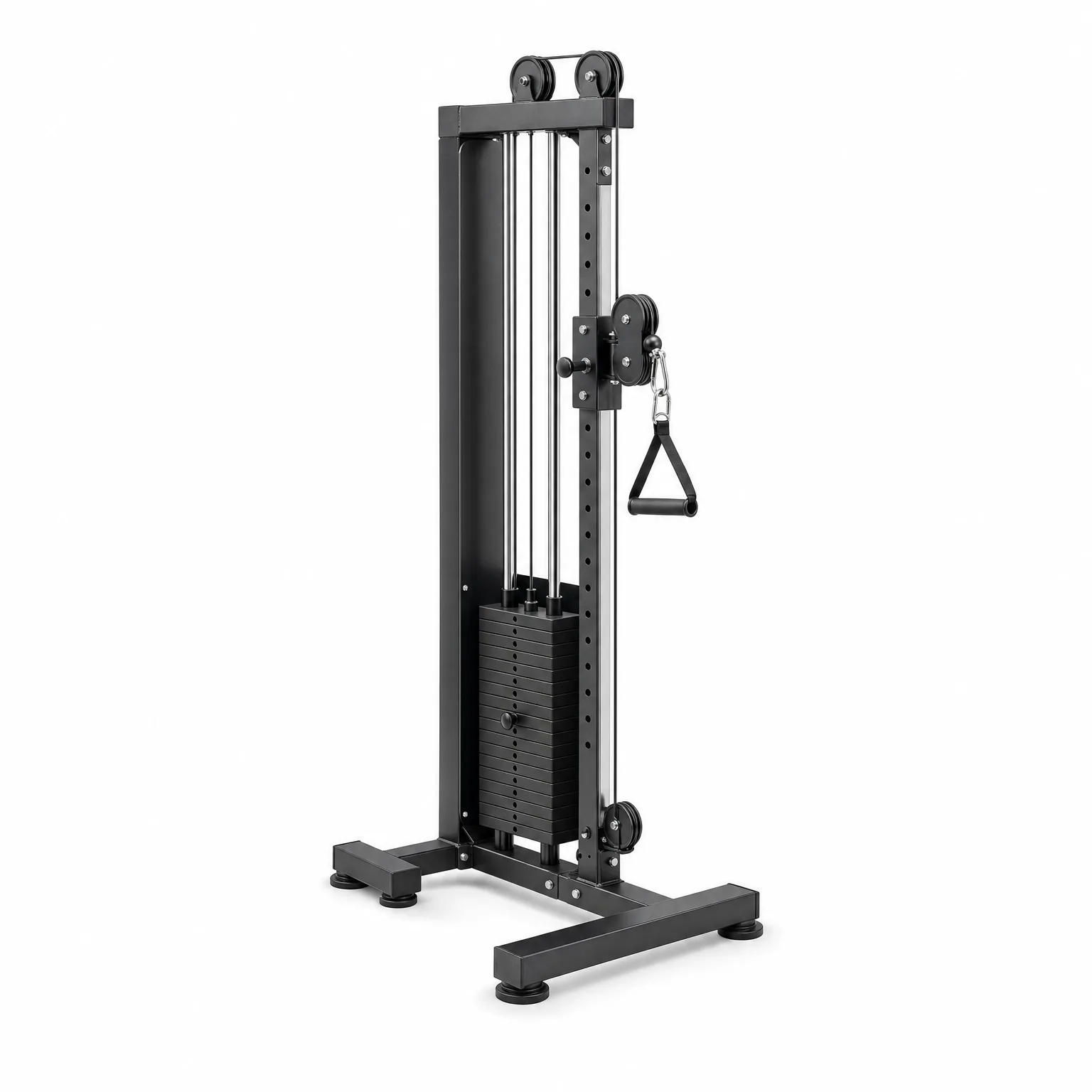
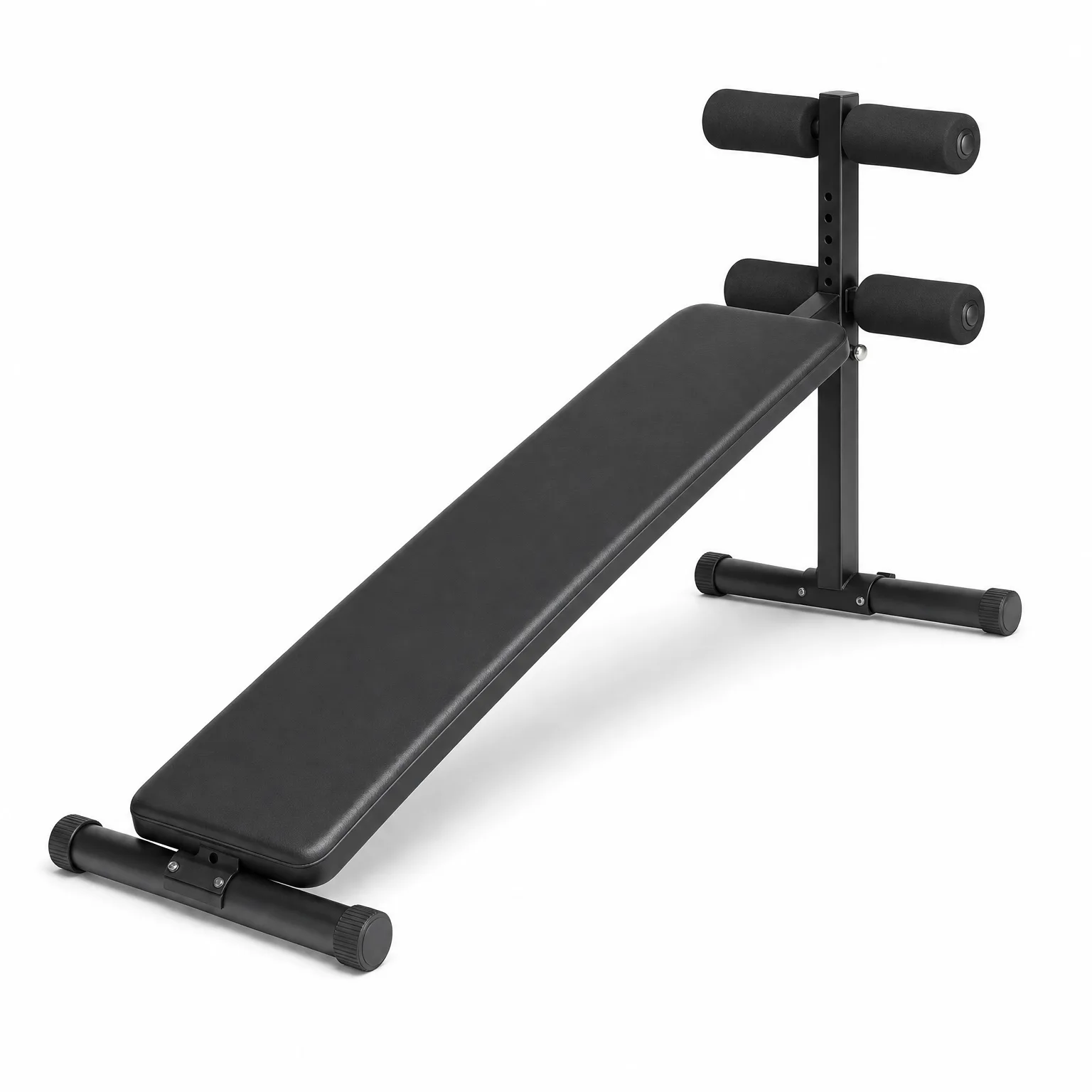
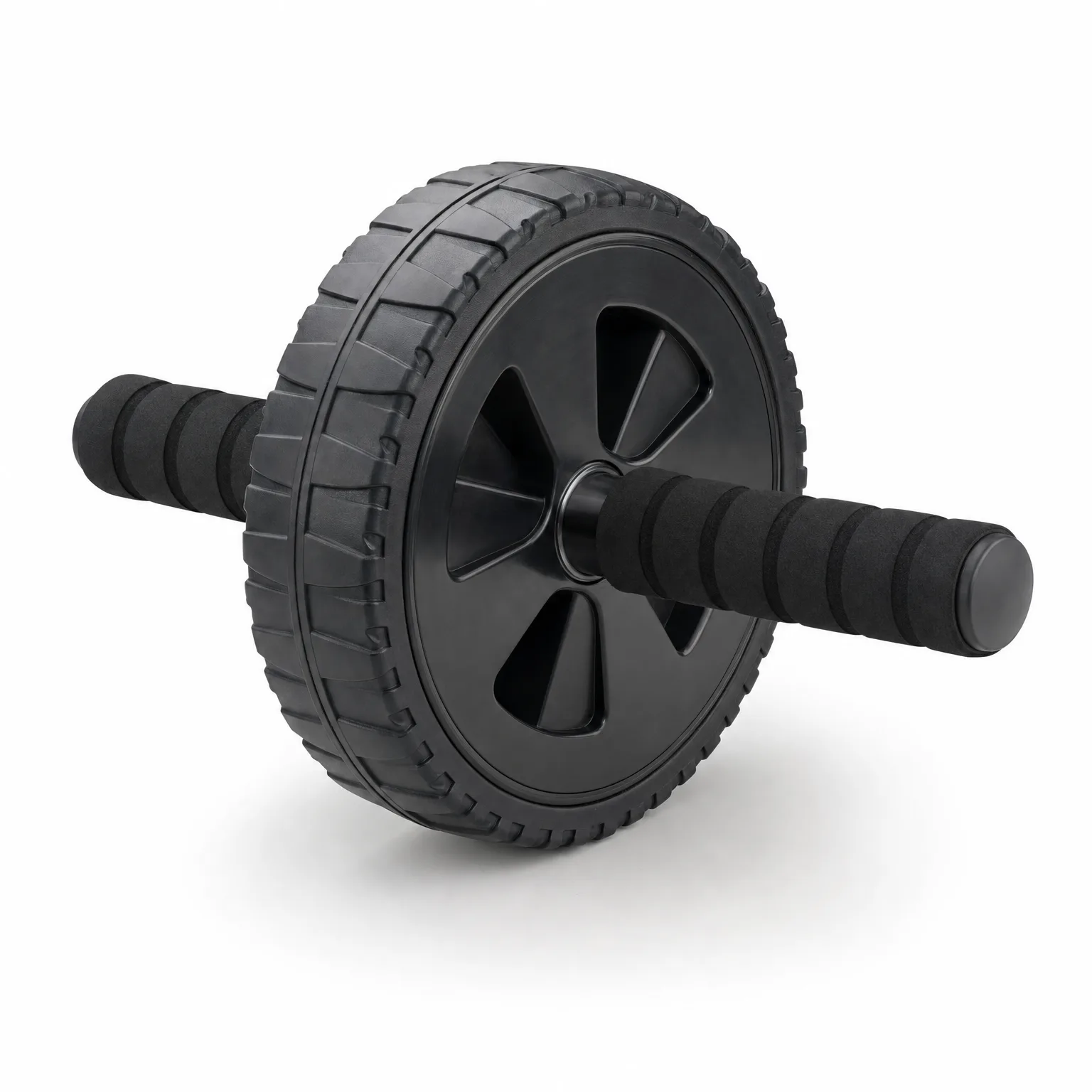
A kneeling crunch with a rope on a high cable is the closest match and adds weight the same way. A decline sit-up bench makes floor work harder through the angle, and you can hold a plate on the chest. An ab wheel loads the abs with body weight in a long position. With no equipment, slow crunches and reverse crunches on a mat train the same muscle.
-
Cable machine
A weight stack on a pulley with a handle you can set at any height. It keeps tension on the muscle through the whole movement. -
Sit-up bench
A padded board set at a decline with rollers that lock the feet. The slope makes sit-ups and crunches harder than on the floor. -
Ab wheel
A small wheel with a handle on each side. You roll it out along the floor and pull it back, which loads the abs harder than most floor exercises. -

Exercise mat
A cushioned, non-slip surface for floor exercises, stretching and yoga. The first thing most people need to train at home.
Often used with
-
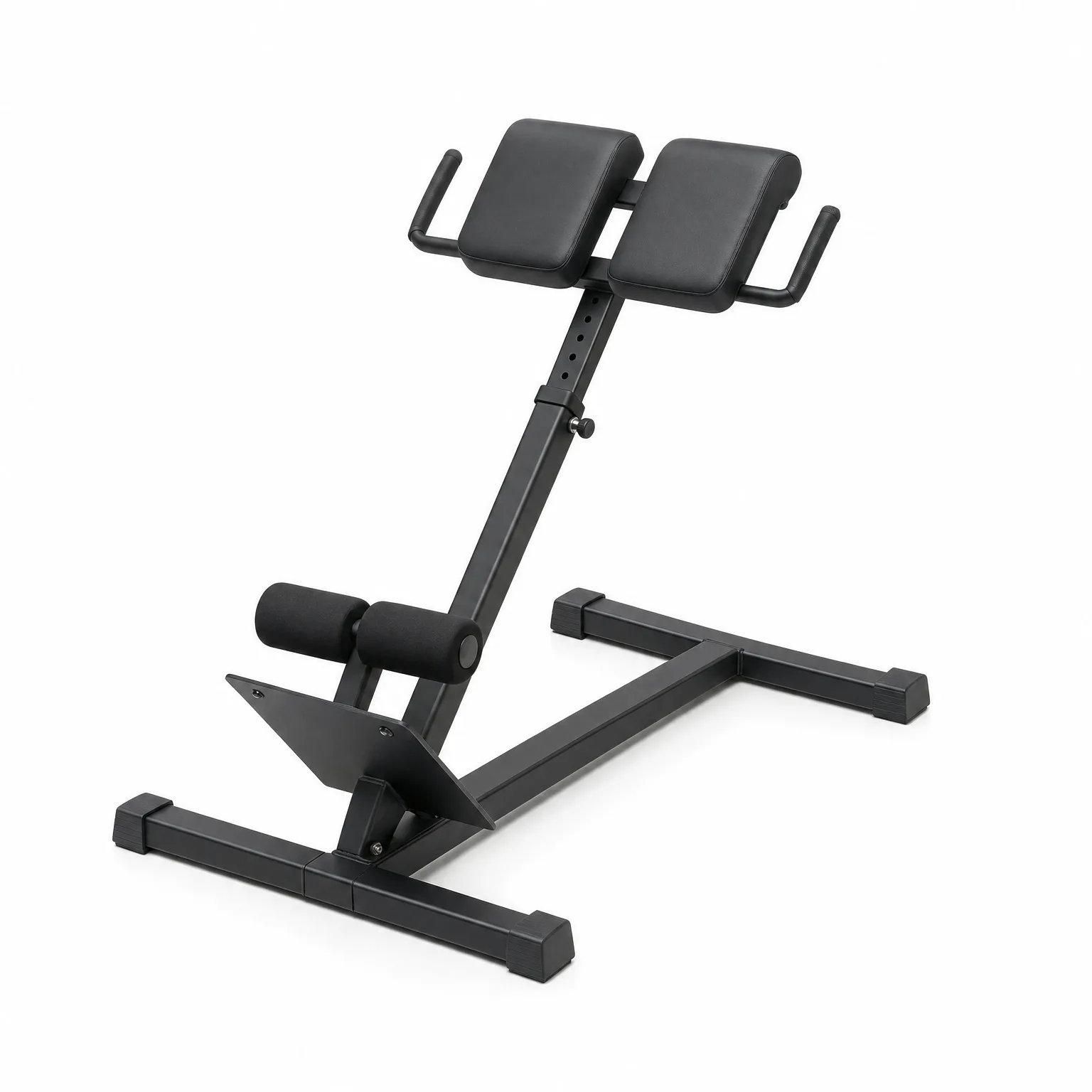
Back extension bench
A padded hip support with ankle rollers. You hinge forward and lift the torso to train the lower back, glutes and hamstrings. -
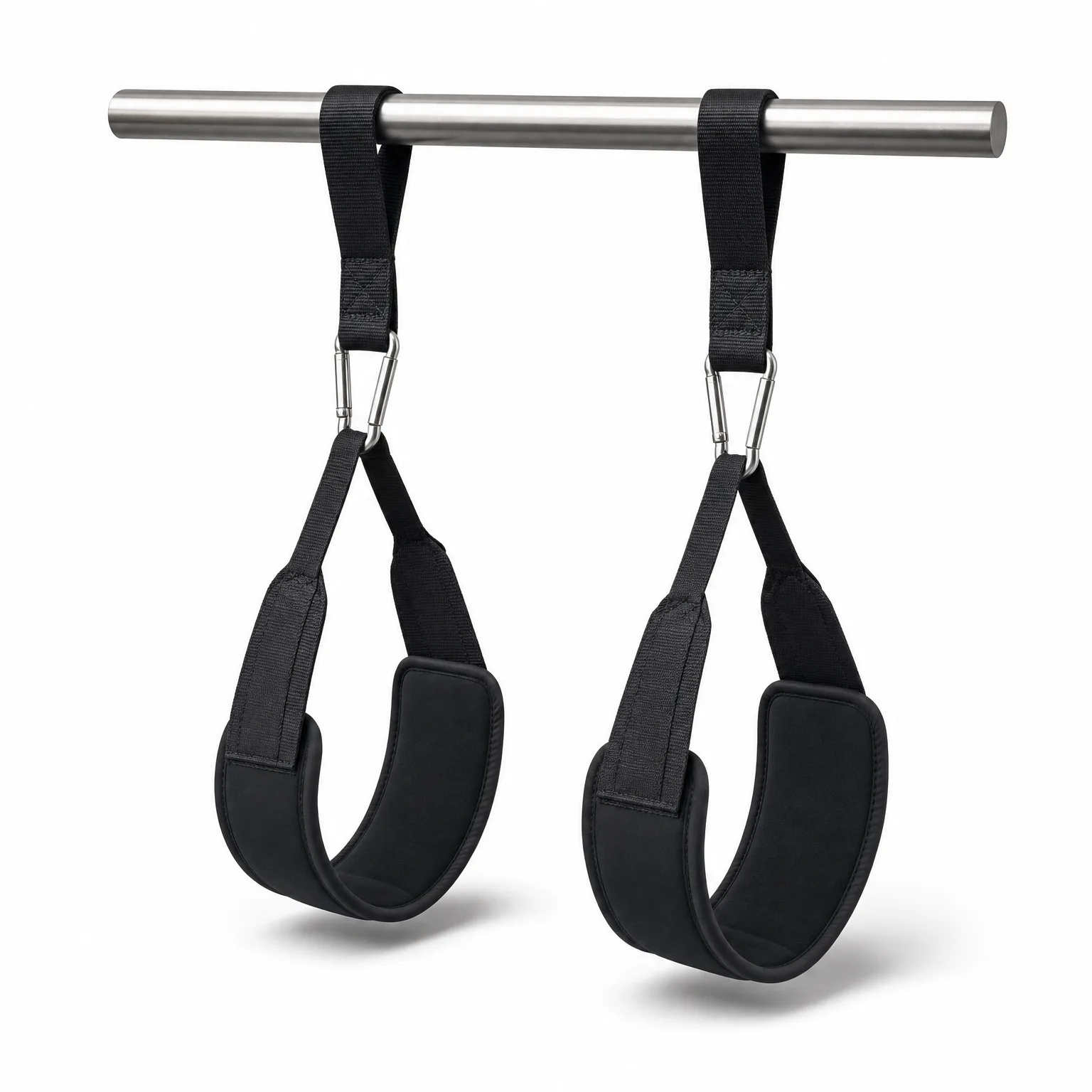
Ab straps
A pair of padded slings that hang from a pull-up bar and hold you by the upper arms, so you can do hanging knee and leg raises without gripping. -
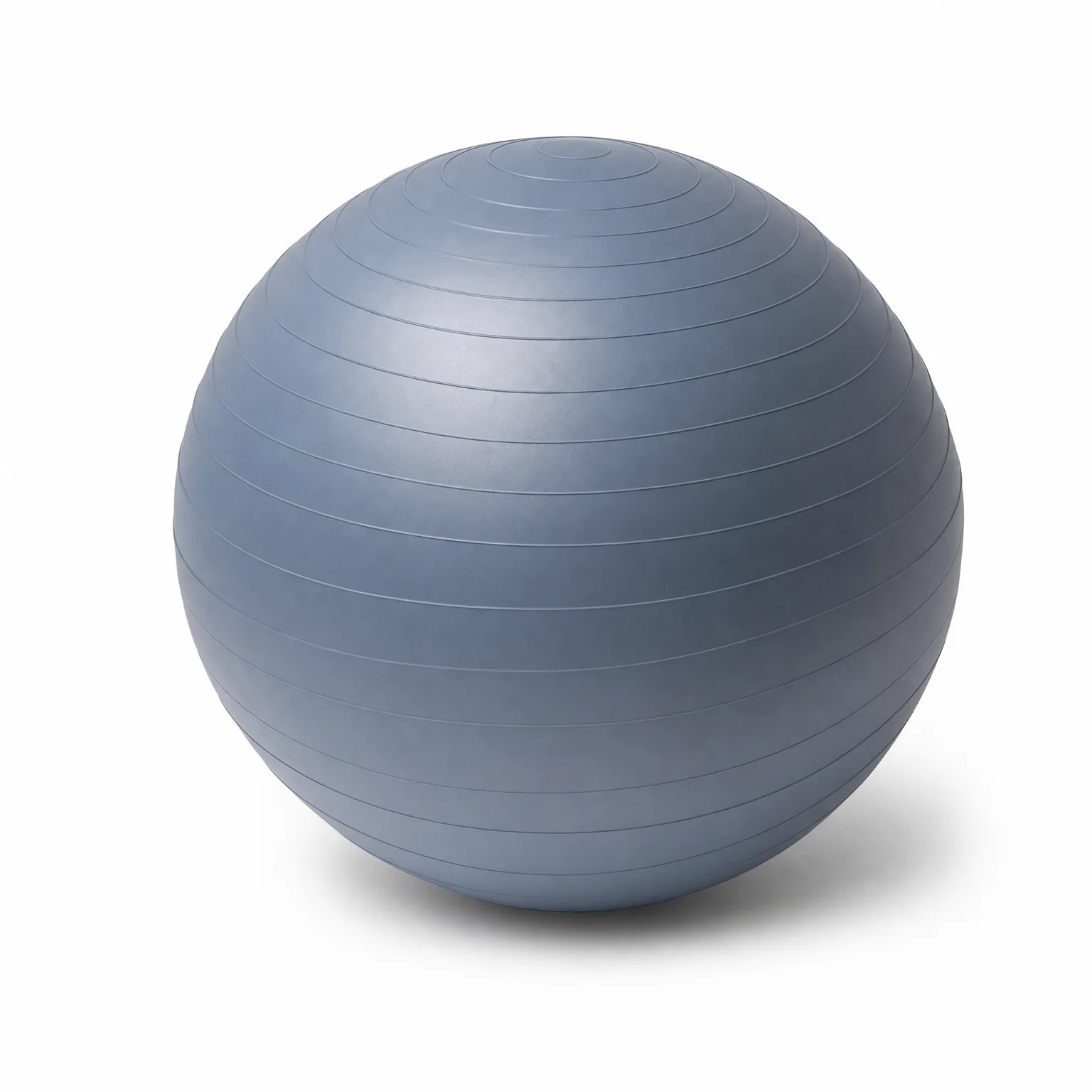
Stability ball
A large inflatable ball you sit, lie or lean on. The unstable surface is used for core exercises, hamstring curls and supported stretches.
Questions about ab crunch machine
Is the ab crunch machine effective?
Yes, it trains the abs like any other loaded exercise, provided the spine curls and the arms and hips do not take over. Its advantage over floor crunches is that you can add weight gradually and keep reps in a moderate range.
Does the ab crunch machine burn belly fat?
No. Training a muscle does not remove the fat lying over it. The machine makes the abdominal muscles stronger and larger. How visible they are depends on overall body fat, which is driven mainly by diet and total activity.
How do you set up the ab crunch machine?
Set the seat so the pivot is level with your lower ribs and the handles are beside your head or the pad is on your upper chest. Hook your feet behind the rollers, pick a light weight, and curl the ribs toward the hips without pulling with the arms.
Ab crunch machine vs cable crunch: which is better?
They train the same muscle with adjustable load. The machine is quicker to set up and guides the path. The cable crunch fits any body size and allows a slightly longer range, but takes practice to do without sitting back on the heels or pulling with the arms.
How often should I use the ab machine?
Two or three sessions a week with 2–4 sets each is enough for most people. The abs also work in squats, deadlifts, carries and planks, so they do not need daily direct training.
Build programs around what your client has
This guide comes from OnlineFitness.app, the app online coaches run their clients in.
Free for life for the first 100 coachesNo card