Equipment Bands and bodyweight tools
Ab wheel
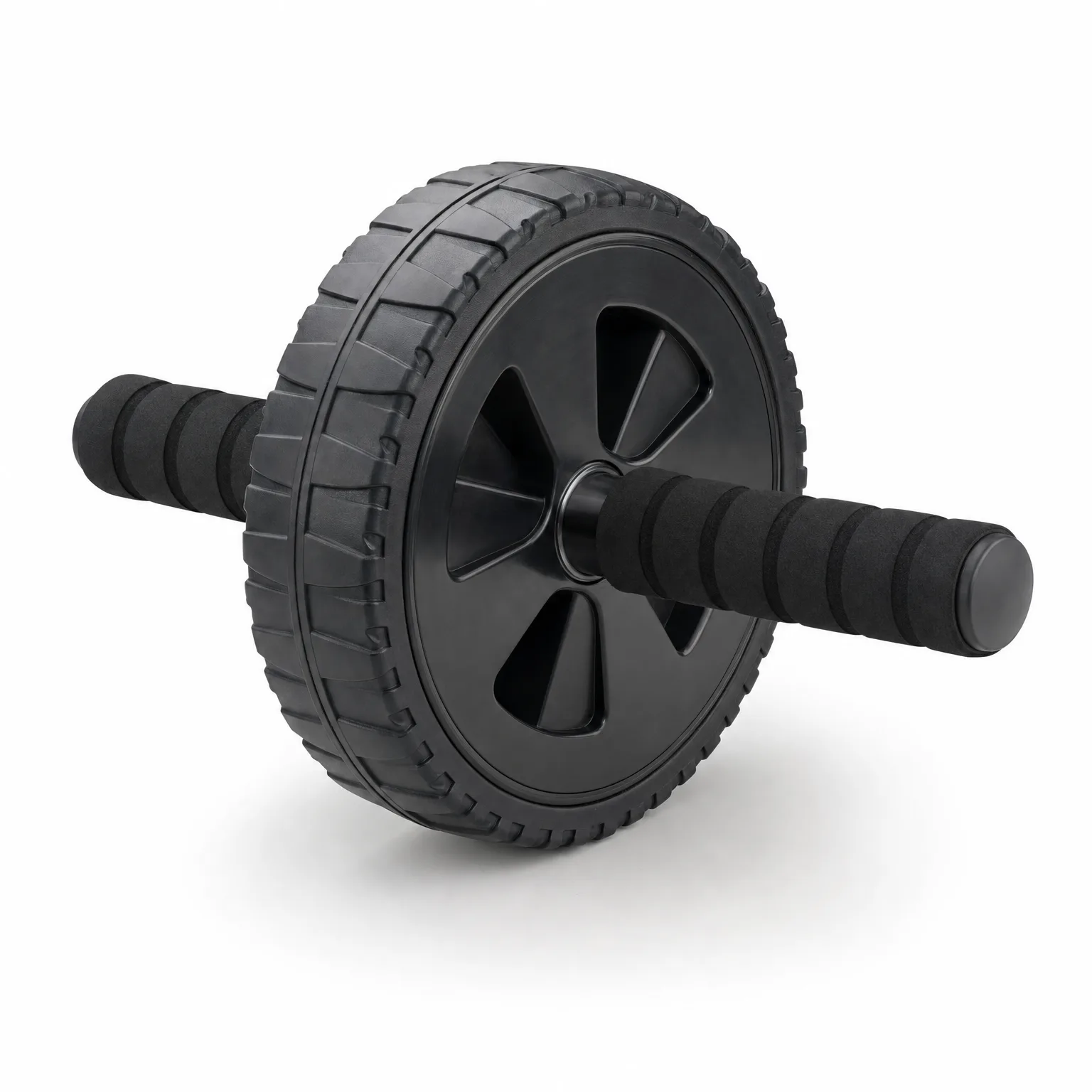
A small wheel with a handle on each side. You roll it out along the floor and pull it back, which loads the abs harder than most floor exercises.
In short
An ab wheel is a small wheel with a handle on each side. You kneel, hold the handles, roll the wheel forward until your body is stretched out, then pull it back. The abs work to stop the lower back from sagging as the lever gets longer, with help from the lats, shoulders and triceps.
It is cheap, small and much harder than it looks. A full rollout from the knees is an intermediate exercise, and a rollout from the feet is an advanced one. People who can already hold a solid plank for about a minute usually get on well with it, starting with a short range.
- Category
- Bands and bodyweight tools
- Where
- Home, Gym, Travel
- Level
- Intermediate and up
- Space
- Fits in a drawer or a bag
- Typical sizes
- Wheel diameter about 15–20 cm (6–8 in); handle span about 25–30 cm (10–12 in)
- Also called
- ab roller, ab wheel roller, abdominal wheel, exercise wheel, roller wheel, core wheel
Muscles it works
- Main
- Abs
- Also works
- Obliques, Lats, Triceps, Front delts
What it is used for
- Kneeling rollouts for the abs
- Angled rollouts to the left and right for the obliques
- Standing rollouts as an advanced progression
- Pikes and knee tucks with the feet strapped in, on wheels that have foot straps
Types
Single wheel. One narrow wheel. Compact and the least stable side to side, so the trunk has to work to keep it on a straight line.
Double or wide wheel. Two wheels side by side or one wide tread. Easier to balance, a sensible first choice.
Spring-assisted. An internal spring resists the way out and helps the way back. Makes the first weeks easier, but the help cannot be turned down as you get stronger.
With foot straps. Pedals or straps on the handles hold the feet, so the wheel can also be used for pikes, knee tucks and hamstring curls.
How to choose
Wider is easier to control
A double wheel or a wide tread tips less to the side. Choose it if this is your first ab wheel. A narrow single wheel is fine once the basic rollout is steady.
Check the tread and the floor
A rubber or polyurethane tread grips and rolls quietly on hard floors. Bare hard plastic slides on tile and laminate and is noisy.
Comfortable, fixed handles
Handles should not rotate loosely or slide off the axle. Slightly angled or contoured grips are easier on the wrists than thin straight tubes.
Do not pay for extras
A plain wheel with a solid axle does the job. Springs, counters and timers add cost without changing the exercise much.
How to start using it
- Kneel on something soft. Put a folded mat or pad under the knees. Hold the handles with the wheel under the shoulders, arms straight, and tuck the pelvis slightly so the lower back is flat or a little rounded, not arched.
- Roll out only as far as you control. Push the wheel forward slowly, letting the hips and arms move together. Stop the moment you feel the lower back start to dip, then pull back by tightening the abs. At first that may be only 30–50 cm (12–20 in).
- Use a wall as a stop. Kneel facing a wall so the wheel touches it at the end of your safe range. Move back a little every week or two as the range grows.
- Keep the reps low. Start with 2–3 sets of 5–8 slow reps, two or three times a week. Add range first, then reps. Expect the abs to be sore for a day or two after the first sessions.
Common mistakes
Lower back sagging
Letting the hips drop and the back arch at the far end takes the load off the abs and puts it on the spine. Shorten the range until you can hold the same trunk position from start to finish.
Rolling out too far too soon
Going to full stretch on day one usually means collapsing to the floor or yanking back with the hips. Build the distance over weeks.
Hips going back first
Pulling back by sitting the hips toward the heels while the arms stay stretched turns the exercise into a rocking motion. Hips and arms should close at the same time.
Bending the elbows
Bent arms shorten the lever and shift the work to the triceps. Keep the arms nearly straight and move from the shoulders.
What to use instead
Core sliders under the hands, or a folded towel on a smooth floor, allow the same rollout movement without a wheel. A stability ball rollout with the forearms on the ball is an easier version and a good first step. A suspension trainer set low gives a standing or kneeling rollout whose difficulty changes with the body angle.
-
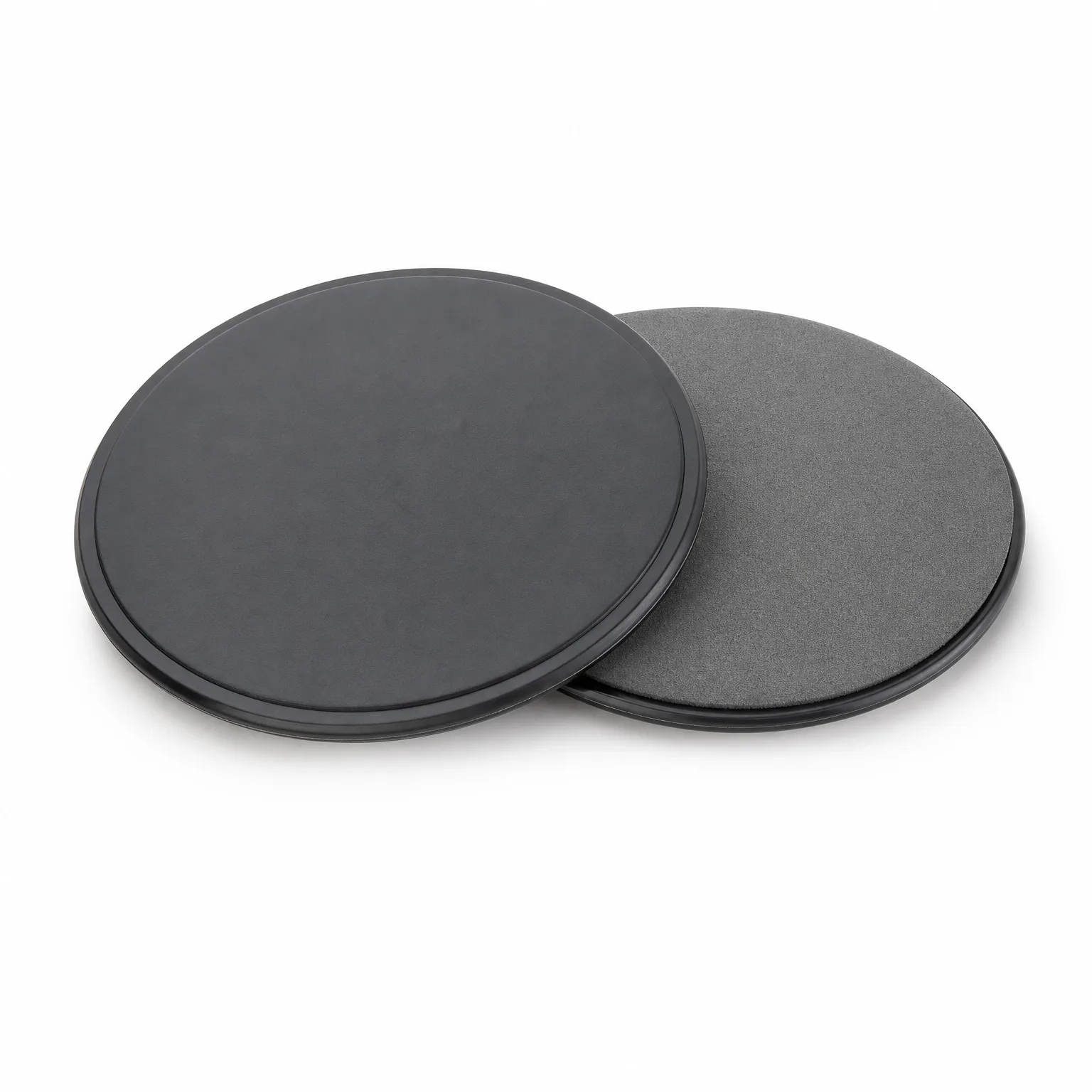
Core sliders
Two flat discs that slide under your hands or feet. They add a gliding element to lunges, planks and hamstring curls on any floor. -
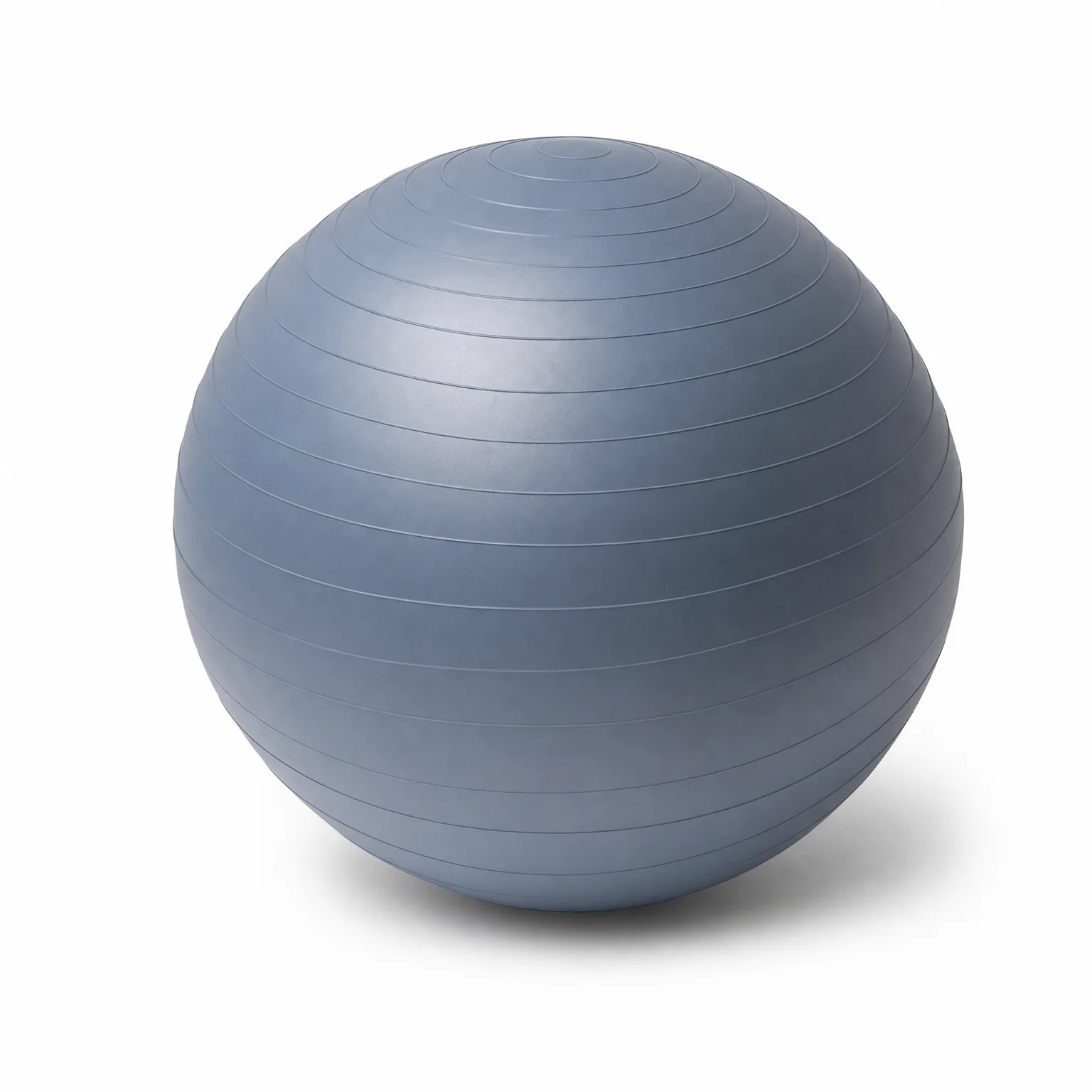
Stability ball
A large inflatable ball you sit, lie or lean on. The unstable surface is used for core exercises, hamstring curls and supported stretches. -
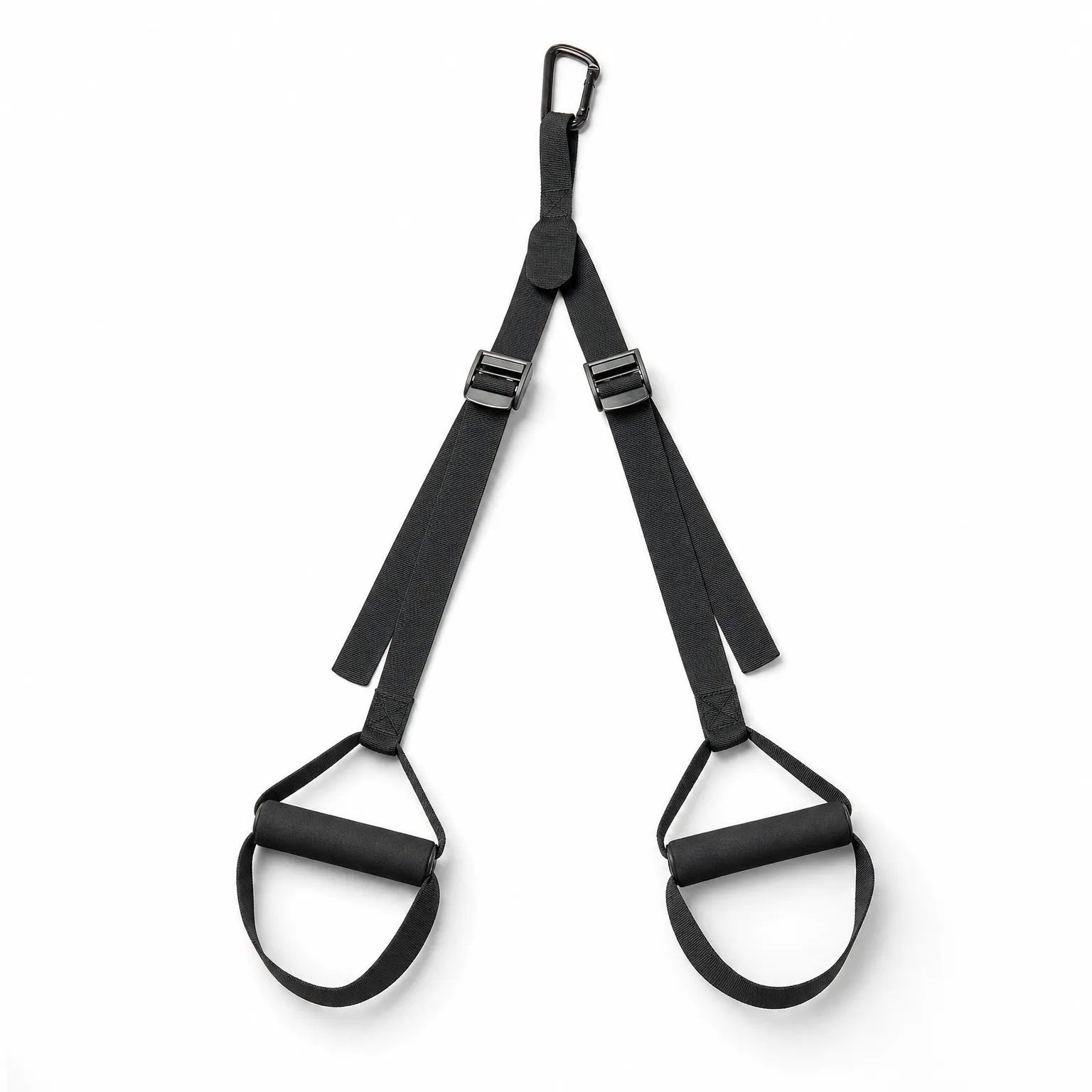
Suspension trainer
Two adjustable straps with handles, hung from one anchor point. You lean or hang on them and use your own body weight as the load. -
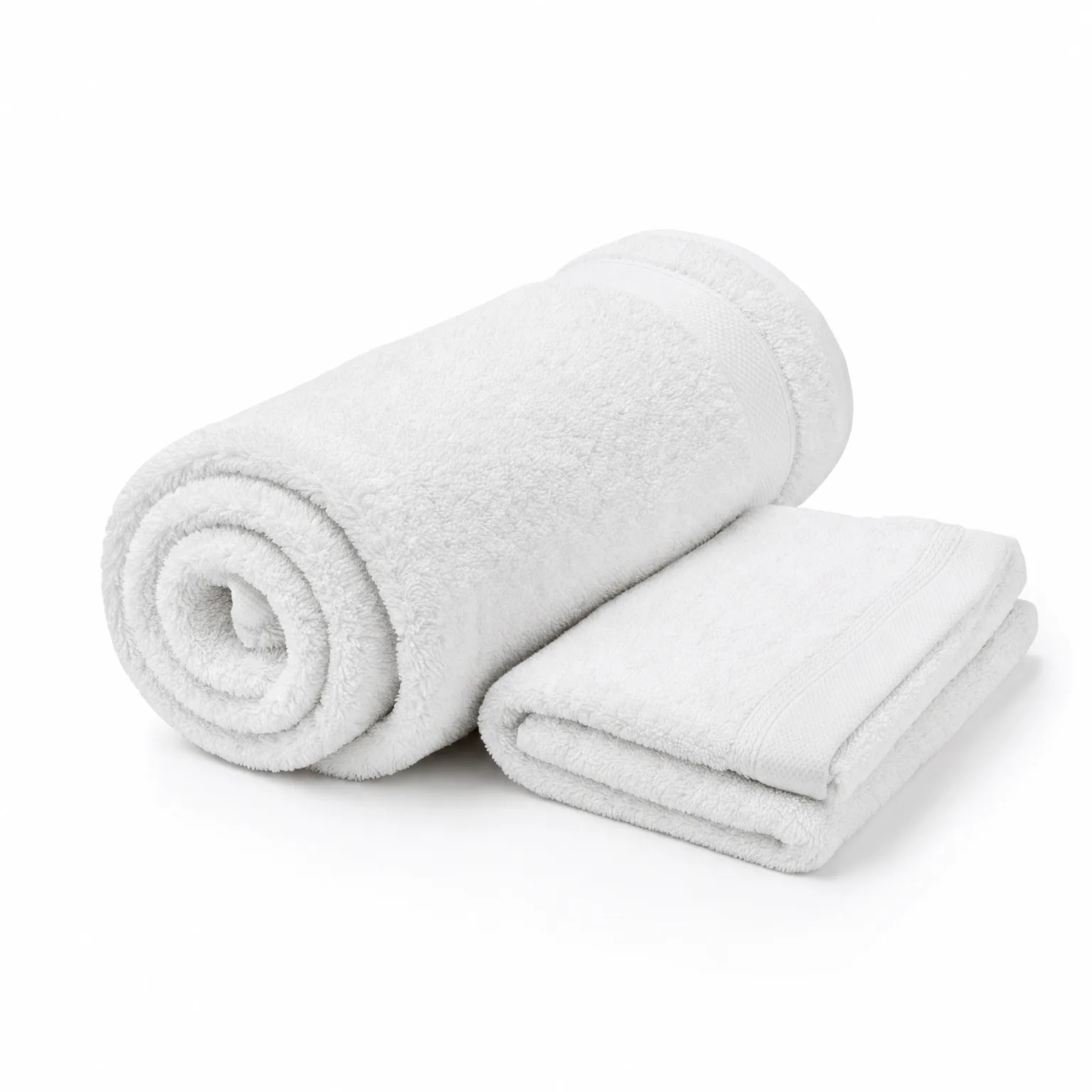
Towel
A towel doubles as sliders on a smooth floor, a stretching strap, a pulling tool for isometric exercises and padding for the knees.
Often used with

Questions about ab wheel
Is the ab wheel good for beginners?
It is better as a second step. The rollout is demanding, and without enough trunk strength the lower back sags. Build up to a plank of about 60 seconds first, then start with short rollouts from the knees, using a wall to limit the range.
What muscles does the ab wheel work?
Mainly the abs, which hold the trunk rigid as the body lengthens. The obliques, lats, triceps and the front of the shoulders assist, and the hip flexors work on the way back.
How many ab wheel rollouts should I do?
Two to three sets of 5–10 controlled reps, two or three times a week, is enough for most people. When 10 full-range reps from the knees are easy, make the exercise harder with a pause at the far end or a longer range instead of adding many more reps.
Why does my lower back hurt when I use the ab wheel?
Most often because the range is longer than the abs can control, so the back arches at the far end. Shorten the rollout, tuck the pelvis before each rep and stop before the hips drop. If pain continues with good form, stop the exercise and see a health professional.
Ab wheel or planks?
They train the same job, resisting a sagging lower back, at different difficulty. The plank is the entry level. The rollout is a moving, much harder version. Use planks until they are easy, then progress to the wheel.
Build programs around what your client has
This guide comes from OnlineFitness.app, the app online coaches run their clients in.
Free for life for the first 100 coachesNo card