Ab straps
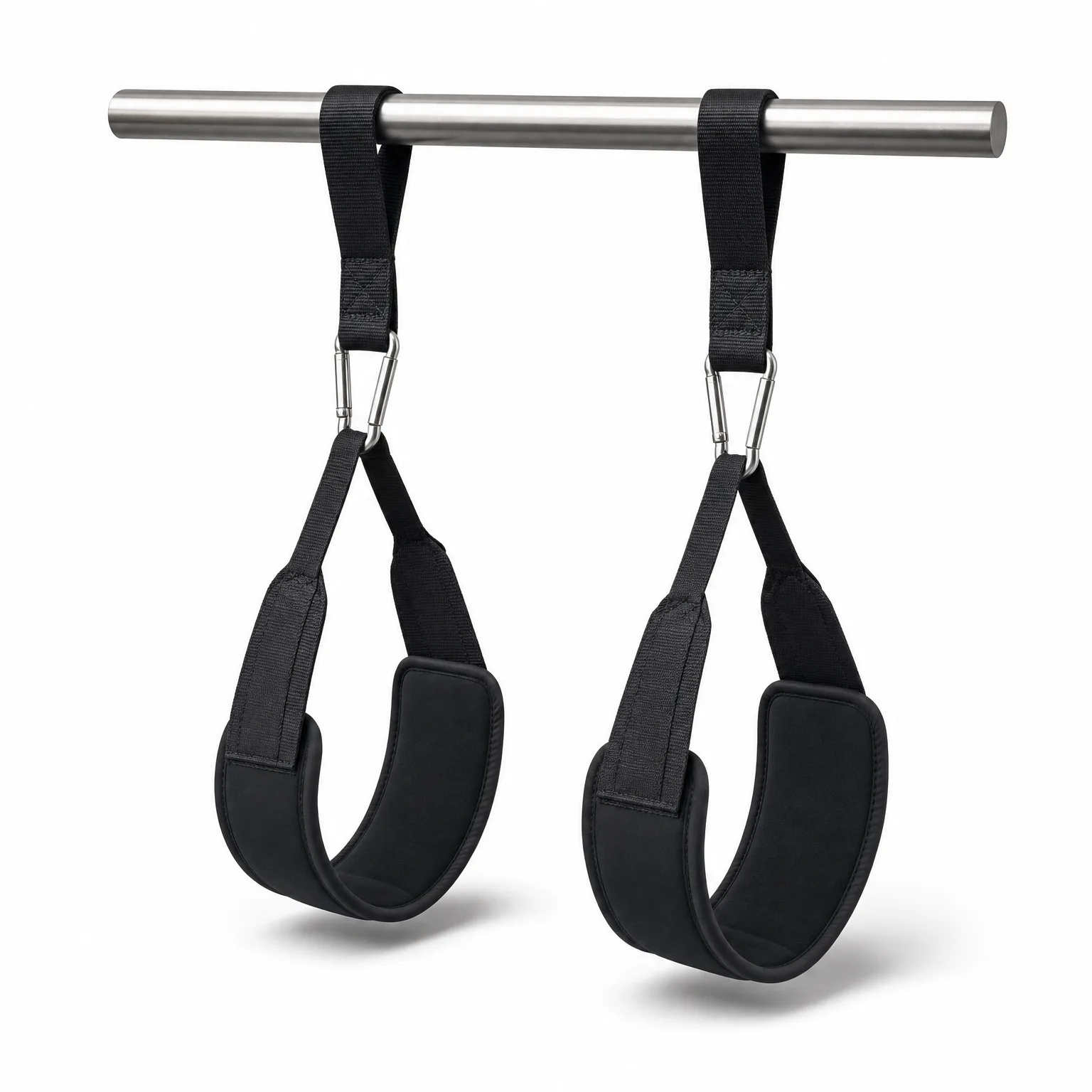
A pair of padded slings that hang from a pull-up bar and hold you by the upper arms, so you can do hanging knee and leg raises without gripping.
In short
Ab straps are two padded loops that clip or hook onto a pull-up bar. You put your arms through them up to the elbows and hang with your weight resting on the backs of the upper arms. That takes the hands and forearms out of the exercise, so a set of hanging knee raises or leg raises ends when the abs are tired, not when the grip fails.
They suit people who cannot yet hang from a bar long enough to train the abs, and anyone who wants to save their grip for other work. They hang from any sturdy pull-up bar, rack or outdoor bar. The exercises are the same as when hanging by the hands. Only the point of support changes.
- Category
- Lifting accessories
- Where
- Gym, Home, Outdoors
- Level
- Beginner and up
- Space
- Fits in a drawer or a bag
- Typical sizes
- Sold as a pair in one size; slings about 15–20 cm (6–8 in) wide. Load capacity depends on the manufacturer's rating
- Also called
- hanging ab straps, ab slings, hanging leg raise straps, arm slings for abs, pull-up bar ab straps, knee raise straps
What it is used for
- Hanging knee raises
- Hanging straight-leg raises
- Hanging knee raises with a twist to each side for the obliques
- Slow lowering reps and holds with the knees up
Types
Carabiner slings. Each sling ends in a steel clip that closes around the bar. Quick to hang and remove. The clip must be large enough for the thickness of your bar.
Loop-through slings. A webbing loop that passes over the bar and through itself, with no metal parts. Fits any bar or beam thickness and packs flat.
Slings with a hand grip. A short strap or handle at the top of each sling to hold lightly. It stops the arms from sliding and helps keep the body from swinging.
How to choose
Check how they attach to your bar
Measure the bar's thickness. Clips fit standard pull-up bars but may not close around a thick rig bar, a beam or playground equipment. Loop-through straps fit anything.
Look for wide, firm padding
Your whole body weight rests on a strip of the upper arm. A wide sling with dense padding spreads that pressure. Thin, narrow slings dig in and cut sets short.
Check the stitching and rating
The seams and clips carry your full weight plus the force of any swing. Look for reinforced stitching and a stated load rating, and stay within it.
Make sure the bar is high enough
How low you hang depends on the length of the slings, so test it before the first set. You need a bar high enough that your feet clear the floor with the legs straight, or you will be limited to knee raises.
How to start using it
- Hang the slings shoulder-width apart. Attach both slings to the bar about as far apart as your shoulders and check that the clips are fully closed. Pull down hard on each one before trusting it with your weight.
- Get in from a step. Stand on a box or bench, push each arm through its sling until the padding sits just above the elbow on the back of the upper arm, and hold the top of the straps. Then ease your weight onto the slings and step off.
- Set the shoulders. Press the upper arms down into the padding and keep the shoulders away from the ears, with the elbows slightly in front of the body. Do not hang slack from the shoulder joints.
- Start with knee raises. From a still hang, tilt the pelvis so the lower back rounds slightly and bring the knees toward the chest. Pause, then lower in two to three seconds until the legs are straight. Stop any swing before the next rep.
- Progress to straight legs. When 12–15 controlled knee raises are comfortable, straighten the legs partly, then fully. Raise them until the hips curl up, not just until the thighs are level.
Common mistakes
Swinging the legs up
Using momentum from a swing takes the work away from the abs. Start each rep from a dead stop and lower slowly.
Moving only at the hips
Lifting the thighs with a flat lower back is mostly hip flexor work. The abs do their part when the pelvis tilts and the lower back rounds at the top of the rep.
Hanging passively from the shoulders
Letting the shoulders jam up toward the ears puts the strain on the joints. Keep pressing the arms down into the slings throughout the set.
Dropping the legs
Letting the legs fall wastes the lowering half of the rep and starts a swing. Control the way down.
Wearing the slings in the armpits
Padding pushed up into the armpit presses on nerves and blood vessels and can make the hands tingle. It belongs on the back of the upper arm, just above the elbow.
What to use instead
A power tower with padded forearm rests, often called a captain's chair, supports you in a similar way for knee and leg raises. Hanging from the bar by your hands works the same muscles and trains the grip as well. Lifting straps can help you hold on for longer. With no bar at all, lying leg raises and reverse crunches on a mat train the same movement with less load.
-
Power tower
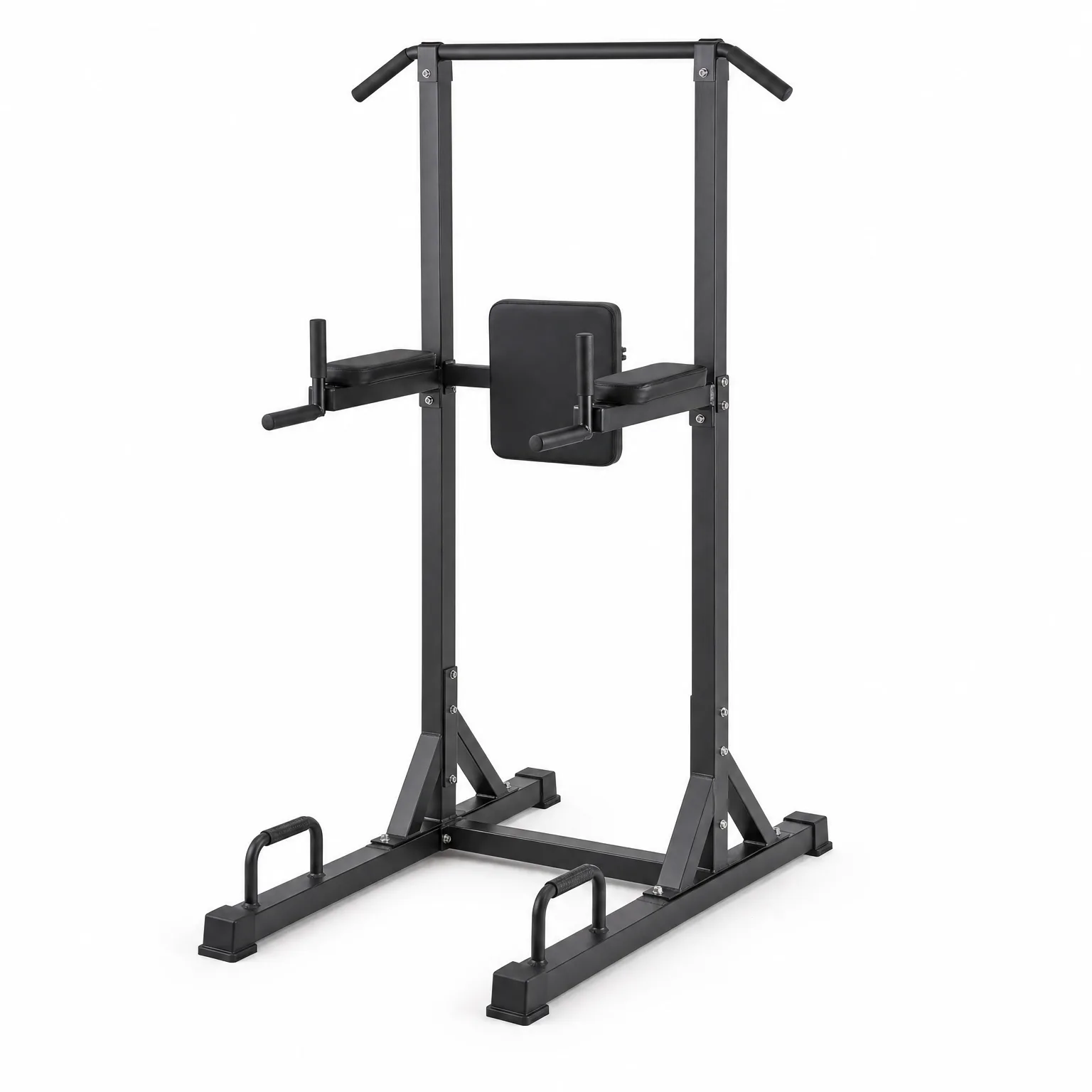
A free-standing frame that combines a pull-up bar, dip handles and a padded station for supported knee and leg raises. -

Exercise mat
A cushioned, non-slip surface for floor exercises, stretching and yoga. The first thing most people need to train at home. -
Lifting straps
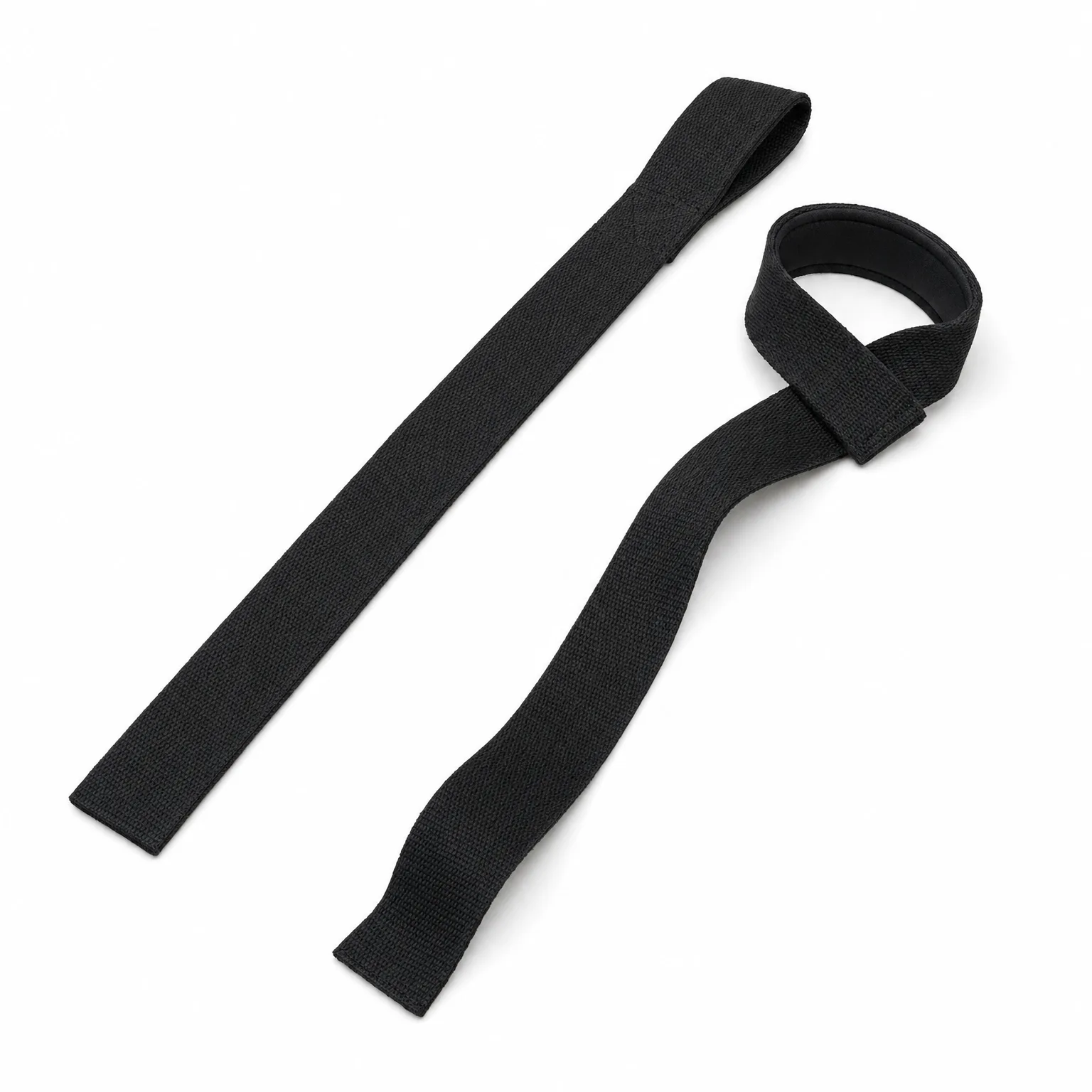
Fabric loops that tie your wrists to the bar so grip strength does not end a set of deadlifts, rows or pull-ups early.
Often used with
-
Pull-up bar
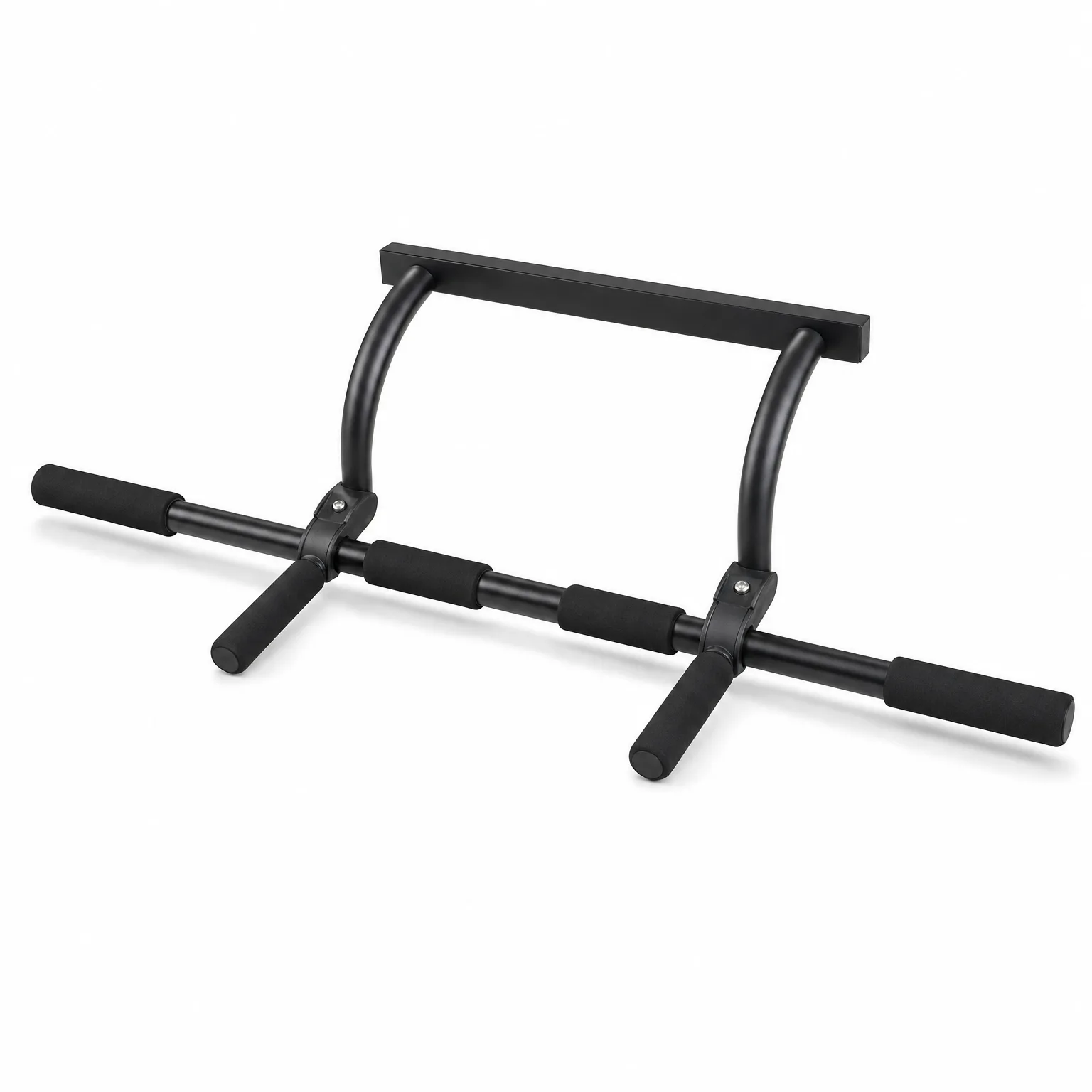
A fixed horizontal bar you hang from. Used for pull-ups, chin-ups, hangs and hanging leg raises, at home or outdoors. -
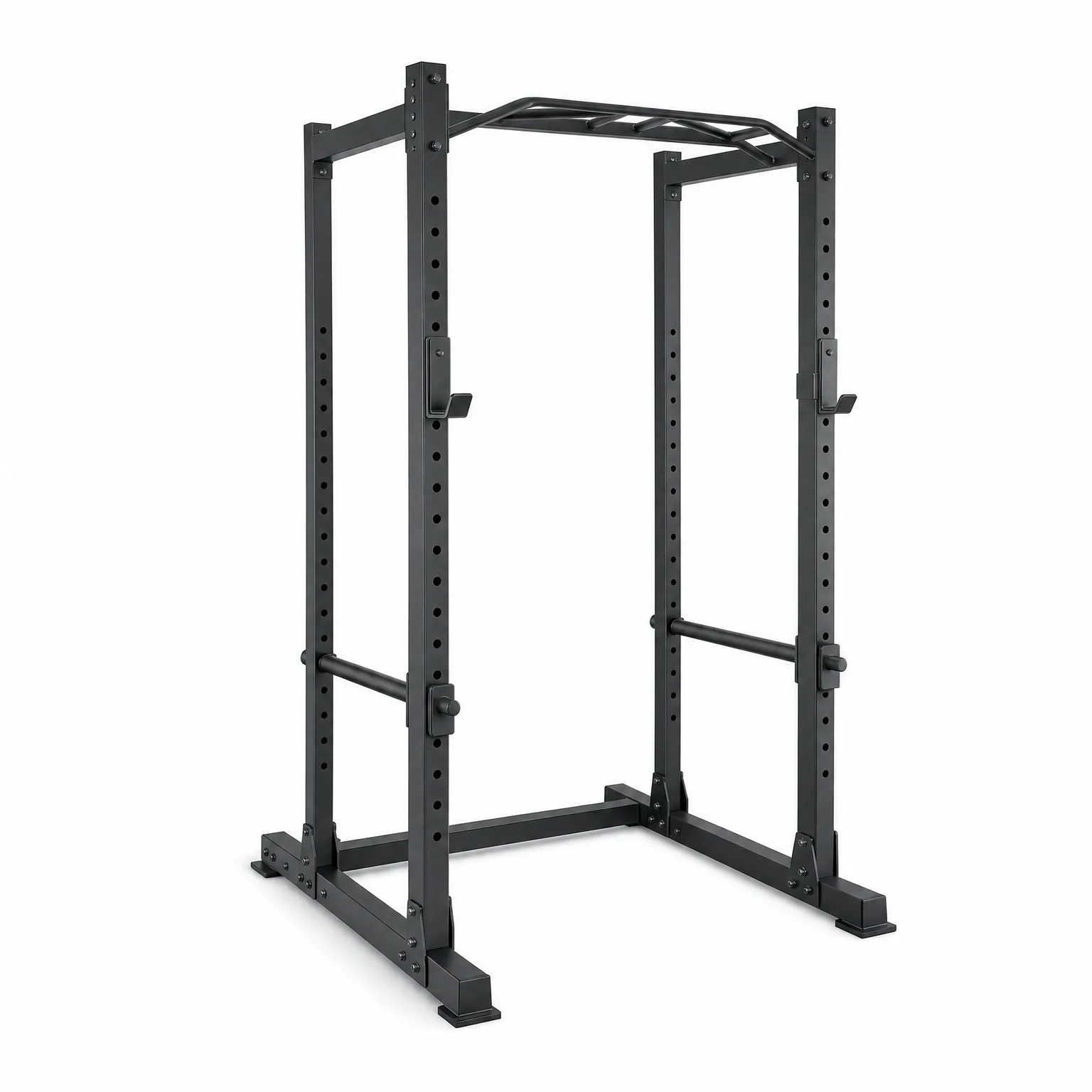
Squat rack
A steel frame that holds a barbell at the height you need and catches it if a rep fails. The base for squats and presses. -
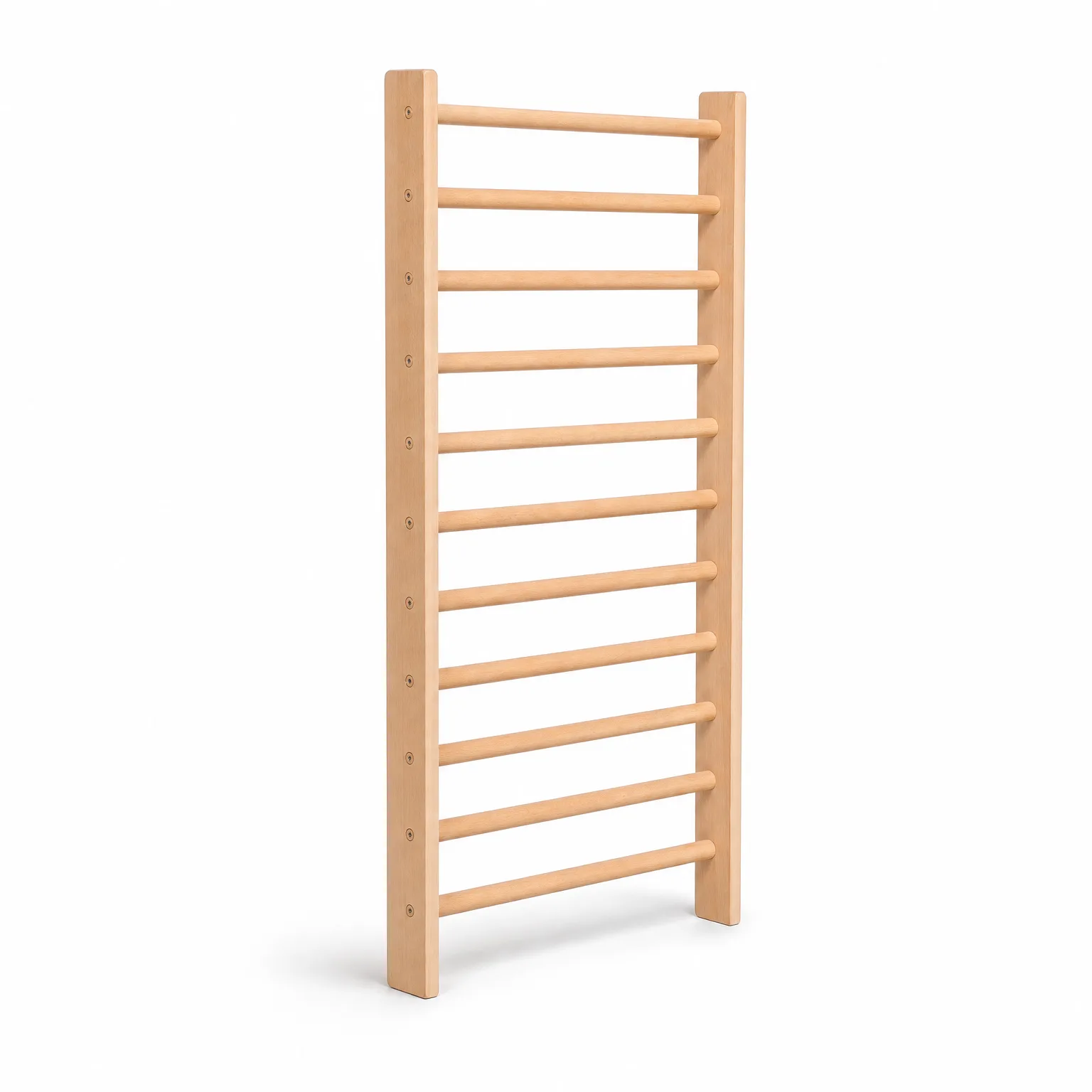
Wall bars
A ladder of horizontal wooden rungs fixed to a wall. Used for hanging leg raises, assisted stretching, pull-ups and band work. -
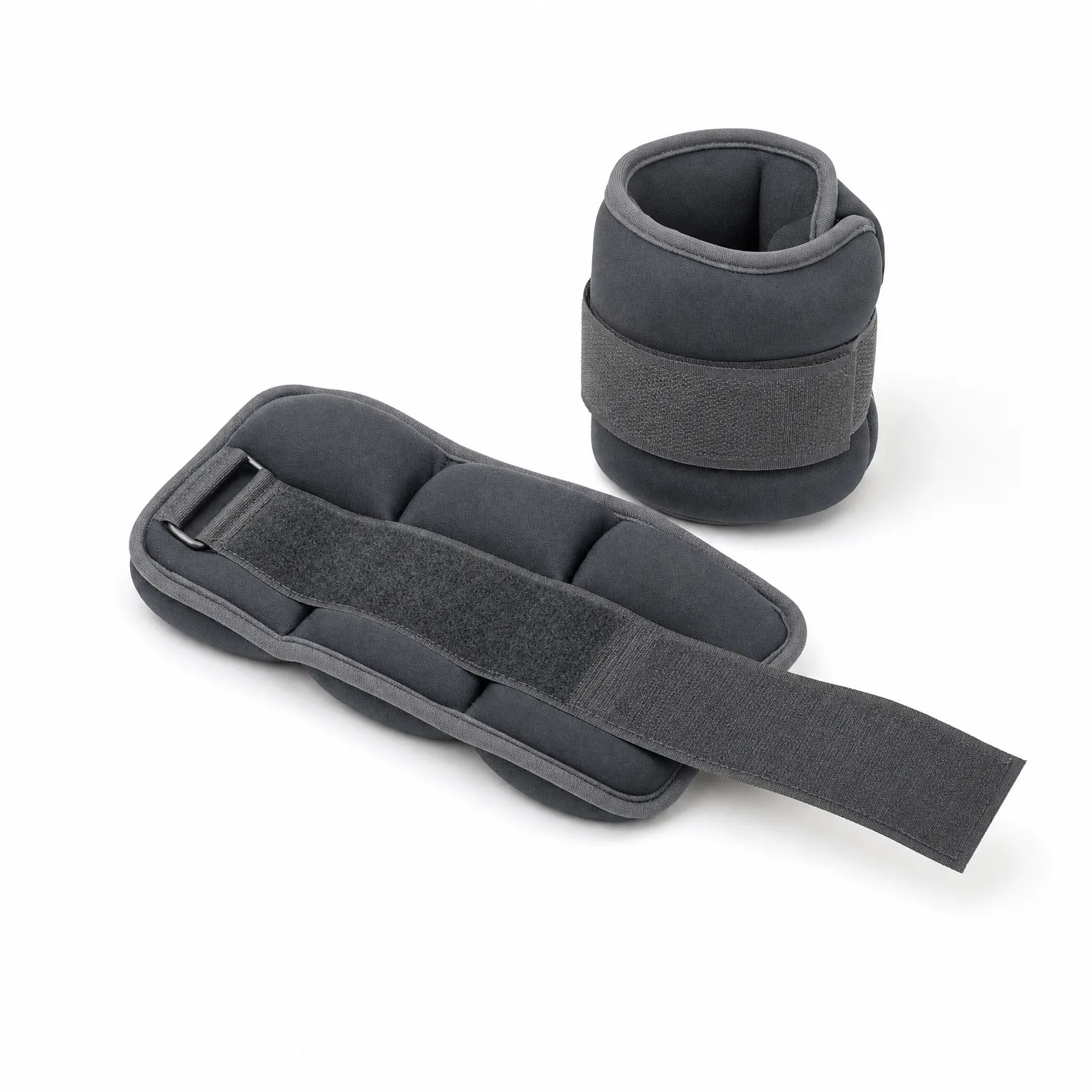
Ankle weights
Weighted cuffs that strap around the ankles. They add light resistance to leg raises, kickbacks and other floor and standing leg work.
Questions about ab straps
What are ab straps used for?
For hanging ab exercises without gripping the bar. Your upper arms rest in two padded slings, so you can do knee raises and leg raises until the abs tire, even if your grip or forearms would give out much earlier.
Are ab straps better than hanging from the bar?
They are not better, they move the limit. In straps the abs decide when the set ends. Hanging by the hands trains the same muscles and also builds grip and shoulder strength. Many people use straps for their hard ab sets and train hanging grip separately.
Do ab straps work the lower abs?
Leg and knee raises work the whole front abdominal muscle, and many people feel them most in the lower part. For that to happen the pelvis has to curl up at the top of the rep. Raising the thighs with a flat back shifts the effort to the hip flexors.
Are ab straps good for beginners?
Yes, for bent-knee raises. Beginners often cannot hang by the hands long enough to work the abs, and straps remove that barrier. Start with slow knee raises and add reps before trying straight legs.
Why do ab straps hurt my arms?
Usually because the slings are too narrow, too thin or sitting in the wrong place. Put the padding on the back of the upper arm just above the elbow, not in the armpit, and wear sleeves at first. Tingling or numbness in the hands means you should get out and reposition.
Build programs around what your client has
This guide comes from OnlineFitness.app, the app online coaches run their clients in.
Free for life for the first 100 coachesNo card