Equipment Benches, racks and bars
Power tower
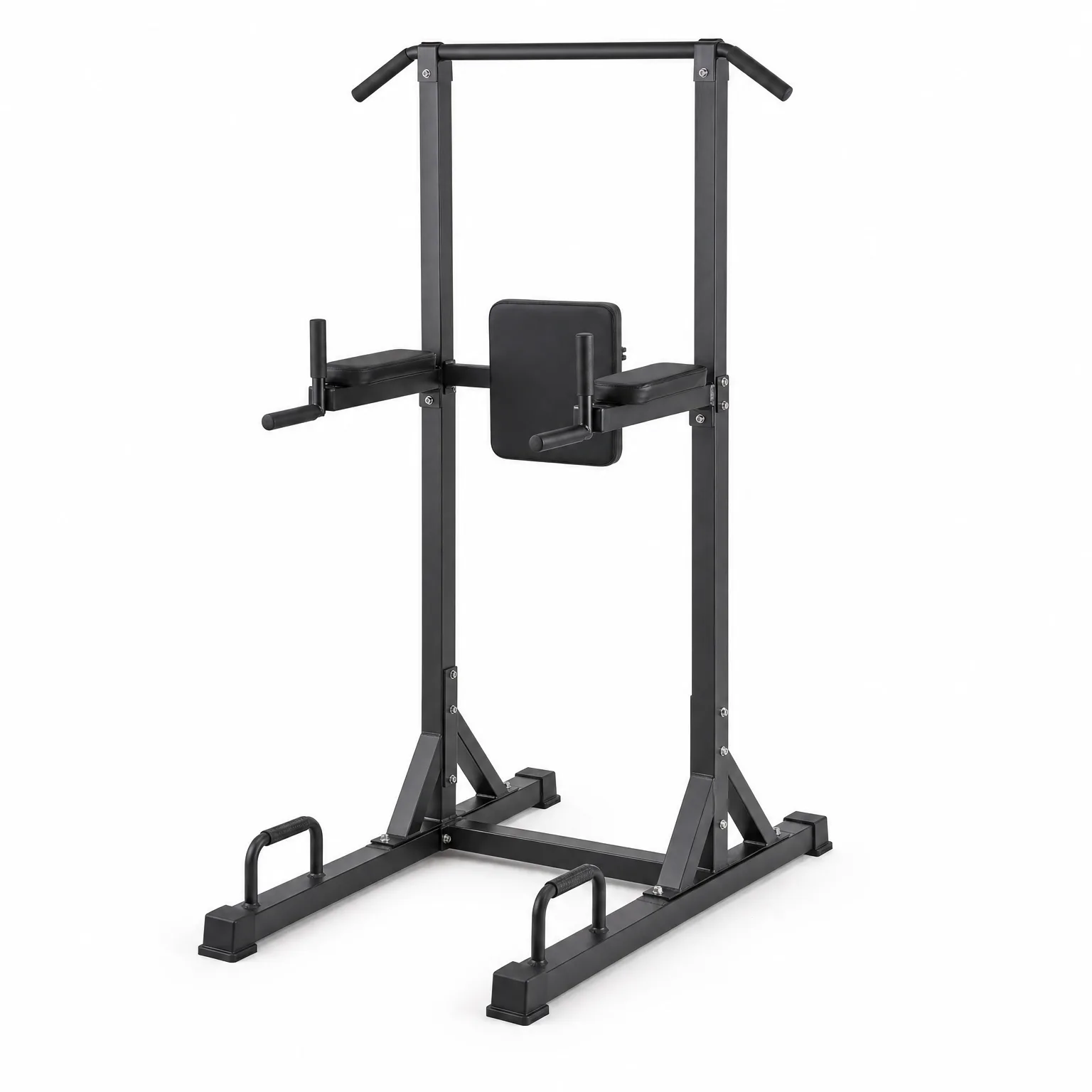
A free-standing frame that combines a pull-up bar, dip handles and a padded station for supported knee and leg raises.
In short
A power tower is a free-standing steel frame with a pull-up bar on top, a pair of dip handles at about chest height, and a padded backrest with forearm pads for knee and leg raises. Many also have low handles for push-ups. It stands on its own base, so nothing is fixed to a wall or door frame.
It puts the main bodyweight pulling, pushing and trunk exercises in one spot. Compared with a door pull-up bar plus separate dip bars, it takes more floor space but needs no doorway, and adds the supported leg raise station that neither of those has.
- Category
- Benches, racks and bars
- Where
- Home, Gym
- Level
- Beginner and up
- Space
- Needs a dedicated area
- Typical sizes
- Footprint roughly 1–1.2 m by 1.2–1.5 m (3.3–4 ft by 4–5 ft); height about 2–2.4 m (6.5–8 ft), often adjustable
- Also called
- pull-up dip station, captain's chair, vkr station, pull up tower, knee raise station, multi-station tower
What it is used for
- Pull-ups and chin-ups at several grip widths
- Dips for the chest and triceps
- Knee and leg raises with the back and forearms supported
- Raised push-ups on the low handles
- Band-assisted pull-ups and dips while building strength
Types
Standard home tower. A light bolt-together frame with a pull-up bar, dip handles and a padded raise station. The most common type.
Height-adjustable. The upper section telescopes so the bar suits lower ceilings and shorter or taller users.
With a fold-down bench. Adds a small bench for dumbbell work or sit-ups. Useful in a small space, though the bench is basic.
Commercial station. A heavy welded gym unit, often split into a pull-up and dip side and a separate raise station. Much steadier under swinging.
How to choose
Measure the ceiling
You need the tower's height plus room for your head above the bar: about 30–40 cm (12–16 in). In a room with a low ceiling, look for an adjustable model or use the bar for chin-over-bar reps with bent knees.
Check the base and the rating
A wide, long base with a rear brace wobbles less. Compare your body weight, plus any added load, with the manufacturer's rated capacity and leave a margin.
Look at the dip handle width
Handles about 50–60 cm (20–24 in) apart suit most people. Fixed handles that are much wider are uncomfortable for narrow shoulders.
Test the reach to the bar
You should reach the pull-up bar from the floor or the footrests with a small jump at most, and hang with your arms straight without your feet dragging.
How to start using it
- Level it and tighten the bolts. Set the tower on a flat, hard floor or a thin rubber mat. Tighten every bolt after assembly and again after the first few weeks. A loose frame rocks.
- Start with the raise station. Rest the forearms on the pads, press the lower back into the backrest and lift the knees to hip height without swinging. This is the easiest exercise on the tower and a good first one.
- Build up to dips and pull-ups. If you cannot do a full rep yet, loop a long band over the bar or the dip handles and put a knee or foot in it, or lower yourself slowly from the top for three to five seconds.
- Move without swinging. Start each pull-up from a still hang and lower under control. Home towers are light, and kipping or swinging can rock or tip them.
Common mistakes
Kipping on a light frame
Swinging pull-ups and fast leg raises throw your weight outside the base. Use strict reps, or weigh the base down as the manufacturer allows.
Half reps
Stopping pull-ups short of straight arms and dips well above parallel makes the numbers look better and the training worse. Use a band and do the full range.
Swinging the legs on raises
Using momentum and letting the back come off the pad turns the leg raise into a hip swing. Lift slowly, pause at the top and lower for two seconds.
Shrugged shoulders in dips
Letting the shoulders rise to the ears at the bottom of a dip puts the load in a weak position. Keep the shoulders pressed down and lean the chest slightly forward.
What to use instead
A doorway or wall-mounted pull-up bar replaces the top of the tower, and a pair of dip bars replaces the middle. Gymnastic rings hung from a beam or a bar cover both pull-ups and dips, with more instability. For dips at home, two sturdy chairs set back to back work, and lying leg raises on the floor stand in for the raise station.
-
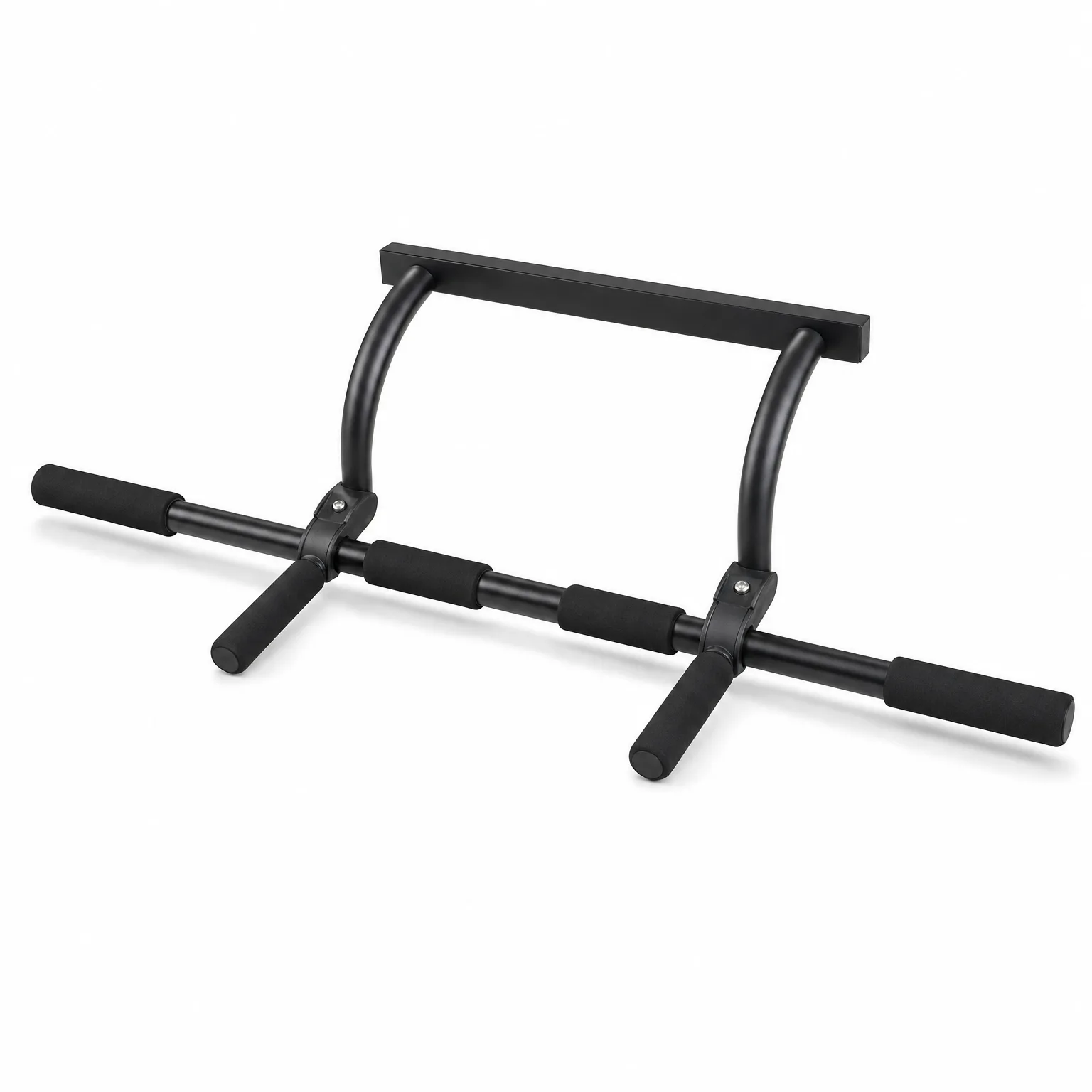
Pull-up bar
A fixed horizontal bar you hang from. Used for pull-ups, chin-ups, hangs and hanging leg raises, at home or outdoors. -
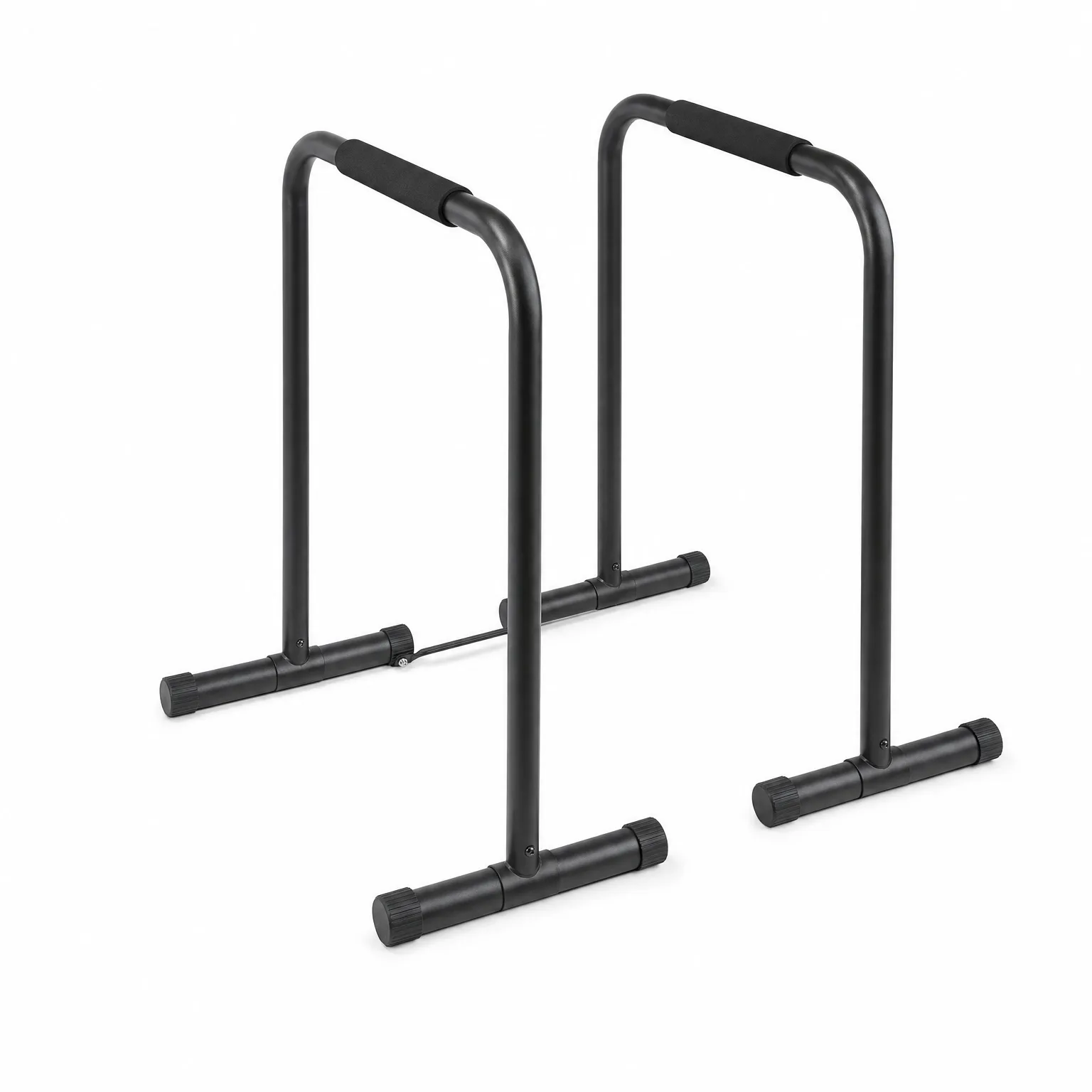
Dip bars
Two parallel bars at about waist height that you support yourself on. Used for dips, leg raises and bodyweight rows. -
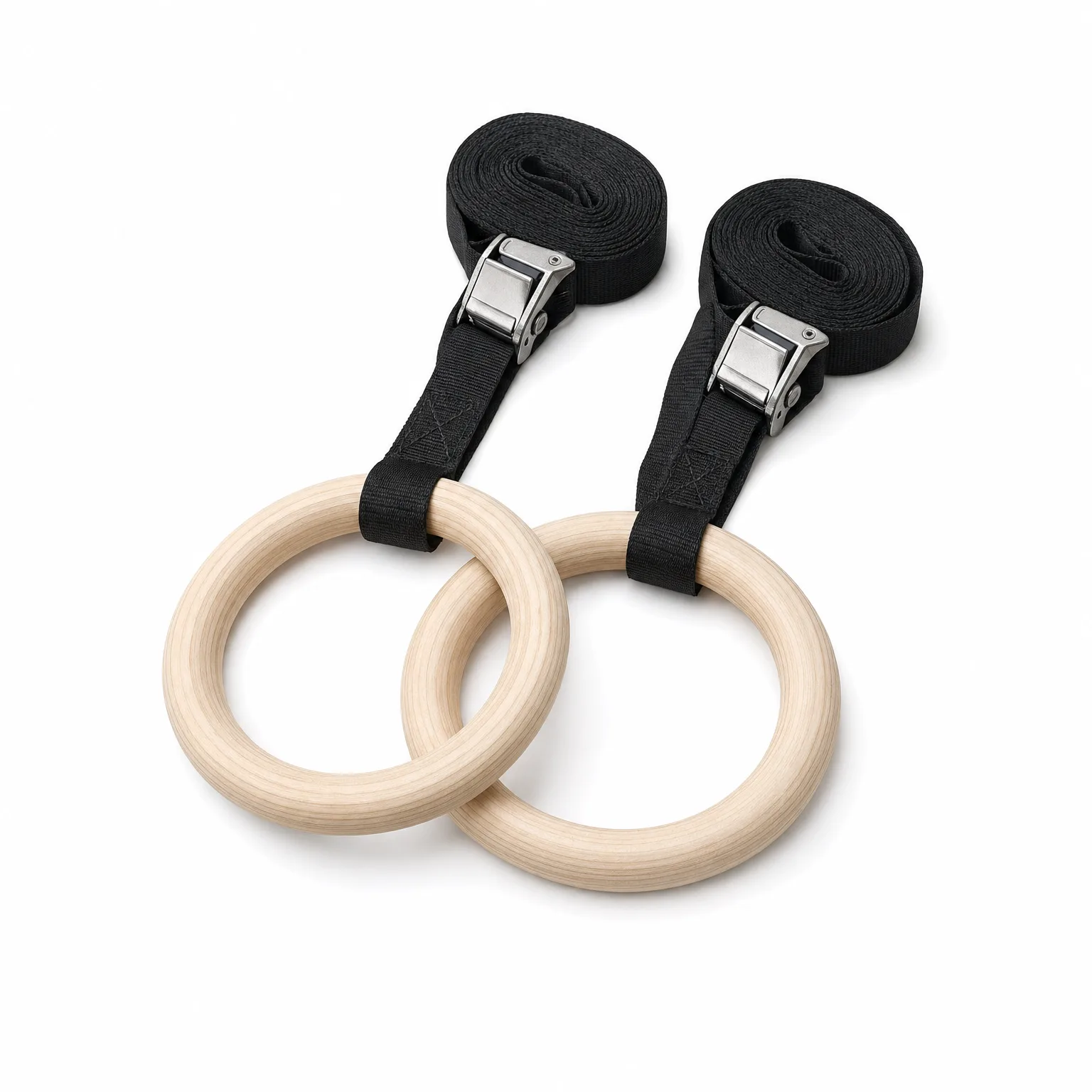
Gymnastic rings
Two rings on adjustable straps, hung from a bar or beam. Used for rows, pull-ups, dips, push-ups and support holds with body weight. -
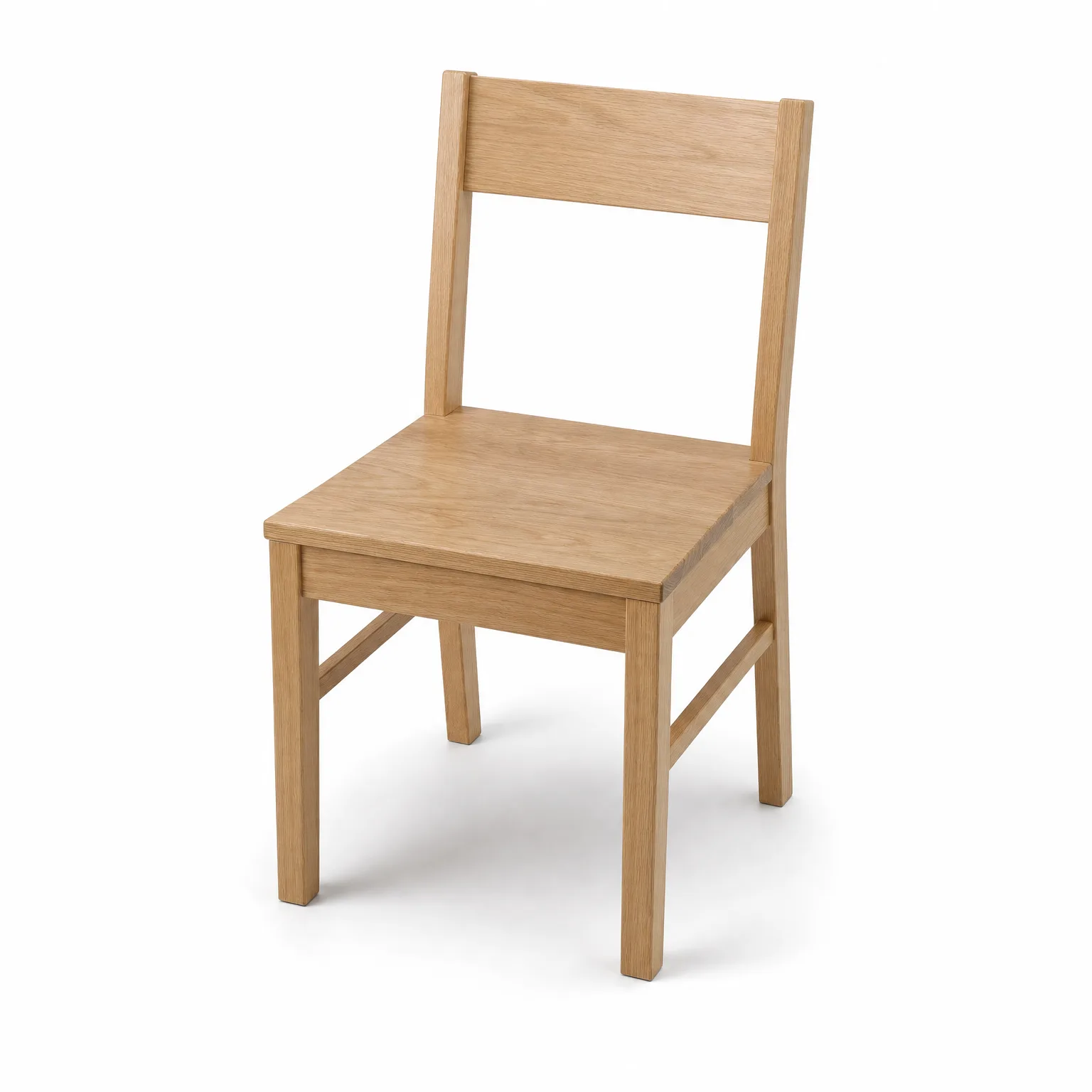
Chair
A sturdy household chair stands in for a bench, a low box or dip bars: sit-to-stands, step-ups, dips, split squats and incline push-ups.
Often used with
-
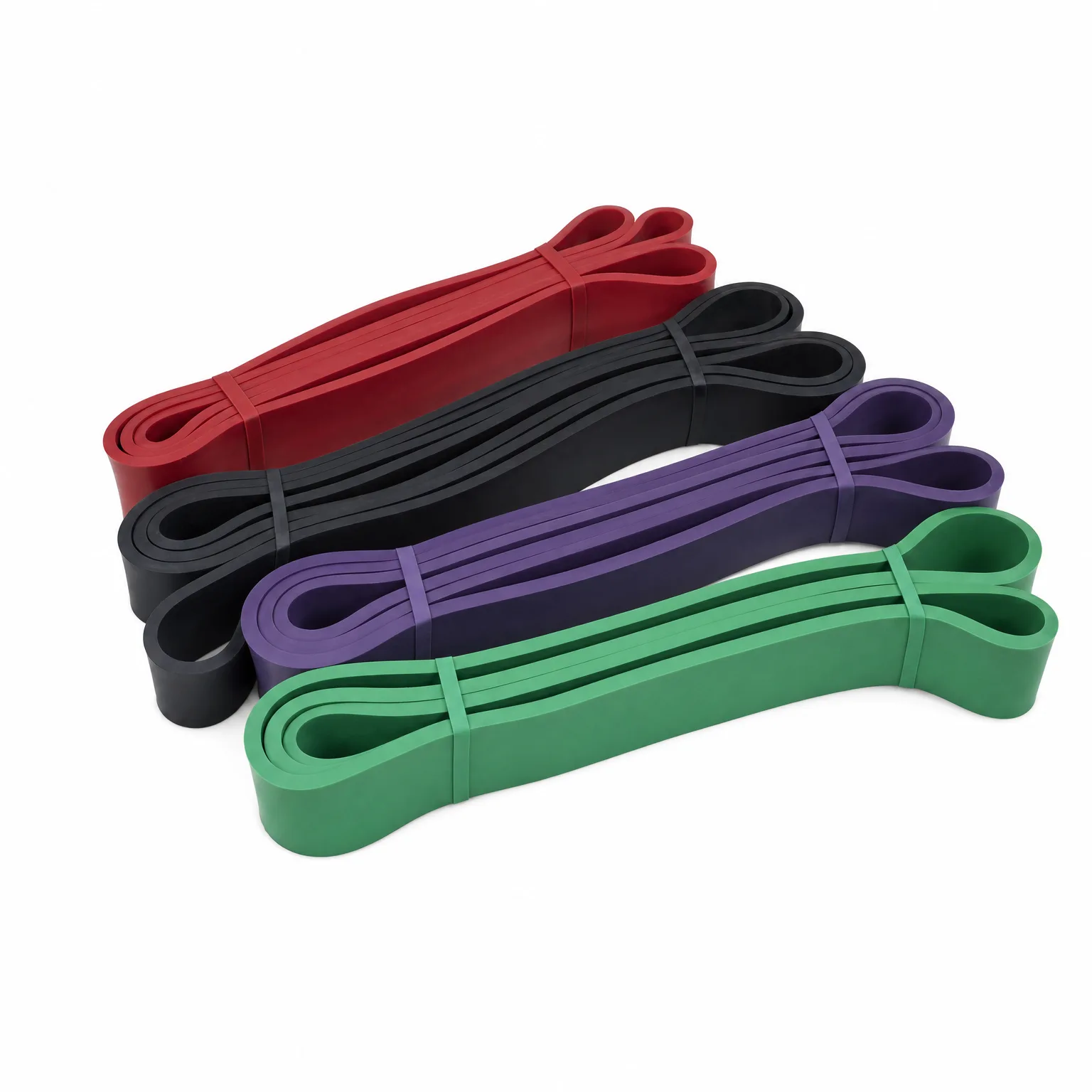
Resistance bands
Long closed loops of thick rubber. They add resistance to rows, presses and squats, or take weight off in pull-ups and dips. -
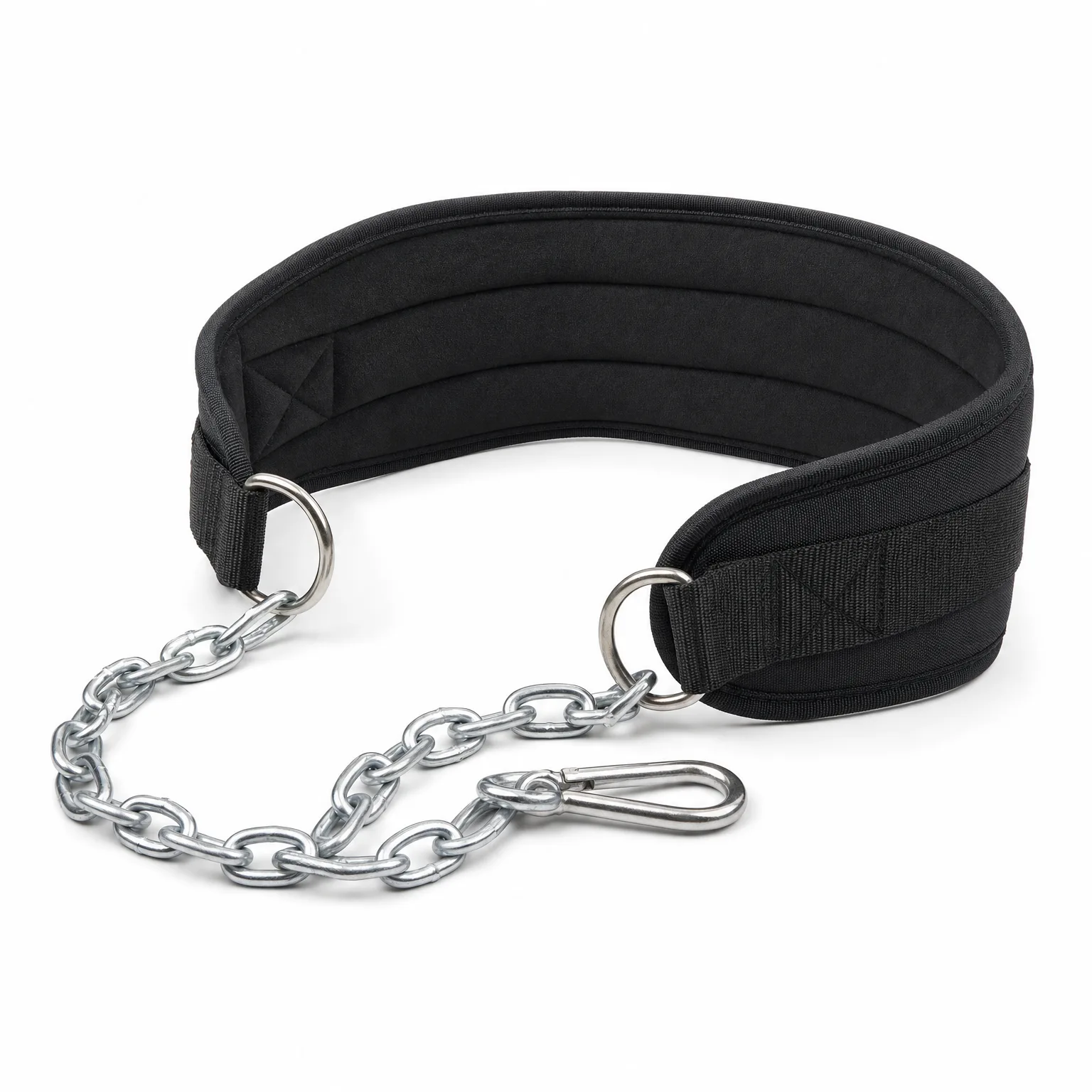
Dip belt
A belt with a chain or strap that hangs weight plates from your hips, used to add load to dips, pull-ups and chin-ups. -
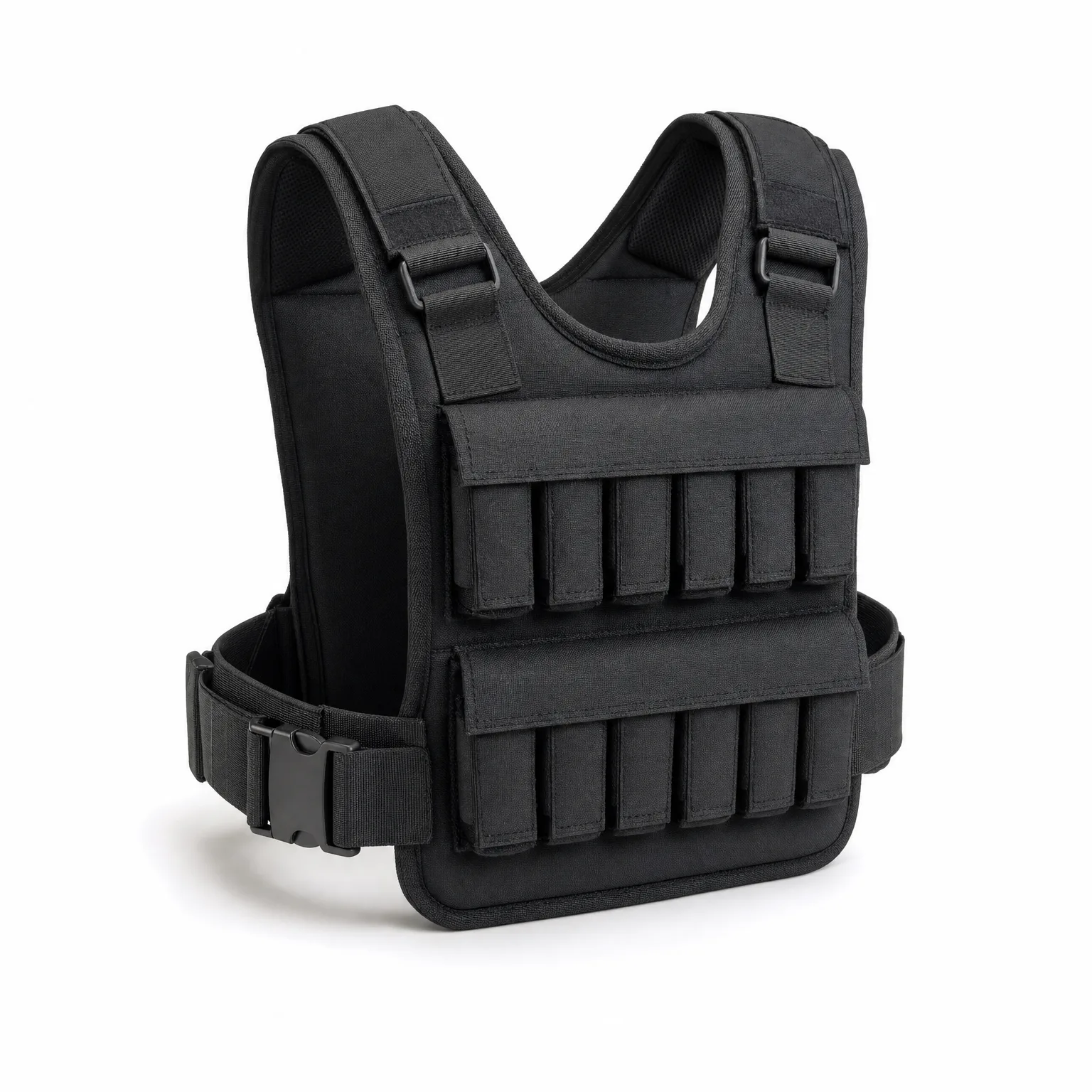
Weighted vest
A vest that carries extra weight on the torso. It makes push-ups, pull-ups, squats, walking and stair climbing harder with free hands. -
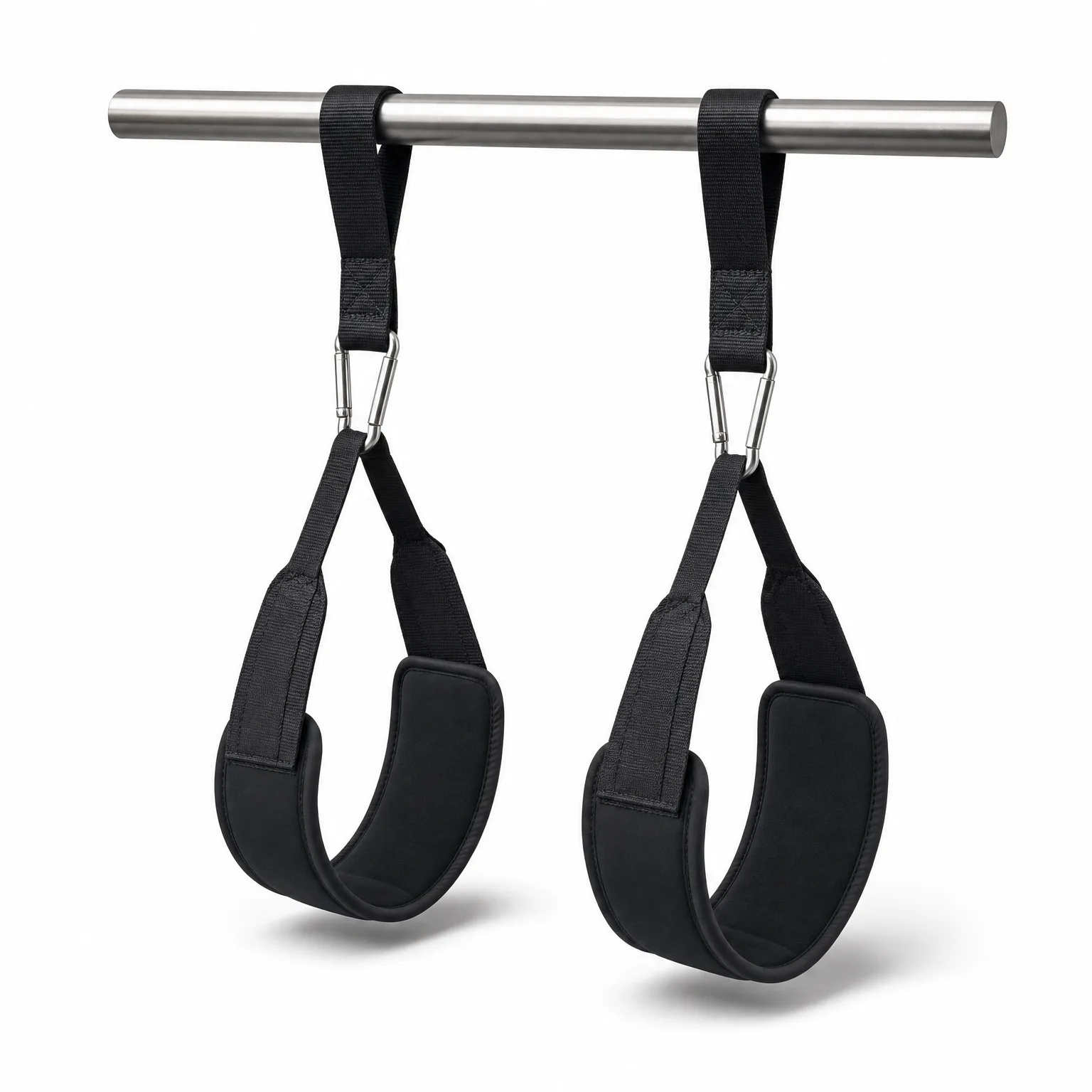
Ab straps
A pair of padded slings that hang from a pull-up bar and hold you by the upper arms, so you can do hanging knee and leg raises without gripping.
Questions about power tower
Is a power tower worth it for home?
If you have the floor space and ceiling height, it is one of the simplest ways to train pull-ups, dips and leg raises at home without drilling into anything. If space is tight, a doorway pull-up bar and floor exercises cover most of the same ground.
Power tower vs pull-up bar: which should I choose?
A doorway or wall pull-up bar is cheaper, smaller and often steadier for pull-ups. A power tower adds dips and a supported leg raise station and needs no door frame or wall fixing. Choose the tower if you want all three exercises in one place and have about 1.5 square meters to give it.
What muscles does a power tower work?
Pull-ups and chin-ups work the lats, mid back, biceps and forearms. Dips work the chest, triceps and front of the shoulders. Knee and leg raises work the abs, obliques and hip flexors.
How much ceiling height does a power tower need?
Take the height of the pull-up bar and add about 30–40 cm (12–16 in) so your head clears the ceiling at the top of a rep. For most towers that means a ceiling of roughly 2.4–2.6 m (8–8.5 ft), less for adjustable models set low.
Build programs around what your client has
This guide comes from OnlineFitness.app, the app online coaches run their clients in.
Free for life for the first 100 coachesNo card