Kickboard
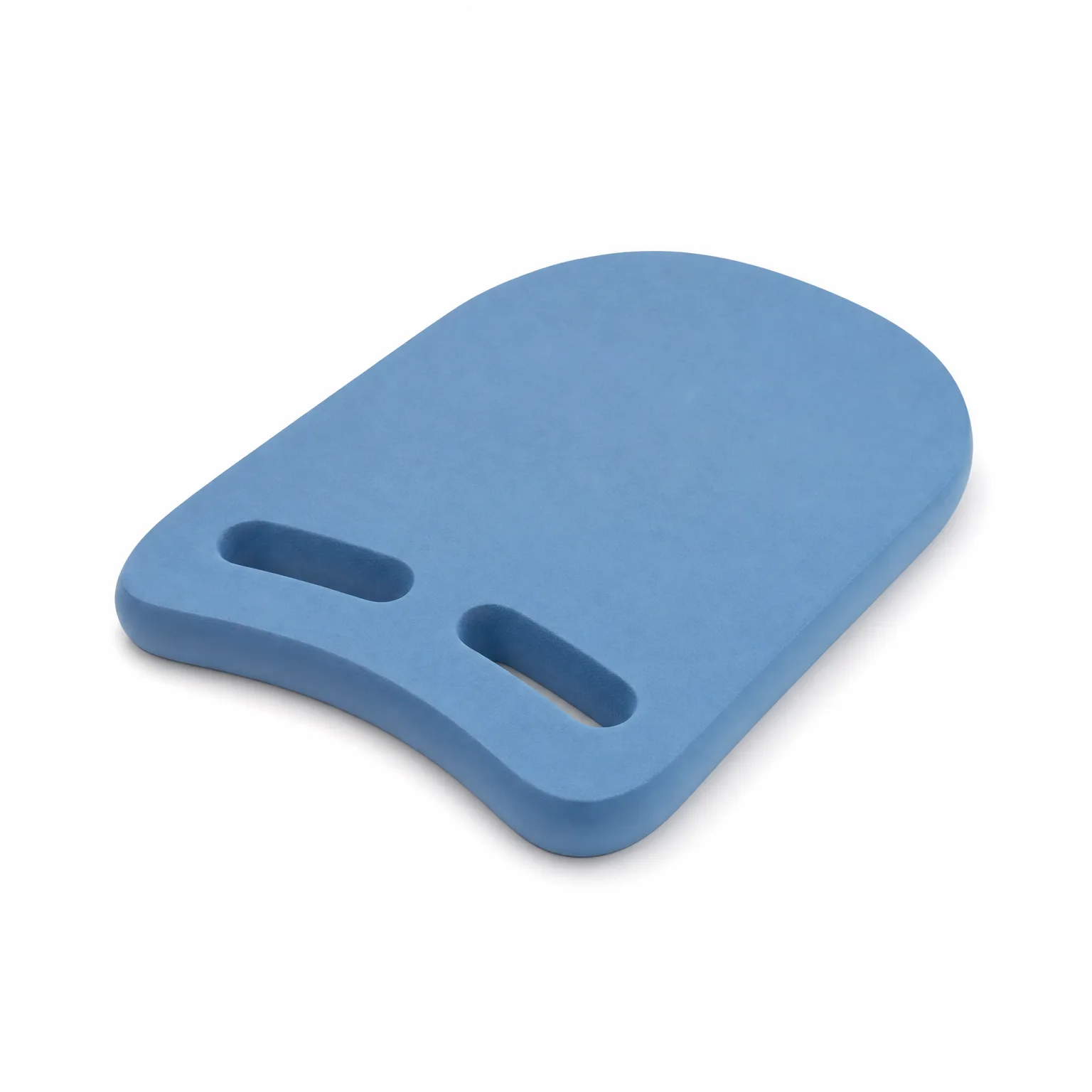
A flat foam board you hold in front of you in the pool. It keeps the upper body afloat so you can train the kick on its own.
In short
A kickboard is a rigid, buoyant slab of closed-cell foam, about the size of a large chopping board. In the pool you hold it out in front with your arms resting on it and move down the lane using only your legs. Because the board supports the arms and chest, all the work goes into the kick, which trains the thighs, glutes and hips and builds leg endurance for swimming.
It is one of the basic tools of swim training and learn-to-swim classes. Beginners use it to practice the kick and breathing without coordinating the arms. Trained swimmers use it for dedicated kick sets. It is also used in water fitness as a float and as something to push through the water for resistance.
- Category
- Pool
- Where
- Gym
- Level
- Beginner and up
- Space
- Fits in a drawer or a bag
- Typical sizes
- Adult boards about 40–50 cm long, 25–35 cm wide and 2.5–4 cm thick (16–20 x 10–14 x 1–1.5 in); junior boards are smaller
- Also called
- swim kickboard, swimming board, swimming kickboard, kick board, swim float board, pool kickboard, swim training board
Muscles it works
- Main
- Quads, Glutes, Hamstrings
- Also works
- Calves, Abs, Tibialis anterior
What it is used for
- Flutter kick sets for freestyle, holding the board in front
- Breaststroke and dolphin kick drills
- Learning to kick and to breathe to the side or front without using the arms
- Easy kicking between hard swim sets while the arms rest
- Water fitness: pushing or pulling the board through the water for resistance
Types
Classic full-size board. A rounded or squared rectangle with a curved front edge. The most buoyant and stable shape. Good for learners and easy kicking.
Short or compact board. A smaller board with less float. The body sits lower and closer to a real swimming position, with less lift on the shoulders. Common in team training.
Board with hand grips. Cut-out holes or molded handles at the front or sides. Easier to hold for children and for water fitness exercises.
Pull-kick combo. A small shaped float that works as a mini kickboard in the hands and as a pull buoy between the thighs. One item for the swim bag, less support than a full board.
How to choose
Match the size to the swimmer
An adult learning to kick does well with a full-size board, which keeps the chest high. Children need a junior board they can hold without spreading the arms wide. A board that is too big is hard to control and lifts the upper body too much.
More float to learn, less to train
A thick, large board is forgiving and lets you concentrate on the legs. A smaller, thinner board gives less support, so the body lies flatter and the shoulders are less raised, which regular swimmers often prefer.
Pick firm closed-cell foam
EVA or similar dense foam does not soak up water, keeps its shape and is soft on the forearms. Cheap, crumbly foam sheds pieces and gets waterlogged.
Check what your pool provides
Most pools and classes have boards at the end of the lane. Trying those tells you which size and shape you like before you buy your own.
How to start using it
- Hold it lightly at the far end. Rest your forearms on the board with your hands over the front edge or holding the sides near the top, arms almost straight. Do not grip hard or press down. The board should float under your arms, not be pushed under.
- Get the body flat. Lower your chin to the water or put your face in between breaths, and let the hips rise toward the surface. The heels should just break the water when you kick.
- Kick from the hips. For flutter kick, move the whole leg from the hip with a relaxed knee and a loose, pointed ankle. The kick is small and quick, roughly within the depth of your body, not a wide scissor.
- Start with short repeats. Kick one length of a 25 m or 25 yd pool, rest 20–30 seconds and repeat 4–6 times. Kick sets are tiring for the legs and slower than swimming, so build the distance gradually.
Common mistakes
Holding the head high the whole time
Looking forward with the chin up arches the back and drops the hips, so you kick uphill. Keep the head low and lift it only to breathe, or put the face in the water.
Kicking from the knees
Bending the knees deeply and pedaling as if on a bicycle pushes water down and back at the wrong angle and barely moves you. Keep the legs long and drive from the hips.
Leaning on the board
Pressing the board down with locked arms and shrugged shoulders loads the shoulders and neck. If your shoulders feel pinched, hold the board closer to the near edge, use a smaller one or kick on your back without it.
Stiff, flexed ankles
Feet held at a right angle act as brakes. Let the ankles go loose so the tops of the feet push the water back.
Doing all leg work on the board
A kickboard raises the front of the body, which is not how you lie when you swim. Mix in kicking without a board, on the side or on the back, with the arms extended.
What to use instead
A pull buoy held in both hands in front of you works as a small kickboard with less float. Without any equipment, kick on your back with arms by your sides, or face down with the arms extended in a streamlined position, lifting the head to breathe. Both give a flatter body position than a board. Kicking while holding the pool gutter or wall is the usual starting drill for learners.
Often used with
-
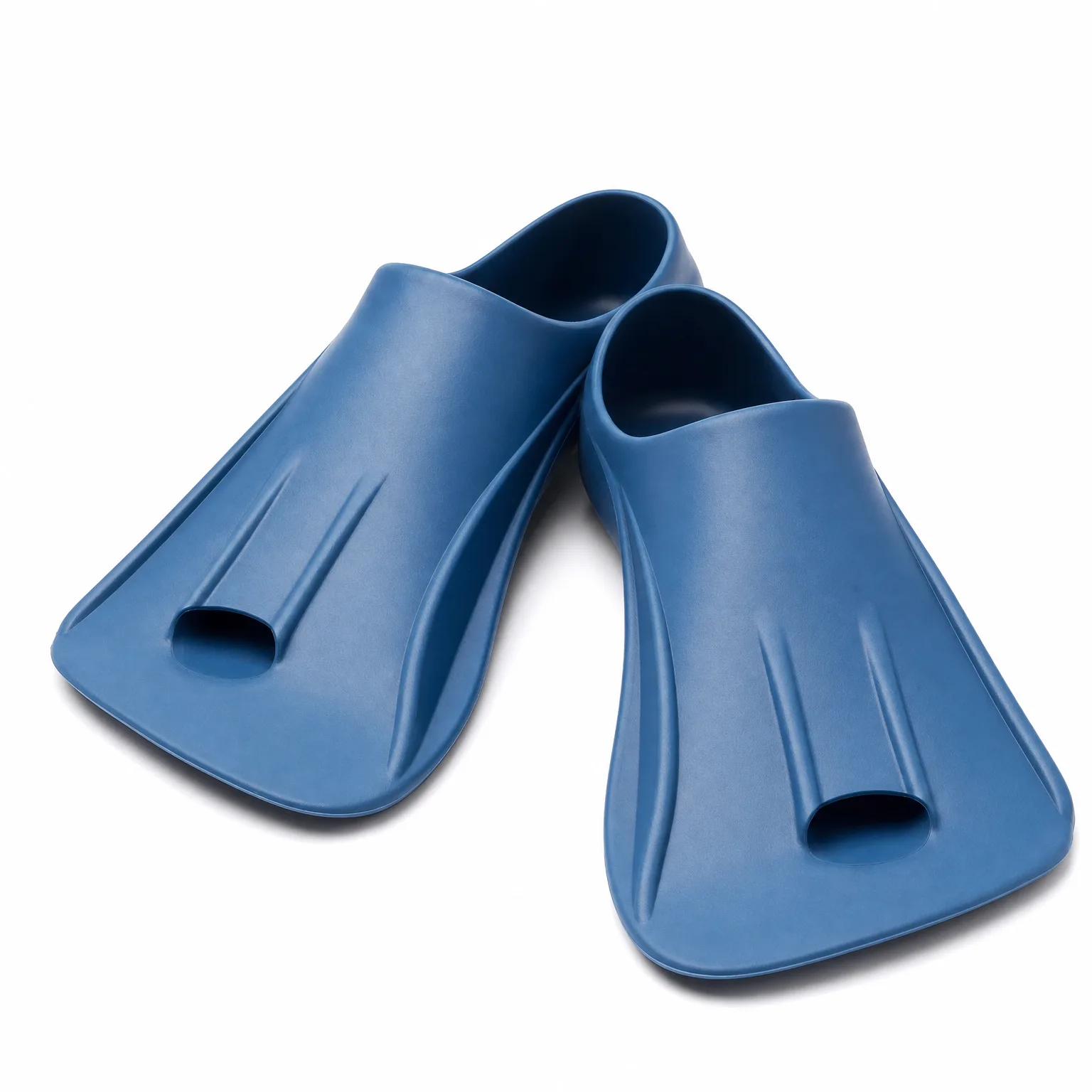
Swim fins
Rubber or silicone blades worn on the feet in the pool. They add surface to the kick, which makes you faster and makes the legs work harder. -
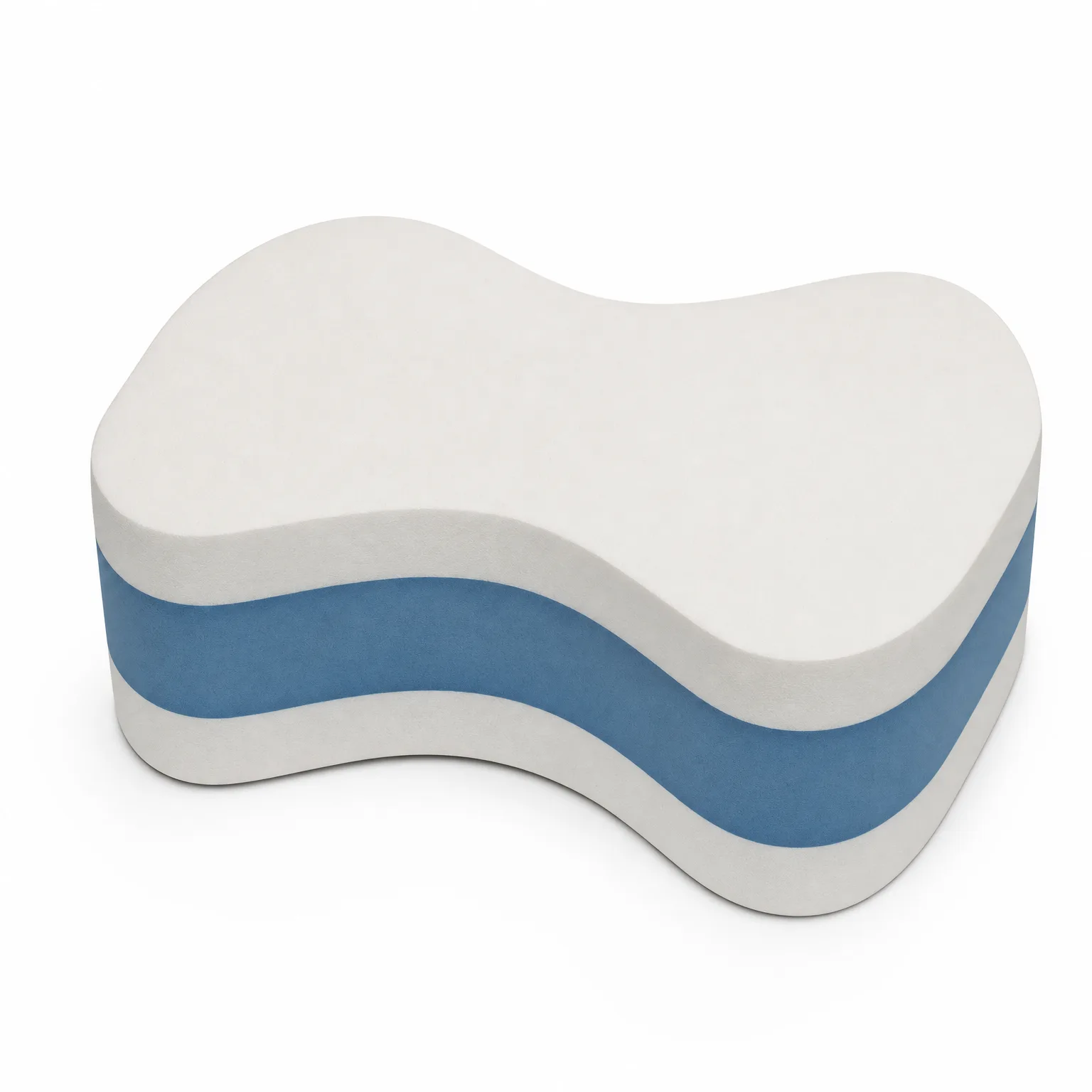
Pull buoy
A foam float held between the thighs in the pool. It keeps the legs up without kicking so the arms and the pull do all the work. -
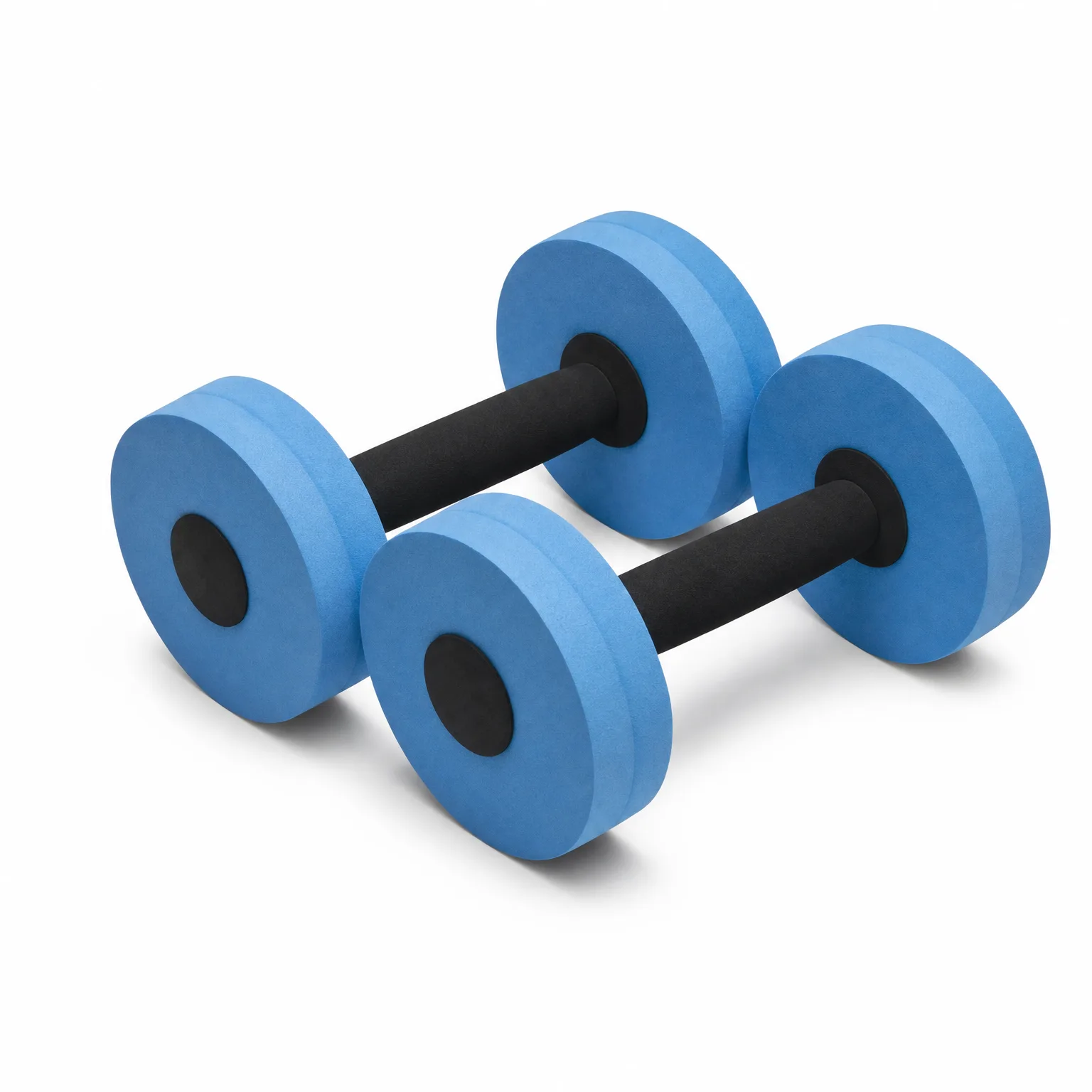
Aqua dumbbells
Foam dumbbells for pool workouts. They float, so the resistance comes from pushing them under water and moving them through it.
Questions about kickboard
What is a kickboard used for?
For kicking practice in the pool. You hold the board in front of you so the arms are supported and only the legs move you forward. It is used to learn and refine the kick, to build leg endurance and to give the arms a rest during a swim session.
What muscles does kicking with a kickboard work?
Mainly the hip and thigh muscles: the quads, glutes and hamstrings, with the hip flexors driving the downbeat. The calves and feet work to hold the ankle position, and the trunk muscles keep the body level in the water.
What size kickboard do I need?
Adults who are learning or kicking for fitness usually do best with a full-size board, about 45 cm (18 in) long. Children need a junior size. Experienced swimmers often choose a shorter, thinner board that lets the body sit flatter in the water.
Why do I barely move when I kick with a board?
Usually because of stiff ankles, a kick that comes from the knees, or hips that sink when the head is held high. Loosen the ankles, kick from the hips with long legs and lower the head. Kicking is slow for most adult learners, and short fins can help you feel the right movement.
Is a kickboard good for beginners who cannot swim well?
It is a standard teaching tool, used in shallow water or under supervision. It is a training aid, not a life-saving device, and it can slip out of your hands. Non-swimmers should use it only where they can stand or with an instructor or lifeguard present.
Build programs around what your client has
This guide comes from OnlineFitness.app, the app online coaches run their clients in.
Free for life for the first 100 coachesNo card