Swim fins
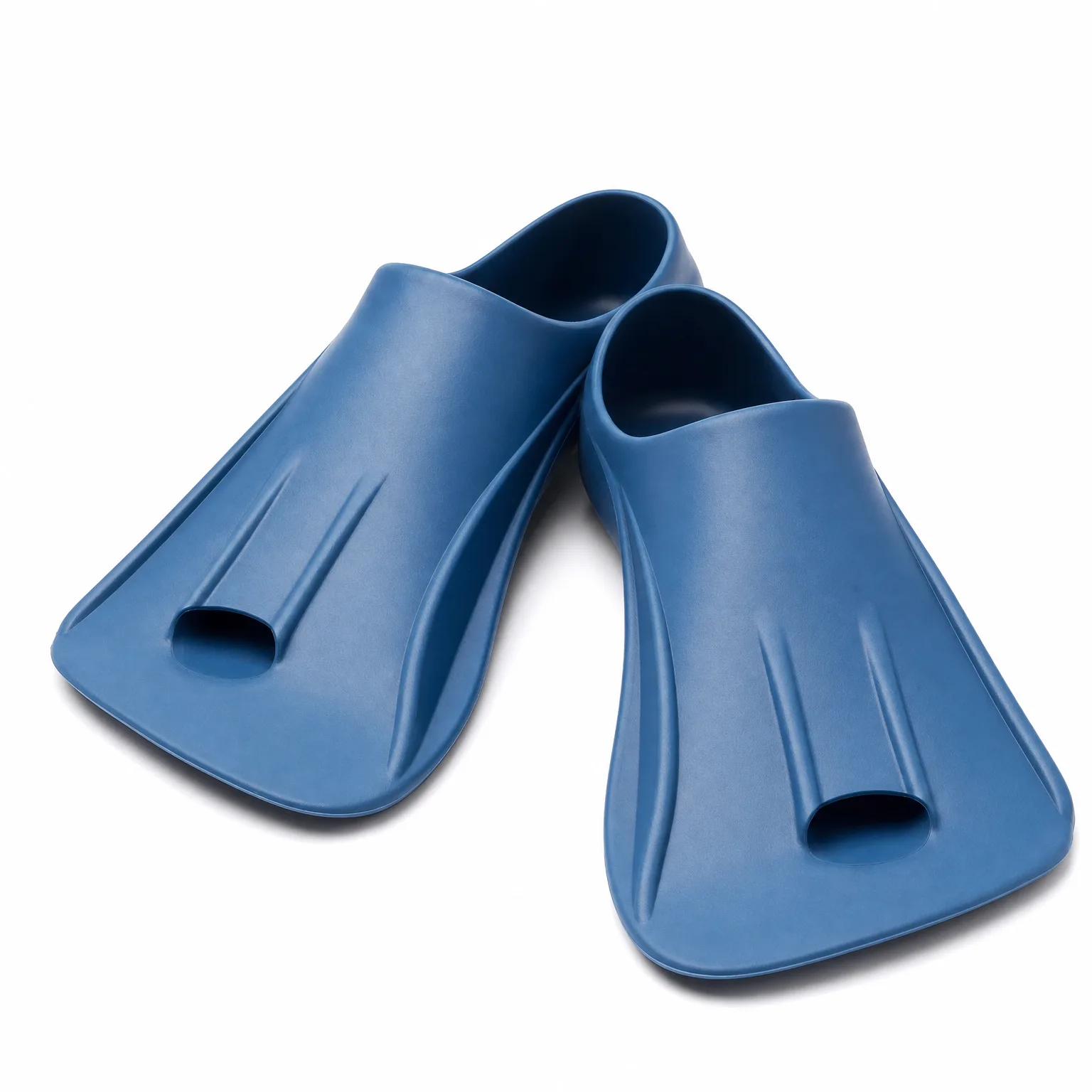
Rubber or silicone blades worn on the feet in the pool. They add surface to the kick, which makes you faster and makes the legs work harder.
In short
Swim fins are flexible blades with a foot pocket, worn on both feet in the pool. They enlarge the surface your foot pushes against the water, so each kick moves you further. The legs meet more resistance, you travel faster, and the body sits higher in the water.
Swimmers use training fins for kick sets, for technique drills that are hard to do at slow speed, and to build leg strength and ankle flexibility. Most are shorter than the long fins used for snorkeling and diving. They suit beginners who struggle to stay level as well as experienced swimmers doing speed work.
- Category
- Pool
- Where
- Gym
- Level
- Beginner and up
- Space
- Fits in a drawer or a bag
- Typical sizes
- Sold by shoe size. Short training blades extend about 3–10 cm (1–4 in) past the toes, long blades 20 cm (8 in) or more
- Also called
- flippers, training fins, swimming fins, short fins, zoomers, swim flippers
Muscles it works
- Main
- Quads, Glutes, Hamstrings, Calves
- Also works
- Abs, Lower back, Tibialis anterior
What it is used for
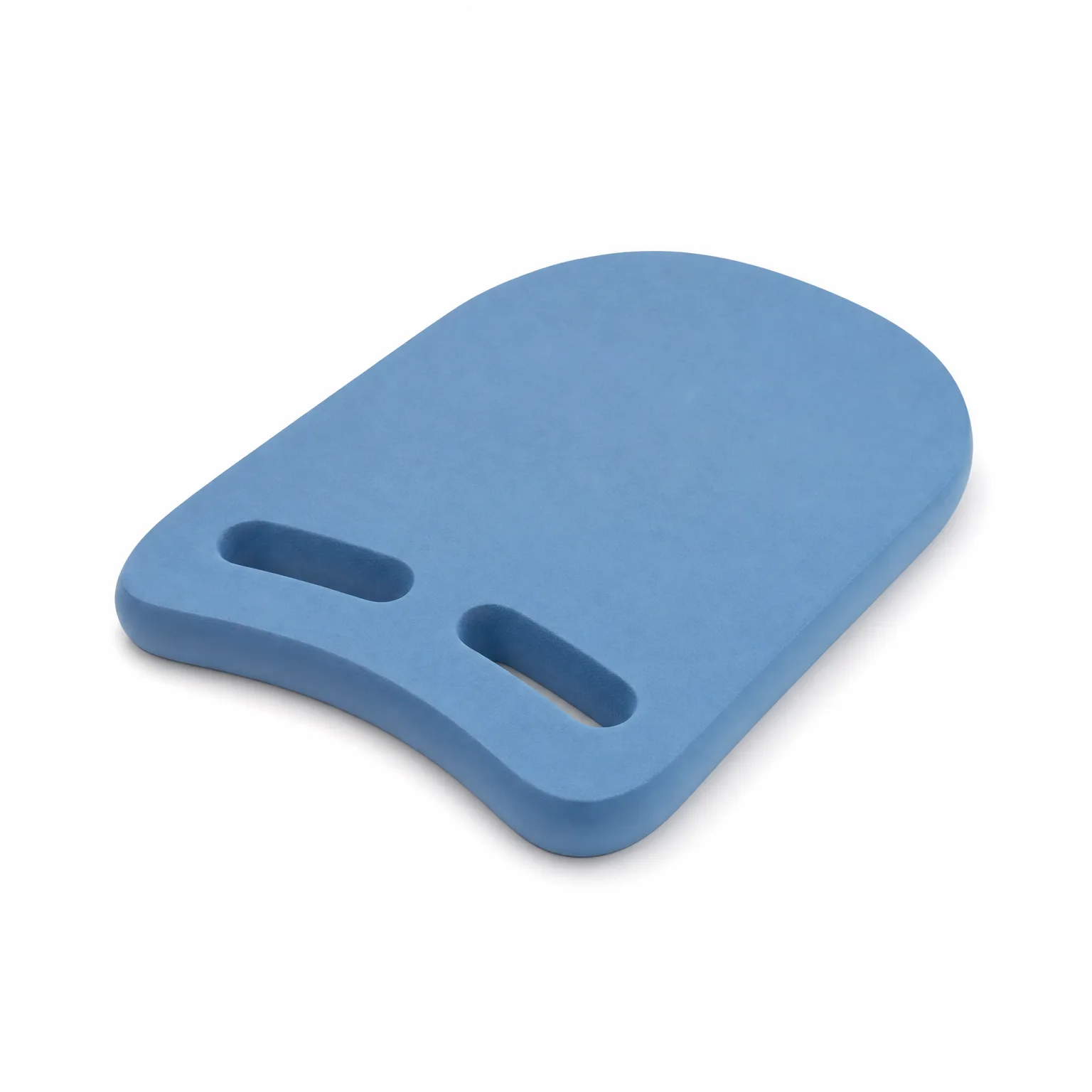
- Kick sets on the front, back or side, with or without a kickboard
- Technique drills such as one-arm freestyle, where extra speed keeps the body level
- Underwater dolphin kick and butterfly practice
- Building strength and endurance in the legs and hips
- Working the ankles through a long, pointed-toe range under light load
Types
Short-blade training fins. A short, fairly stiff blade that keeps the kick tempo close to normal swimming. The standard choice for lap swimmers.
Long-blade fins. A longer, softer blade that gives more speed and lift at a slower kick rate. Easier for beginners and for ankle flexibility work.
Breaststroke fins. Very short, wide fins shaped so the feet can turn out for the breaststroke kick, which ordinary fins do not allow.
Monofin. One wide blade with both feet in it, used for dolphin kick training and finswimming. A specialist tool for confident swimmers.
Open-heel fins. An adjustable strap instead of a closed heel. Fits a wider range of foot sizes, which suits shared pairs and growing feet.
How to choose
Short blades for lap swimming
If you swim laps and want your normal stroke to carry over, pick short training fins. They let you kick at close to your usual rhythm. Long blades slow the kick down and change the timing more.
Fit comes first
The foot pocket should be snug without pinching the toes or the top of the foot, and the heel should not lift when you kick. Fins that are loose cause blisters. Fins that are tight can bring on foot cramps. Sizing differs between makers, so check the size chart.
Softer material is kinder to the feet
Silicone fins are softer and more comfortable on bare skin than hard rubber ones. Stiffer blades give more resistance and put more load on the ankles and calves, so they suit swimmers who already kick well.
Check the pool rules
Some public pools limit fins to certain lanes or times, or do not allow long blades. Ask before you bring them.
How to start using it
- Put them on wet. Sit on the pool edge or stand in the shallow end, wet your feet and the fins, and slide the foot in fully before pulling the heel up. Do not walk around the deck in them: step into the water close to where you put them on.
- Kick from the hips. Keep the legs long with a small, relaxed bend at the knee and let the movement start at the hip. The ankles stay loose with the toes pointed. The fins should stay just under the surface, not slap above it.
- Start with short kick sets. Try 4–8 lengths of kicking with a kickboard or on your back, resting between lengths. Keep the first sessions short. Calves and feet that are new to fins cramp easily.
- Mix fins and no fins. Do part of a set with fins and then repeat the same drill without them. That carries the feeling of speed and body position over to your normal swimming.
Common mistakes
Kicking from the knees
Bending the knees a lot and pedaling the lower legs pushes water up and down instead of backward. With fins it also loads the knees. Keep the legs long and drive from the hips.
Wearing them for the whole session
Fins make swimming easier and faster, and it is tempting to keep them on. Use them for specific sets, then take them off, or your swimming without them will not improve.
Too much, too soon
The extra blade area loads the calves, the feet and the front of the ankles. Long first sessions often end in cramps. Add fin work a few lengths at a time.
The wrong size
Loose fins rub the heels and toes raw, and tight ones squeeze the foot. If a pair is slightly loose, thin fin socks can take up the space.
What to use instead
Nothing else in the catalogue does what fins do. The closest option is kicking without them: a kick set with a kickboard trains the same muscles at a lower speed, and vertical kicking in deep water makes the legs work hard with no equipment at all. On land, ankle mobility work and leg training support the kick but do not replace time in the water.
Often used with
Questions about swim fins
What do swim fins do?
They add surface area to your feet. Each kick pushes more water, so you move faster, ride higher in the water and feel more resistance in the legs. Swimmers use that for kick training, drills and speed work.
Short fins or long fins for swim training?
For lap swimming, short fins are the usual choice because the kick tempo stays close to normal. Long fins give more speed and lift for less effort per kick, which helps beginners and people working on ankle range, but the slow rhythm transfers less well to swimming without fins.
Do swim fins make your legs stronger?
They make each kick harder, so regular fin sets do train the hips, thighs and calves. The effect is on muscular endurance in the water more than on maximum strength. For that, leg training on land does more.
Why do my feet cramp when I swim with fins?
Usually because the feet and calves are doing more work than they are used to, the toes are pointed hard for a long time, or the fins are too tight. Shorten the sets, relax the ankles, check the fit and build up slowly.
Can beginners use fins?
Yes. The extra speed holds the body level, which makes it easier to practice breathing and arm technique. Beginners should still spend part of each session swimming without them.
Build programs around what your client has
This guide comes from OnlineFitness.app, the app online coaches run their clients in.
Free for life for the first 100 coachesNo card