Pull buoy
A foam float held between the thighs in the pool. It keeps the legs up without kicking so the arms and the pull do all the work.
In short
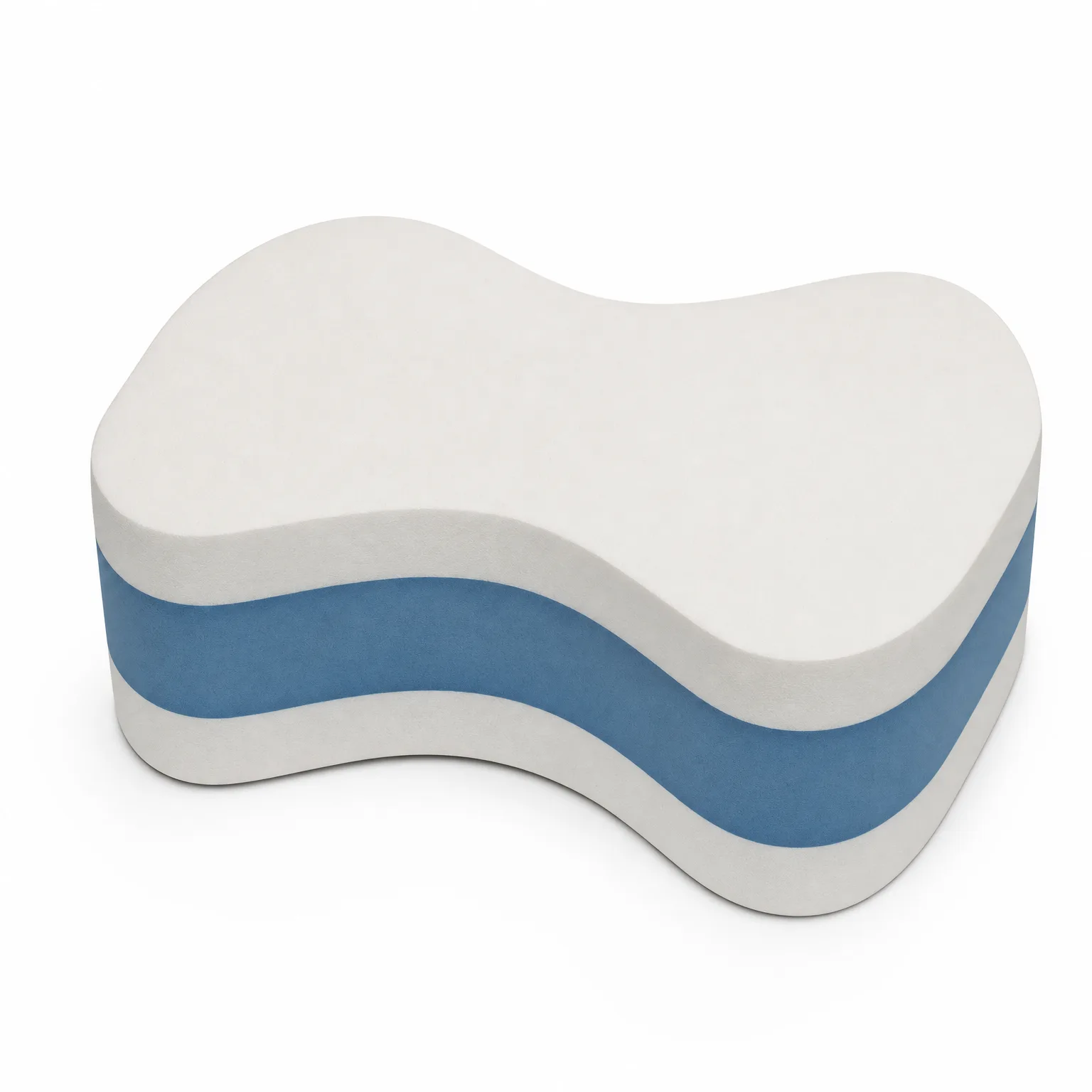
A pull buoy is a figure-eight shaped block of closed-cell foam that a swimmer holds between the thighs in the pool. It floats the hips and legs, so you can stop kicking and swim with the arms alone. That puts the work on the lats, shoulders, chest and triceps and gives you room to concentrate on the catch, the pull and your breathing.
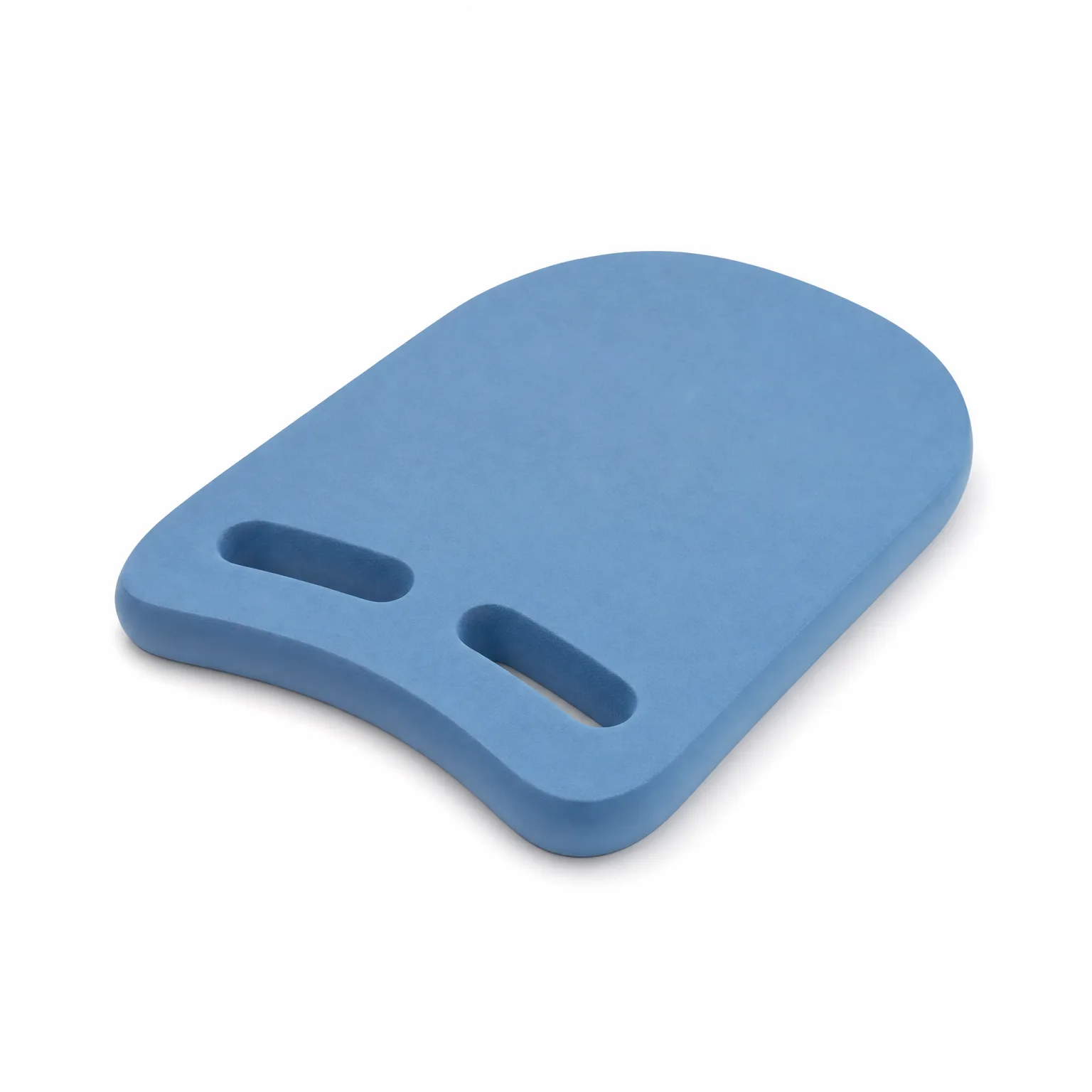
It is the opposite of a kickboard, which holds the upper body up so the legs do the work. Pull sets suit swimmers of any level, from beginners whose legs sink to triathletes who want upper-body volume while resting the legs.
- Category
- Pool
- Where
- Gym
- Level
- Beginner and up
- Space
- Fits in a drawer or a bag
- Typical sizes
- About 22–25 cm (9–10 in) long and 12–15 cm (5–6 in) wide; junior sizes are smaller
- Also called
- pull float, swim buoy, leg float, pull buoy for swimming, swimming leg buoy, pullbuoy
Muscles it works
- Main
- Lats, Triceps, Front delts, Chest
- Also works
- Rear delts, Abs, Obliques, Forearms
What it is used for
- Pull sets: swimming freestyle with the arms only to build upper-body endurance
- Technique work on the catch, body rotation and breathing without thinking about the kick
- Feeling a high, level body position in the water
- Easier swimming on days when the legs are tired from running, cycling or leg training
- Held between the ankles for a harder drill that demands a tight, straight body
Types
Figure-eight. The classic one-piece shape with a narrow waist and two equal lobes. Simple, cheap and what most pools keep on the deck.
Asymmetric. One lobe is larger than the other, which changes how much lift you get and how it sits. Makers differ on which way round to hold it, so follow their guidance and your comfort.
Two-piece with straps. Two foam cylinders joined by adjustable straps. An older design that fits wide or narrow thighs but is slower to put in place.
Pull-kick combo. A flatter buoy with a front edge that also works as a small kickboard, so one piece covers both kick and pull sets.
How to choose
Match the size to your thighs
The buoy should sit between the upper thighs without you squeezing hard to keep it there. Adult sizes fit most people. Children and small adults do better with a junior size, because a buoy that is too wide forces the legs apart.
More foam means more lift
A thicker buoy raises the hips more. That helps swimmers whose legs sink, and it makes pulling easier. A smaller, less buoyant one keeps more of the work with your own body position.
Check the foam
Look for dense closed-cell EVA foam with smooth edges. Soft foam with rough seams can rub the inner thighs on long sets, and crumbling foam soaks up water and loses lift.
How to start using it
- Place it high between the thighs. Stand in the shallow end, put the narrow waist of the buoy between your upper thighs, close to the groin, and squeeze lightly. Push off the wall and keep the legs together and still.
- Let the legs trail. Point the toes and let the feet follow the body. A small involuntary flutter is fine. If you find yourself kicking for speed, slow down and let the arms set the pace.
- Keep rotating. With the legs quiet, rotate the hips and shoulders together with each stroke as you would in normal freestyle. Hold the trunk firm so the legs do not swing from side to side.
- Start with short repeats. Begin with 4–6 repeats of 50–100 m (or yards) with a short rest between them, inside a normal swim session. Build the distance gradually, because pulling loads the shoulders more than full-stroke swimming.
Common mistakes
Using it for most of the session
The buoy does the job that your kick and trunk normally do. Swimmers who pull all the time can find that their legs sink as soon as the float is gone. Keep pull sets to a part of the session.
Holding it too low
A buoy near the knees with loose legs slips out and lets the hips drop. Place it at the top of the thighs unless you are deliberately doing the harder ankle version.
Letting the legs fishtail
If the legs swing left and right with each stroke, the hands are probably crossing the center line or the trunk is loose. Enter the hand in line with the shoulder and keep the body long.
Adding paddles too early
Hand paddles together with a pull buoy raise the load on the shoulders a lot. Get comfortable with pulling on its own first, and add paddles in small doses.
What to use instead
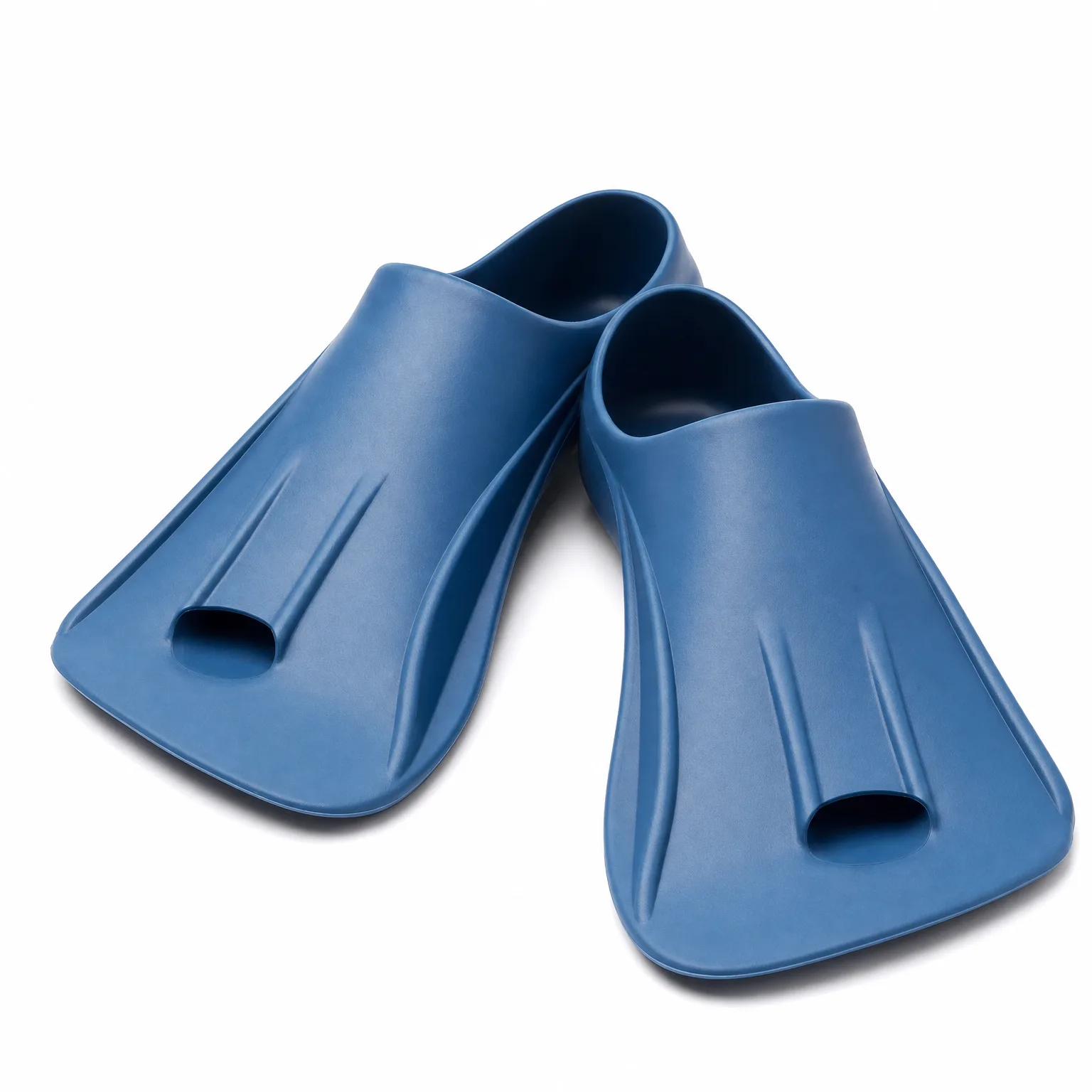
A kickboard turned on its side and held between the thighs gives similar lift and is the usual stand-in when a pool has no buoys left. Some swimmers pull with nothing at all, crossing the ankles and letting the legs drag, which is harder because nothing holds the hips up. Short swim fins are not a substitute: they help the legs rather than switch them off.
Often used with
Questions about pull buoy
What is a pull buoy used for?
It floats the legs so you can swim with the arms only. Swimmers use it to build upper-body endurance, to work on the pull and on breathing without having to kick, and to get in easy laps when the legs are tired.
Where do you put a pull buoy?
Between the upper thighs, as close to the groin as is comfortable, held with a light squeeze. Placing it between the knees or ankles is a harder variation that demands more control from the trunk.
Pull buoy vs kickboard: what is the difference?
They isolate opposite halves of the stroke. A pull buoy goes between the legs and supports the lower body, so the arms work. A kickboard is held in front with the hands and supports the upper body, so the legs work. Most swim sessions use both.
Why am I faster with a pull buoy?
Many adult swimmers are, because the float lifts the hips and legs into a flatter position with less drag than they hold on their own. It usually points to body position or kick as the thing to work on in full-stroke swimming.
Can beginners use a pull buoy?
Yes. It is easy to use and lets a beginner practice the arm stroke and breathing without sinking legs. It should not replace learning to kick and to float level without help.
Build programs around what your client has
This guide comes from OnlineFitness.app, the app online coaches run their clients in.
Free for life for the first 100 coachesNo card