Equipment Bands and bodyweight tools
Power twister
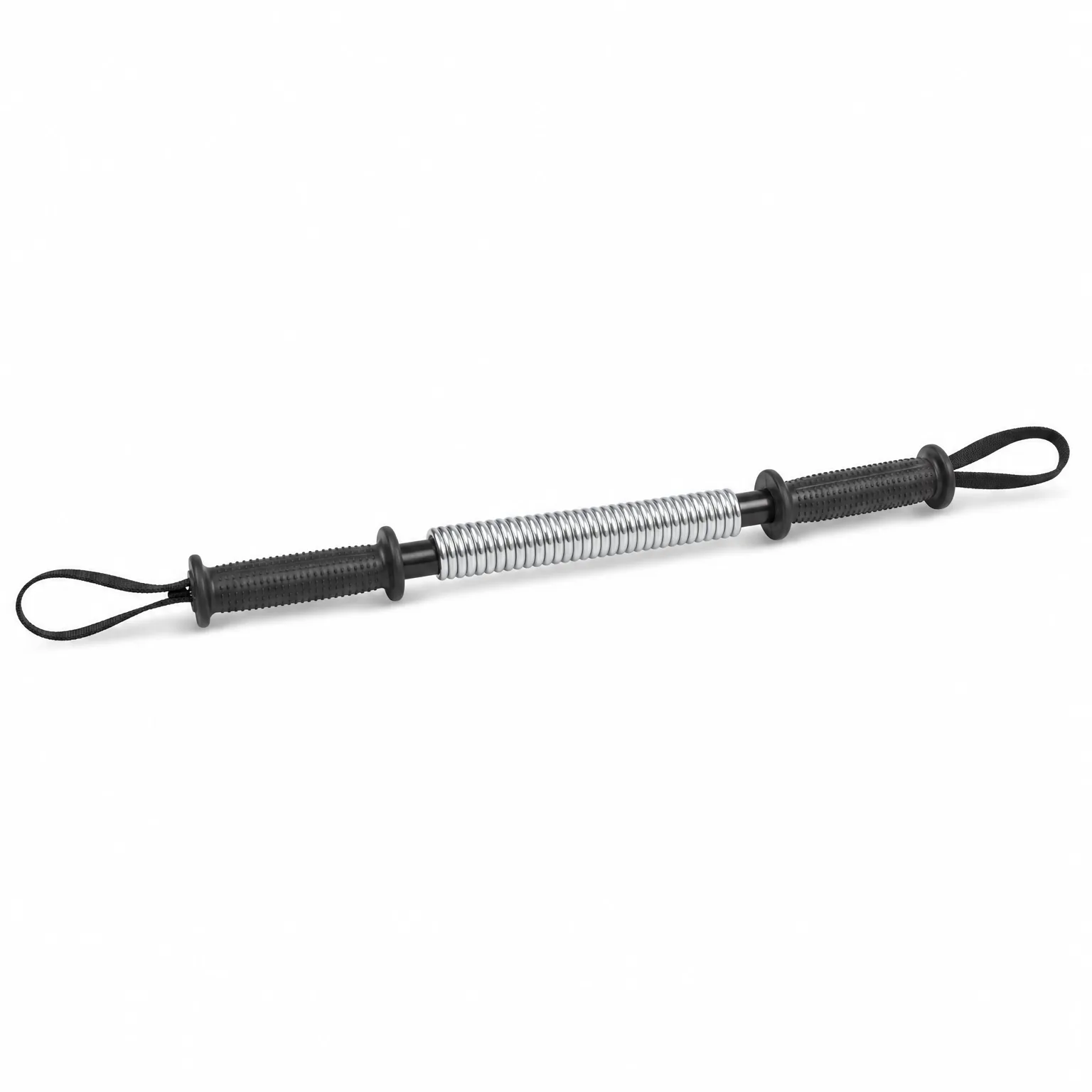
A steel bar with a heavy coil spring in the middle and a handle at each end. You bend it into a U to work the chest, shoulders and arms.
In short
A power twister is a bar roughly 60 cm long with a stiff coil spring in the center and a grip at each end, usually with wrist straps. You hold both ends and bend the bar until the handles come toward each other, then let it straighten under control. The spring resists more the further you bend it.
Bending it in front of the chest works the chest, front shoulders, arms and grip in a squeezing action. Holding the bend adds isometric work. It is small and cheap, but the resistance is fixed for each bar and the spring stores a lot of energy, so it suits people with some training experience more than complete beginners.
- Category
- Bands and bodyweight tools
- Where
- Home, Travel
- Level
- Intermediate and up
- Space
- Fits in a drawer or a bag
- Typical sizes
- About 55–70 cm (22–28 in) long; springs are sold by rating, commonly 20–60 kg (45–130 lb), and ratings differ by maker
- Also called
- power twister bar, spring bar, chest bender, arm bender, bending bar, spring chest bar, power spring
What it is used for
- Front bends at chest height for the chest and shoulders
- Bends with the bar held low or overhead to change the angle
- Isometric holds in the bent position
- Reverse-grip bends for the forearms and biceps
- Short grip and arm sessions when no other equipment is at hand
Types
Fixed spring. A single coil spring with one resistance. The common, inexpensive type.
Adjustable or hydraulic. A hinged bar with a hydraulic cylinder or a dial that sets the resistance. Smoother, with less snap-back, and one unit covers several levels.
Double spring. Two springs side by side for a higher rating. Stiffer and harder to control.
How to choose
Choose the lightest rating first
Ratings are approximate and bars feel heavier than the number suggests. If you cannot bend it fully for at least 8 reps, it is too strong to train with. Most people should start at the lowest rating sold.
Insist on wrist straps
Straps keep a handle from flying out of a sweaty hand. Do not buy or use a bar without them, and check that they are stitched or riveted firmly.
Consider an adjustable model
A fixed spring is right for a narrow window of strength. An adjustable or hydraulic bar lets you start light and progress, and is easier to control.
Look at the grips and the spring cover
Textured, non-rotating grips are easier to hold. A sleeve over the spring stops it pinching skin or clothing.
How to start using it
- Put both hands through the straps. Slide each hand through its strap before gripping, every time. Hold the bar horizontally in front of the chest, well away from your face.
- Bend it down and in. With elbows slightly bent, push the handles down and toward each other so the bar forms an upside-down U with the spring at the top. Keep the spring clear of the face and chest.
- Straighten it slowly. Take two to three seconds to let the bar open. Do not relax the arms until it is fully straight.
- Keep sets short. Do 3–4 sets of 8–12 bends, or holds of 5–10 seconds in the bent position. Stop a set as soon as your grip weakens.
Common mistakes
Using it without the straps
If one hand slips, the free end of the bar swings round fast at face height. The straps are the main protection against that.
A spring that is too strong
Half bends with a shaking bar train little and are the moment a grip gives way. Pick a rating you can close fully.
Bending toward the face
Holding the bar high and close puts your face in the path of a handle if it slips. Hold it at chest or waist height, well in front of the body.
Relying on it alone
It trains one squeezing pattern at one resistance. It does not replace presses, rows and leg work, and progress stops when the spring becomes easy.
What to use instead
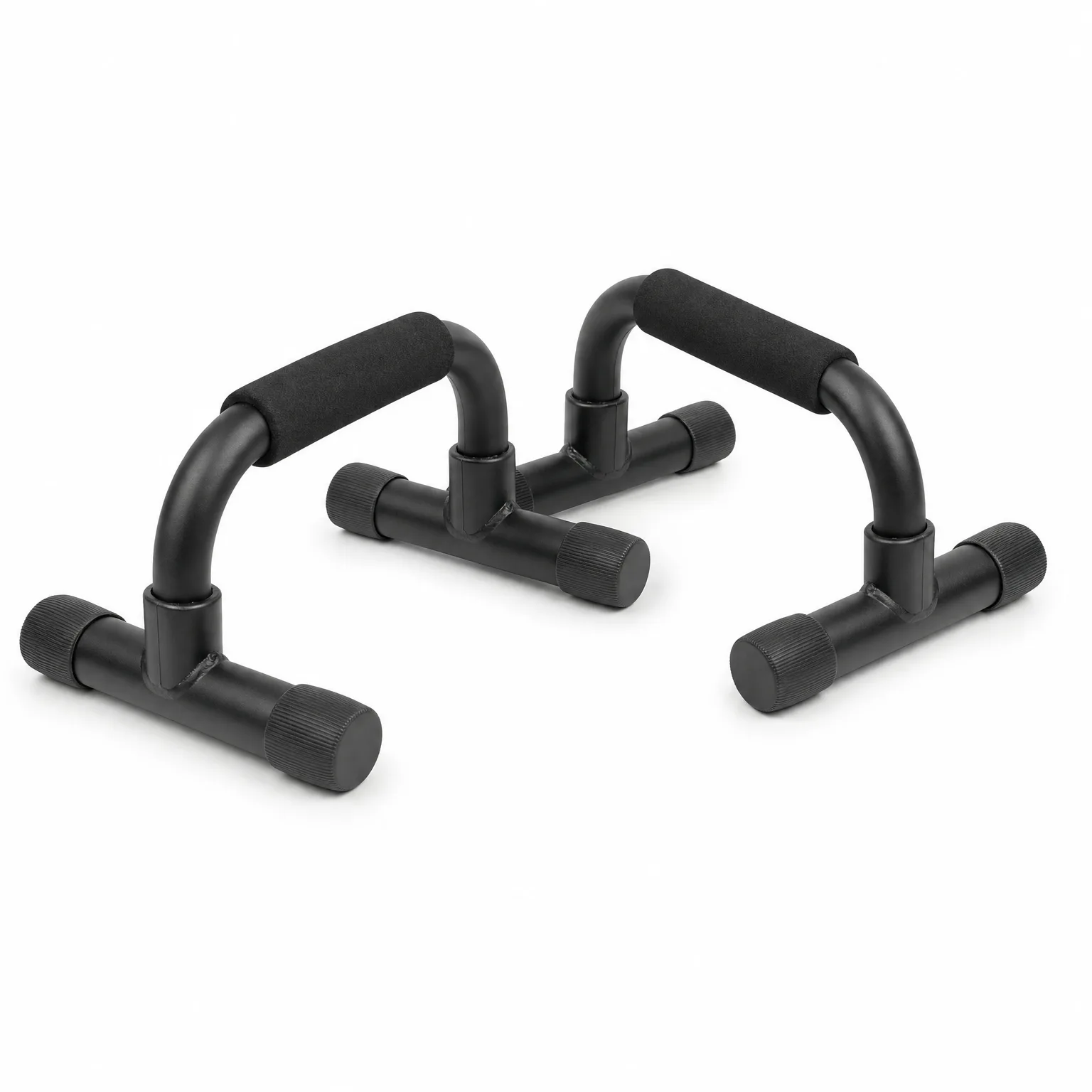
A chest expander pressed apart behind the back, or a resistance band wrapped around the back for a press, trains the chest and arms with adjustable resistance. A Pilates ring squeezed between the palms gives the same inward squeeze at a much lighter level. For the chest in general, push-ups on the floor or on push-up bars do more than any of these.
-
Chest expander
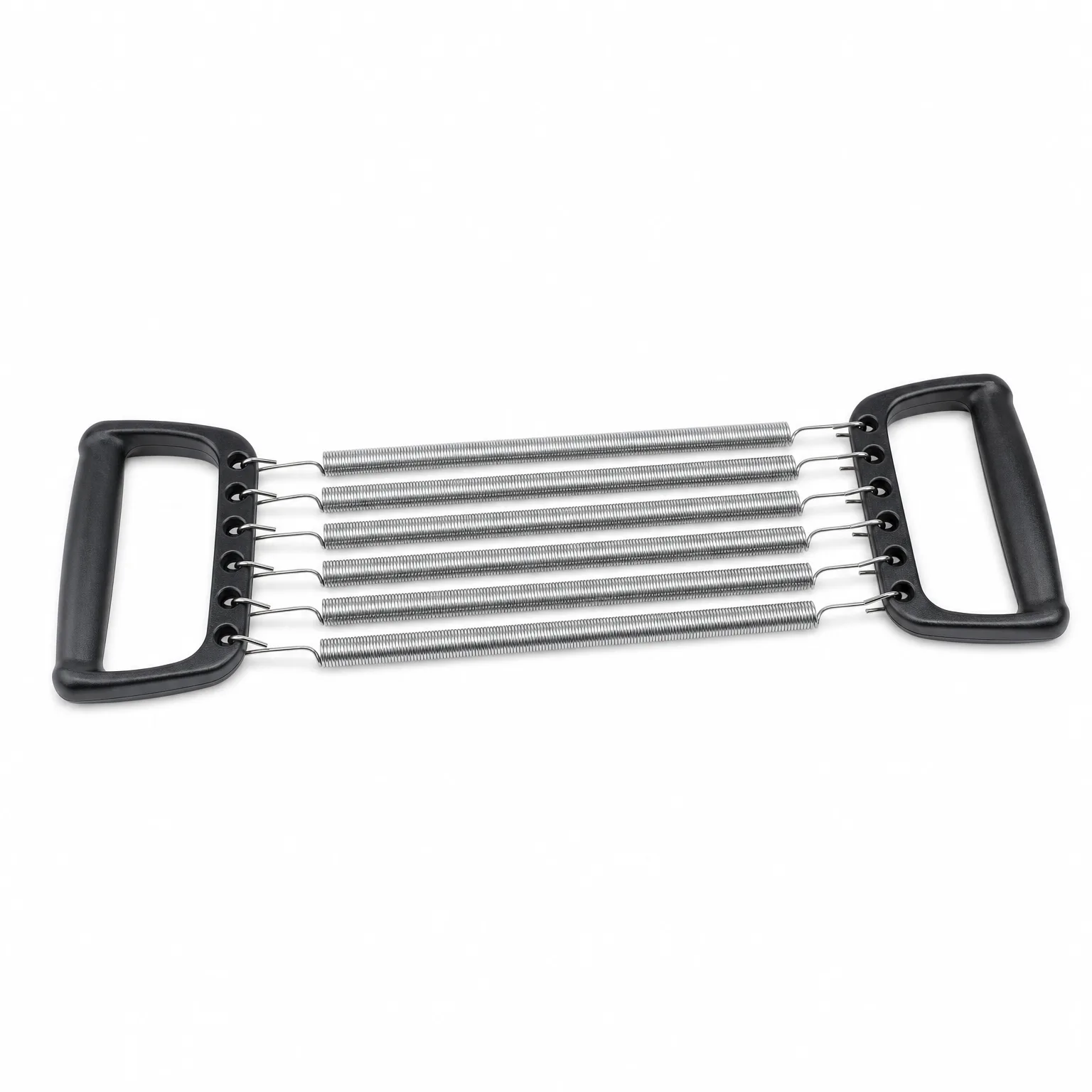
Two handles joined by several springs or rubber strands that you pull apart. A compact tool for the upper back, shoulders and chest. -
Resistance bands
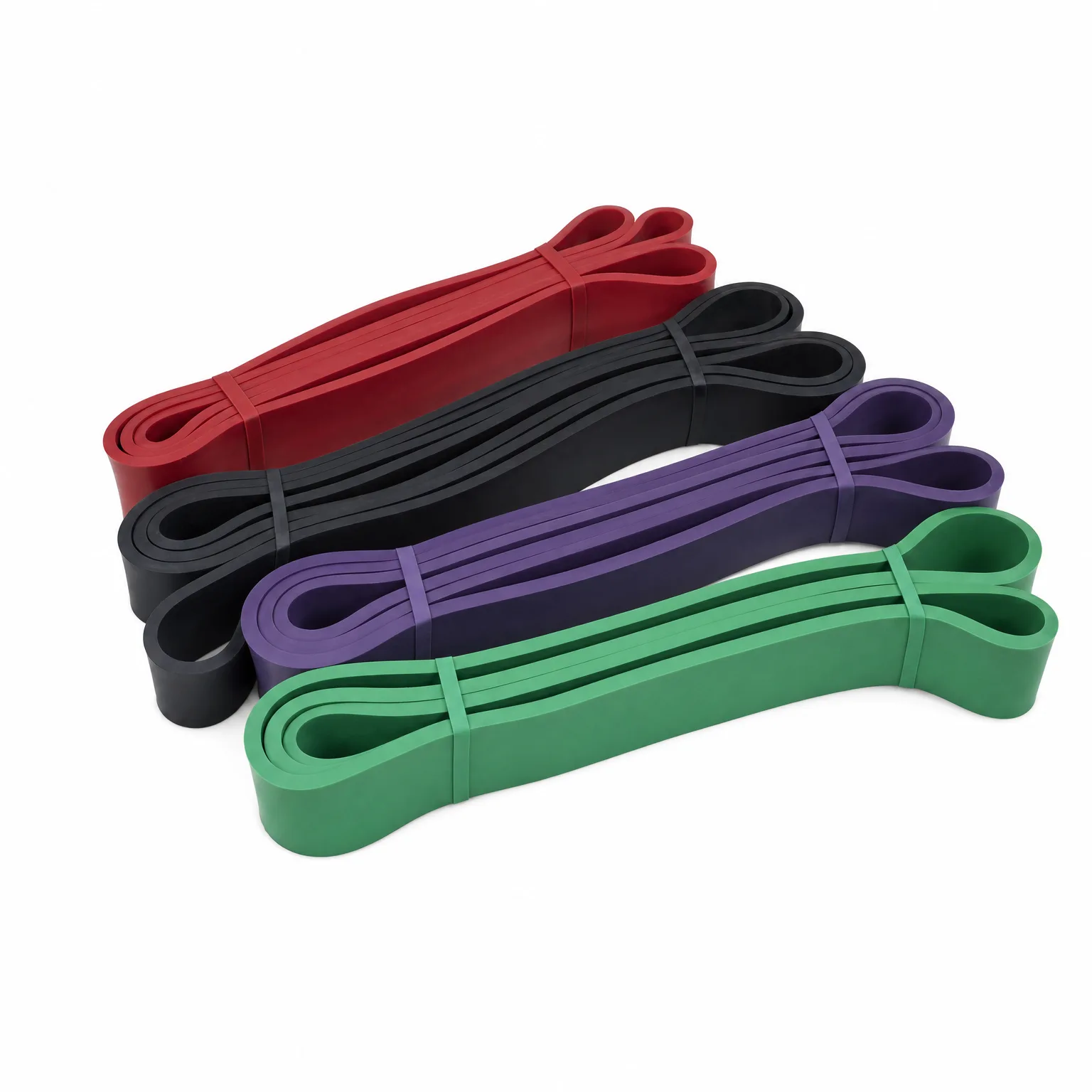
Long closed loops of thick rubber. They add resistance to rows, presses and squats, or take weight off in pull-ups and dips.
Often used with
Questions about power twister
What muscles does a power twister work?
Bending it in front of the body works the chest and front shoulders, with the biceps, triceps and forearms holding the handles and the lats helping to pull the arms in. Changing the height and grip shifts the emphasis slightly.
What strength power twister should I buy?
The lowest rating available, usually around 20–30 kg (45–65 lb), unless you already train regularly. The printed numbers are not standardized, and a bar you cannot bend fully is both useless and risky. An adjustable model avoids the guess.
Are power twisters dangerous?
They can be if a hand slips, because the spring releases its stored energy at once and the handle travels toward the face or chest. Using the wrist straps, holding the bar well in front of the body, drying your hands and choosing a spring you can control lowers the risk.
Can a power twister build a bigger chest?
It can add some work for the chest, mostly in a short, squeezed range. Because the resistance is fixed and the range is small, it is a supplement. Push-ups, dips and presses that you can make harder over time do more for chest size.
Build programs around what your client has
This guide comes from OnlineFitness.app, the app online coaches run their clients in.
Free for life for the first 100 coachesNo card