Equipment Bands and bodyweight tools
Chest expander
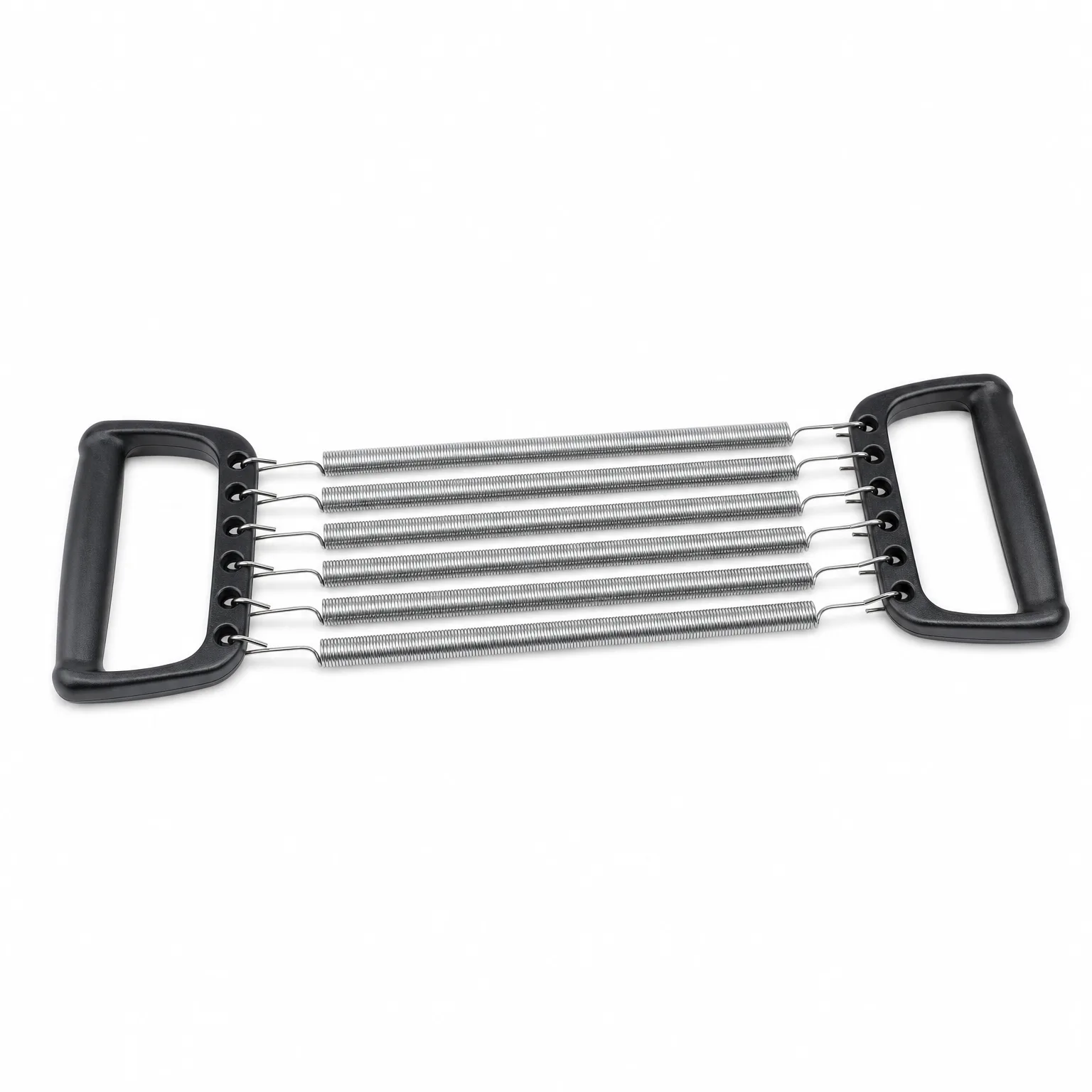
Two handles joined by several springs or rubber strands that you pull apart. A compact tool for the upper back, shoulders and chest.
In short
A chest expander is two handles joined by three to five steel springs or rubber strands. You hold a handle in each hand and pull them apart, in front of the chest, overhead or behind the back. Resistance rises the further you stretch it, and you change the level by adding or removing strands.
Despite the name, the classic front pull works the rear shoulders and the muscles between the shoulder blades more than the chest. Pulled apart behind the back, it trains the chest and triceps. It suits home and travel training where space is short, as a simpler, shorter relative of tube bands with handles.
- Category
- Bands and bodyweight tools
- Where
- Home, Travel
- Level
- Beginner and up
- Space
- Fits in a drawer or a bag
- Typical sizes
- About 50–70 cm (20–28 in) long at rest, with 3–5 removable springs or rubber strands
- Also called
- spring chest expander, chest pull, strand puller, spring expander, chest developer, cable expander
Muscles it works
- Main
- Rear delts, Mid back, Chest, Side delts
What it is used for
- Front pull-aparts for the rear shoulders and mid back
- Overhead pull-downs, bringing the strands down to the chest
- Behind-the-back presses for the chest and triceps
- Curls and upright rows with one handle under the foot
- Archer pulls, one arm straight and one bending
Types
Steel springs. The traditional type. Durable and consistent, but springs can pinch skin and hair, and resistance climbs steeply at the end.
Rubber or latex strands. Lighter, quieter and smoother to pull, with nothing to pinch. Rubber wears out and should be checked for cracks.
With foot stirrups. A longer version with a foot loop at one end for rowing, curls and leg presses while seated.
How to choose
Choose removable strands
A model whose springs or strands clip on and off covers a range of levels. Fixed ones lock you into a single resistance that will be wrong for half the exercises.
Springs or rubber
Rubber is more comfortable and better for beginners. Steel lasts longer and gives a stiffer pull. If you choose steel, sleeved springs reduce pinching.
Check the length against your arm span
With the handles held at arm's length in front, there should be light tension already. An expander that is too long gives no resistance until the arms are wide.
Inspect handles and hooks
The handles should not rotate out of the hand and the hooks should close fully. Open hooks are where strands come loose.
How to start using it
- Start with one or two strands. Take off all but one or two. You should be able to reach full stretch for 10–15 reps without shrugging or leaning back.
- Front pull-apart. Hold the handles at chest height with arms nearly straight. Pull the hands apart until the strands touch the chest, squeezing the shoulder blades together. Return slowly.
- Behind-the-back press. Pass the expander behind the shoulder blades with elbows bent and hands by the chest. Press both hands out to the sides until the arms are straight, then bring them back under control.
- Never let go under tension. Bring the handles all the way back together before releasing your grip. Keep the strands away from the face, and keep hair and loose clothing clear of steel springs.
Common mistakes
Too many strands
With too much resistance the pull stops halfway, the shoulders shrug and the back arches. Fewer strands and full range train the target muscles better.
Letting it snap back
Releasing the stretch quickly wastes the lowering half of the rep and can whip a handle into your hand or chest. Take two seconds to return.
Using worn rubber or bent hooks
Cracked strands and stretched-open hooks fail at full stretch, when the handle is near your face. Check before each session and replace damaged parts.
Only pulling in front
The front pull is one exercise. Add overhead, behind-the-back and foot-anchored pulls to train more than the upper back.
What to use instead
A tube band with handles does everything a chest expander does and also anchors to a door for rows and presses. A flat resistance band or a long loop band held in both hands works for pull-aparts, overhead pull-downs and behind-the-back presses. Choose a band light enough to reach full stretch.
-
Resistance tubes with handles
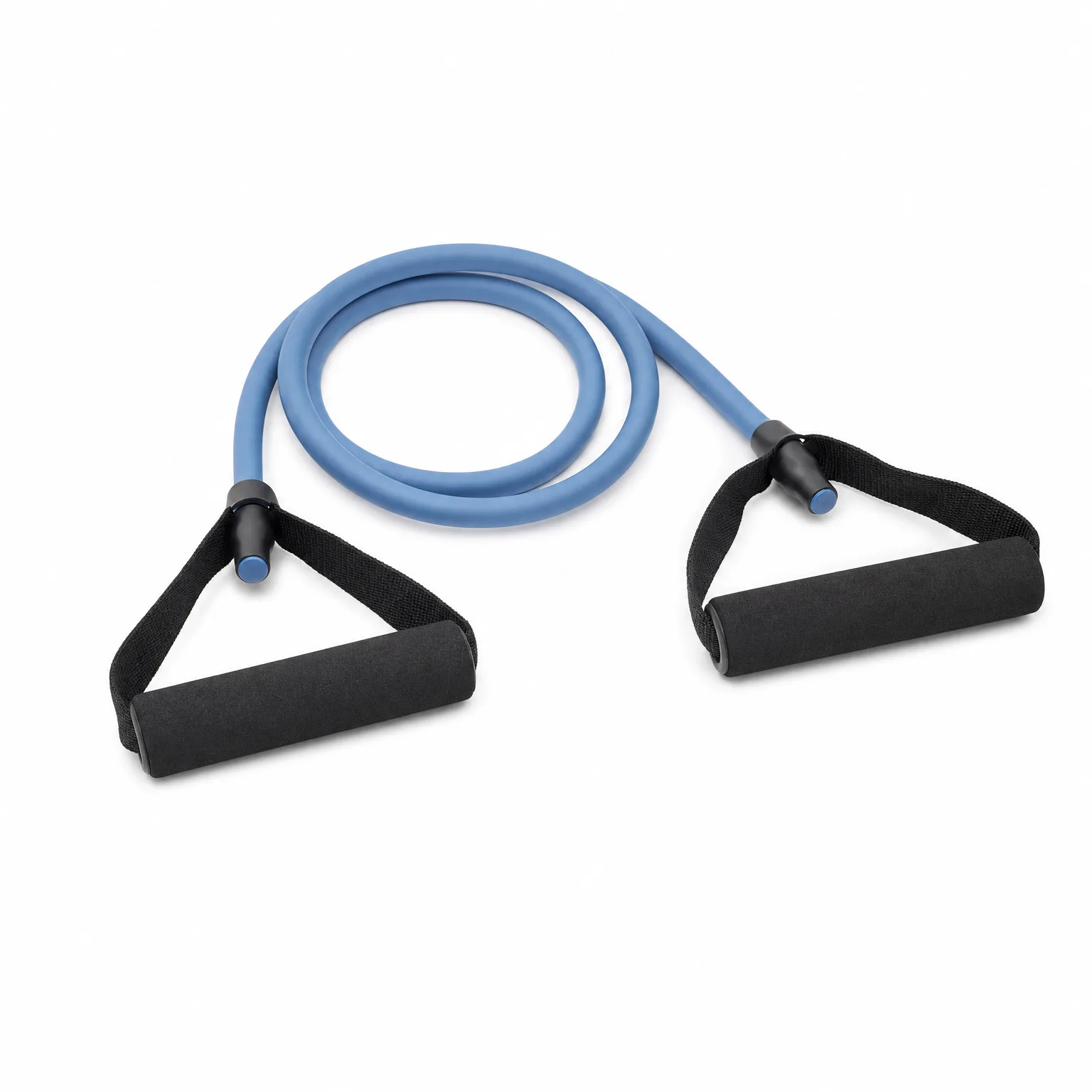
Elastic tubes with a handle at each end, often with a door anchor. A portable way to do rows, presses, curls and pulldowns. -
Resistance bands
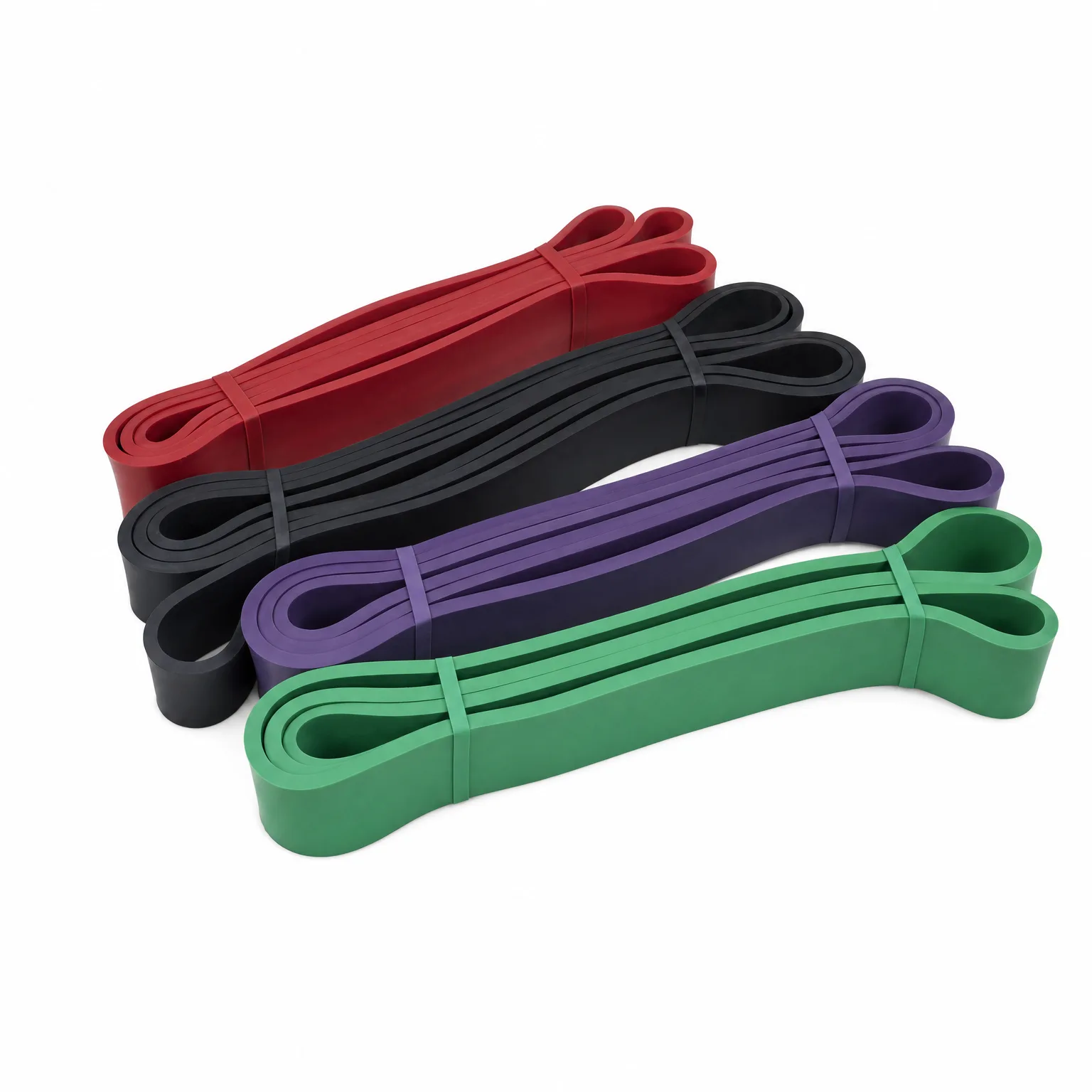
Long closed loops of thick rubber. They add resistance to rows, presses and squats, or take weight off in pull-ups and dips. -
Flat resistance band
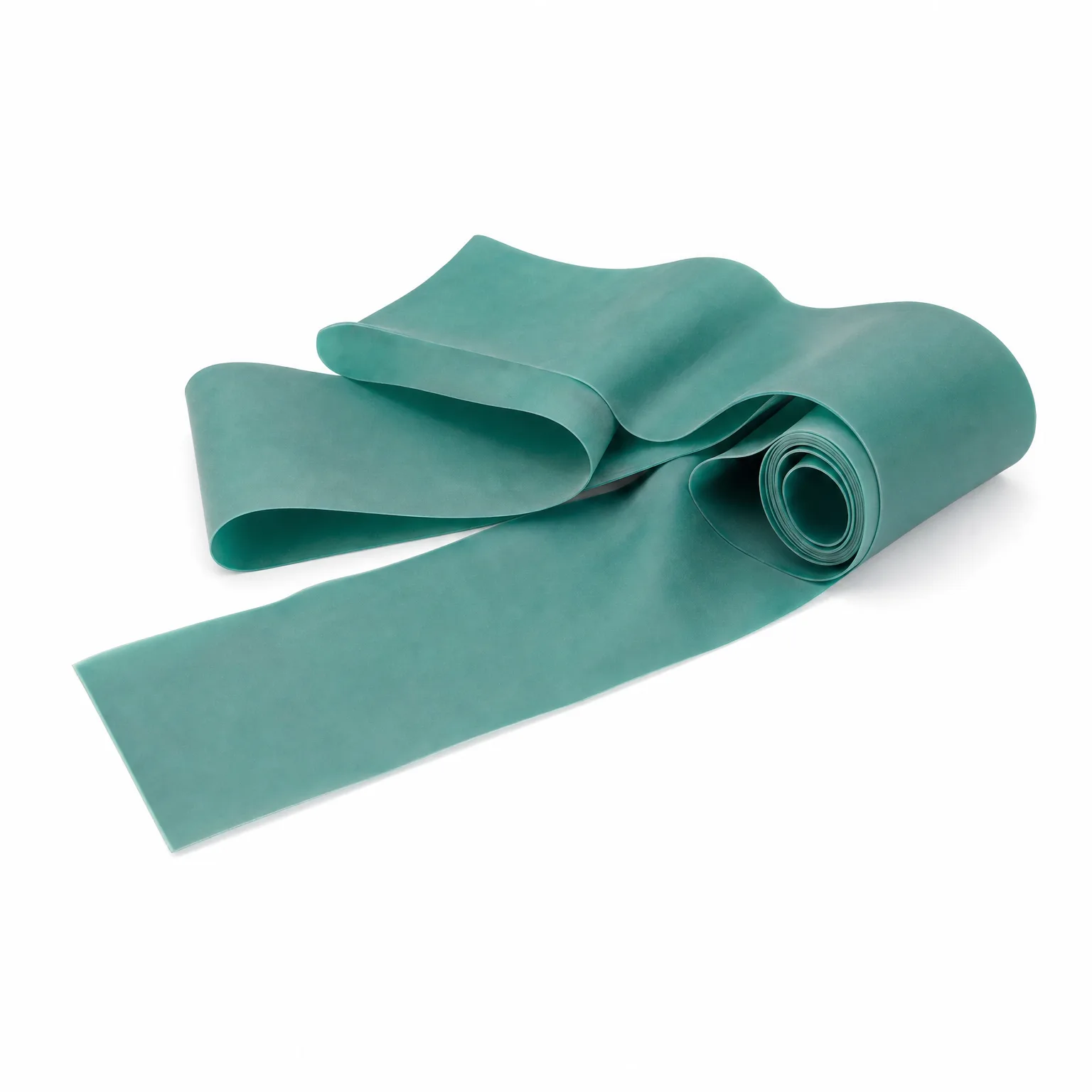
A long, thin, flat strip of elastic with open ends. Used for light strength exercises, Pilates, warm-ups and stretching.
Often used with
-
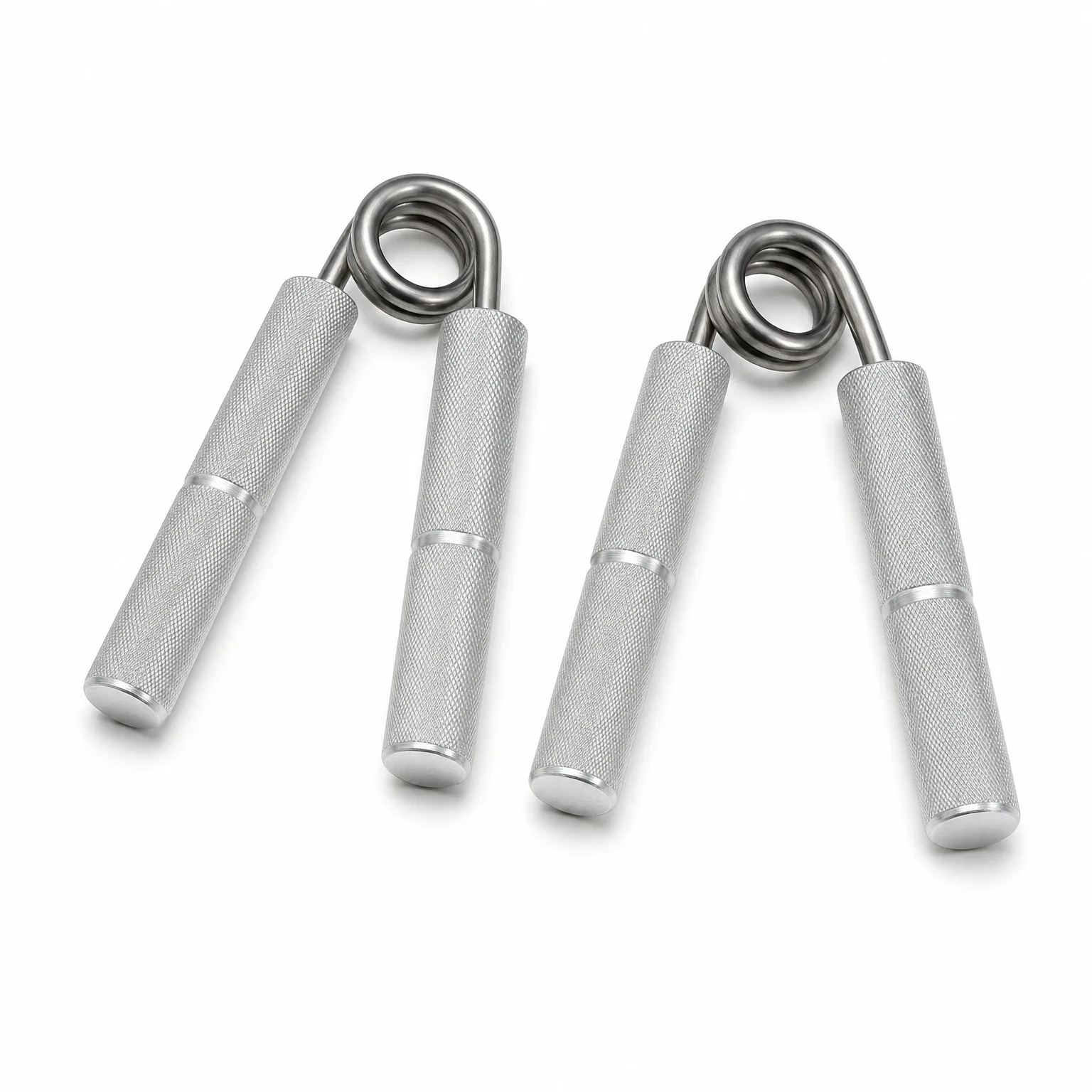
Hand grippers
A spring-loaded pair of handles you squeeze with one hand. Trains the crushing grip and the forearm muscles that close the fingers. -
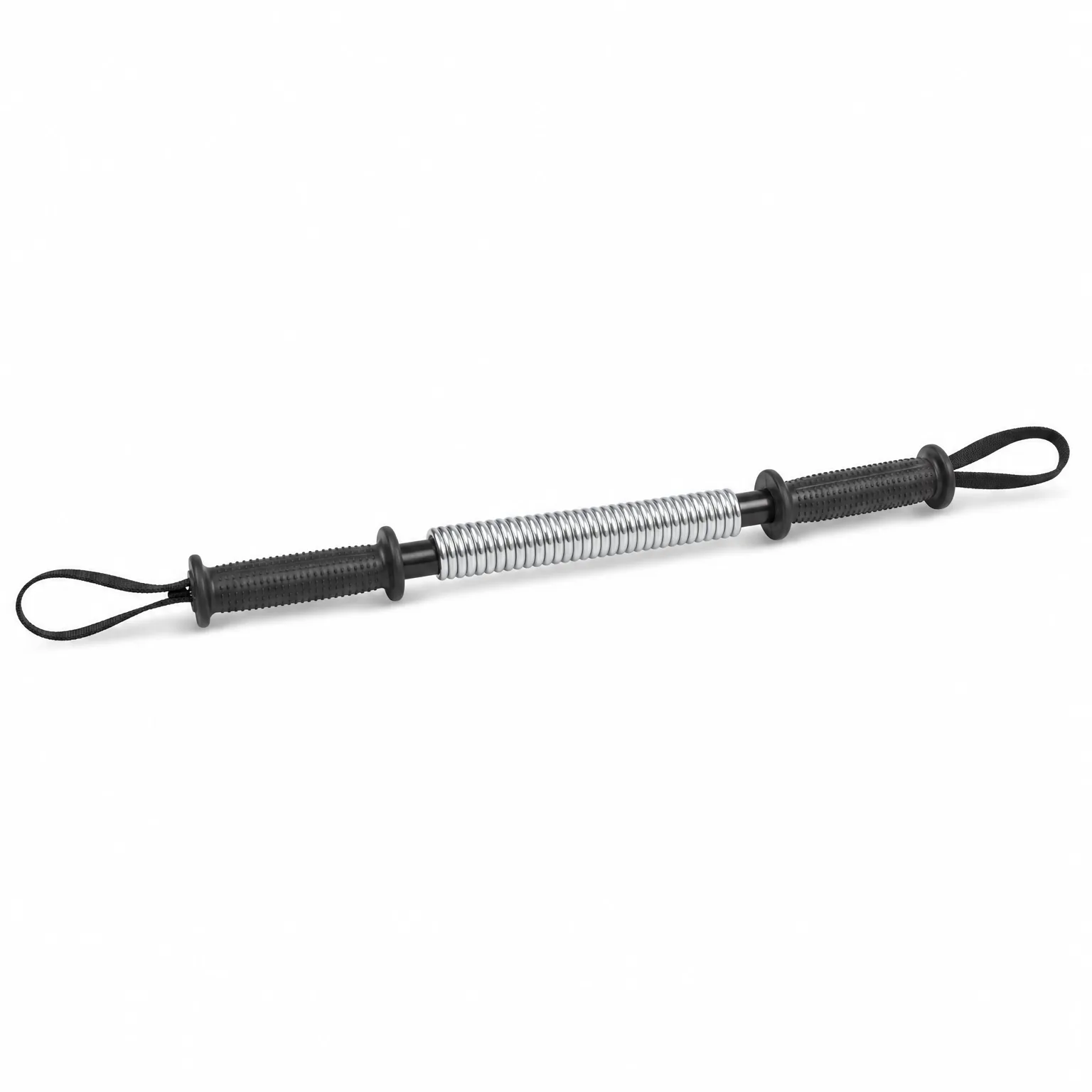
Power twister
A steel bar with a heavy coil spring in the middle and a handle at each end. You bend it into a U to work the chest, shoulders and arms. -
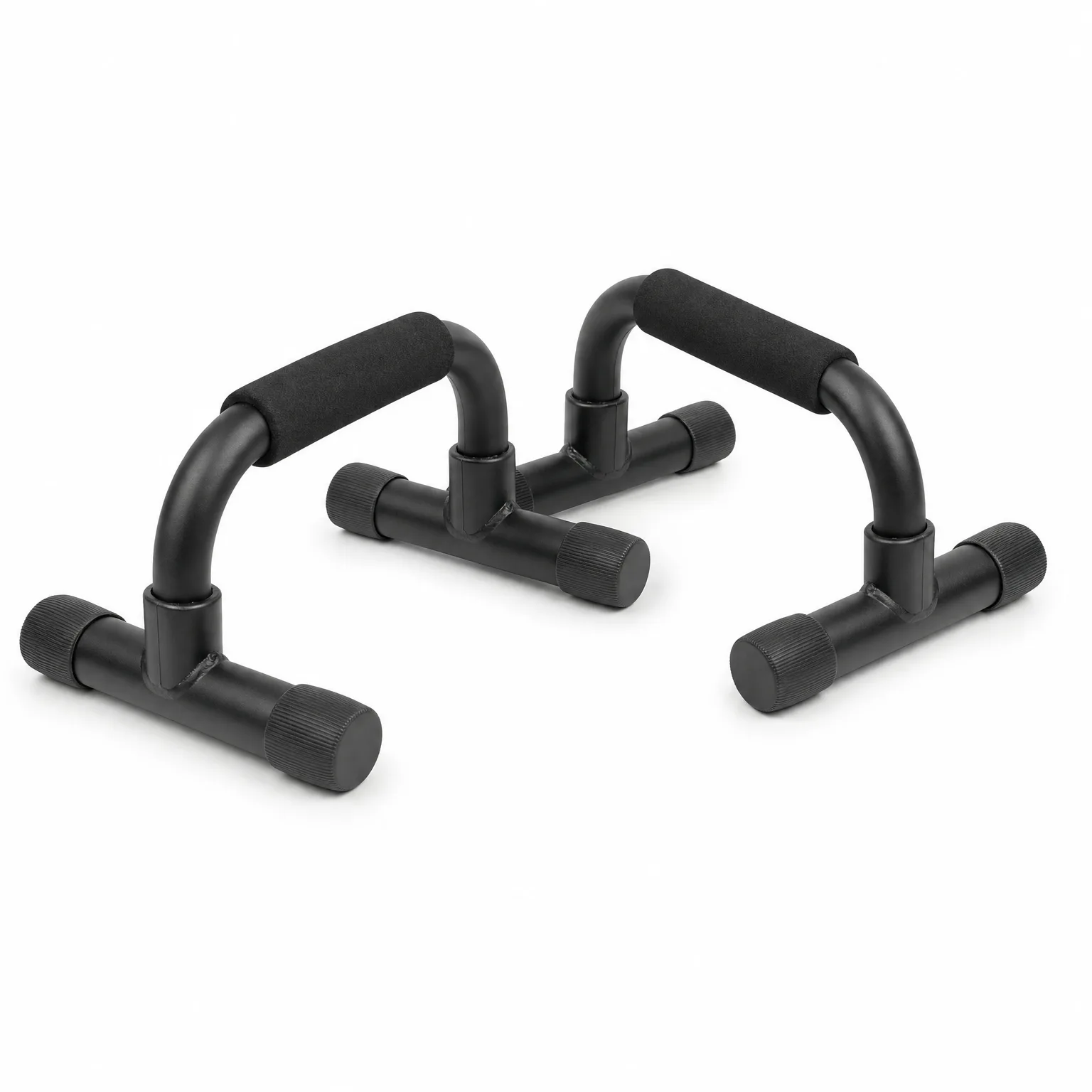
Push-up bars
A pair of low handles for the floor. They keep the wrists straight in push-ups and let the chest go lower than the hands.
Questions about chest expander
What muscles does a chest expander work?
It depends on the exercise. Pulling apart in front works the rear shoulders, the muscles between the shoulder blades and the traps. Pressing apart behind the back works the chest and triceps. Overhead pull-downs bring in the lats, and curls with a foot anchor work the biceps.
Do chest expanders build chest muscle?
A little, through the behind-the-back press, but that is not their strength. Most expander exercises train the upper back and shoulders. For chest size, push-ups and presses with heavier resistance are more effective.
Chest expander vs resistance bands: which is better?
Bands are more versatile: they anchor to doors and under the feet, come in more levels and cover the legs as well. A chest expander is a tidy, quick tool for pull-aparts and upper-body work between the hands. If you own bands, you do not need an expander.
How many springs should I use?
As many as let you reach full stretch for 10–15 controlled reps. That is often one or two for front pull-aparts and overhead work and more for behind-the-back presses. Add a strand when the top of the rep range becomes easy.
Build programs around what your client has
This guide comes from OnlineFitness.app, the app online coaches run their clients in.
Free for life for the first 100 coachesNo card