Equipment Bands and bodyweight tools
Push-up board
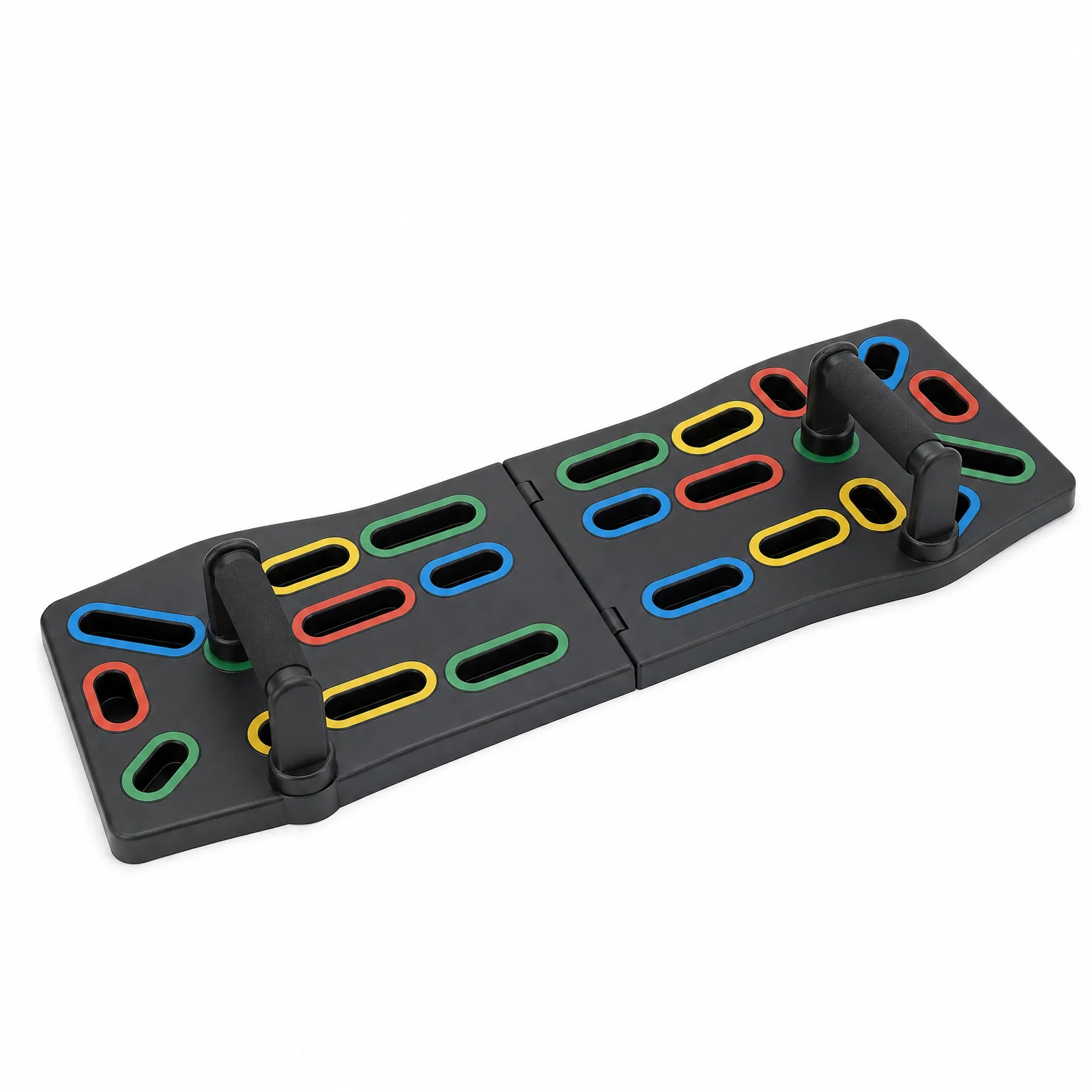
A flat board with color-coded slots and two plug-in handles. Moving the handles changes hand width and angle for push-ups.
In short
A push-up board is a flat plastic board, usually folding, with rows of color-coded slots and two handles that plug into them. You do push-ups holding the handles. Moving them to another pair of slots changes how wide your hands are and how they are turned, which shifts the work between the chest, triceps and shoulders.
It suits people who train with push-ups at home and want variety with a neutral wrist. It is still a push-up: the board adds hand positions, not load, and the colors are a rough guide rather than a precise muscle map.
- Category
- Bands and bodyweight tools
- Where
- Home, Gym, Travel
- Level
- Beginner and up
- Space
- Fits in a drawer or a bag
- Typical sizes
- About 60–70 cm (24–28 in) long unfolded and 18–20 cm (7–8 in) wide; folds in half
- Also called
- push up board, pushup board, push-up rack board, color-coded push-up board, push-up board system, press-up board
Muscles it works
- Main
- Chest, Triceps, Front delts
- Also works
- Abs
What it is used for
- Push-ups at narrow, shoulder-width and wide hand positions without measuring the floor
- Push-ups with a straight wrist for people who find a flat palm uncomfortable
- A slightly deeper push-up, because the handles lift the hands off the floor
- Repeating the same hand position from session to session so progress is comparable
Types
Folding board. The standard type: two halves on a hinge with 10–14 positions. Folds to roughly the size of a large book.
Board with resistance bands. Has anchor points and tube bands with handles, so the board doubles as a standing platform for curls, rows and presses.
Board with rotating handles. The handles sit on turning discs, so the hands rotate through the rep. Less stable, and not a beginner option.
How to choose
Check how the handles lock
The handles should click or seat deeply into the slots and not rock when you lean on them. A handle that pops out mid-rep is the main way these boards fail.
Look at the underside
Rubber or foam feet across the whole base keep the board from sliding on a hard floor. A board with a bare plastic underside needs a mat under it.
Prefer a rigid hinge
On folding boards the hinge is the weak point. The board should lie completely flat and not flex in the middle under your weight. The load limit depends on the manufacturer's rating, so check it against your body weight.
Do not pay for the number of positions
Three widths cover nearly everything: narrow, shoulder width and wide. Extra slots and colors add little.
How to start using it
- Set the board on a flat, grippy surface. Unfold it fully on a hard floor or a thin mat. Plug both handles into matching slots on the left and right and press down on each to check it is seated before you put your weight on it.
- Start at shoulder width. Use the middle slots first. Hold the handles, step back into a straight line from head to heels, lower until the chest is just above the board and press up. Elbows point back at about 45 degrees from the body.
- Change one thing at a time. Move the handles closer to shift work toward the triceps, or wider for more chest. Keep the same position for a few weeks and add reps before switching again.
- Scale the push-up, not the board. If full push-ups are too hard, put your knees on the floor, or set the board aside and do push-ups with your hands on a sturdy bench. If they are easy, raise your feet or add a weighted vest.
Common mistakes
Trusting the color chart literally
Boards label slots for chest, shoulders, triceps and back. Hand position changes emphasis a little, but every position is still a push-up that works chest, triceps and front shoulders. No slot turns it into a back exercise.
Going too wide
The outermost slots put the hands far beyond the shoulders. That shortens the range and loads the shoulder joint in a weak position. Stay within about one and a half shoulder widths.
Not seating the handles
Dropping into a set with a handle half in its slot lets it tip or slip out. Push each handle down and wiggle it before every set.
Letting the hips sag
The board changes nothing about body position. Keep the abs and glutes tight so the body moves as one line, and stop the set when the lower back starts to dip.
What to use instead
Push-up bars give the same straight wrist and extra depth, and you can place them at any width, so they replace a board fully. Low parallettes do the same and add room for L-sits. A pair of hex dumbbells standing on their flat sides works as handles on a non-slip floor. With no equipment, push-ups on the floor at different hand widths train the same muscles.
-
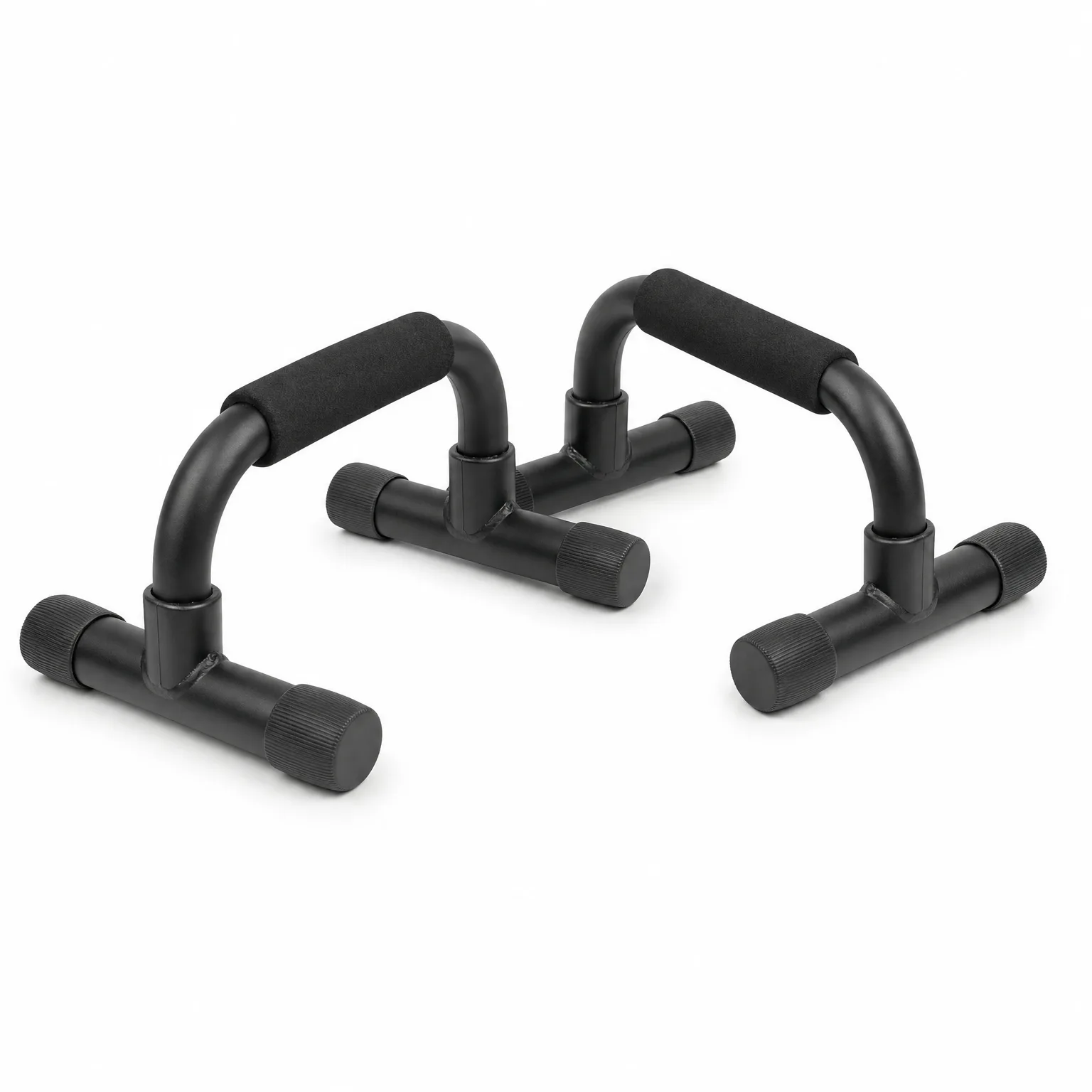
Push-up bars
A pair of low handles for the floor. They keep the wrists straight in push-ups and let the chest go lower than the hands. -
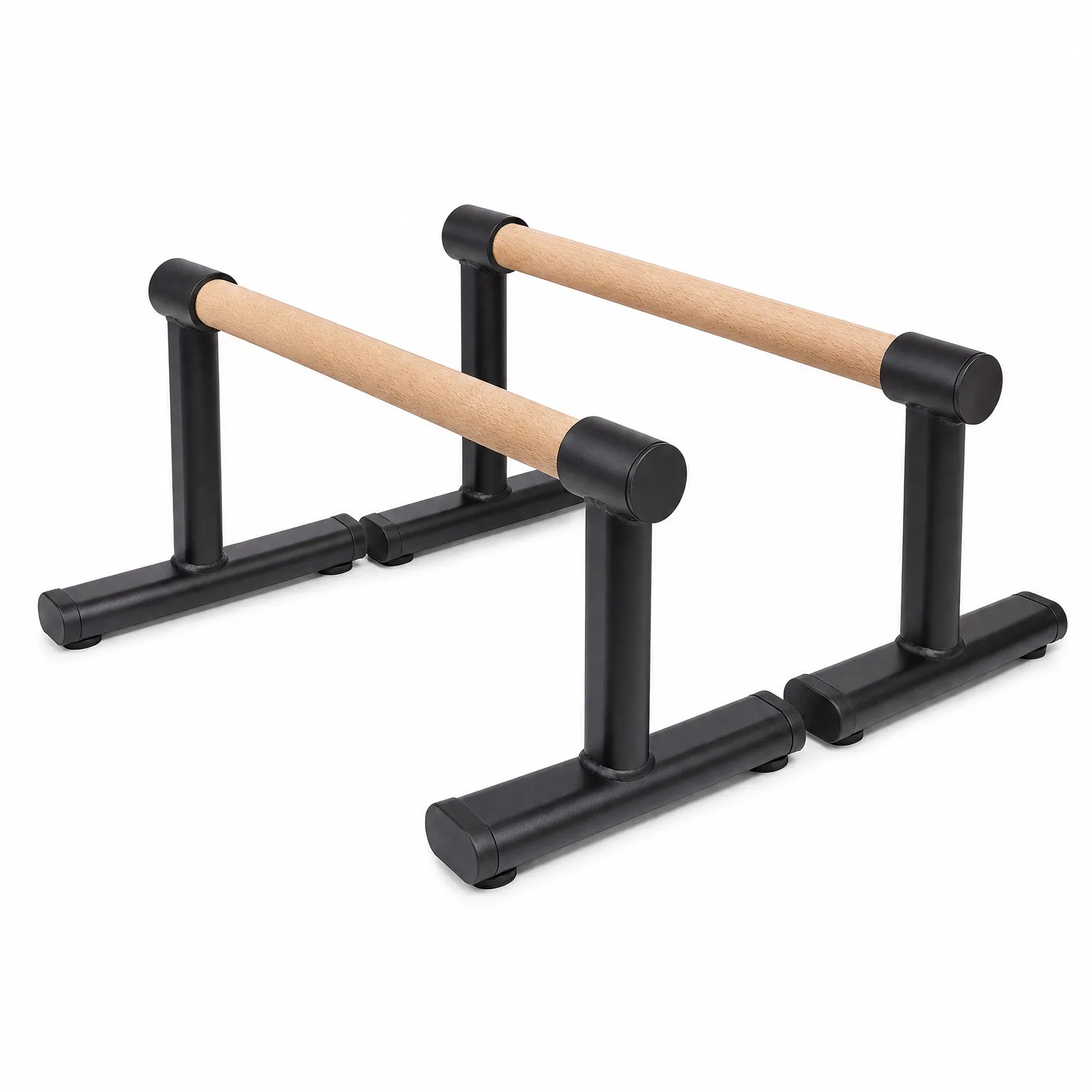
Parallettes
A pair of low parallel bars on stable feet. Used for L-sits, deep push-ups, handstands and other gymnastic strength work. -

Dumbbells
A pair of short handles with a weight at each end. One pair trains every major muscle group, at home or in a gym.
Often used with
-

Exercise mat
A cushioned, non-slip surface for floor exercises, stretching and yoga. The first thing most people need to train at home. -
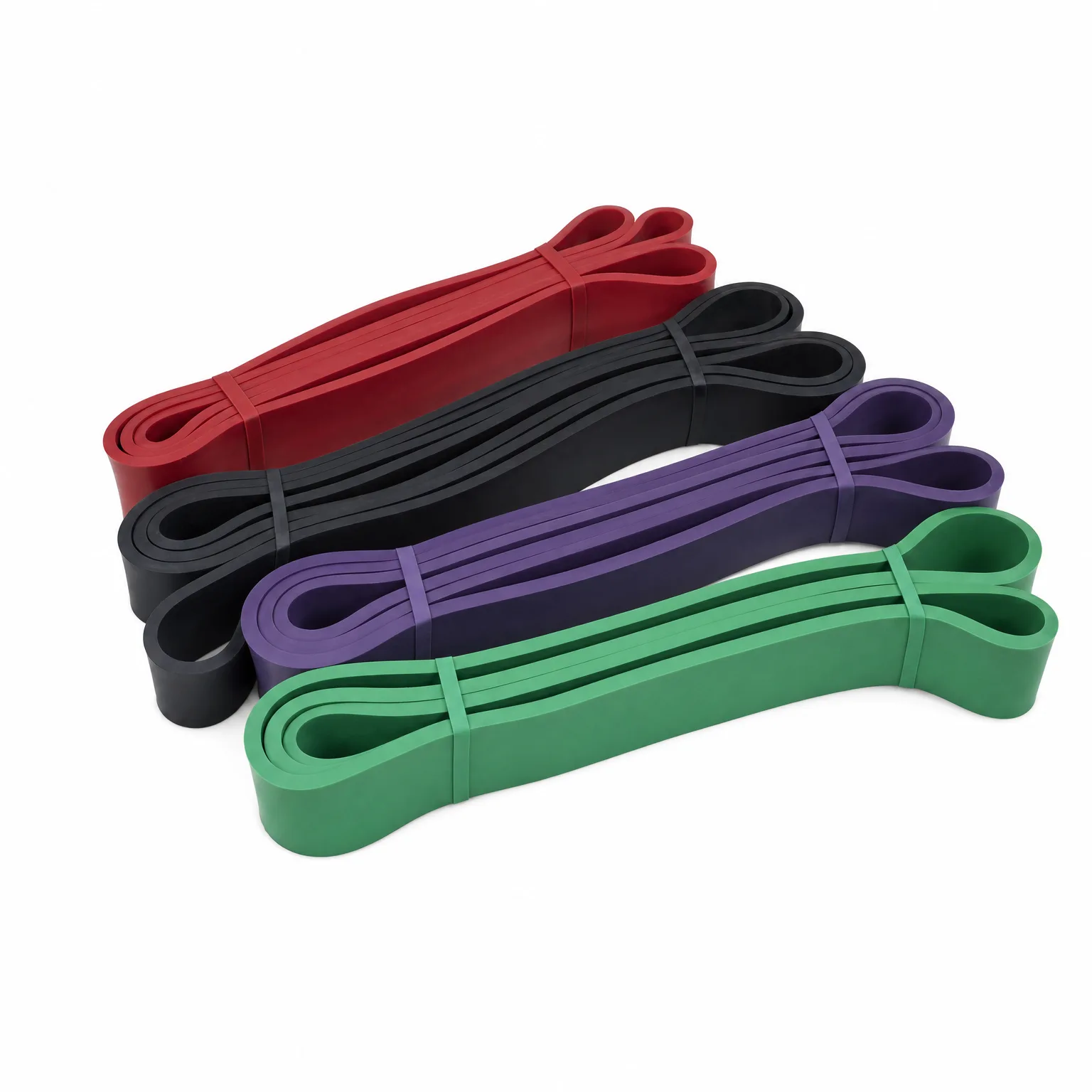
Resistance bands
Long closed loops of thick rubber. They add resistance to rows, presses and squats, or take weight off in pull-ups and dips. -
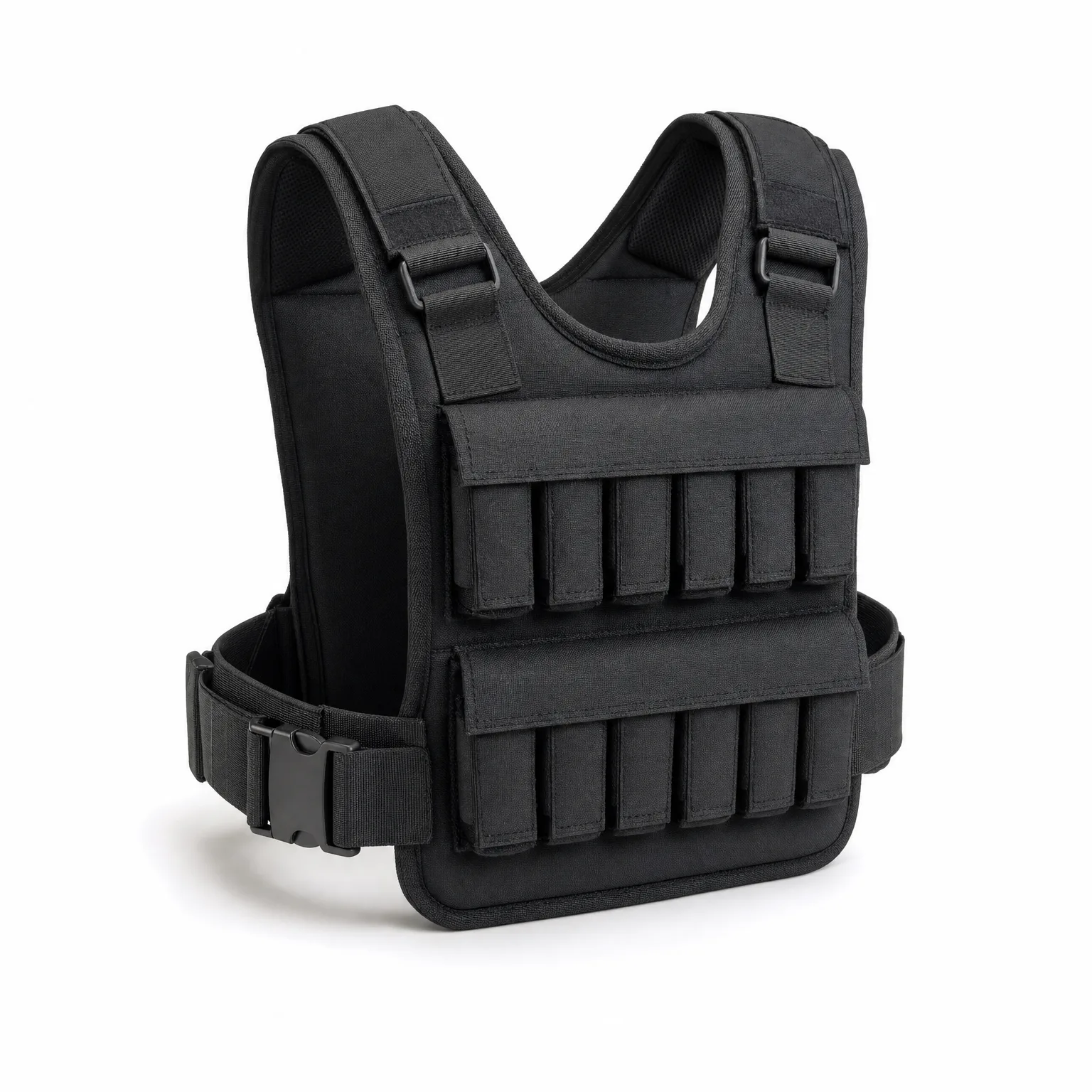
Weighted vest
A vest that carries extra weight on the torso. It makes push-ups, pull-ups, squats, walking and stair climbing harder with free hands.
Questions about push-up board
Do push-up boards really work?
They work as well as push-ups do. The handles keep the wrist straight and the slots make hand positions easy to repeat, which some people find motivating. The board does not add resistance, and the color coding overstates how much each position isolates a muscle.
Push-up board or push-up bars?
Bars are simpler, usually sturdier and can be set at any width or angle. A board fixes the positions for you and keeps both handles linked on one base, which helps on a slippery floor. For most people bars are enough. A board suits those who like a guided layout.
Which position on a push-up board is best for the chest?
A position a little wider than the shoulders, with the elbows about 45 degrees from the body and a full range down to the board. Much wider than that reduces the range without adding chest work.
Can a beginner use a push-up board?
Yes. Start on the knees or with the hands raised if a full push-up is not there yet, use the shoulder-width slots, and build to sets of 8–12 clean reps before trying other positions.
Build programs around what your client has
This guide comes from OnlineFitness.app, the app online coaches run their clients in.
Free for life for the first 100 coachesNo card