Stair climber
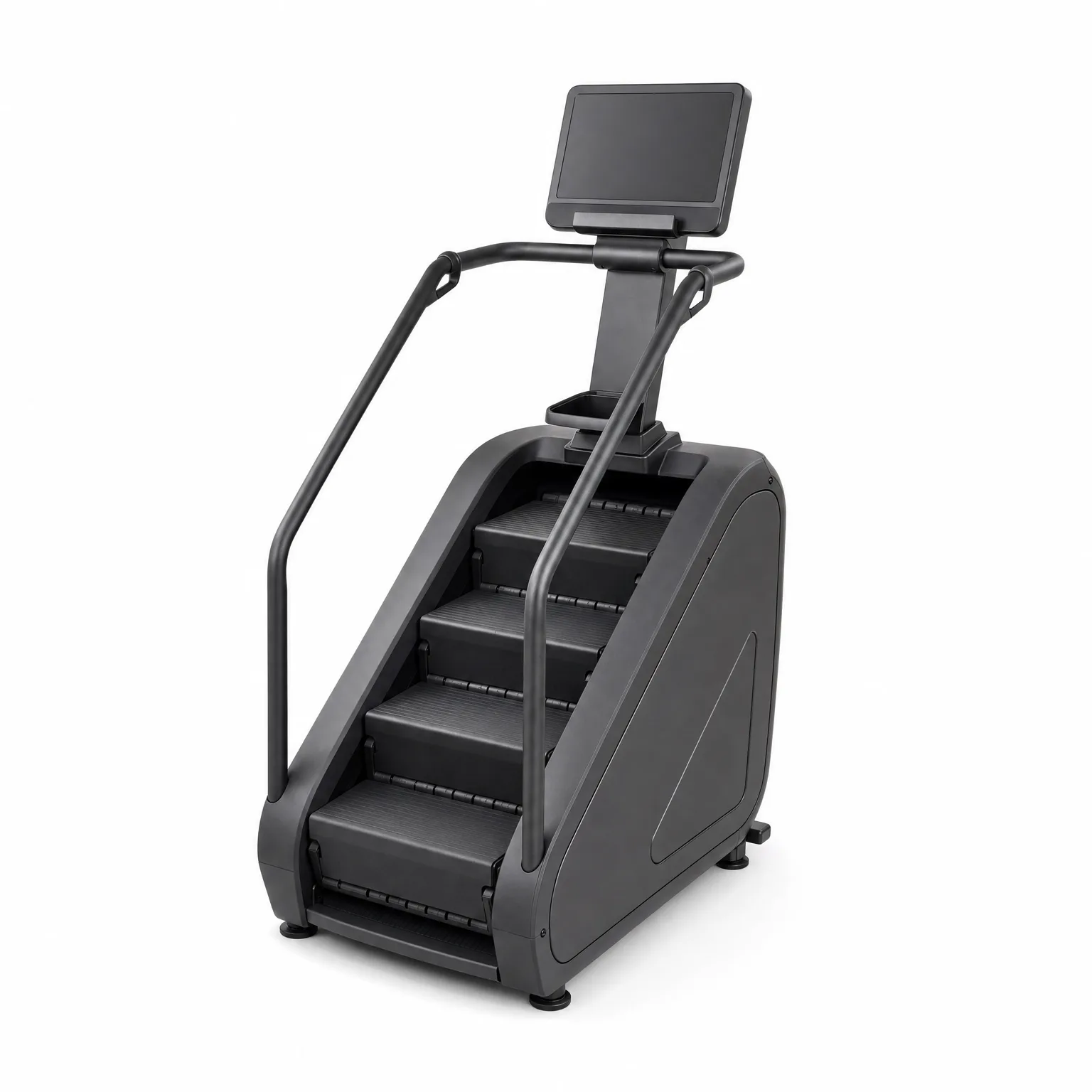
A gym machine that imitates climbing stairs, either with a revolving staircase or with two pedals. It works the glutes, quads and calves.
In short
A stair climber is a cardio machine that imitates walking up stairs. The best-known type, the stepmill, is a short revolving staircase that keeps moving down as you climb. The other type, the stair stepper, has two pedals that you press down in turn. Both make you lift your body weight step after step, so the heart rate climbs quickly even at a slow pace.
It is used for steady cardio and intervals, and it loads the glutes, quads and calves more than flat walking does. The slowest levels suit beginners.
- Category
- Cardio
- Where
- Gym
- Level
- Beginner and up
- Space
- Needs a dedicated area
- Typical sizes
- Stepmills stand about 2.0–2.3 m (6.5–7.5 ft) tall with steps about 20 cm (8 in) high; check the ceiling height the maker requires
- Also called
- stepmill, stair stepper, stair machine, stairmaster, stair climber machine, step machine, stair mill
Muscles it works
- Also works
- Hamstrings, Abs
What it is used for
- Steady climbing of 10–30 minutes
- Intervals that alternate a fast and a slow step rate
- Leg endurance for hiking and hill walking
- A short, hard finisher after strength training
- Variations such as side steps or skipping a step, at low speed
Types
Stepmill. A revolving set of real steps, like a short escalator going down. You take full steps and lift your whole body each time. The harder of the two types.
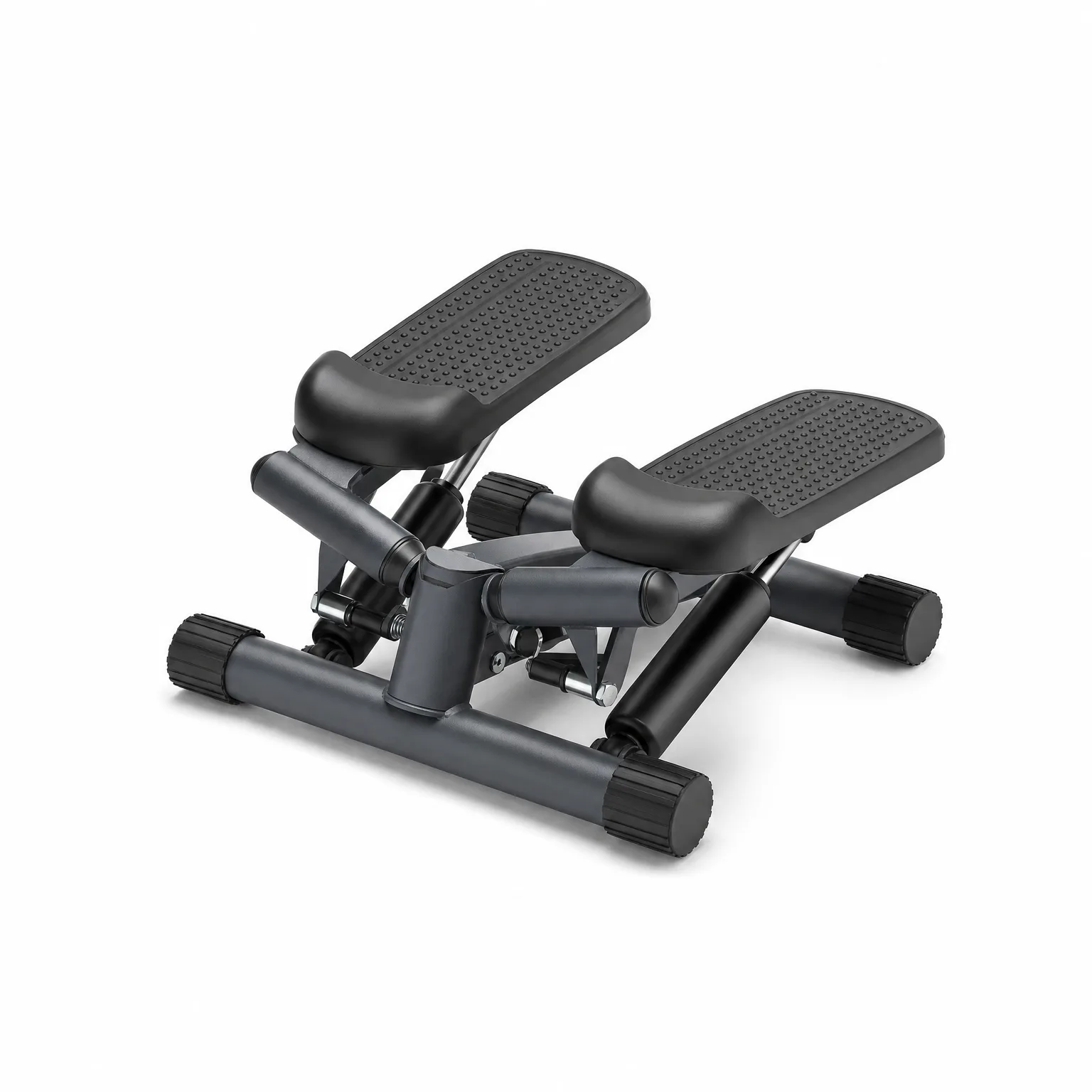
Pedal stair stepper. Two pedals that go up and down under your feet. The feet never leave the pedals and the step depth is up to you.
Vertical climber. A related machine with pedals and handles that move on an upright rail, closer to climbing a ladder. Arms and legs work together. It has its own page.
How to choose
Stepmill or pedals
If your gym has both, the stepmill is closer to real stairs and harder for a given time. The pedal stepper is steadier underfoot and lets you start with shallow steps, which is an easier entry point.
Pick a level you can hold hands-free
The right speed is one at which you can stand upright and climb without gripping the rails. If you have to hang on, go down a level.
Choose manual mode at first
Preset programs change the speed for you. On your first sessions use manual or quick start so that every speed change is your own.
For a home, check the ceiling
A stepmill puts you well above the floor, so standard ceilings can be too low for taller users. Compact home steppers with pedals avoid the problem.
How to start using it
- Get on and start slow. Hold both rails, climb onto the steps of a stepmill until you stand comfortably within reach of the console, and press start at the lowest level. The steps begin moving after a short delay. On a pedal stepper, stand on both pedals before you start.
- Place the whole foot. Put the full foot on each step, heel included, and push through the heel and midfoot. This spreads the work across the glutes and thighs and keeps the calves from doing it all.
- Stand tall and keep the hands light. Stay upright or lean very slightly forward from the hips. Rest your fingertips on the rails for balance without putting weight through them.
- Start with 5–10 minutes. Stair climbing is harder than it looks. Do a short first session at a low level, then add a couple of minutes each time. Once 20 minutes feels steady, begin raising the level.
- Slow down before stepping off. Drop to the lowest level for a minute or two, press stop, wait until the steps are still, and climb down holding the rails.
Common mistakes
Hanging on the rails
Supporting your weight on your arms, or locking the elbows and leaning on the console, takes a large part of the load off the legs. Slow the machine down until you can climb upright with light hands.
Hunching over the console
Bending forward at the waist shortens the step and loads the lower back. Keep the chest up and the eyes ahead.
Climbing on the toes
With only the forefoot on the step, the calves take over and tire first. Place the whole foot on the step.
Taking tiny steps on a pedal stepper
Quick, shallow pumps at the top of the pedal travel raise the count but barely move your body. Use a full, controlled range without letting the pedals hit the bottom.
Going too fast too soon
A speed you cannot hold for more than a minute forces you onto the rails. A lower level held for the whole session does more.
What to use instead
Real stairs are the direct replacement: climb a few flights, walk down and repeat. A mini stepper gives the pedal version of the movement at home. Step-ups on a step platform or a sturdy box train the same muscles one leg at a time. A treadmill set to a steep incline at walking speed comes close to the same effort.
-
Stairs
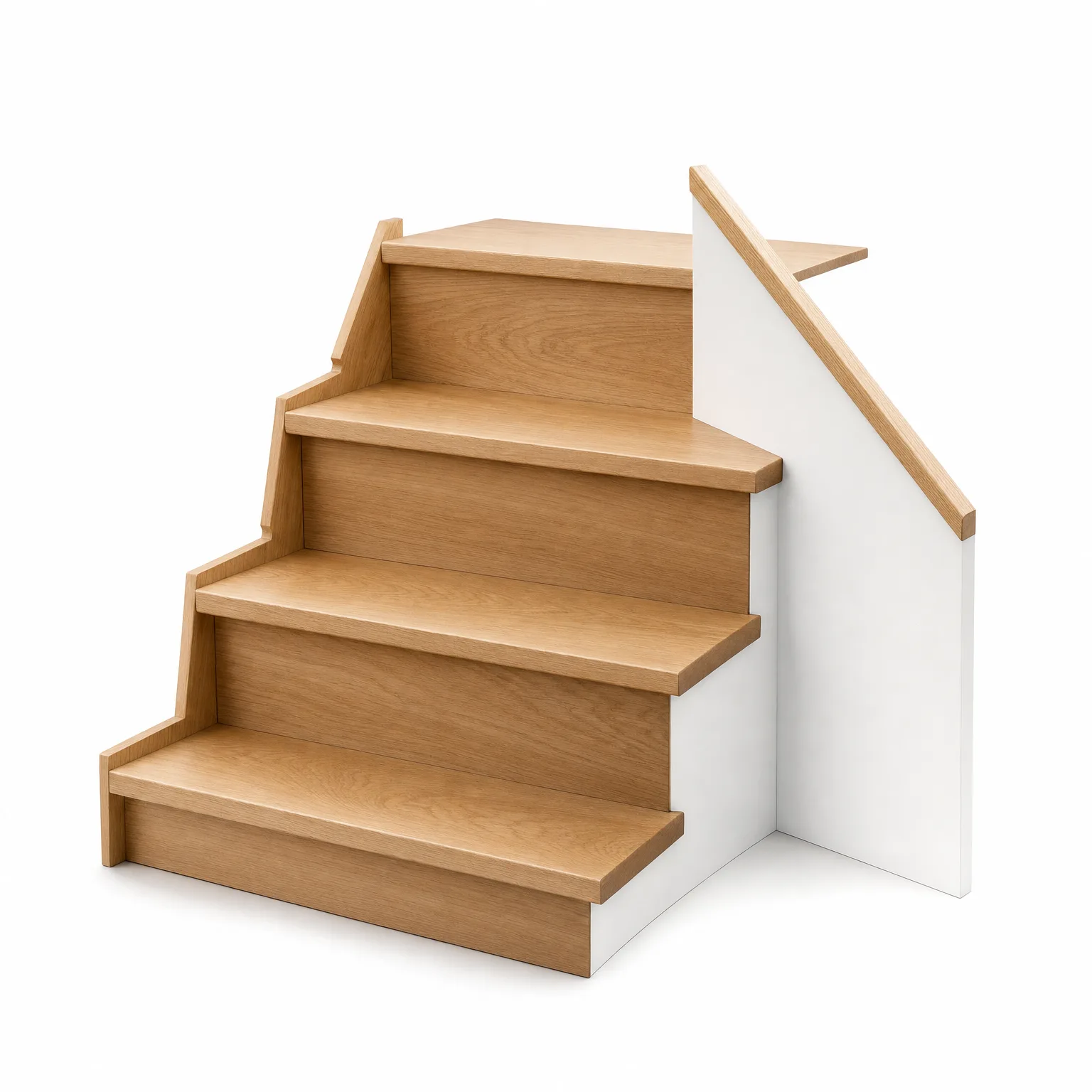
A staircase or a single step replaces a step platform, a low plyo box and a stair climber: step-ups, calf raises and stair climbing. -
Mini stepper
A small home machine with two pedals on hydraulic cylinders. You step in place to train the legs and raise the heart rate. -
Step platform
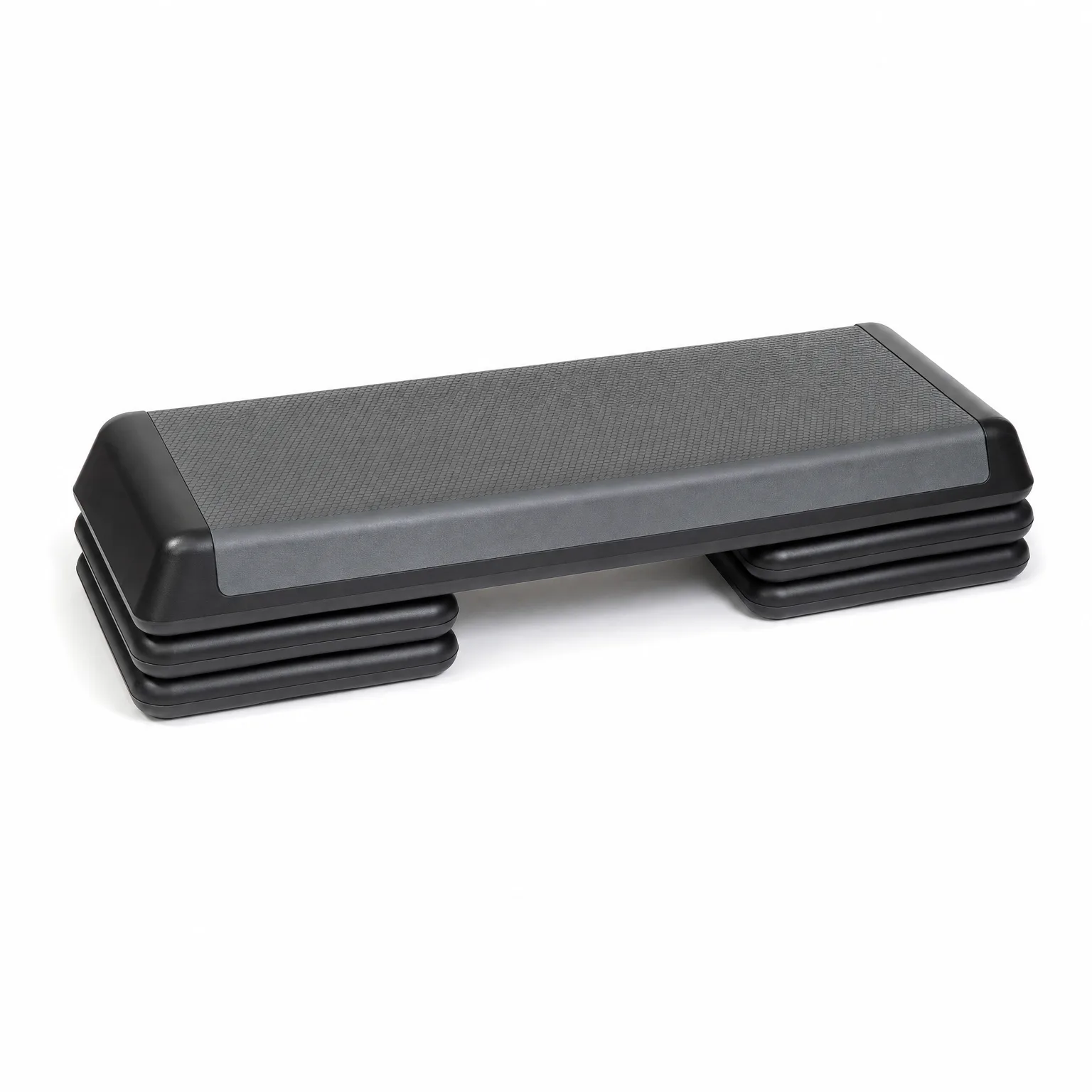
A low, wide platform with removable risers. Used for step aerobics, step-ups, calf raises and as a low bench. -
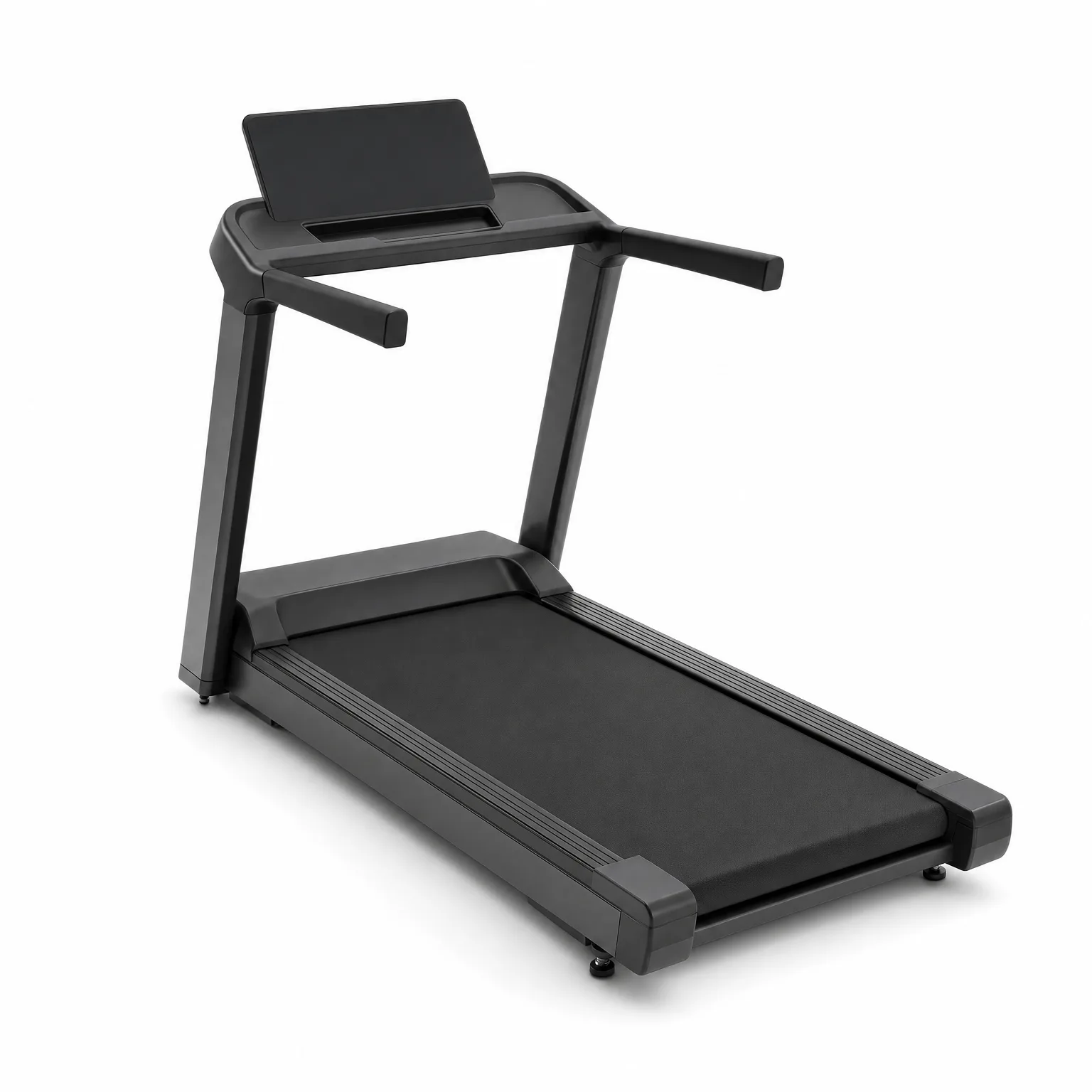
Treadmill
A moving belt for walking and running indoors. You set the speed and incline, so the pace stays exactly where you put it.
Often used with
Questions about stair climber
What muscles does a stair climber work?
Mostly the glutes, quads and calves, with the hamstrings helping and the abs keeping the torso upright. Placing the whole foot on the step and pushing through the heel brings the glutes in more. Climbing on the toes shifts the work to the calves.
Stair climber vs treadmill: which is harder?
At the same pace of movement the stair climber is usually harder, because every step lifts your body weight. A treadmill covers a wider range, from a slow walk to a sprint. Incline walking on a treadmill is the closest match to stair climbing.
How long should a beginner use a stair climber?
Start with 5–10 minutes at a low level, two or three times a week. Add a couple of minutes per session until you reach 20–30 minutes, and only then raise the speed.
Is it OK to hold the handrails on a stair climber?
A light touch for balance is fine, and holding on is sensible while getting on and off. Leaning your weight on the rails is what to avoid, because it reduces the work your legs do. If you cannot let go, lower the level.
Stepmill vs stair stepper: what is the difference?
A stepmill has a revolving staircase and you take real steps, lifting each foot onto the next stair. A stair stepper has two pedals that move up and down while your feet stay on them. The stepmill is closer to real stairs and generally more demanding.
Build programs around what your client has
This guide comes from OnlineFitness.app, the app online coaches run their clients in.
Free for life for the first 100 coachesNo card