Equipment Mobility and recovery
Massage balls
Small firm balls for pinpoint self-massage of the glutes, upper back, feet and other spots a foam roller cannot reach.
In short
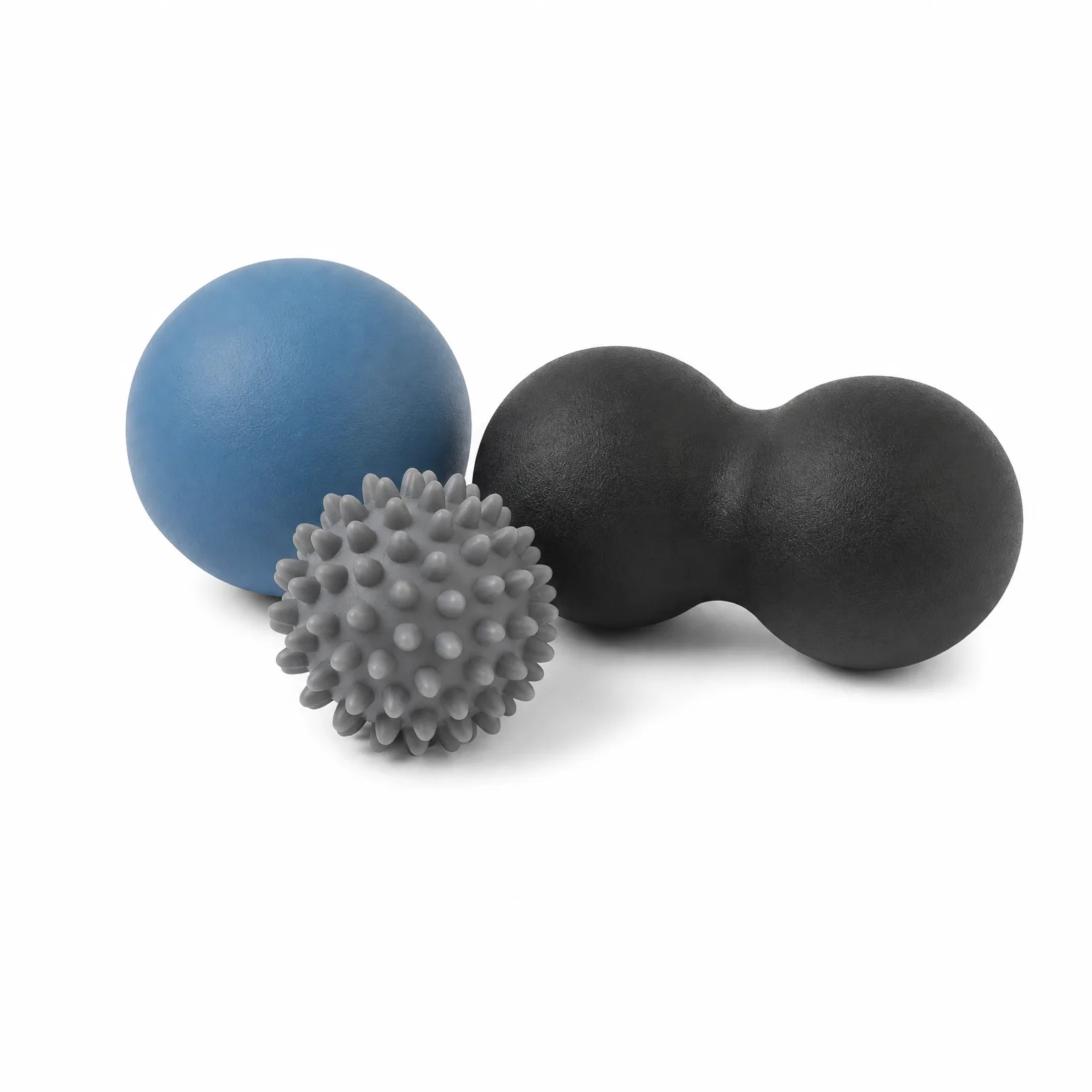
Massage balls are small, firm balls that you press between your body and a wall or the floor to massage one spot at a time. The best known are the lacrosse ball, a solid rubber ball slightly smaller than a tennis ball, and the peanut ball, two balls joined side by side. They put pressure on a much smaller area than a foam roller.
People use them on places a roller is too big for: the glutes, the muscles around the shoulder blades, the chest near the shoulder, the forearms and the soles of the feet. The feeling is a strong, focused pressure. They are simple to use, cost little and fit in a pocket.
- Category
- Mobility and recovery
- Where
- Home, Gym, Travel
- Level
- Beginner and up
- Space
- Fits in a drawer or a bag
- Typical sizes
- Lacrosse ball about 6.3 cm (2.5 in) across; other massage balls 5–12 cm (2–5 in); peanut balls about 12–16 cm (5–6 in) long
- Also called
- massage ball, lacrosse ball, peanut ball, trigger point ball, spiky ball, double lacrosse ball, myofascial release ball
What it is used for
- Pinpoint pressure on the glutes and the side of the hip
- Working around the shoulder blades and upper back against a wall
- Rolling the soles of the feet while seated or standing
- Pressure on the chest, forearms and calves
- Rolling along both sides of the spine with a peanut ball
Types
Lacrosse ball. Solid rubber, very firm, with a slightly grippy surface that stays put on a wall. The standard choice for glutes, shoulders and feet.
Peanut ball. Two balls joined together. The groove sits over the spine so the balls press on the muscles either side. Also used on calves and forearms.
Spiky ball. A smaller, lighter ball with blunt spikes. Mostly used under the feet and on the hands. Softer versions suit people who find a lacrosse ball too hard.
Soft foam or rubber ball. Gives under pressure. A gentler starting point, and more comfortable on the chest and other sensitive areas.
Large ball. About 10–12 cm across. Spreads the pressure over a wider area, halfway between a small ball and a foam roller. Good for hips and hamstrings.
How to choose
Start with one firm ball
A single lacrosse-size ball covers most uses. If you are sensitive to pressure or new to self-massage, start with a slightly softer rubber ball and move to a firmer one later.
Add a peanut for the back
A single ball cannot be used on the spine. A peanut ball sits with the spine in its groove and presses on the muscles either side, which makes it the right tool for the upper and middle back.
Check the surface
A slightly tacky rubber surface holds its place against a wall and clothing. Smooth, hard plastic balls slide and are harder to control.
Match size to the area
Smaller balls dig deeper and suit feet, forearms and the chest. Larger balls spread the load and are easier to tolerate on the hips and thighs.
How to start using it
- Begin against a wall. Standing with the ball between you and a wall lets you control pressure by how much you lean. Lying on the ball puts much more of your body weight through it, so save the floor for when the wall no longer feels like enough.
- Find a spot and hold. Move slowly until you find a tight, tender spot in the muscle. Stay on it for 20–30 seconds while breathing normally, then move a few centimeters and repeat. One to two minutes per area is plenty.
- Add small movements. Once the pressure feels tolerable, make small circles or slowly move the nearby limb, for example raise and lower the arm while the ball is on the back of the shoulder.
- Roll the feet while seated first. Sit on a chair, put the ball under one foot and roll from heel to toes with light pressure. Stand up to add weight only if sitting feels too easy, and hold on to something for balance.
- Place the peanut either side of the spine. Lie on your back with the peanut ball across the upper back, the spine resting in the groove. Support your head with your hands, and shift a little higher or lower every 20–30 seconds.
Common mistakes
Pressing on bone or the spine
A single ball directly on the spine, the point of the hip, the shoulder blade edge or a joint just hurts. Keep it on the soft part of the muscle and use a peanut ball along the back.
Too much pressure too soon
Dropping your full weight onto a hard ball makes the muscle tighten against it and can leave the area sore or bruised the next day. Build the pressure gradually.
Staying on one spot for minutes
Long, heavy pressure on a single point tends to irritate it. If a spot has not eased after about 30 seconds, move on and come back later.
Ignoring numbness or tingling
Pins and needles, numbness or pain that shoots down an arm or leg suggests you are pressing on a nerve, not on muscle. Move the ball or stop.
Using it on the neck and throat
The front and sides of the neck are not places for a hard ball. For the back of the neck, use light pressure only, at the base of the skull, or leave the area alone.
What to use instead
A tennis ball is the usual stand-in: softer than a lacrosse ball and a good starting point. Two tennis balls tied in a sock work like a peanut ball. A foam roller covers the large muscles of the legs and back but cannot target small spots. A massage gun reaches the same areas without needing a wall or the floor.
-
Foam roller
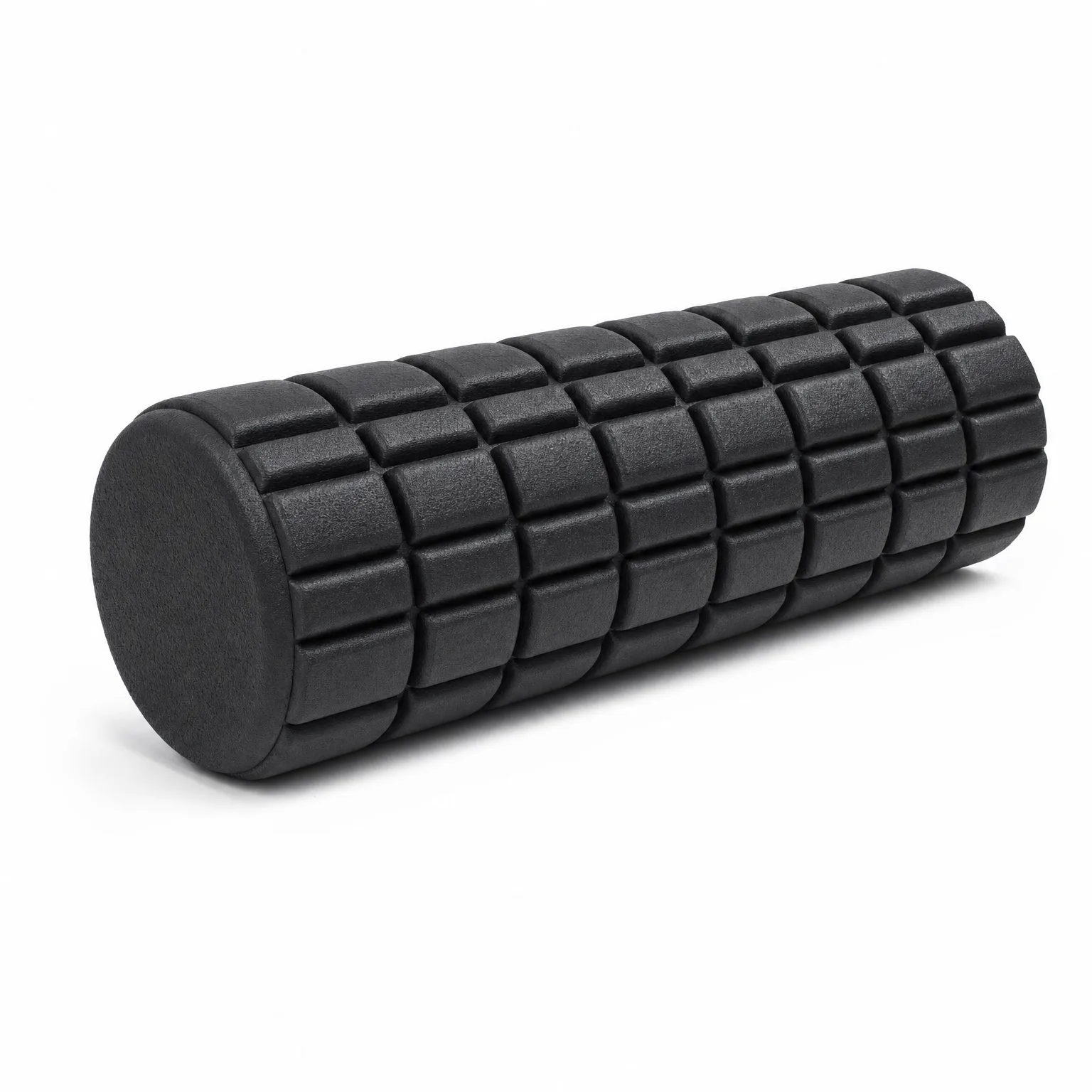
A firm foam cylinder you lie on and roll along a muscle for self-massage, usually during a warm-up or after training. -
Massage gun
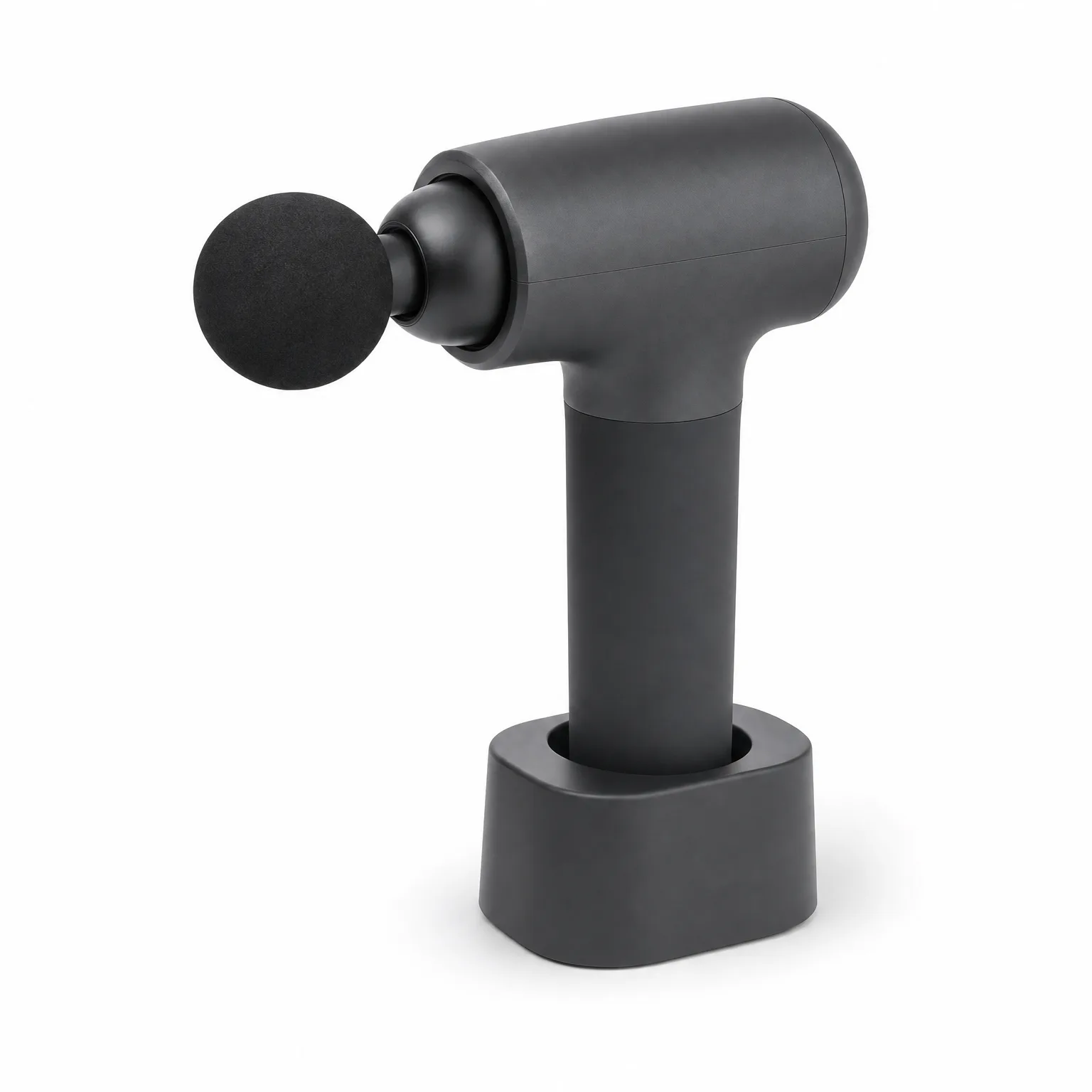
A handheld, battery-powered device that taps a muscle rapidly with a soft head. Used for self-massage before or after training.
Often used with
-

Exercise mat
A cushioned, non-slip surface for floor exercises, stretching and yoga. The first thing most people need to train at home. -
Wall
A clear stretch of solid wall works as support, a balance aid and a fixed surface to push against: wall sits, wall push-ups, stretches. -
Foam roller
A firm foam cylinder you lie on and roll along a muscle for self-massage, usually during a warm-up or after training.
Questions about massage balls
What is a lacrosse ball used for in fitness?
As a firm self-massage tool. You lean on it against a wall or lie on it and press it into a muscle, most often the glutes, the back of the shoulder, the upper back and the sole of the foot. It is popular because it is hard enough to give strong pressure, grippy enough to stay in place, and cheap.
Massage ball or foam roller?
A foam roller covers big muscles quickly: quads, hamstrings, calves, lats. A ball presses on one small spot at a time and reaches places a roller cannot, such as the glutes, the feet and between the shoulder blades. Many people use both: the roller first, then a ball on any spot that still feels tight.
What is a peanut massage ball for?
Its two-ball shape leaves a gap in the middle. Lying on it with the spine in that gap puts pressure on the muscles running either side of the spine without pressing on the bone. It is also handy on the calves, forearms and the back of the neck with light pressure.
How often can I use a massage ball?
Most people use one for a few minutes a day or around training sessions without any problem. Keep it to one or two minutes per area, and give a spot a day off if it feels bruised or sore from the previous session.
Build programs around what your client has
This guide comes from OnlineFitness.app, the app online coaches run their clients in.
Free for life for the first 100 coachesNo card