Equipment Mobility and recovery
Massage gun
A handheld, battery-powered device that taps a muscle rapidly with a soft head. Used for self-massage before or after training.
In short
A massage gun, or percussion massager, is a handheld device with a motor that drives a padded head back and forth many times a second. You rest the head on a muscle and it delivers rapid, short taps. People use it for self-massage of the legs, glutes, back and arms, usually for a minute or two per muscle.
It does roughly the same job as a foam roller, but you do not need to get on the floor or support your body weight. It feels like a strong, buzzing massage. It does not build strength or fitness and is not a treatment: think of it as a comfort tool around training.
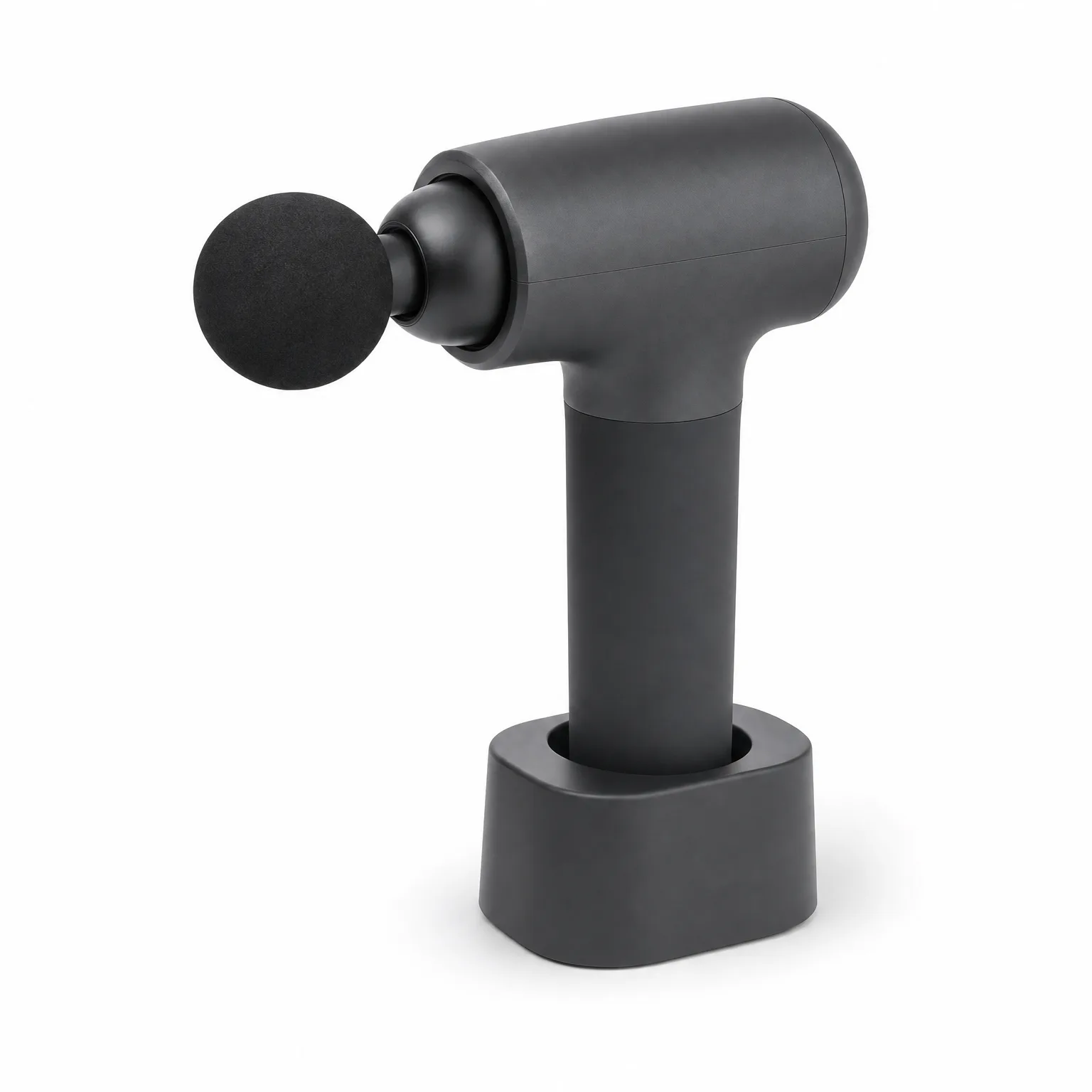
- Category
- Mobility and recovery
- Where
- Home, Gym, Travel
- Level
- Beginner and up
- Space
- Fits in a drawer or a bag
- Typical sizes
- Stroke depth about 6–16 mm (0.25–0.6 in); most weigh 0.4–1.2 kg (1–2.5 lb)
- Also called
- percussion massager, percussive massager, muscle gun, percussion gun, handheld massager, deep tissue massager
What it is used for
- Self-massage of large muscles: quads, hamstrings, calves, glutes
- A short pass over the working muscles as part of a warm-up
- Winding down after training or on rest days
- Reaching the upper back and shoulders without lying on the floor
- Massage of the forearms and the soles of the feet with a small head
Types
Full-size. A longer stroke and a stronger motor that keeps going under firm pressure. Suits large muscles. Heavier to hold and usually louder.
Mini. Palm-sized, light and quiet enough for travel. Shorter stroke and less power, which is fine for arms, calves and light use.
Heated or cooled head. An attachment that warms up or cools down while it works. A comfort feature that adds cost and battery drain.
How to choose
Look at stroke depth and stall force
Stroke depth, or amplitude, is how far the head travels: around 10–16 mm gives a distinct tapping feel, while under about 8 mm feels closer to vibration. Stall force is how hard you can press before the motor stops. Both matter more than the top speed figure.
Weight and handle
You hold the device at arm's length, sometimes behind your back. A lighter body and a handle you can grip in more than one way make it far easier to reach the shoulders and back on your own.
Noise and battery
Quieter models are easier to use while watching something or around other people. Check the claimed battery life and how the device charges. A common USB-C port is more convenient than a special charger.
You need few attachments
A round ball head and a flat head cover almost everything. A soft or cushioned head helps on sensitive areas. Pointed and fork heads are easy to misuse and most people rarely touch them.
How to start using it
- Start on the lowest speed. Fit the round or flat head, switch the device on before it touches you, and choose the lowest setting. Raise the speed only if it feels comfortable. Read the manufacturer's instructions for limits on session time.
- Let the head float over the muscle. Rest the head on the muscle with light pressure and glide it slowly along the length of the muscle, a few centimeters per second. Let the device do the work instead of pushing it in.
- Keep it short. About 30 seconds to two minutes per muscle group is typical. Before training, a brief pass of 30 seconds or so is enough. Keep moving rather than holding the head on one point.
- Stay on the soft part of the muscle. Work the thick, fleshy areas: thighs, calves, glutes, the muscles of the upper back and the upper arms. Lift the head off as you approach a joint, a bony edge or the spine.
Common mistakes
Using it on bones, joints or the spine
Percussion on the kneecap, shin, elbow, collarbone or directly on the spine is painful and pointless. The device is for muscle only.
Using it on the neck, head or abdomen
Keep the device away from the front and sides of the neck, the throat, the head, the face, the abdomen and the groin. On the shoulders, stay on the thick muscle on top, away from the neck. If you are unsure about an area, leave it out.
Pressing hard on the highest speed
More force and more speed do not give a better result and can leave the muscle sore or bruised. Light to moderate pressure on a low or medium setting is enough for most people.
Using it on an injury
Do not use a massage gun on a recent strain, sprain, bruise, swelling, broken skin or any area with numbness. If you have a medical condition or take blood-thinning medication, ask your doctor before using one.
Expecting it to replace training or recovery
A massage gun can feel good, but it does not replace a warm-up, sleep, food or sensible training loads. Treat it as an extra.
What to use instead
A foam roller gives a similar massage of the large leg and back muscles using your body weight, with no battery and at a fraction of the cost. Massage balls reach small spots such as the glutes, the shoulder blade area and the feet. A massage stick rolls the calves and thighs by hand. All of them need a floor or a wall and a bit more effort, and all are used for the same purpose as a massage gun.
-
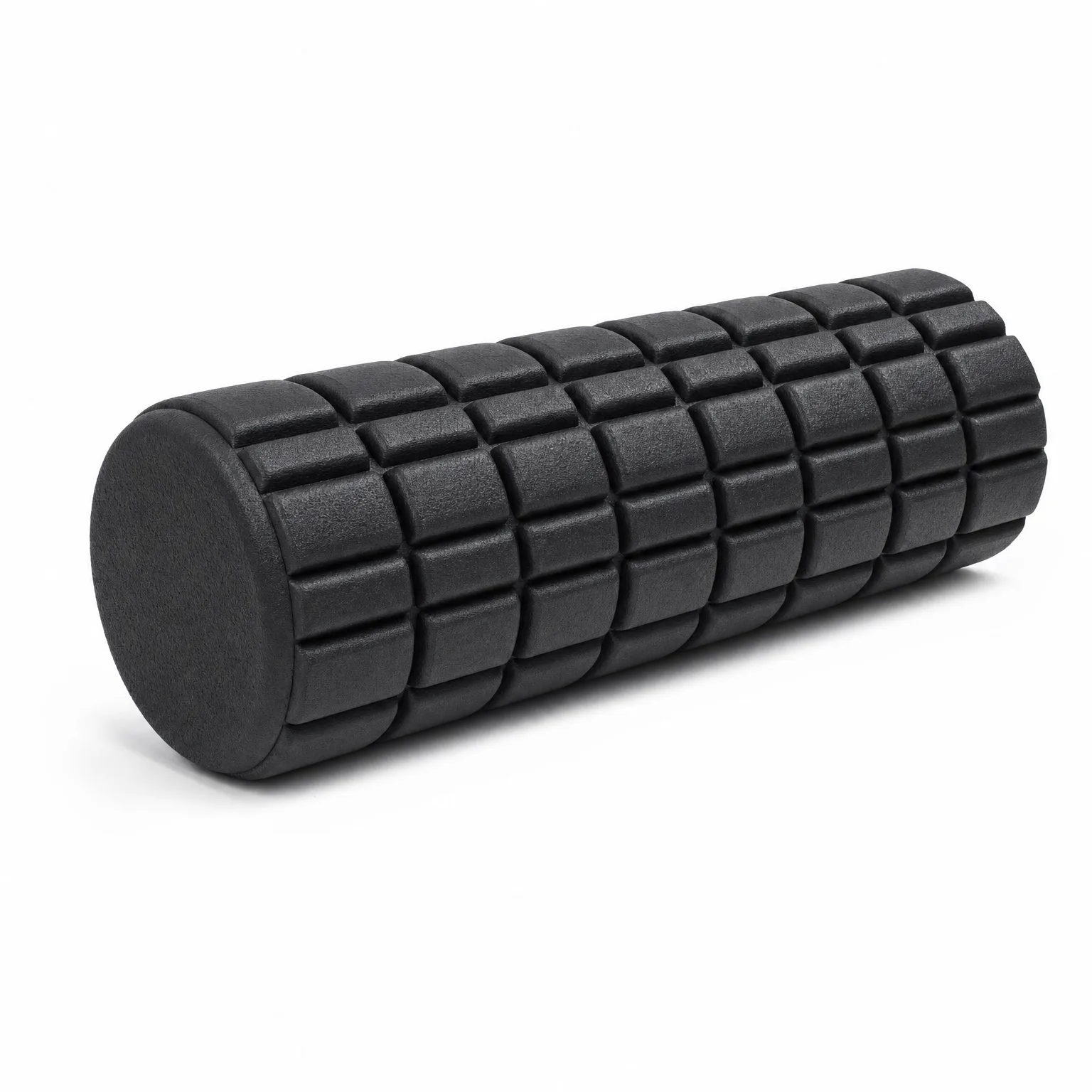
Foam roller
A firm foam cylinder you lie on and roll along a muscle for self-massage, usually during a warm-up or after training. -
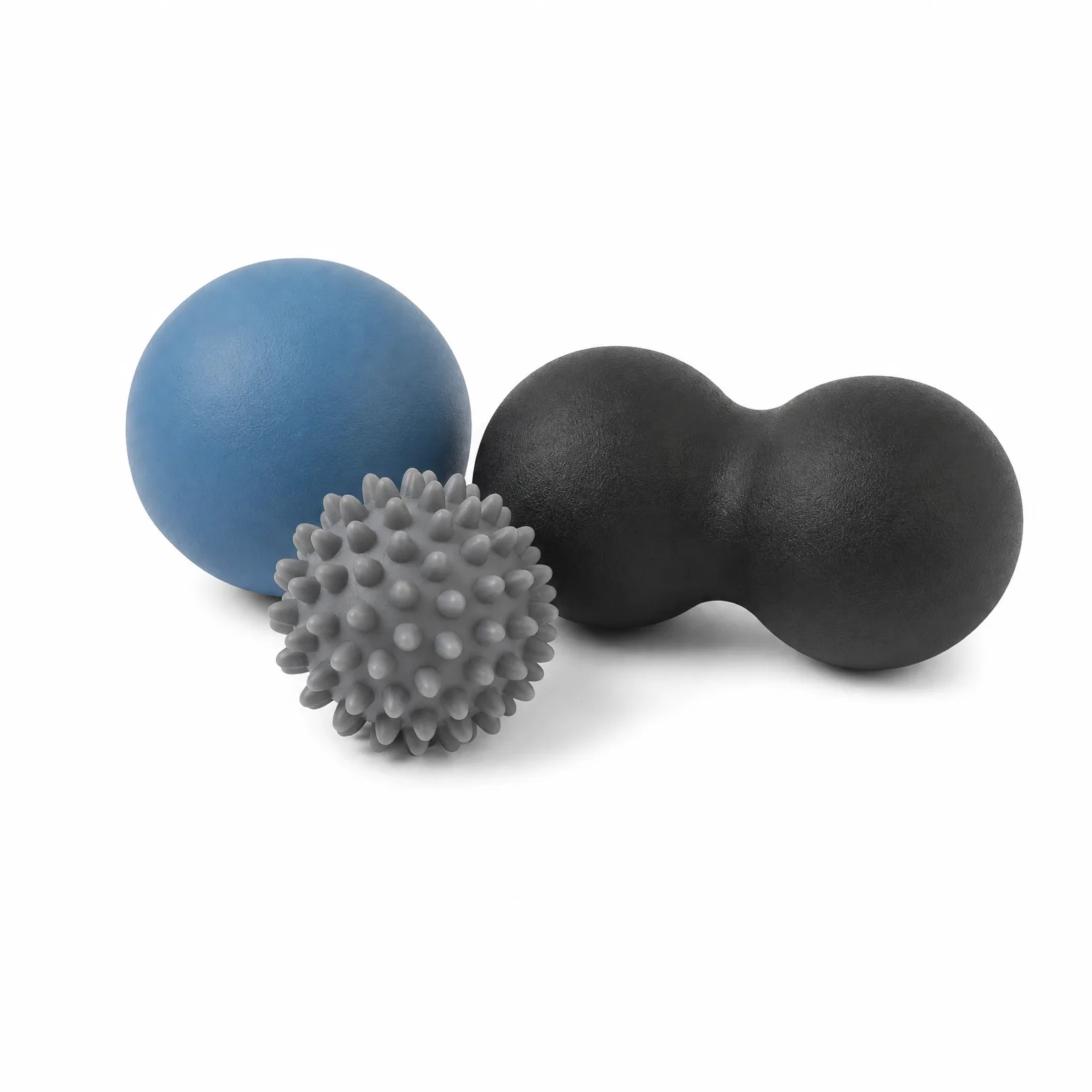
Massage balls
Small firm balls for pinpoint self-massage of the glutes, upper back, feet and other spots a foam roller cannot reach. -
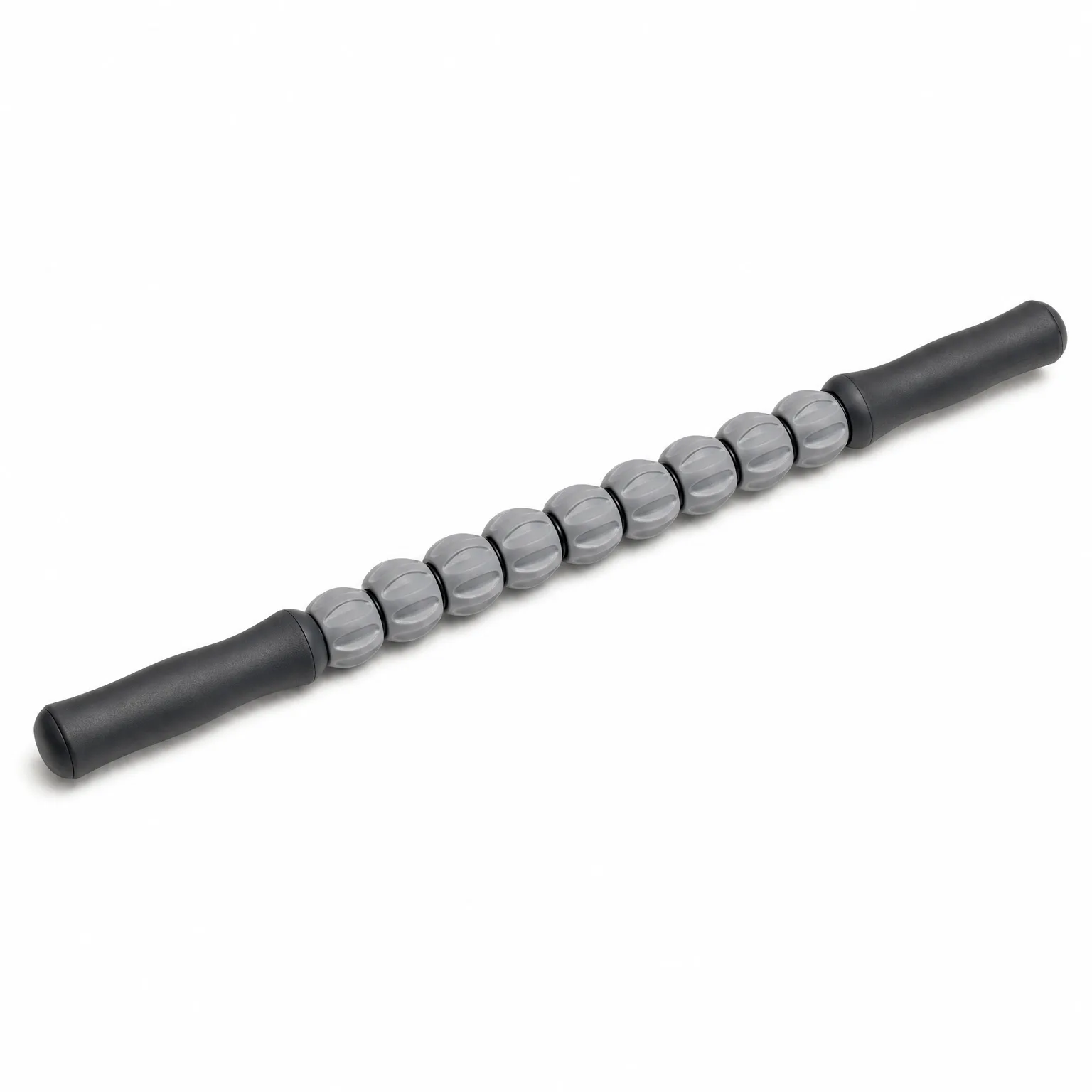
Massage stick
A handheld rod with rolling segments and a grip at each end. You press it into a muscle and roll it with your hands for self-massage.
Often used with

Questions about massage gun
What does a massage gun actually do?
It taps the muscle rapidly, combining pressure and vibration. Small studies report a short-term increase in range of motion and a reduced feeling of muscle soreness for some people. The evidence is limited and the effects are temporary, so it is best seen as a way to make muscles feel looser around training, not as a treatment.
Should I use a massage gun before or after a workout?
Both are common. Before training, people run it over the muscles they are about to use for about 30 seconds each, then do an active warm-up. After training or on rest days, one to two minutes per muscle at a comfortable setting is typical.
How long should I use a massage gun on one spot?
Keep the head moving, and limit each muscle group to about one to two minutes. Holding it on a single point for a long time can irritate the area. A whole-body session rarely needs more than 10–15 minutes.
Where should you not use a massage gun?
Avoid bones and joints, the spine, the front and sides of the neck, the head and face, the abdomen, the groin, and any area that is injured, swollen, bruised or numb. People with medical conditions should check with a doctor first.
Massage gun or foam roller?
They are used for the same thing. A foam roller is cheaper and covers large areas well but needs floor space and some effort. A massage gun is easier to use anywhere and to aim at a specific muscle, but costs more and needs charging. Neither has been shown to be clearly better.
Build programs around what your client has
This guide comes from OnlineFitness.app, the app online coaches run their clients in.
Free for life for the first 100 coachesNo card