Recumbent bike
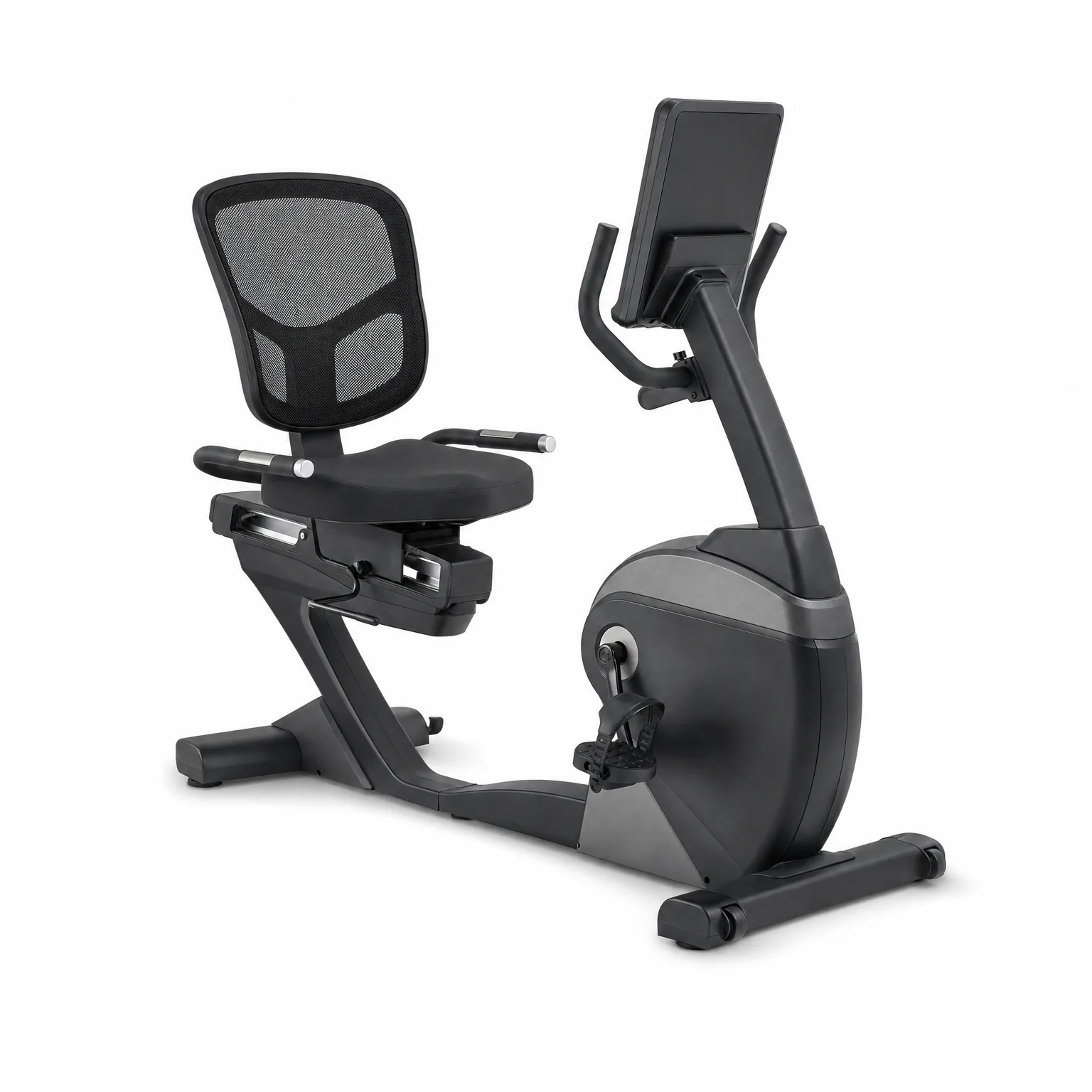
A stationary bike with a wide seat, a backrest and pedals out in front. The most supported way to do seated cardio.
In short
A recumbent bike is a stationary bike where you sit low in a chair-like seat with a backrest and pedal with your legs out in front of you instead of below you. Your weight is spread over the seat and back, and your hands rest on side handles. Resistance is set on a console, usually in magnetic levels.
It is used for steady cardio by people who want a comfortable, stable position: beginners, older adults, heavier people, and anyone who finds a bicycle saddle or a forward lean unpleasant. Most models have an open frame you step through, so getting on and off is easy. The legs work as on any bike, and the trunk and arms work less.
- Category
- Cardio
- Where
- Home, Gym
- Level
- Beginner and up
- Space
- Needs a dedicated area
- Typical sizes
- Footprint about 140–170 x 60–70 cm (55–67 x 24–28 in); seat about 45–60 cm (18–24 in) from the floor
- Also called
- recumbent exercise bike, recumbent stationary bike, reclined bike, recumbent cycle, seated exercise bike, exercise bike with back support
Muscles it works
- Main
- Quads, Glutes, Hamstrings
- Also works
- Calves, Tibialis anterior
What it is used for
- Steady low-to-moderate cardio for 20–60 minutes
- Long easy sessions where saddle comfort would otherwise be the limit
- Seated intervals by raising the resistance for a minute or two
- A gentle warm-up for the legs before strength work
- Cardio while reading or watching a screen, with hands free
Types
Step-through. An open frame with no bar between the seat and the pedals. You walk in and sit down. Standard in gyms and on most home models.
Semi-recumbent. A higher, more upright seat with a backrest and pedals lower in front. A middle ground between upright and recumbent.
With moving arms. Handles that push and pull with the pedals, so the upper body joins in.
Compact or folding. A shorter, lighter home model. Less stable and with a smaller adjustment range than full-size bikes.
Recumbent stepper. A related machine with a stepping motion and arm levers instead of circular pedaling. Common in rehab clinics.
How to choose
Check the seat rail range
The seat slides along a rail to fit leg length. Make sure the range covers every user in the house: at the far end the tallest rider's leg should be almost straight, and at the near end the shortest should reach the pedals without sliding forward.
Look for an easy seat lever
You adjust the seat while sitting on it. A lever at the side that you can reach and release with one hand is far more convenient than a pin under the seat.
Test the backrest
A mesh back stays cooler in long sessions. A padded back feels softer. Some backrests recline. The lower back should rest against it without a gap when your feet are on the pedals.
Measure the floor space
A recumbent is the longest of the exercise bikes and usually does not fold. Allow its footprint plus room to step in from the side. Transport wheels on the front help to move it.
Recumbent or upright
Choose a recumbent for comfort, back support and easy mounting. Choose an upright bike if space is tight or you want a position closer to a normal bicycle.
How to start using it
- Set the seat distance. Sit back fully, put a foot on the pedal at its farthest point and slide the seat until the knee has a slight bend, about 25–35 degrees. The leg should not lock straight, and the hips should not slide forward to reach.
- Strap in the feet. Place the ball of each foot over the pedal axle and tighten the straps. Keep the knees tracking in line with the feet, not falling out to the sides.
- Sit back and relax the hands. Keep the lower back against the backrest and hold the side handles lightly. Many bikes have heart rate sensors in these handles. The reading is approximate.
- Start with an easy level. Pedal for 5 minutes at a low level and about 60–80 revolutions per minute, then raise the resistance until breathing deepens and you can still speak in sentences. Begin with 15–20 minutes and add a few minutes each week.
Common mistakes
Seat too close
Knees that come up high toward the chest on each stroke mean the seat is too near the pedals. The thighs tire fast and the knees bend sharply under load. Slide the seat back.
Seat too far
If the leg locks straight or the hips shift on the seat to reach the pedal, the seat is too far back. Move it forward one notch.
Slumping away from the backrest
Sliding down in the seat with a rounded lower back defeats the point of the support. Sit with the hips all the way back.
Pedaling with no resistance
The comfortable seat makes it easy to coast. Set a level where you feel each push and your breathing clearly changes.
Pulling on the handles
Gripping hard and bracing with the arms when the level is high tenses the shoulders and neck. Lower the resistance or let the legs do the work.
What to use instead
An upright bike gives the same leg work in less floor space, with no back support. An indoor cycling bike suits harder efforts. A pedal exerciser in front of a firm chair copies the recumbent position at a much lighter resistance. An elliptical is a standing, low-impact option that also uses the arms.
-
Upright bike
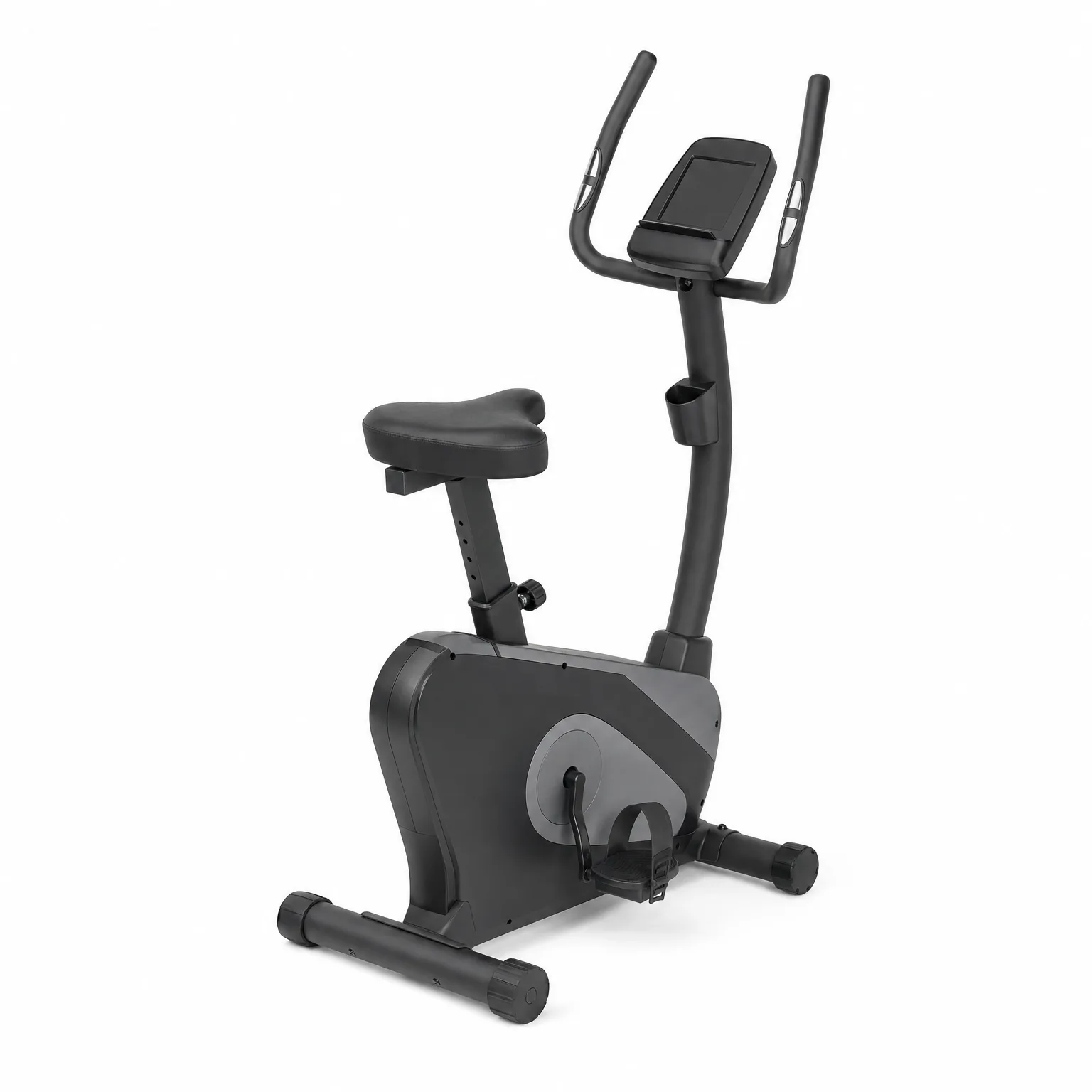
The classic stationary bike: wide saddle, high handlebars, a console and resistance levels. Made for comfortable seated cardio. -
Indoor cycling bike
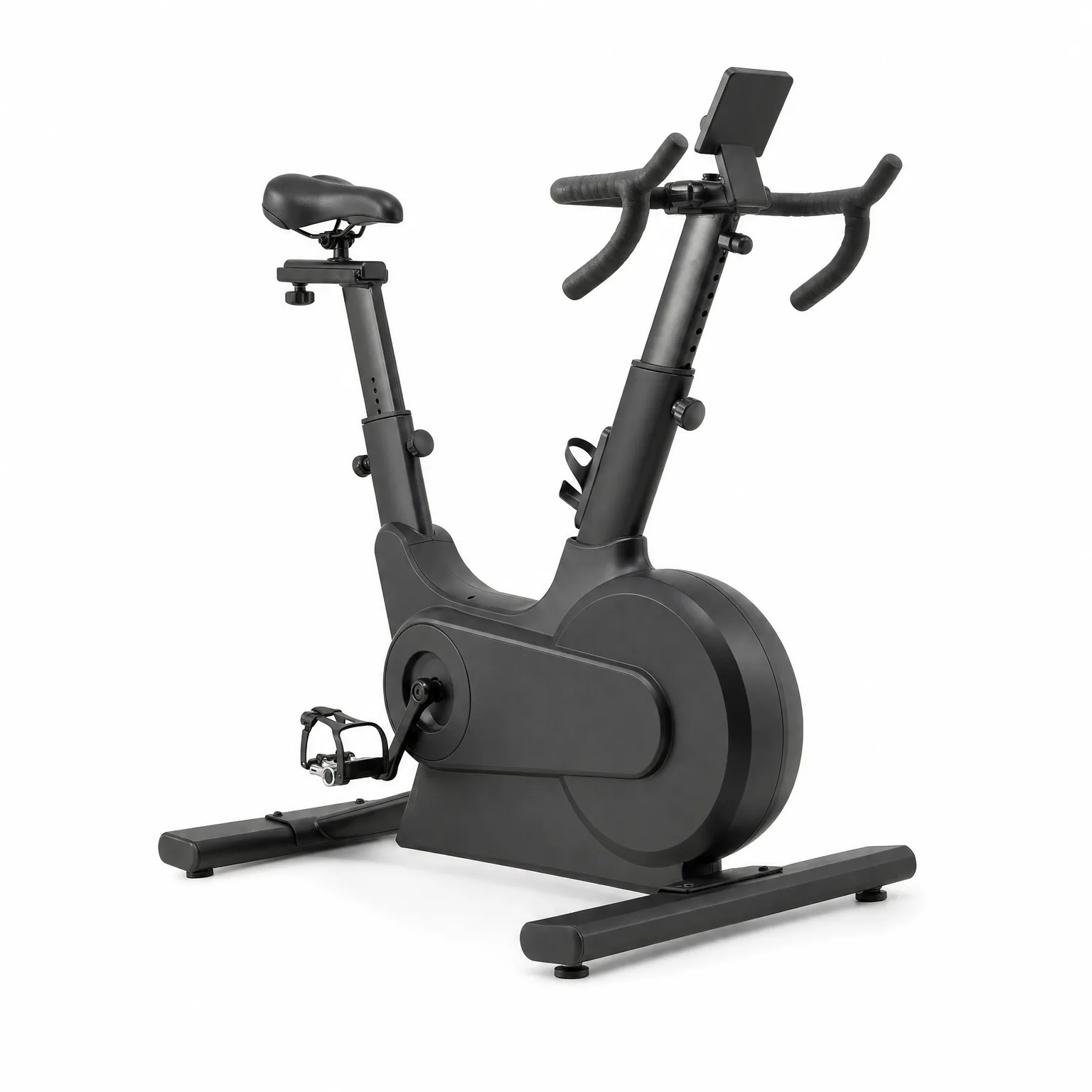
A stationary bike with a weighted flywheel, a narrow saddle and a road-bike position. Built for hard intervals and riding out of the saddle. -
Pedal exerciser
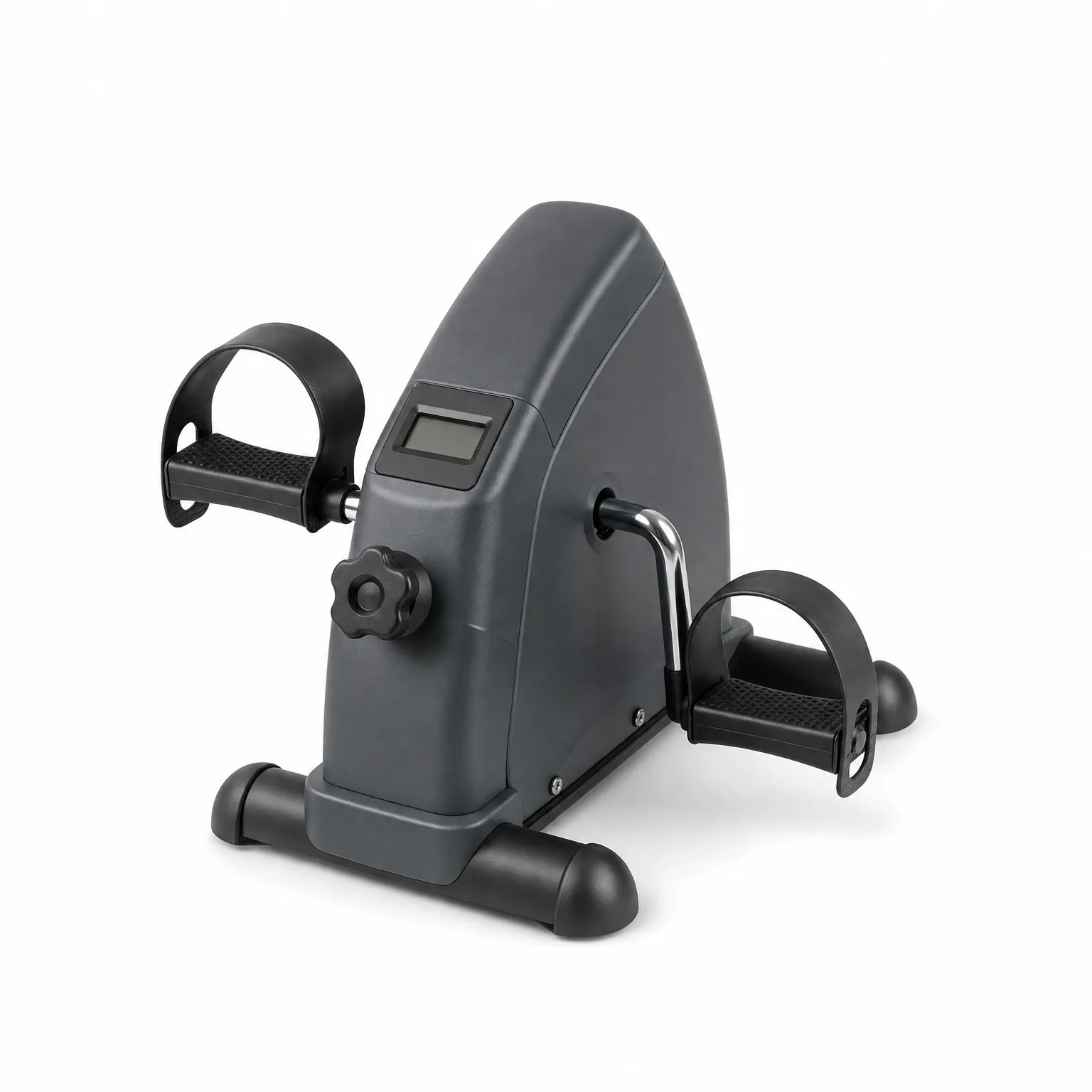
A small set of pedals on a base with no seat or handlebars. You pedal from a chair with your feet, or on a table with your hands. -
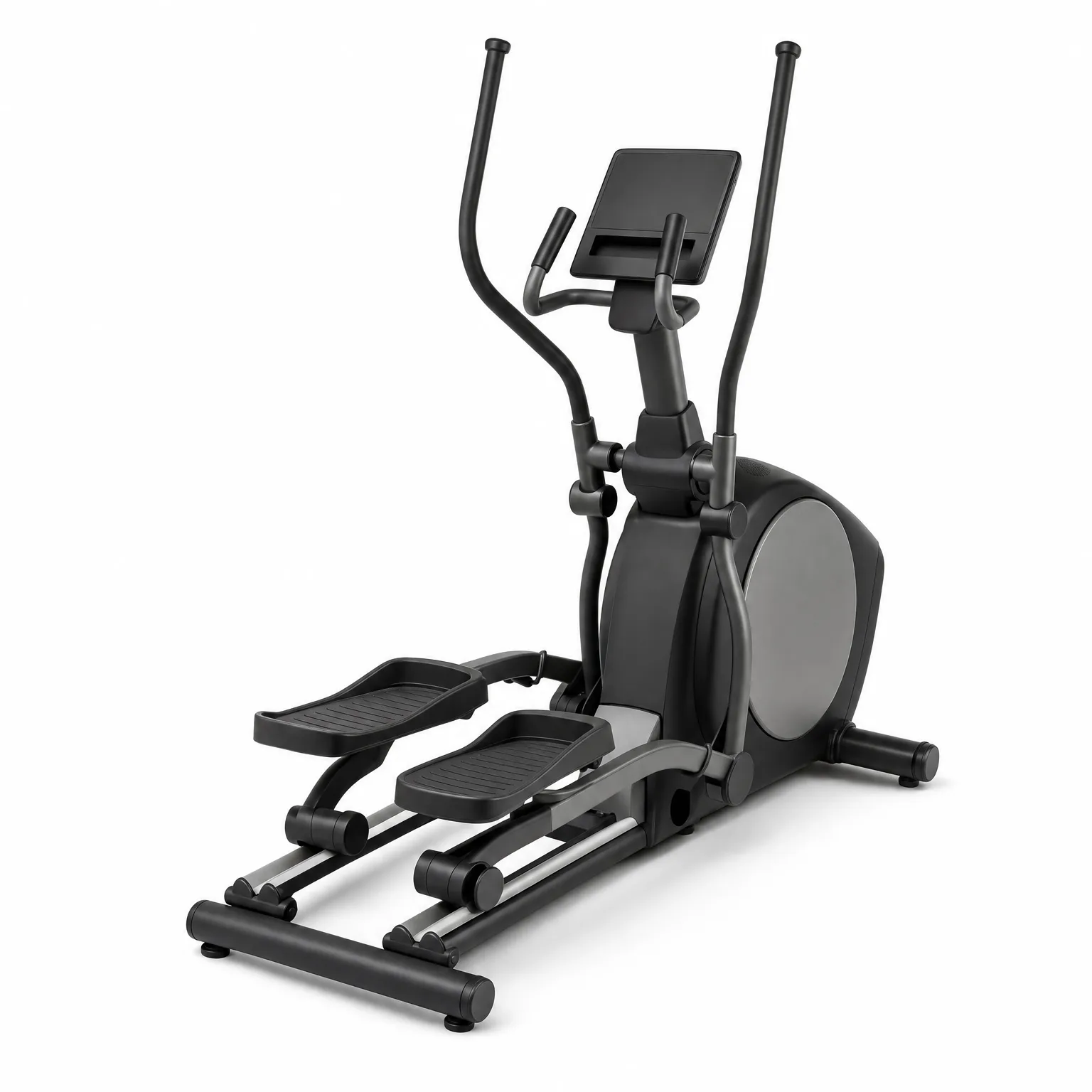
Elliptical
A standing cardio machine with two pedals that travel in an oval path and handles that move with them. Your feet never leave the pedals.
Often used with
-
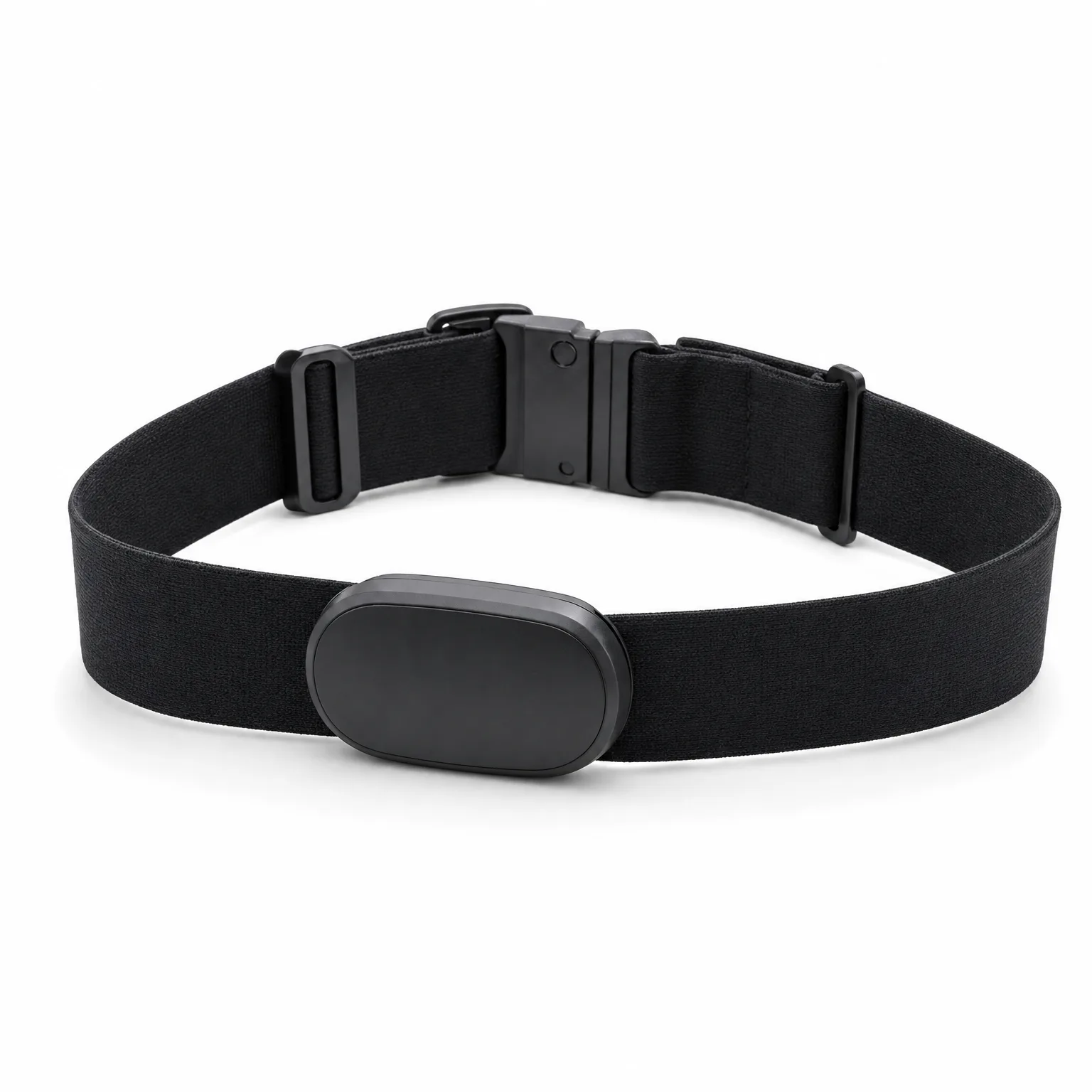
Heart rate monitor
A chest strap or armband that measures heart rate during exercise and sends it to a watch, phone or cardio machine in real time. -
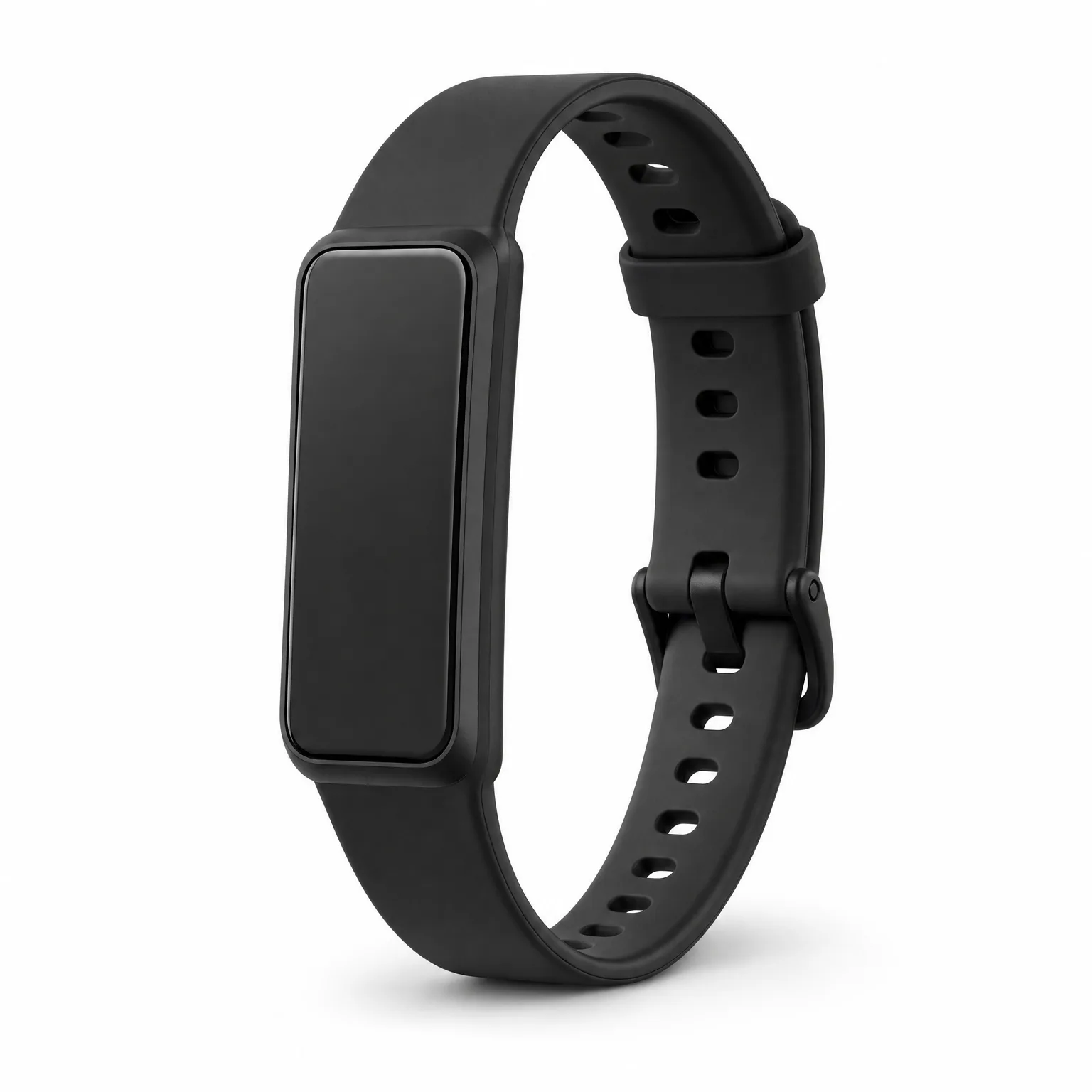
Fitness tracker
A wrist-worn band or watch that counts steps, logs workouts and estimates heart rate and sleep all day. Good for trends, approximate for detail. -

Exercise mat
A cushioned, non-slip surface for floor exercises, stretching and yoga. The first thing most people need to train at home.
Questions about recumbent bike
Is a recumbent bike as good as an upright bike?
For the heart, lungs and legs, yes, when the effort is the same. At equal resistance and pace the work is similar. The recumbent supports the back and uses the trunk less, and it is harder to reach very high intensities on it. Many people ride it longer because it is more comfortable.
What muscles does a recumbent bike work?
The quads, glutes and hamstrings, with the calves and shin muscles helping at the ankle. Because the hips are bent more than on an upright bike, some people feel the glutes and hamstrings a little more. The upper body is mostly at rest.
Is a recumbent bike good for seniors?
It is a popular choice: the seat is low and wide, there is a backrest, the frame is easy to step through and balance is not needed. Anyone with a heart, joint or other medical condition should agree the type and amount of exercise with a doctor first.
How long should I ride a recumbent bike?
A common target is 20–45 minutes at a moderate effort, three to five times a week. Beginners can start with 10–15 minutes at an easy level and build up gradually.
Can you lose weight on a recumbent bike?
It can help as part of a plan. Weight loss comes from using more energy than you eat over time, and regular riding adds to the energy you use. Diet has the larger effect. Choose the bike you will ride often.
Build programs around what your client has
This guide comes from OnlineFitness.app, the app online coaches run their clients in.
Free for life for the first 100 coachesNo card