Speed bag
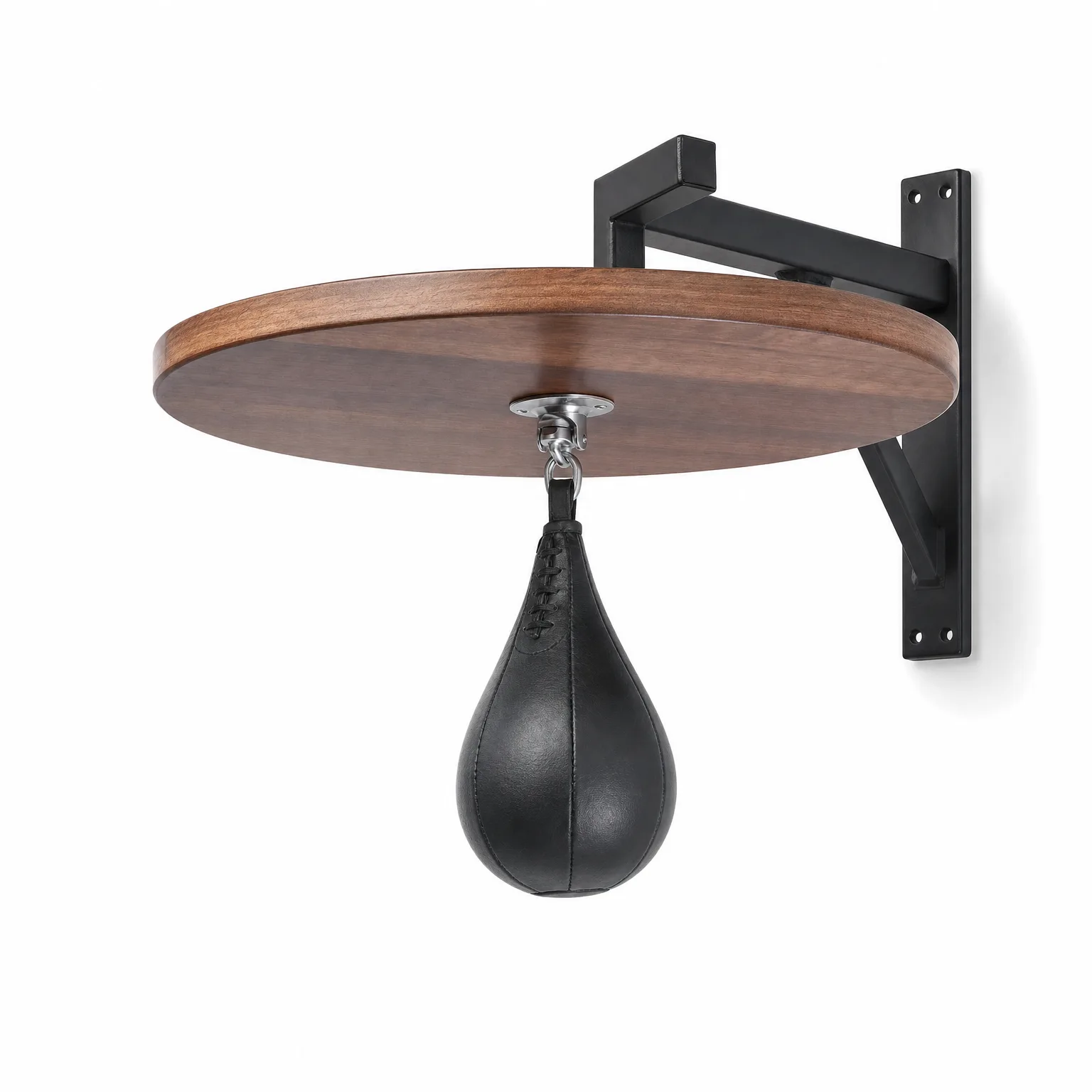
A small air-filled bag hung from a swivel under a platform. Hitting it in rhythm trains timing, hand-eye coordination and shoulder endurance.
In short
A speed bag is a small, teardrop-shaped, air-filled leather bag that hangs from a swivel under a round horizontal platform. You hit it with light, quick strikes and it rebounds off the platform in a steady rhythm. Keeping that rhythm trains timing, hand-eye coordination and the endurance of the shoulders, because the hands stay up the whole time.
It is a classic boxing tool but needs no boxing background. It is a skill drill, not a power drill: strikes are light and the challenge is rhythm. It takes a few sessions before the pattern clicks.
- Category
- Boxing
- Where
- Home, Gym
- Level
- Beginner and up
- Space
- Needs a corner of a room
- Typical sizes
- Bags from about 20 × 13 cm (8 × 5 in) to 33 × 25 cm (13 × 10 in); platform about 60 cm (24 in) across
- Also called
- speedbag, speed ball, boxing speed bag, punching ball, pear ball
Muscles it works
- Main
- Front delts, Side delts
- Also works
- Triceps, Forearms, Traps, Rear delts
What it is used for
- Rhythm rounds with alternating hands
- Shoulder endurance: keeping the hands up for 2–3 minute rounds
- Hand-eye coordination and timing practice
- An active warm-up before bag or mitt work
- Learning to stay relaxed while the hands move fast
Types
Large bag. Around 30–33 cm long. Slower rebound and a bigger target. The size to learn on.
Small bag. Around 20–23 cm long. Very fast with a small target. For people who already keep a steady rhythm on a larger bag.
Wall-mounted platform. A wooden drum on a bracket bolted to a wall, often height-adjustable. The heavier and more rigid it is, the truer the rebound.
Free-standing reflex bag. A ball on a sprung pole and a floor base. Needs no wall, but it moves differently and does not give the platform rhythm.
Double-end bag. A ball held by elastic cords between floor and ceiling. It moves back at you, so it trains timing, accuracy and head movement. A related but different tool.
How to choose
Start with a larger bag
A bag of about 28–33 cm (11–13 in) rebounds slowly enough to learn the rhythm. Move to a medium or small bag once you can keep a steady beat for a full round.
Put the money into the platform
A thick, heavy, rigid platform that does not shake gives a consistent rebound. A thin board on a flimsy bracket rattles and makes the bag unpredictable. It must be bolted into wall studs or masonry.
Get an adjustable height if people share it
The bag has to hang at the right height for each user. A platform that slides on a wall track saves standing on a box or crouching.
Check the swivel
A ball-hook or chain-link swivel should turn freely without catching. A smooth swivel matters more for rhythm than the bag itself.
How to start using it
- Set the height. Adjust the platform so the widest part of the bag, its belly, is level with your mouth or nose. Too high and the shoulders burn out. Too low and you hunch.
- Inflate it firm, not hard. Pump the bag until it is firm with a slight give when squeezed. An overinflated bag is too fast and strains the seams. A soft one dies on the platform.
- Stand square and close. Face the bag with feet about shoulder width, hands up near the bag at chin height, elbows lifted out to the sides. You should reach the bag with a short movement of the forearm.
- Learn the count of three. Hit the bag with the side of the fist in a small forward circle. It hits the platform away from you, toward you, and away again. Strike again as it comes back after the third hit. Count one, two, three aloud.
- Build the pattern. Start with one hand only, slowly. Then do two strikes with each hand, then alternate. Work in rounds of 1–2 minutes. Speed comes from rhythm and small circles, not from hitting harder.
Common mistakes
Hitting too hard
Hard strikes make the bag fly back too fast to follow and shake the platform. Use light taps and let the rebound do the work.
Big arm swings
Dropping the hands or winding up between strikes breaks the timing. Keep the fists close to the bag and move them in small circles.
Wrong height
A bag hung at forehead level or chest level is the most common setup error. Reset it to mouth or nose level for each user.
Watching the hands
Looking at your fists makes you late. Keep your eyes on the bag and listen to the rhythm of the rebounds.
Hitting it bare-handed for long sessions
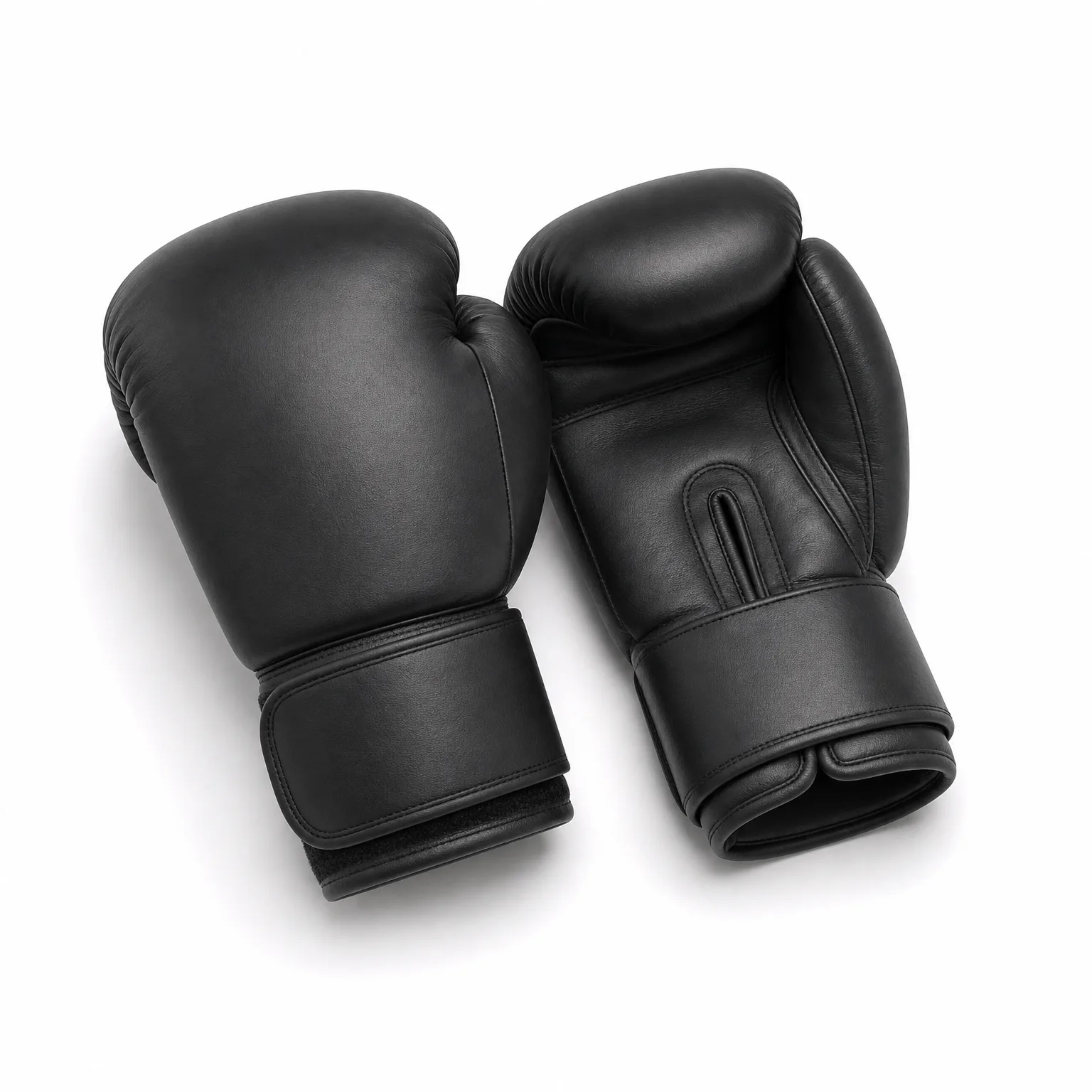
The leather and seams rub the skin off the knuckles over time. Hand wraps or thin bag gloves prevent that.
What to use instead
Nothing copies the rebound of a speed bag exactly. For shoulder endurance and rhythm, rounds on a hanging or free-standing punching bag with light, continuous punches come close. Focus mitts with a partner train timing and accuracy. A jump rope trains rhythm and coordination in a different way. Shadow boxing with the hands held high works the same shoulder endurance with no equipment.
-
Punching bag
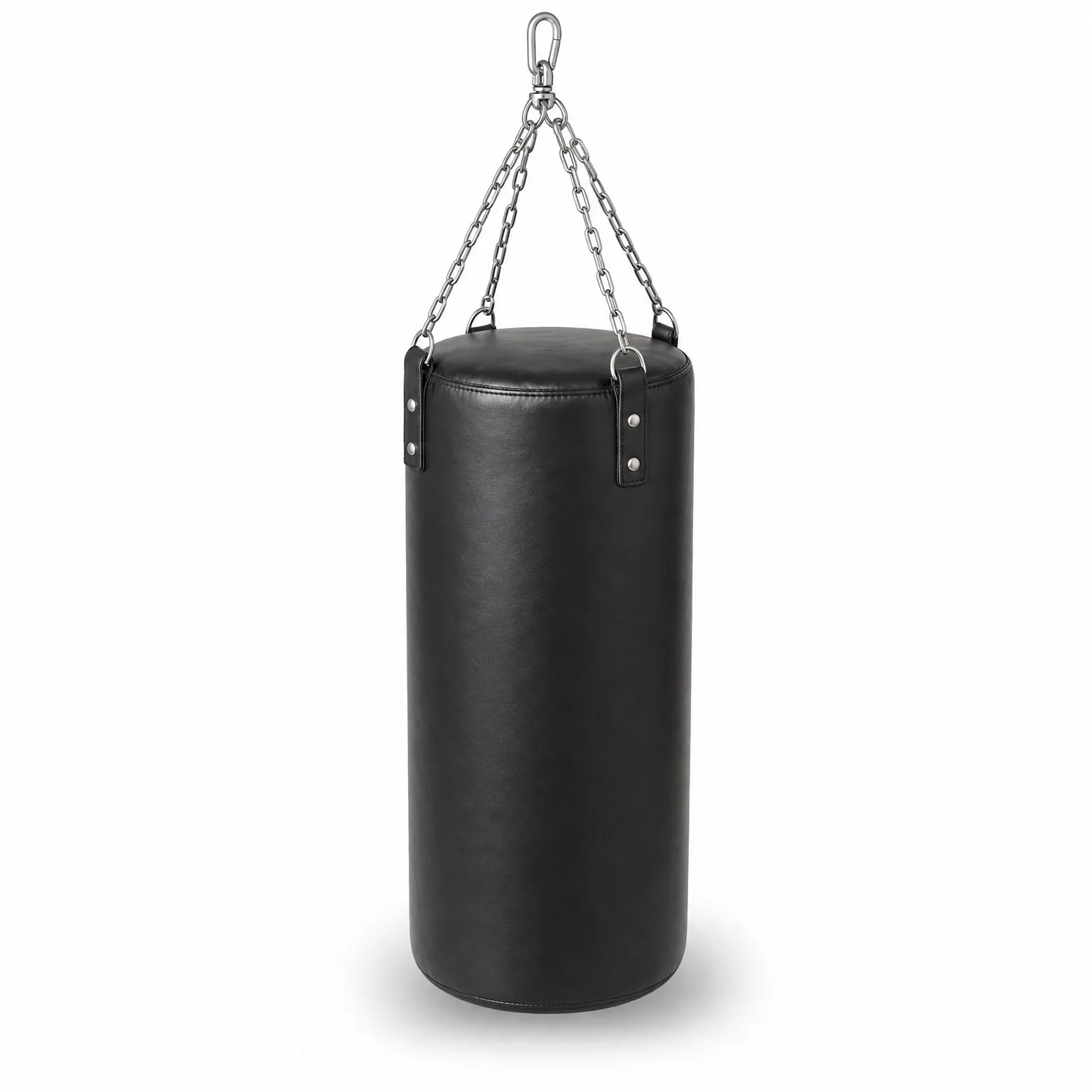
A heavy, padded bag that hangs from a ceiling mount, wall bracket or stand. Used for punches and kicks as boxing practice and hard conditioning. -
Free-standing punching bag
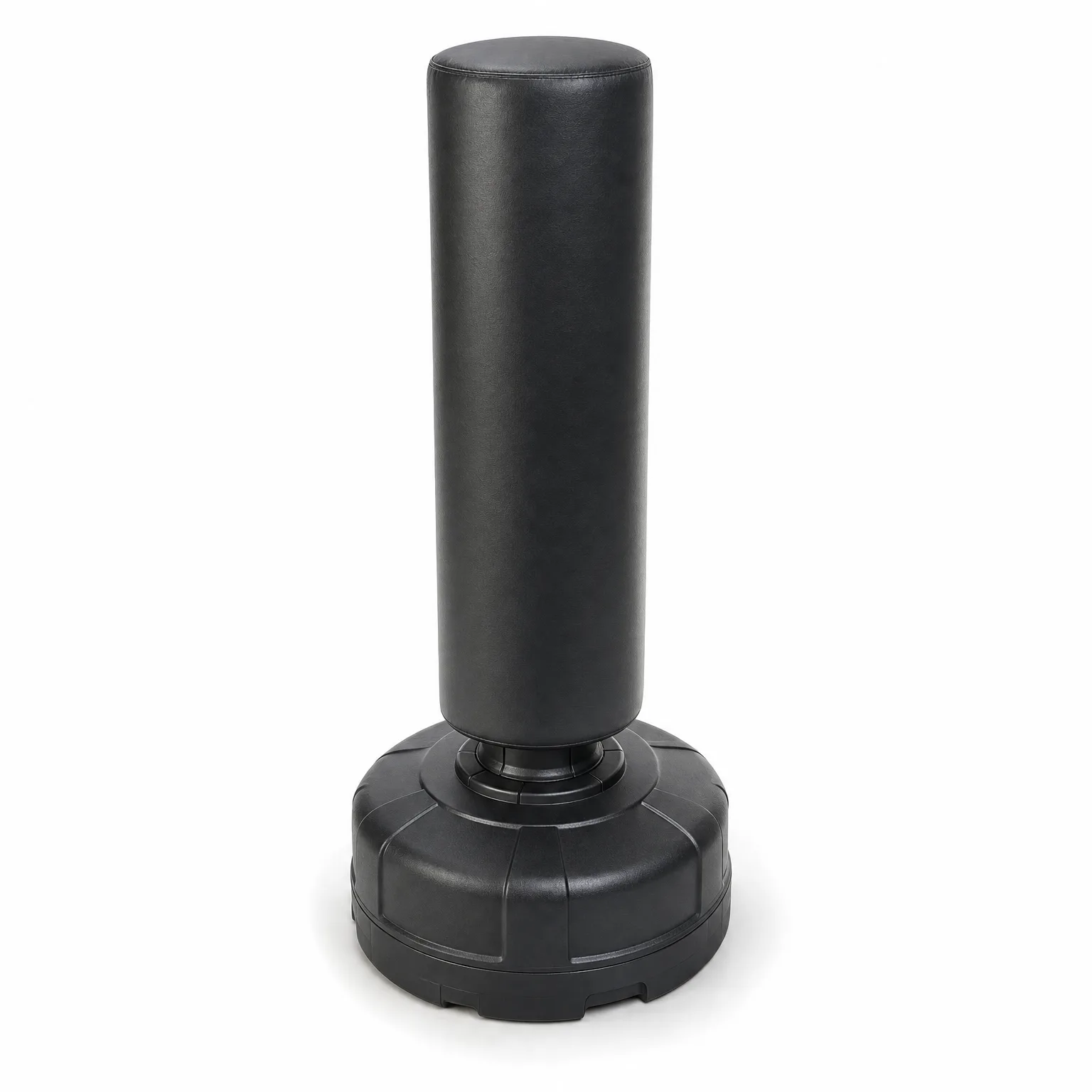
A padded striking bag on a heavy base filled with water or sand. It needs no ceiling mount, so it suits homes where a hanging bag cannot go. -
Focus mitts
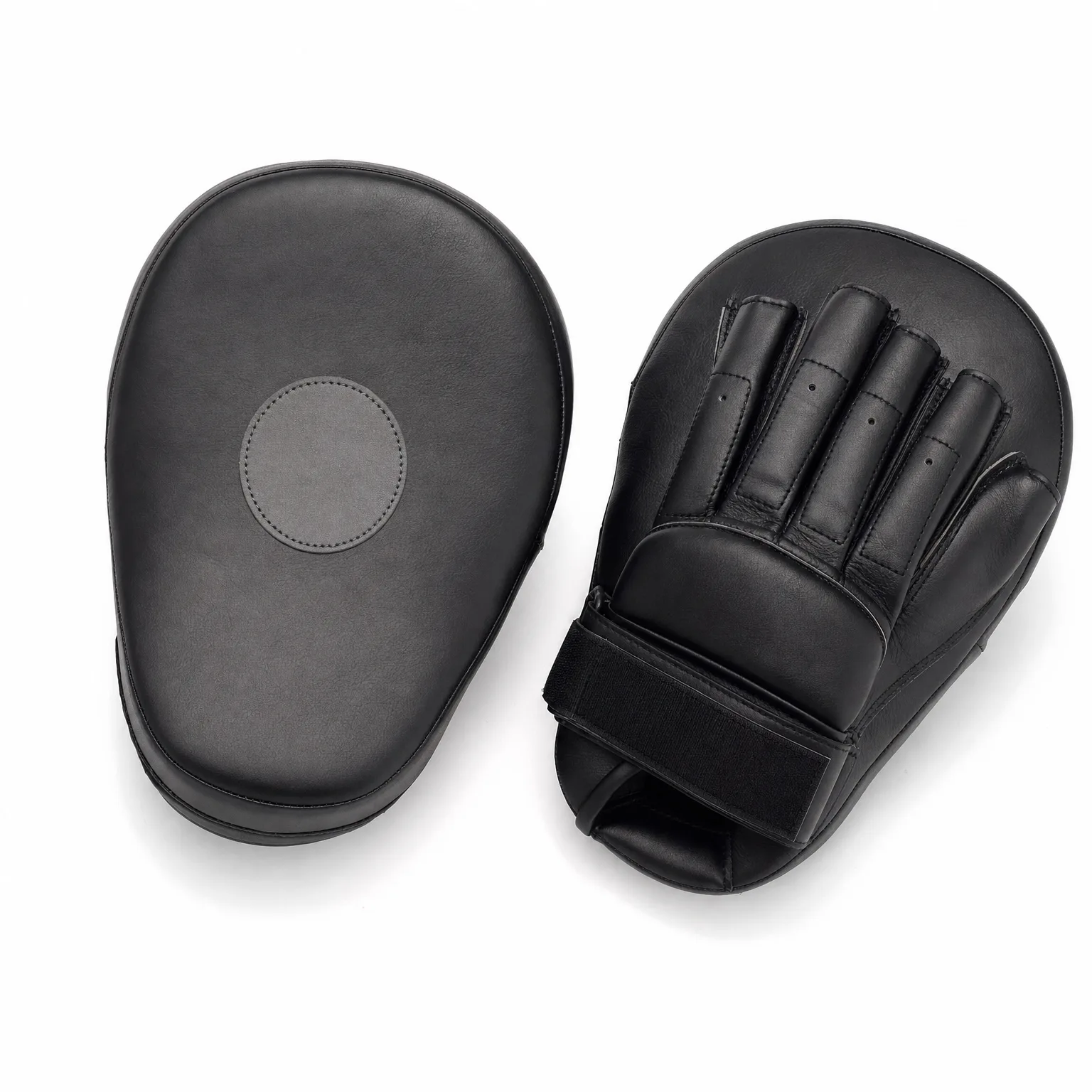
Padded targets a partner wears on the hands and holds up for punches. Used to drill accuracy, combinations and defense. -
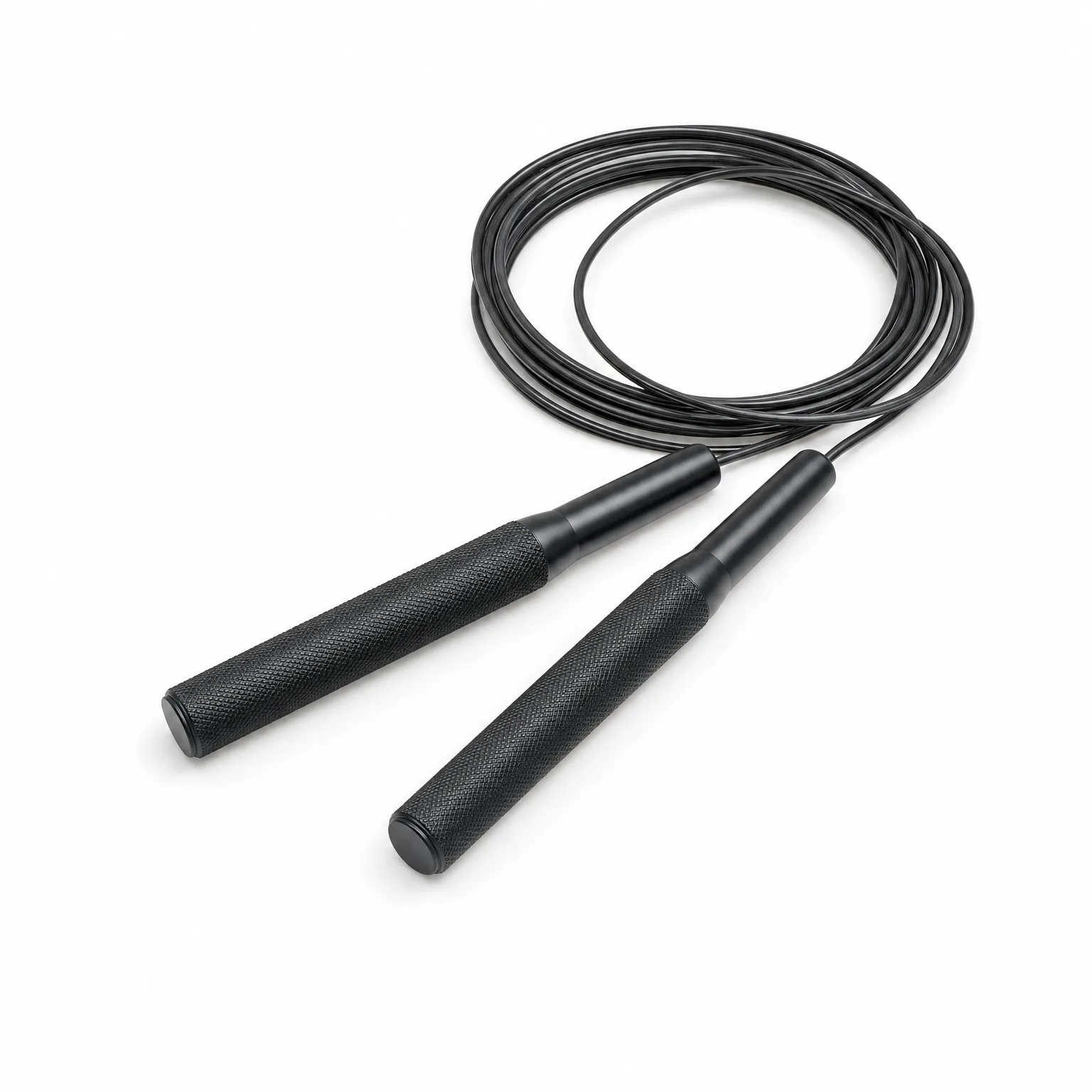
Jump rope
A rope with two handles that you swing over your head and jump. Hard cardio and footwork practice that fits in a pocket.
Often used with
Questions about speed bag
What does a speed bag do?
It trains rhythm, timing and hand-eye coordination, and it builds endurance in the shoulders because the hands stay raised for the whole round. It does not build punching power. Boxers use it to stay relaxed and accurate when their arms are tired.
How high should a speed bag be?
The belly of the bag, its widest part, should be about level with your mouth or nose when you stand in front of it. Adjust the platform for each person who uses it.
What size speed bag is best for beginners?
A large one, roughly 28–33 cm (11–13 in) long. It rebounds more slowly and is easier to hit, so you can learn the three-count rhythm. Smaller bags are faster and suit people with established timing.
Do you need gloves for a speed bag?
Full boxing gloves are too bulky. Most people use hand wraps or thin bag gloves, which protect the skin without slowing the hands. Short sessions bare-handed are common too, but the knuckles get sore.
How long does it take to learn the speed bag?
Most people get a basic one-hand rhythm in the first session or two and smooth alternating hands within a few weeks of short, regular practice. Five to ten minutes a few times a week is enough to progress.
Build programs around what your client has
This guide comes from OnlineFitness.app, the app online coaches run their clients in.
Free for life for the first 100 coachesNo card