Exercise clubs
Bowling-pin-shaped weights swung in circles around the body. They train grip, shoulders and trunk through large rotating movements.
In short
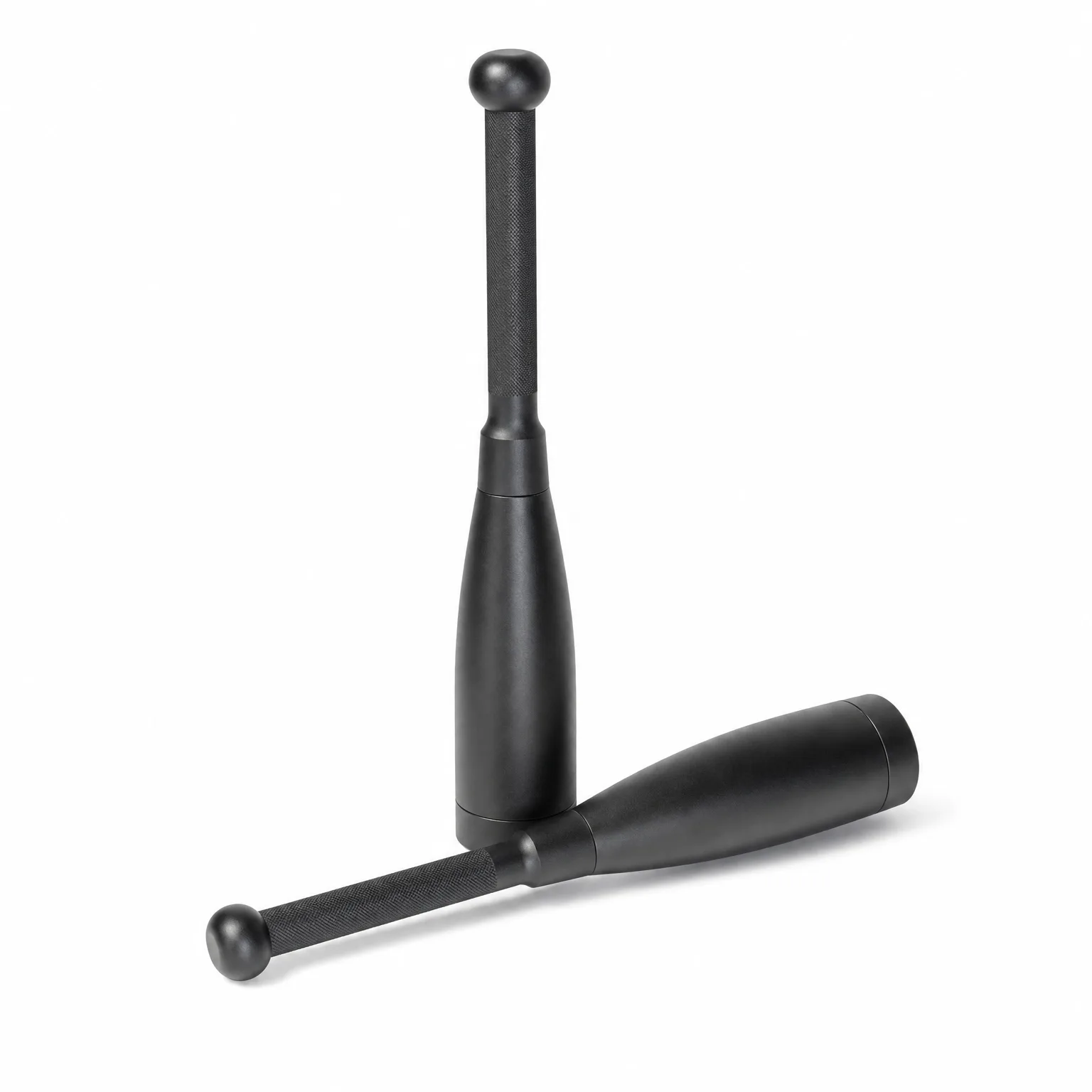
Exercise clubs are weights shaped like a bowling pin or a short bat: a narrow handle with a knob at the end and most of the mass far from the hand. You swing them in arcs and circles around the shoulders and head rather than lifting them up and down. Because the weight sits at the end of a lever, a light club feels much heavier than a dumbbell of the same weight.
Light wooden Indian clubs are used in pairs for shoulder mobility and coordination. Heavier steel clubs are used one at a time, in one or two hands, for strength in the grip, shoulders and trunk.
- Category
- Free weights
- Where
- Home, Gym, Outdoors
- Level
- Beginner and up
- Space
- Needs a corner of a room
- Typical sizes
- Indian clubs about 0.5–1 kg (1–2 lb) each; steel clubs 2–20 kg (5–45 lb); roughly 40–70 cm (16–28 in) long
- Also called
- clubbells, indian clubs, steel clubs, club bells, persian meels, heavy clubs, swinging clubs
Muscles it works
- Main
- Forearms, Front delts, Side delts, Rear delts
What it is used for
- Shoulder circles and swings with light clubs as a warm-up
- Mills, shield casts and pullovers with a heavier club
- Grip and forearm work from controlling the long lever
- Rotational swings that load the trunk and hips
- Flow sequences that link several swings without stopping
Types
Indian clubs. Light wooden or plastic clubs used in pairs for flowing circles. The focus is mobility and coordination, not load.
Steel clubs. Solid steel with a powder-coated or knurled handle, often sold under the name clubbell. Used singly, with one or two hands.
Persian meels. Large wooden clubs with a thick conical body, swung in pairs behind the shoulders. Heavier and bulkier than Indian clubs.
Adjustable clubs. A handle with a head that takes plates or screw-on sections, so one club covers several weights.
How to choose
Start much lighter than you think
The lever multiplies the load. For steel clubs, many adults start with a single 2–5 kg club for one-hand work and 5–7 kg for two-hand work. For Indian clubs, 0.5–1 kg each is plenty.
One club or two
A single heavier club is enough for two-hand swings and one-arm work, and is the simpler way to start. A light pair is for Indian club circles.
Check the handle and knob
The handle should fit your hand without squeezing hard, and the knob at the end must be wide enough to stop the club sliding out. Avoid slick, glossy handles.
Count the space
You need a clear circle at arm's length plus the club in every direction, including overhead. Low ceilings and nearby furniture rule out most swings.
How to start using it
- Clear the area first. Check overhead and behind you. Do not swing near people, pets, mirrors or screens. Outdoors on grass is the easiest place to learn.
- Learn the two-hand front swing. Hold the club in two hands, hinge at the hips and swing it between the legs and up to chest height, like a kettlebell swing. This teaches you how the weight pulls before you take it overhead.
- Add the two-hand pullover. From an upright hold in front of the chest, lower the club behind the shoulder and pull it back over. Keep the elbows close to the head and the ribs down.
- Move slowly and stay in control. Sets of 5–10 slow reps per side are enough at first. Stop the set when your grip starts to slip, not after.
Common mistakes
Buying too heavy a club
A club that is a comfortable dumbbell weight is usually far too heavy to swing behind the head. Technique falls apart and the shoulders and elbows take the strain.
Swinging with a tired grip
A club that leaves your hand travels a long way. End the set early, dry your hands, and do not use clubs after heavy grip work.
Arching the lower back
When the club goes behind the head, the ribs tend to flare and the lower back arches. Keep the trunk braced and let the shoulders do the moving.
Rushing the circles
Speed hides poor positions. Slow swings with a pause at the top and bottom build the control that faster swings need.
What to use instead
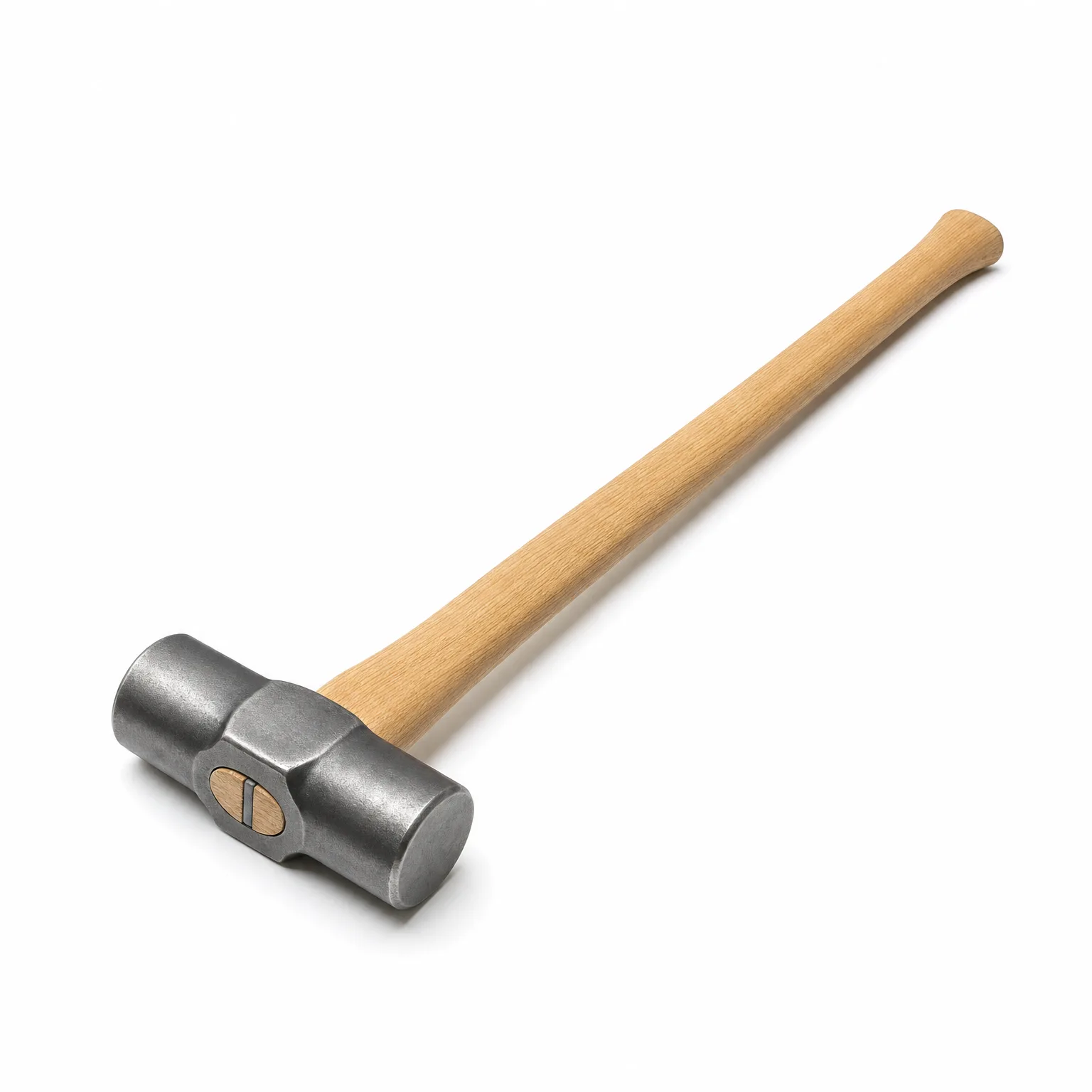
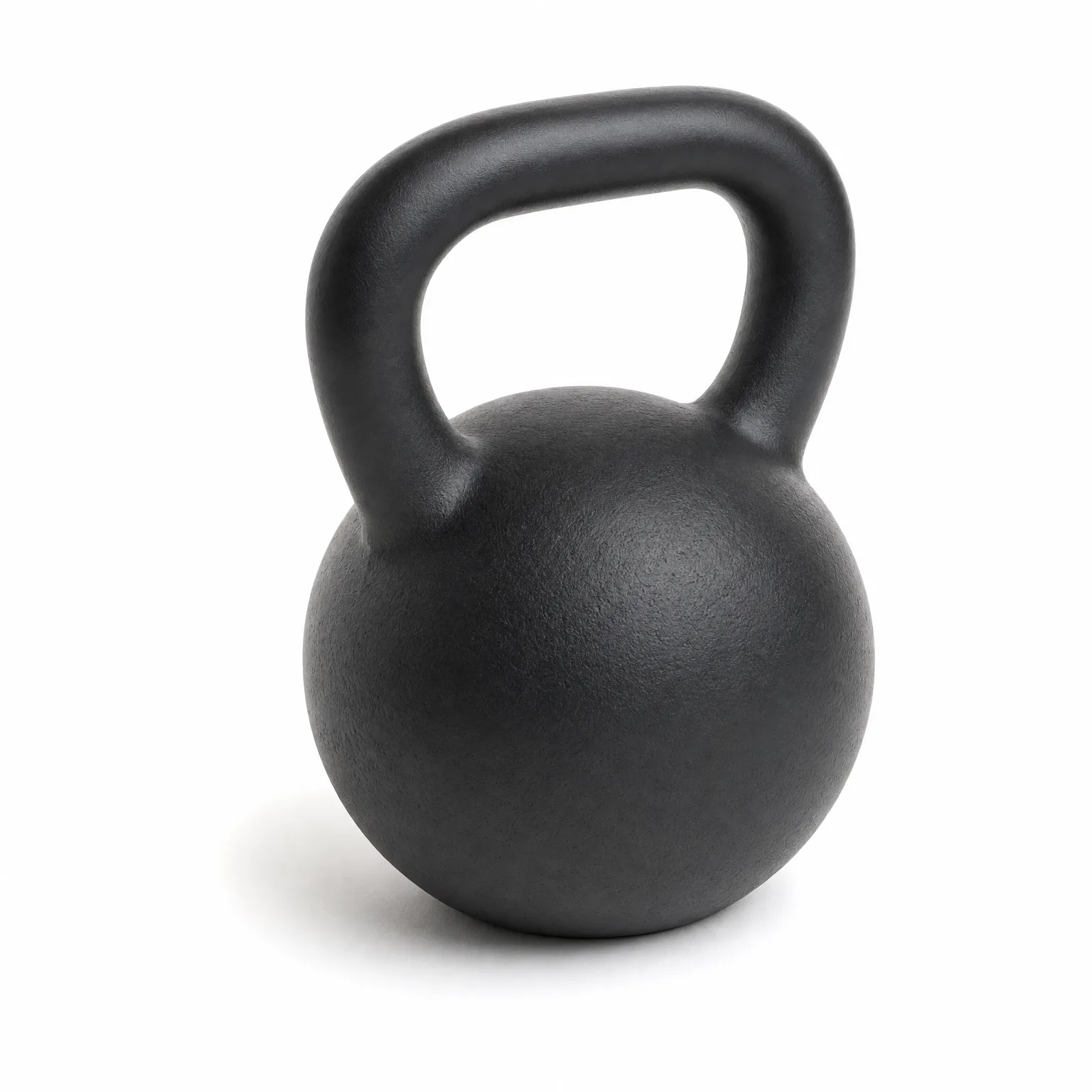
A light sledgehammer held near the end of the handle behaves much like a steel club and works for two-hand swings and pullovers. A kettlebell held upside down by the handle covers halos and pullovers, and kettlebell swings train the same hip drive. Light dumbbells can replace Indian clubs for simple shoulder circles, though the weight sits in the hand, so the feel is different.
-
Sledgehammer
A long-handled heavy hammer swung onto a tire. Strikes train the trunk, lats, grip and shoulders and work well in conditioning intervals. -
Kettlebell
A cast-iron or steel ball with a flat base and a handle on top. Built for swings, carries, squats and presses with one weight. -

Dumbbells
A pair of short handles with a weight at each end. One pair trains every major muscle group, at home or in a gym.
Often used with
Questions about exercise clubs
What weight exercise club should a beginner use?
For steel clubs, a single club of about 2–5 kg (5–10 lb) suits most beginners for one-hand work, and 5–7 kg (10–15 lb) for two-hand swings. For Indian clubs, start with a pair of about 0.5 kg (1 lb) each. It is easy to go up later and hard to learn with a club that is too heavy.
What is the difference between Indian clubs and steel clubs?
Indian clubs are light, usually wooden, and swung in pairs in continuous circles for shoulder mobility and coordination. Steel clubs are heavier, used one at a time, and train strength in the grip, shoulders and trunk with slower, more deliberate swings.
What muscles do exercise clubs work?
Mostly the forearms and grip, all parts of the shoulders and the muscles of the trunk, with the lats and triceps helping in pullovers and casts. Swings between the legs also use the hips.
Exercise clubs or kettlebells?
Kettlebells are better for heavy hip-driven work such as swings, and for presses and squats. Clubs are better for circular shoulder work and grip with a long lever. They complement each other, and a kettlebell is the more general first purchase.
Build programs around what your client has
This guide comes from OnlineFitness.app, the app online coaches run their clients in.
Free for life for the first 100 coachesNo card