Bulgarian bag
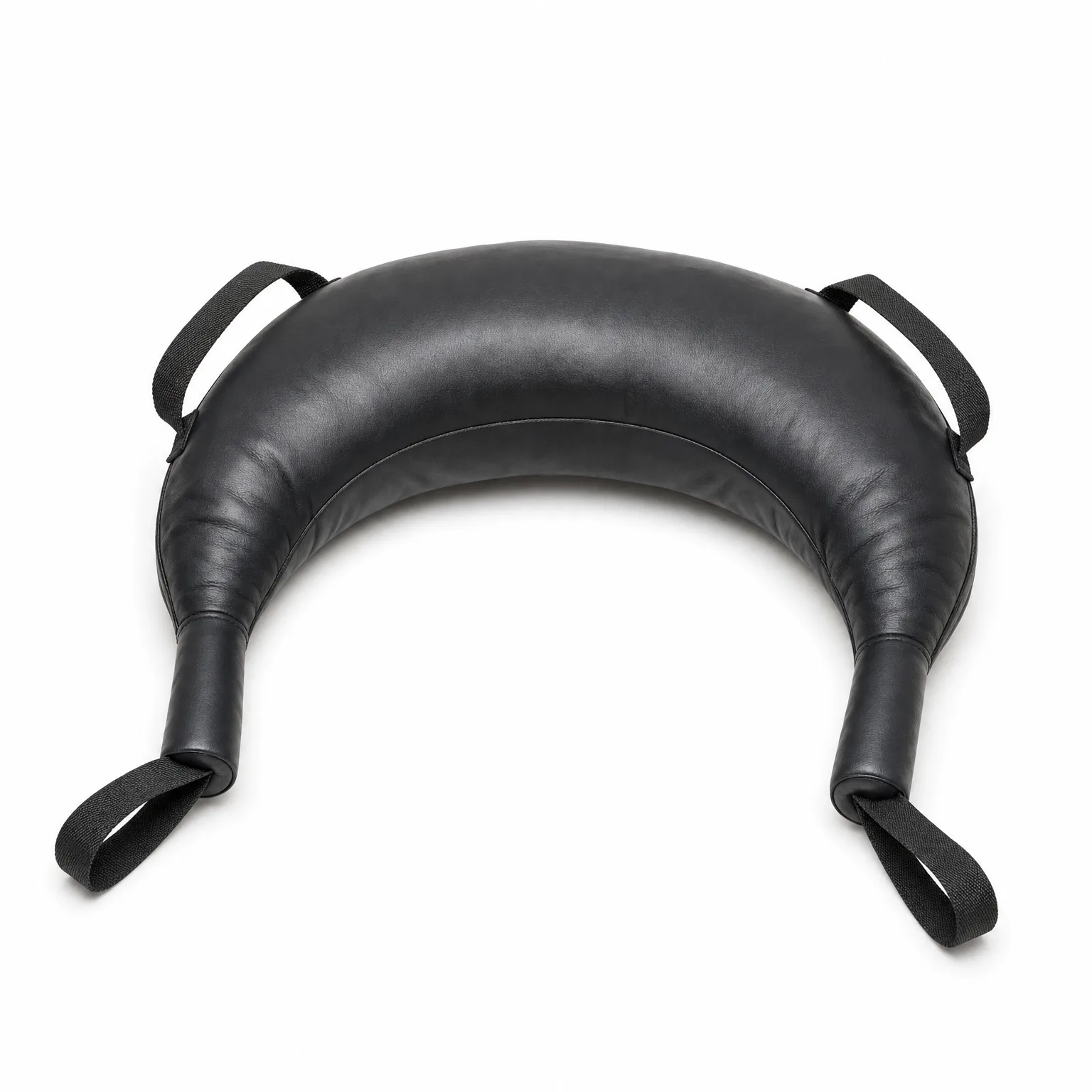
A crescent-shaped weighted bag with handles at both ends. It is swung, spun around the head and carried on the shoulders.
In short
A Bulgarian bag is a crescent-shaped bag of leather or canvas filled with sand and wool, with a handle at each tip and usually extra straps along the body. The shape lets it sit across the shoulders like a yoke or be gripped by both ends and swung. It was developed for wrestling training.
Its signature exercise is the spin: the bag travels in a circle around the head while the trunk resists being pulled off line. It is also used for swings, snatches, squats and lunges. It suits people who want grip, trunk and conditioning work with one compact tool.
- Category
- Free weights
- Where
- Home, Gym, Outdoors
- Level
- Intermediate and up
- Space
- Needs a corner of a room
- Typical sizes
- About 5–22 kg (11–50 lb), usually in five or six steps
- Also called
- bulgarian training bag, crescent sandbag, wrestling bag, half moon bag, bulgarian sandbag
Muscles it works
- Also works
- Hamstrings, Quads, Rear delts, Traps, Lats
What it is used for
- Spins around the head for grip, shoulders and trunk
- Swings and snatches driven by the hips
- Squats, lunges and jumps with the bag across the shoulders
- Twists and side-to-side swings
- Conditioning circuits with timed rounds
Types
Leather. The original build. Durable and smooth against the neck, at a higher price.
Canvas or synthetic. Cheaper and fine for most home use. Check the stitching at the handles, where the bag takes the most stress.
Fillable. Sold empty with inner liners you fill with sand. Weight is adjustable, but an underfilled bag shifts more.
How to choose
Choose the weight for spins
The spin is the limiting exercise. Many women start with 5–8 kg and many men with 8–12 kg. A bag that is right for spins will feel light for squats, which is normal.
Check the handles
The main handles are thick and firm. Check that they are stitched solidly and that your hand can still hold on. Side straps add grip options for swings and presses.
Look at the seams
The bag is swung hard by its ends. Double stitching and reinforced handle bases matter more than the outer material.
Plan the space
A spin needs a clear circle around you at arm's length and normal ceiling height. Swings need room in front and behind.
How to start using it
- Start with the bag on your shoulders. Hold the main handles, set the bag across the upper back and do squats and lunges. This gets you used to its weight and shape before you swing it.
- Learn the swing. Grip the main handles, hinge at the hips and swing the bag between the legs, then drive the hips forward so it rises to chest height. Arms stay long, as in a kettlebell swing.
- Then the spin. Stand with feet wider than the hips. Swing the bag to one side, let it pass behind the head close to the neck and come round to the front. Keep the elbows high and close, breathe out each rep, and practice both directions.
- Work in short timed rounds. Rounds of 20–30 seconds with equal rest suit this tool. Stop when your grip fades.
Common mistakes
Starting too heavy
A bag you can squat easily may be far too heavy to spin. If the bag pulls you off your feet or you cannot keep the circle tight, go down a size.
Spinning with a wide circle
Letting the bag swing far from the head puts a long lever on the shoulders. Keep it close to the neck and the elbows near the ears as it passes behind.
Bending the trunk to follow the bag
The point of the spin is to hold the trunk still while the bag moves. Leaning and twisting with it takes the work away from the trunk and throws you off balance.
Only spinning one way
Everyone has an easier direction. Do the same number of reps or seconds both ways.
What to use instead
A sandbag covers the shouldered squats, lunges, carries and cleans, though it cannot be spun around the head. A kettlebell replaces the swings and snatches, and a kettlebell halo is the closest thing to a slow spin. At home, a firmly packed backpack worn or held against the chest works for the squats and lunges.
-
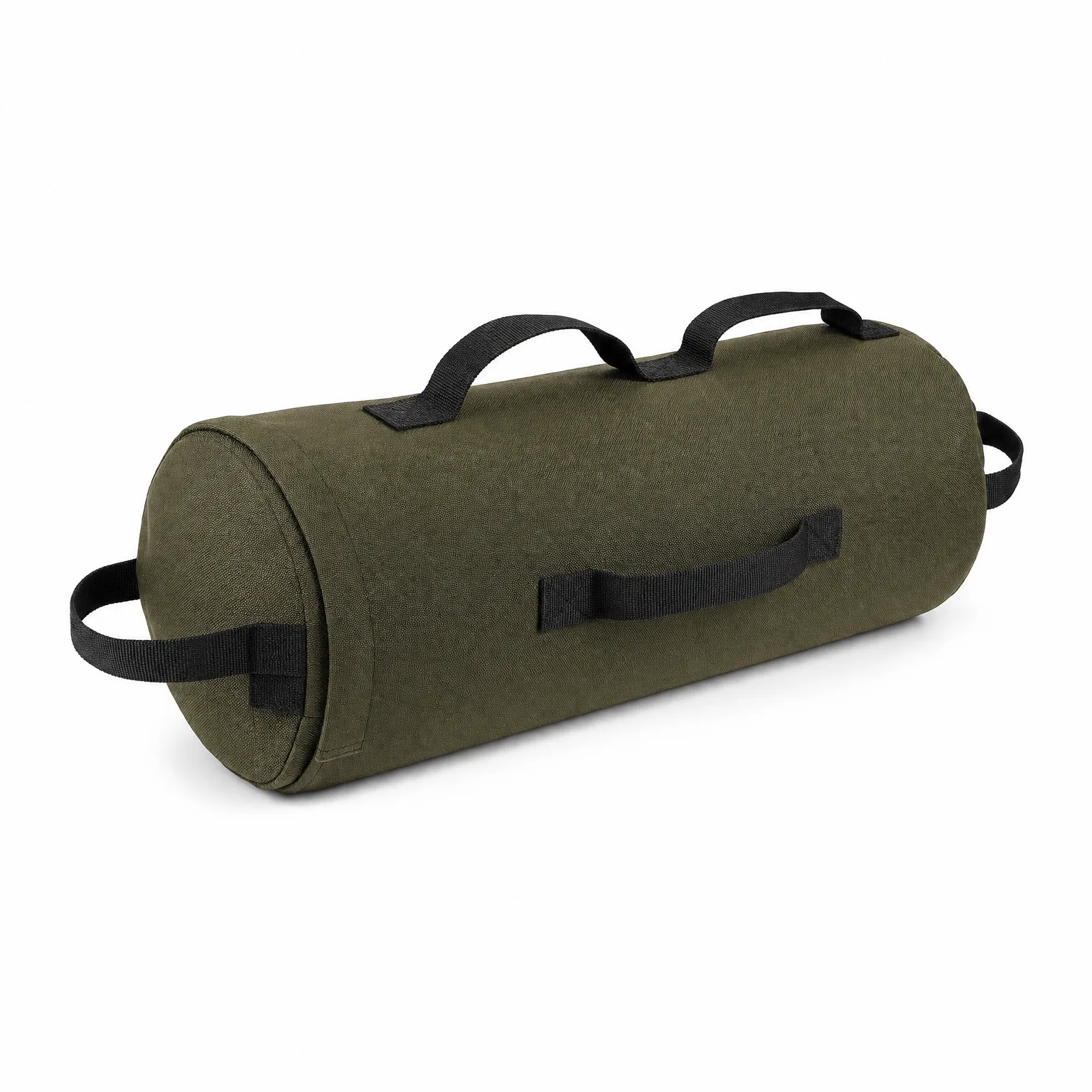
Sandbag
A tough fabric bag filled with sand, with or without handles. The load shifts as you lift, carry, squat and throw it. -
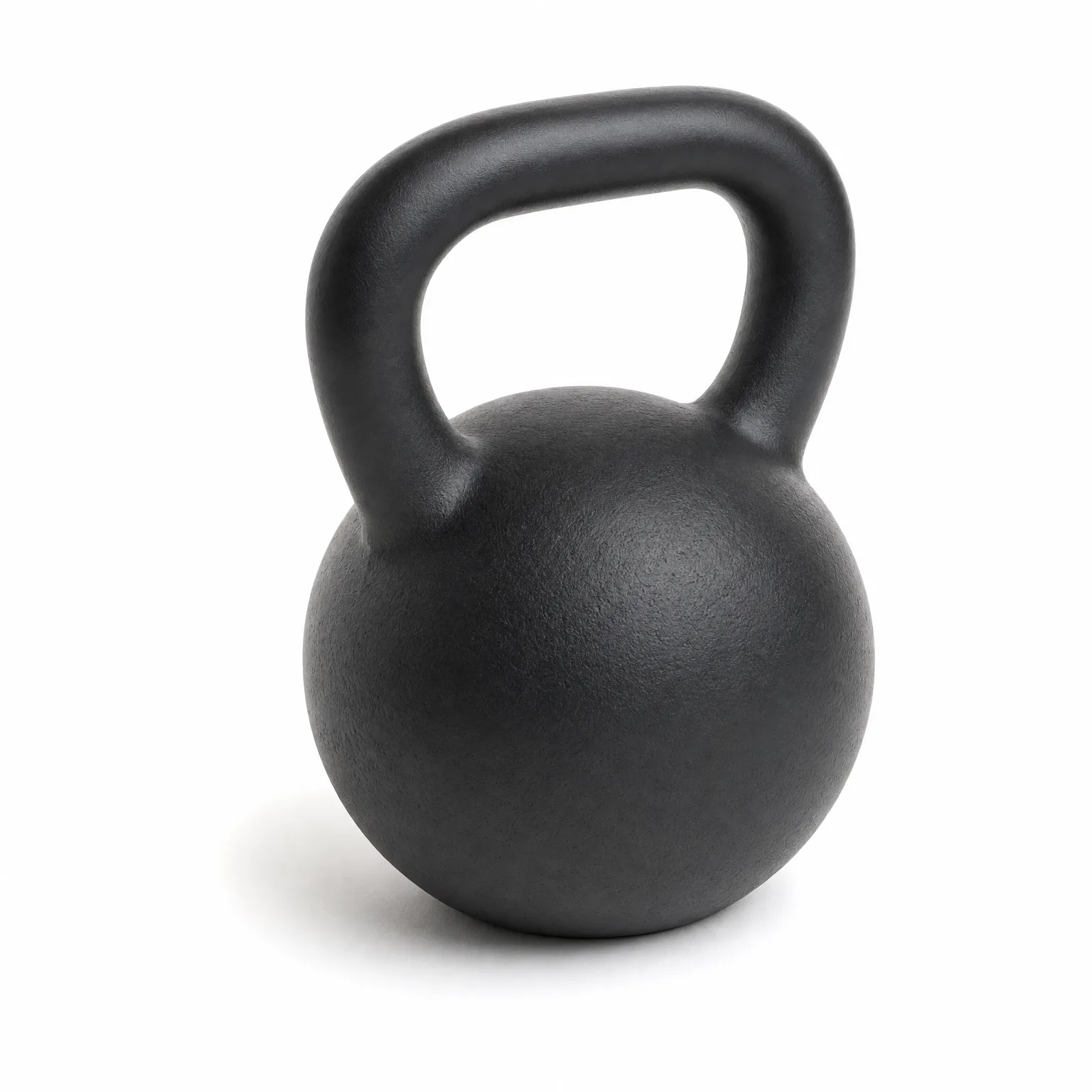
Kettlebell
A cast-iron or steel ball with a flat base and a handle on top. Built for swings, carries, squats and presses with one weight. -
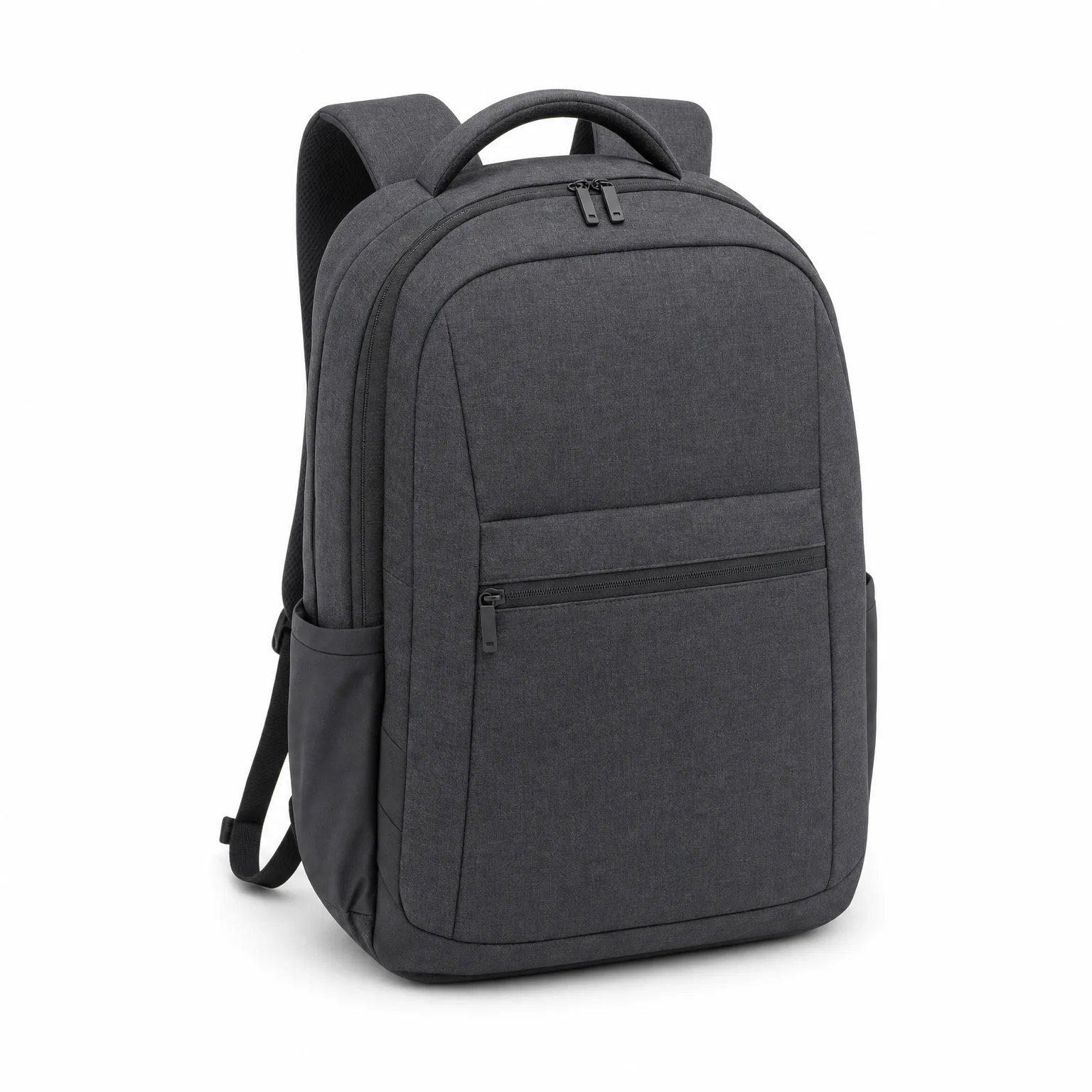
Loaded backpack
An ordinary backpack filled with books or water bottles works as an adjustable weight for squats, rows, push-ups and loaded walks.
Often used with
-
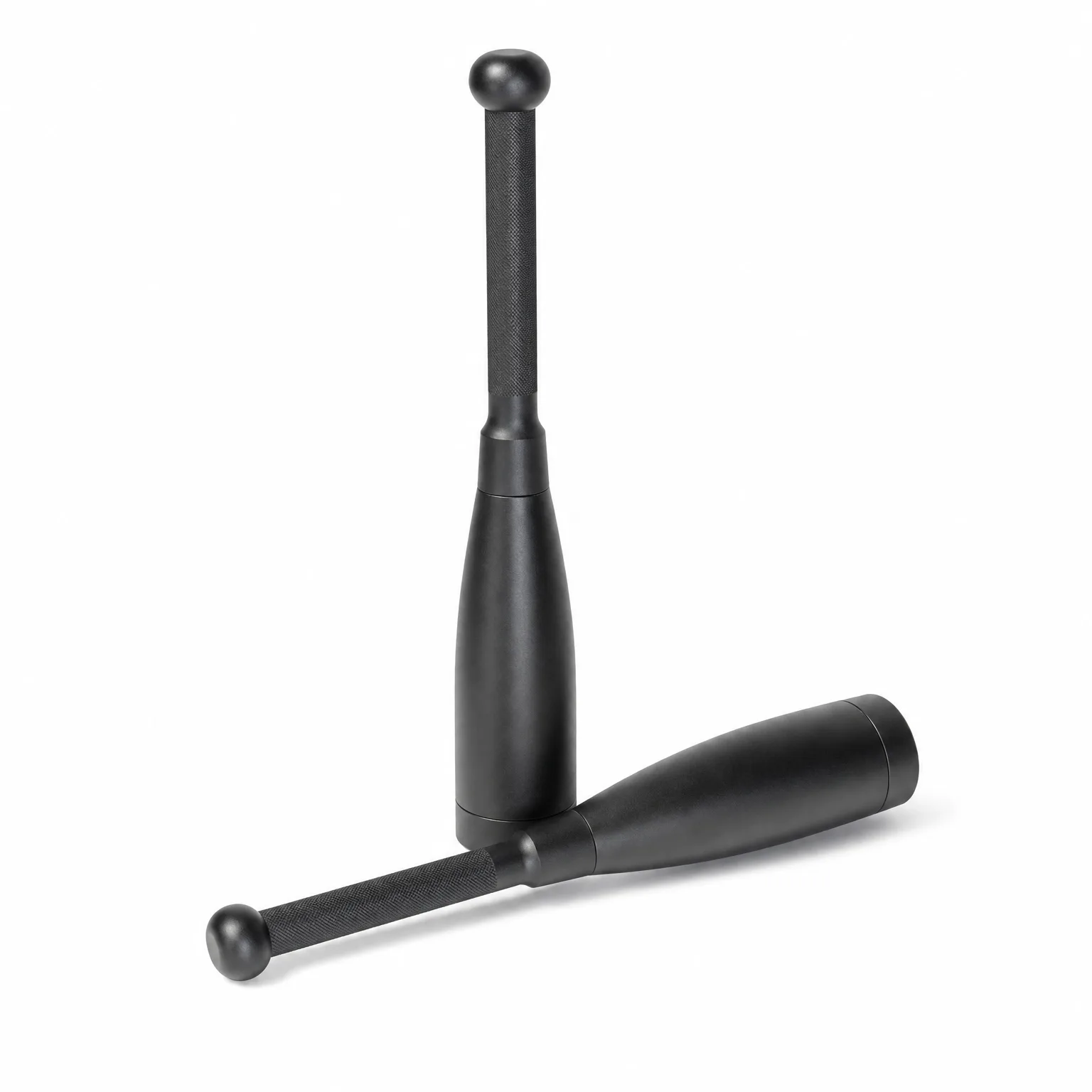
Exercise clubs
Bowling-pin-shaped weights swung in circles around the body. They train grip, shoulders and trunk through large rotating movements. -

Exercise mat
A cushioned, non-slip surface for floor exercises, stretching and yoga. The first thing most people need to train at home. -
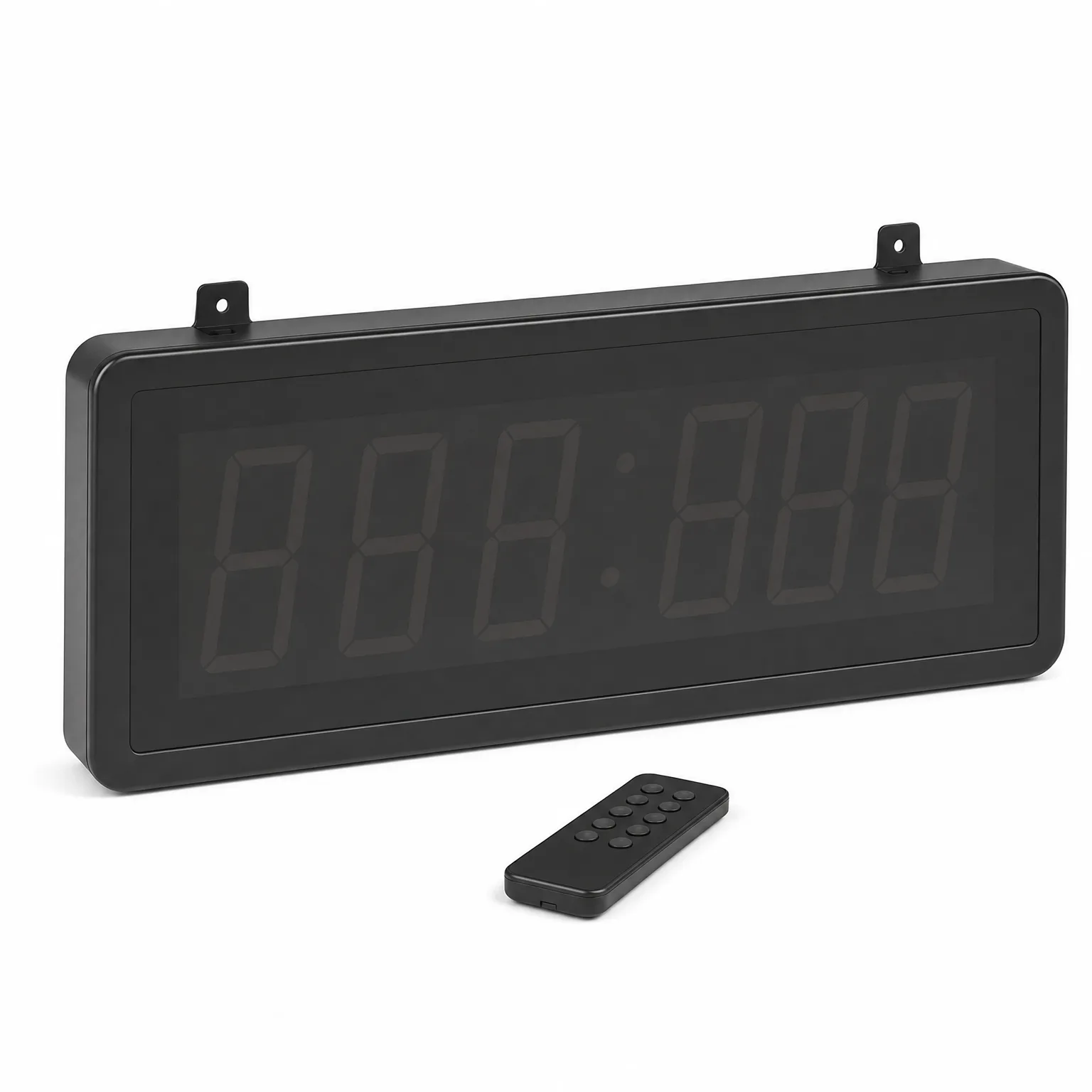
Interval timer
A wall clock or phone app that counts work and rest periods and signals each change, for tabata, EMOM, AMRAP, rounds and timed rests.
Questions about bulgarian bag
What size Bulgarian bag should I get?
Pick it for spins, not squats. As a starting point, many women use 5–8 kg (11–17 lb) and many men 8–12 kg (17–26 lb). Experienced lifters with strong grips move up from there. If you are between sizes, take the lighter one.
What muscles does a Bulgarian bag work?
Spins load the grip, shoulders, upper back and the muscles of the trunk, especially the obliques. Swings and snatches work the glutes and hamstrings. With the bag on the shoulders, squats and lunges work the legs as with any other load.
Bulgarian bag vs sandbag: what is the difference?
A sandbag is a straight bag made for lifting, carrying and shouldering, and it comes much heavier. A Bulgarian bag is lighter, crescent-shaped and has end handles, so it can be swung and spun. The Bulgarian bag is the better tool for rotation and grip, the sandbag for heavy carries.
Is a Bulgarian bag good for beginners?
The shouldered squats and lunges are fine for a beginner. Swings and spins take practice and a base of strength in the grip and trunk, so learn them with a light bag and short sets.
Build programs around what your client has
This guide comes from OnlineFitness.app, the app online coaches run their clients in.
Free for life for the first 100 coachesNo card