Equipment Functional and conditioning
Mini trampoline
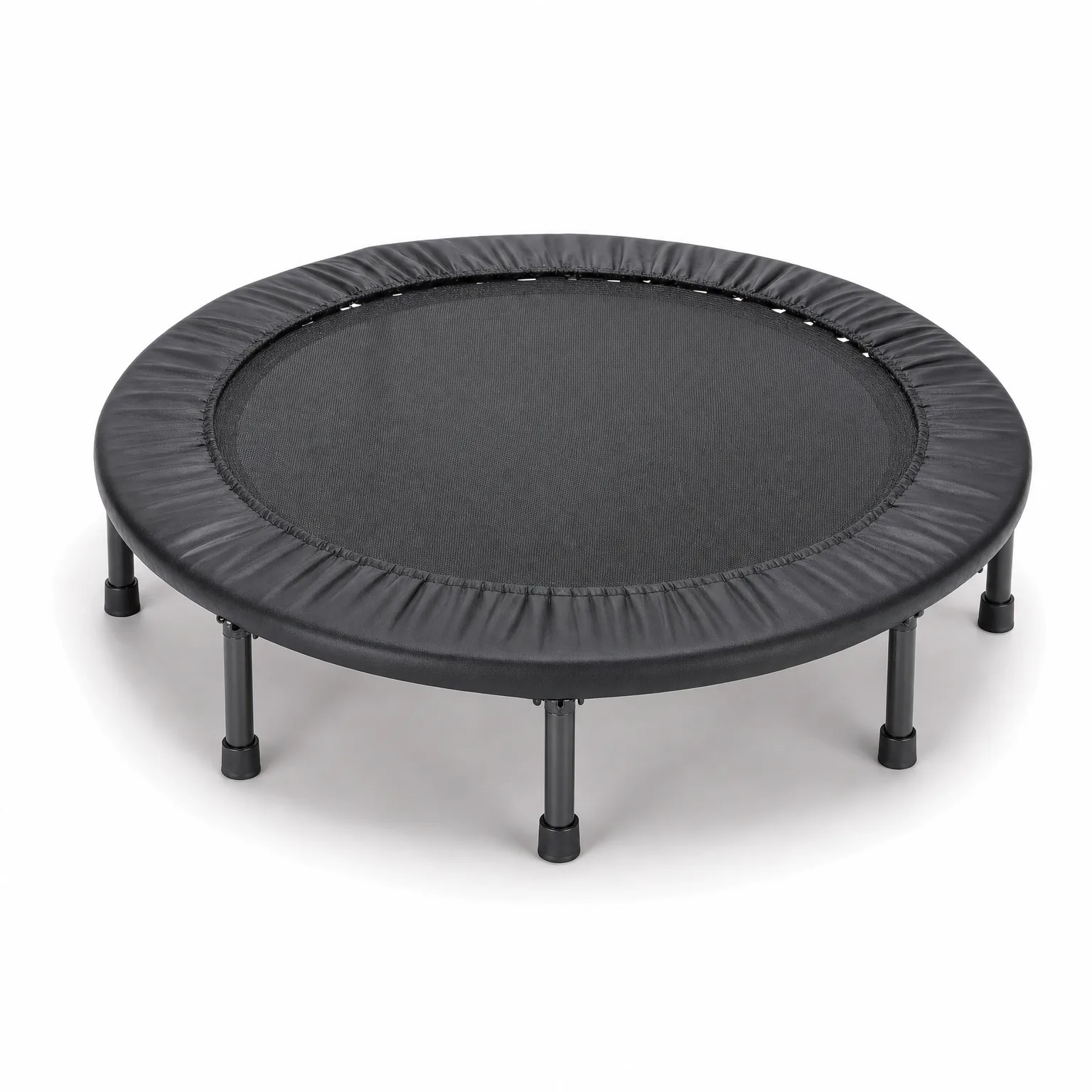
A small, low trampoline for one person. You bounce, jog and step on it for cardio at home, with the mat taking up part of each landing.
In short
A mini trampoline, also called a rebounder, is a round or hexagonal trampoline about one meter across and knee height or lower, made for one person to exercise on. You bounce, jog in place and do simple steps on it. The mat stretches on each landing, so the impact is spread over a longer time than on a hard floor.
It is used for home cardio and in group jumping classes. It suits beginners and people who find jogging in place on a floor dull or jarring. It is not for flips or high jumps: the aim is low, controlled bounces.
- Category
- Functional and conditioning
- Where
- Home, Gym
- Level
- Beginner and up
- Space
- Needs a corner of a room
- Typical sizes
- Mat frame 90–125 cm (36–50 in) across, 20–35 cm (8–14 in) off the floor
- Also called
- rebounder, fitness trampoline, exercise trampoline, rebounder trampoline, mini rebounder, jumping fitness trampoline
Muscles it works
- Also works
- Hamstrings, Abs, Tibialis anterior
What it is used for
- Steady cardio: gentle bouncing, jogging and marching in place
- Intervals with high knees, jumping jacks and fast runs
- Choreographed group jumping classes
- Balance drills standing on one leg on the soft mat
- Light warm-ups before strength training
Types
Spring rebounder. Steel springs connect the mat to the frame. Firmer, bouncier and cheaper. Springs can squeak and wear, so a full cover over them matters.
Bungee rebounder. Elastic cords instead of springs. Quieter with a softer, deeper bounce. Cords stretch over time and are replaced.
Rebounder with handlebar. A front bar to hold for balance. Standard in jumping classes and useful for beginners.
Folding rebounder. The frame folds in half or quarters and the legs unscrew for storage. Some take real force to fold and unfold.
How to choose
Springs or bungees
Bungee cords are quieter and softer underfoot, which helps in an apartment. Springs give a quicker, firmer bounce and cost less. Either works for general cardio.
Check the size and the edge cover
A 100–110 cm (40–44 in) frame gives most adults room to jog without watching their feet. The springs or cords should be fully covered by a padded skirt so a foot cannot go between them.
Look at the legs and the rating
Six legs with rubber feet are steadier than four. The user weight limit depends on the manufacturer's rating. Choose one with a clear margin above your body weight, because jumping multiplies the load.
Consider a handlebar
If your balance is unsure or you plan fast, class-style routines, get a model with a height-adjustable bar. You can usually remove it later.
Measure the ceiling
Add the frame height and a small bounce to your height with your arms raised. Low ceilings and light fittings rule out some rooms.
How to start using it
- Place it on a flat, clear floor. Set the rebounder on a level, non-slip surface with at least a meter of clear space all around and above. Check that every leg is screwed in fully and the frame does not rock.
- Step on and find the center. Step onto the middle of the mat, feet hip-width apart, knees slightly bent. Use bare feet, grip socks or light flat shoes. Ordinary socks slide on the mat.
- Start with the basic bounce. Press down into the mat and let it lift you, with the feet barely leaving the surface. Keep the trunk upright and braced. Do one or two minutes, then march or jog in place.
- Build time, then intensity. Begin with 5–10 minutes of easy bouncing and jogging with short breaks. Add time over a few weeks, then mix in faster segments such as high knees for 20–30 seconds.
- Get off carefully. Stop bouncing, stand still for a moment, then step down. The floor feels oddly hard for a few seconds after a session.
Common mistakes
Jumping for height
High jumps on a small mat end with a landing near the edge or off it. Push down into the mat and keep the bounce low.
Landing on the edge
Drifting to the rim puts a foot on the springs or frame and tips the rebounder. Glance down now and then and stay over the center.
Stiff legs or a deep squat
Locked knees make the bounce jar the back. Sitting into a squat on every landing tires the thighs in a minute. Keep a soft, small knee bend.
Wearing ordinary socks
A smooth sock on a woven mat slips sideways. Go barefoot or use socks with rubber grips.
More than one person, or children unsupervised
A rebounder is built for one adult at a time doing controlled exercise. It is not a play trampoline.
What to use instead
A jump rope gives similar bouncing cardio in less space, with harder landings. A step platform or a mini stepper gives rhythmic leg work with one foot always supported. Climbing stairs at a steady pace works the same muscles. Jogging or bouncing lightly in place on an exercise mat is the simplest stand-in.
-
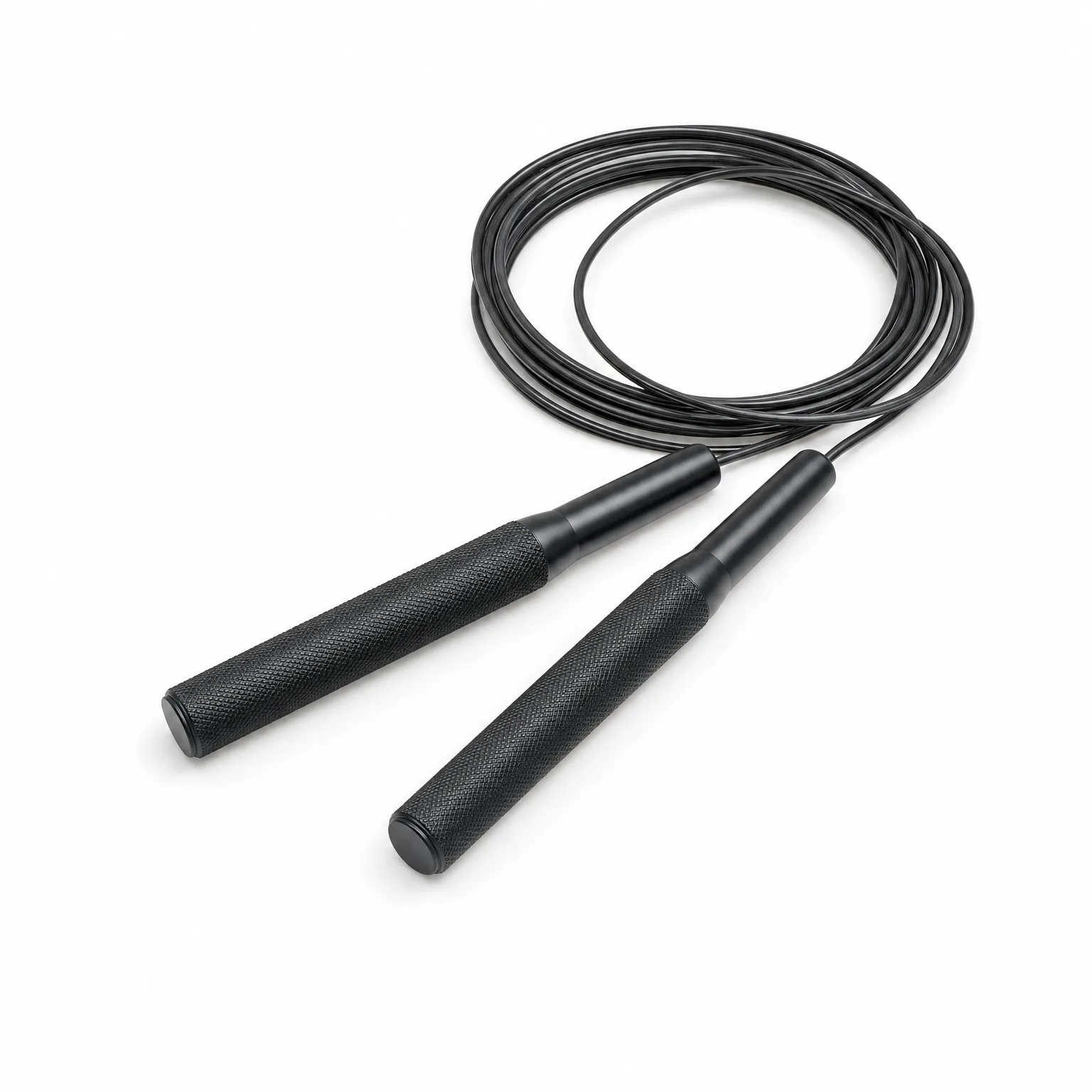
Jump rope
A rope with two handles that you swing over your head and jump. Hard cardio and footwork practice that fits in a pocket. -
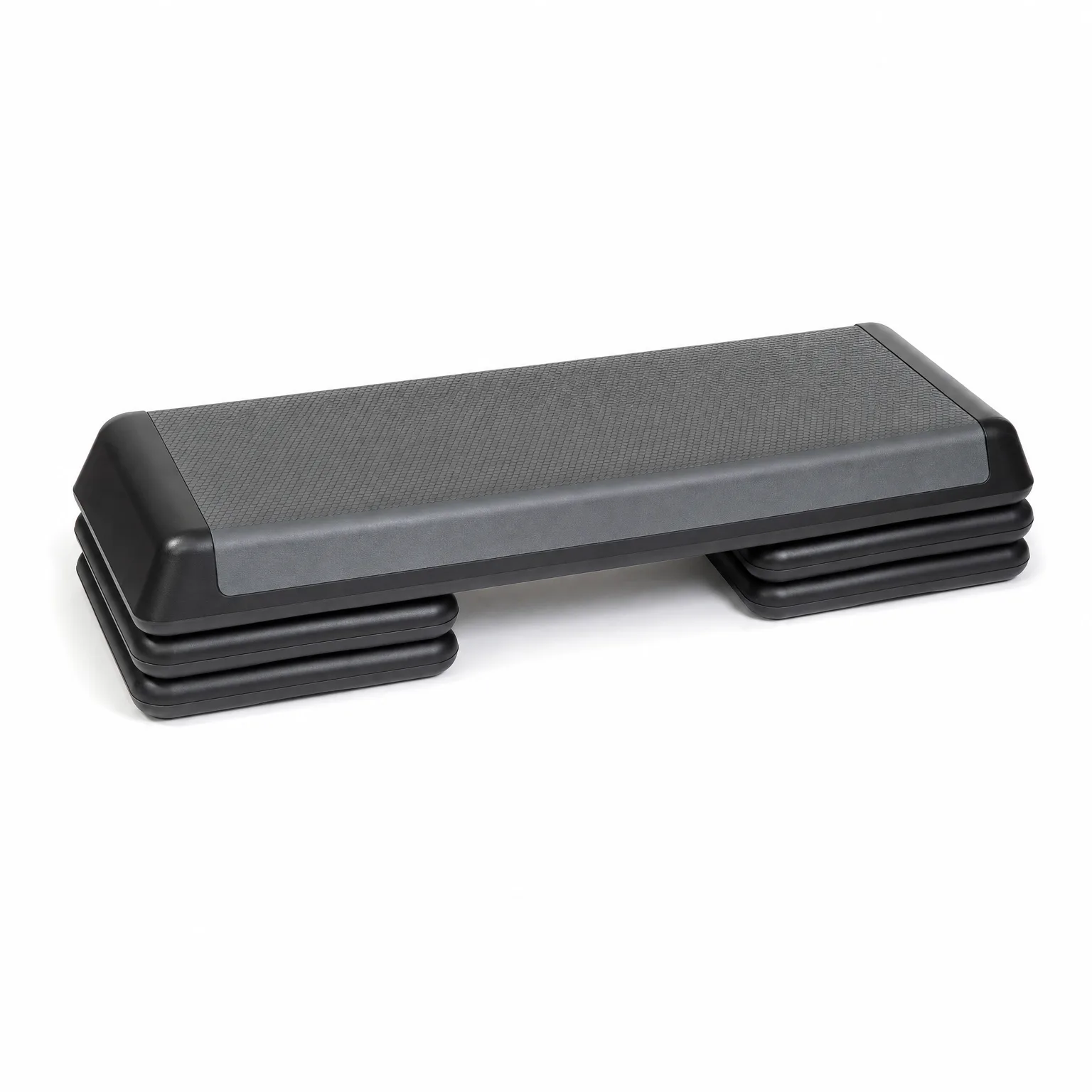
Step platform
A low, wide platform with removable risers. Used for step aerobics, step-ups, calf raises and as a low bench. -
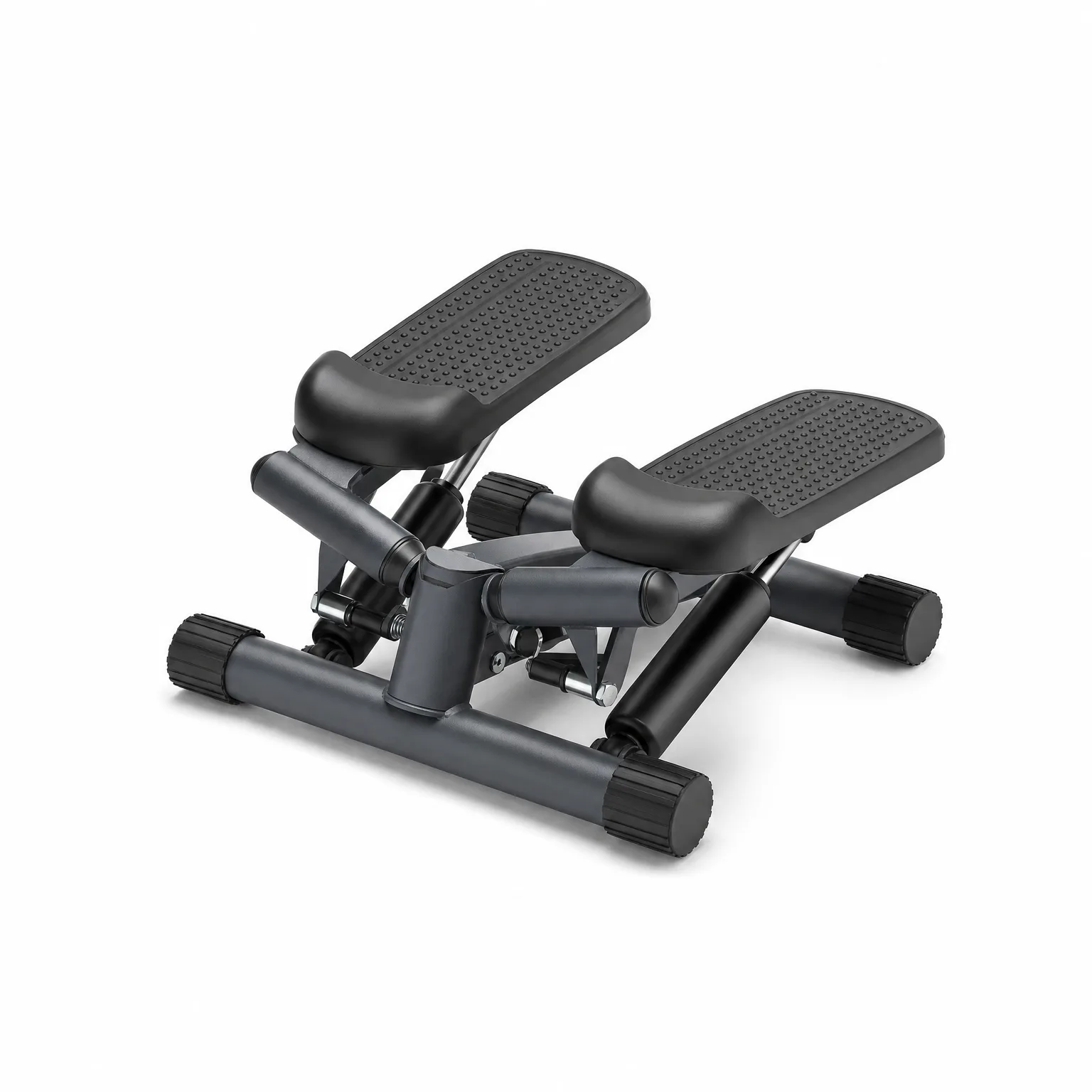
Mini stepper
A small home machine with two pedals on hydraulic cylinders. You step in place to train the legs and raise the heart rate. -
Stairs
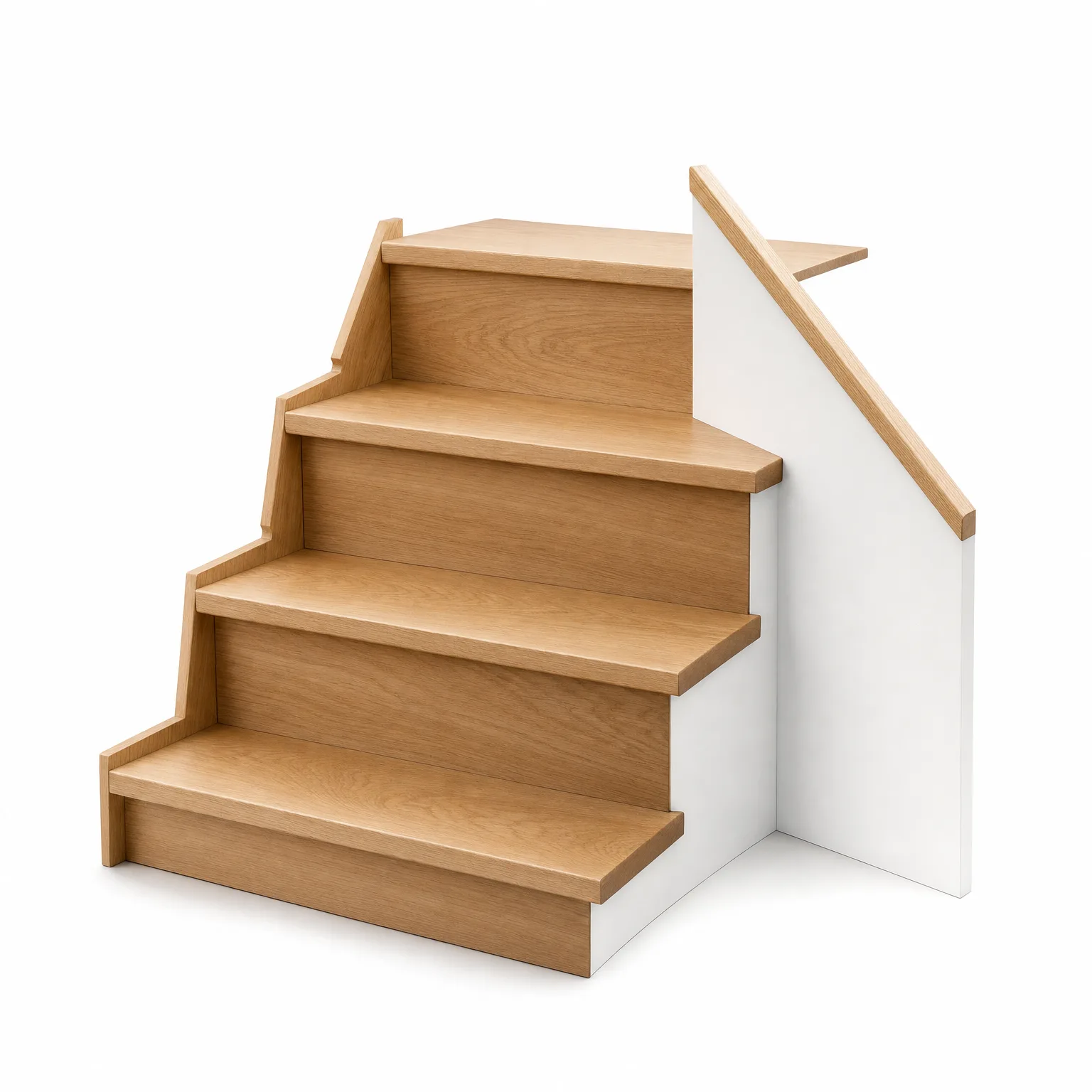
A staircase or a single step replaces a step platform, a low plyo box and a stair climber: step-ups, calf raises and stair climbing.
Often used with
-
Interval timer
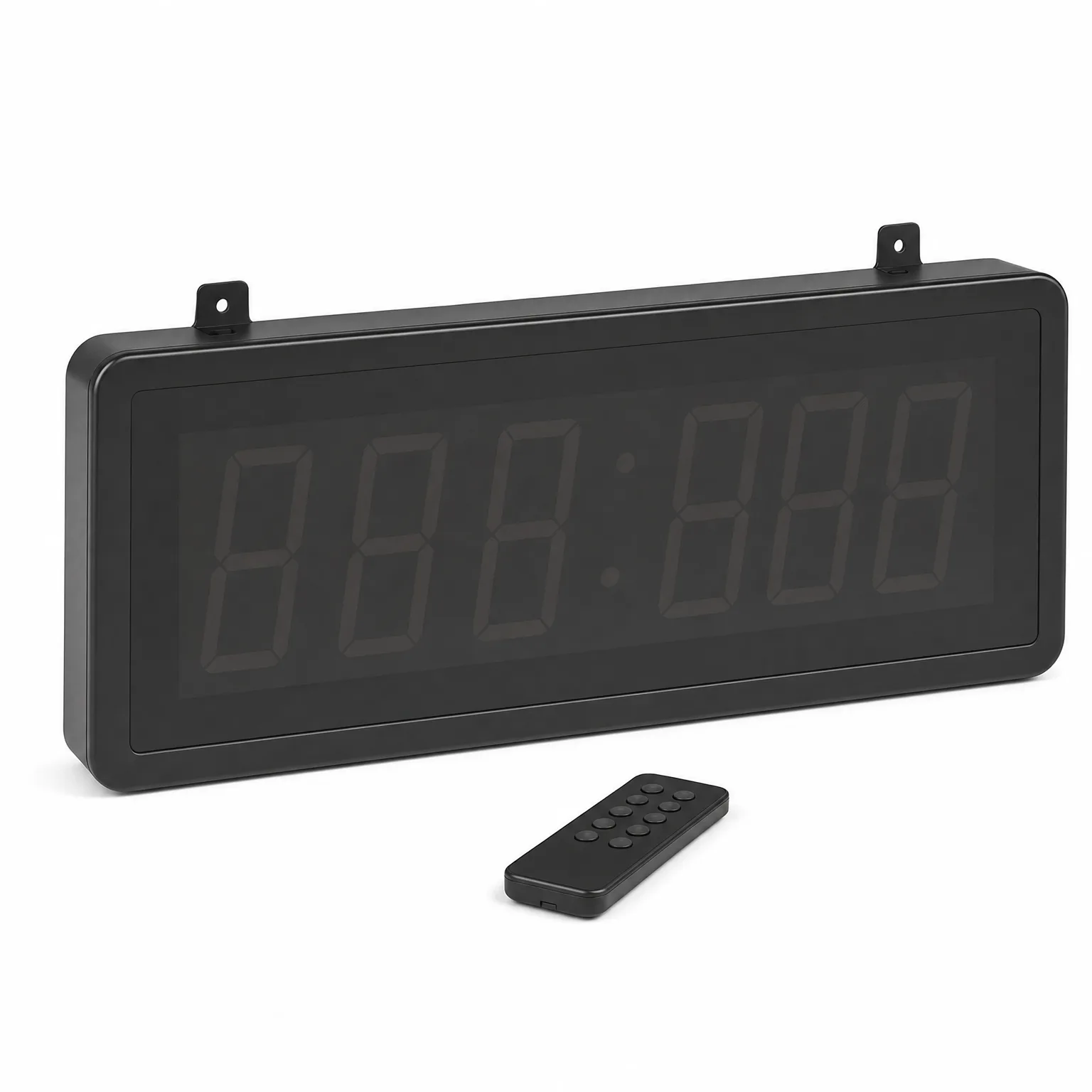
A wall clock or phone app that counts work and rest periods and signals each change, for tabata, EMOM, AMRAP, rounds and timed rests. -

Dumbbells
A pair of short handles with a weight at each end. One pair trains every major muscle group, at home or in a gym. -

Exercise mat
A cushioned, non-slip surface for floor exercises, stretching and yoga. The first thing most people need to train at home.
Questions about mini trampoline
Is a rebounder the same as a mini trampoline?
In everyday use, yes. Rebounder usually means a mini trampoline built for exercise, with a firmer mat and a sturdier frame than a cheap toy trampoline. Both are small, low, single-person trampolines.
Is rebounding good cardio?
It can be. Steady bouncing is light to moderate effort for most people, and jogging, high knees and intervals raise the heart rate further. How hard it is depends on what you do on it, as with any cardio. Claims that it beats running or has special effects on the lymphatic system are not well supported by research.
Is a mini trampoline easier on the joints than running?
The mat gives under you, so each landing is softer and slower than on pavement, and many people find it more comfortable. That is a description of how it feels, not a medical guarantee. If you have a joint, pelvic floor or balance problem, ask a doctor or physical therapist before you start.
How long should a rebounder workout be?
Start with 5–10 minutes and build to 20–30 minutes as your legs and balance adapt. Several short sessions a week are a fine alternative to a few longer ones.
Springs or bungee cords: which is better?
Bungees are quieter and softer, with a deeper bounce. Springs are firmer, quicker and cheaper. For an apartment or a softer feel, choose bungees. For fast, class-style routines, many people prefer springs.
Build programs around what your client has
This guide comes from OnlineFitness.app, the app online coaches run their clients in.
Free for life for the first 100 coachesNo card