Equipment Mobility and recovery
Yoga wheel
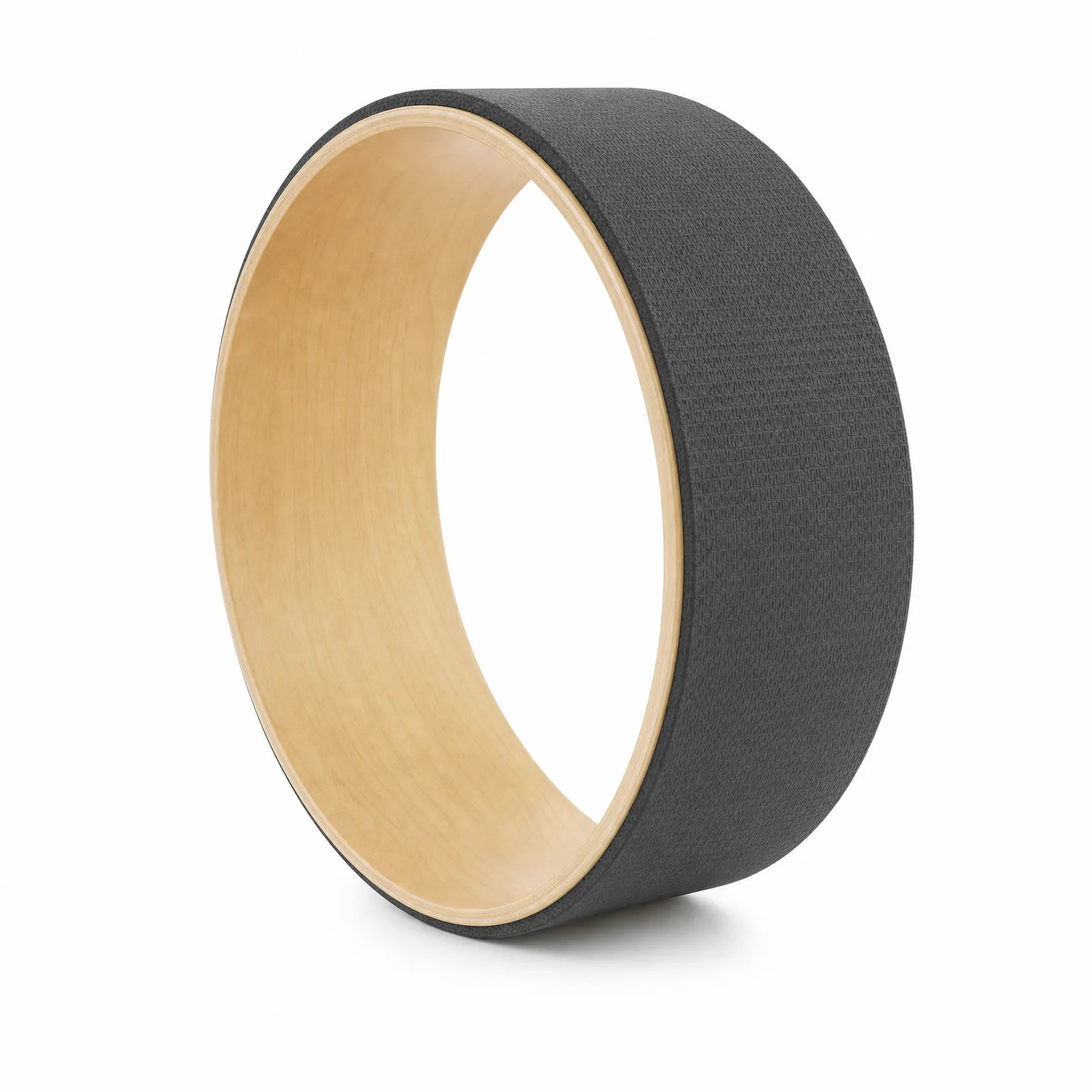
A hollow, padded ring about 30 cm across. You lie back over it to support backbends, or use it as a rolling prop for balance and core work.
In short
A yoga wheel is a rigid hollow ring, roughly 30 cm (12 in) in diameter and a hand's width wide, with a thin layer of padding around the outside. You place it under the spine and lean back over it, so the wheel supports the back while the chest, shoulders and front of the hips stretch. It is also used as a rolling support under the feet, shins or hands for planks, pikes and balance drills.
It gives a narrower, taller and firmer curve than a foam roller or a bolster, which is why people use it to work toward backbends. The basic supported positions are within reach of beginners with average mobility. Balances and deep backbends on it are intermediate work.
- Category
- Mobility and recovery
- Where
- Home, Gym
- Level
- Beginner and up
- Space
- Needs a corner of a room
- Typical sizes
- Standard about 30–33 cm (12–13 in) in diameter and 13 cm (5 in) wide; smaller wheels of 15–25 cm (6–10 in) exist
- Also called
- yoga ring, back wheel, yoga roller wheel, backbend wheel, yoga circle, back roller wheel
What it is used for
- Supported backbends: lying back over the wheel with the feet on the floor
- Rolling slowly along the upper and mid back
- Stretching the chest, shoulders and front of the hips over the curve
- Plank, pike and knee-tuck variations with the feet or shins on the wheel
- A hand or foot support in seated folds, lunges and balance poses
Types
Standard wheel. About 30–33 cm (12–13 in) across with a rigid plastic core and a few millimeters of foam. The size most instructions and classes assume.
Small and mini wheels. Roughly 15–25 cm (6–10 in). A lower curve for a milder backbend, for shorter people, or for placing under the neck, calves or feet. Often sold in sets of three.
Wide or thick-padded wheel. A broader rim or a thicker cushion spreads the pressure across more of the back. More comfortable for bony spines, slightly less precise.
Cork or wooden wheel. A wooden core with a cork surface. Firm and grippy without foam. Heavier and harder under the spine.
How to choose
Start with the standard size
A 30–33 cm (12–13 in) wheel suits most adults for supported backbends and core work. If you are shorter than about 160 cm (5 ft 3 in) or stiff in the upper back, a wheel around 25 cm (10 in) gives a gentler curve.
Check the core
The ring must not flex when you put your full weight on it. Look for a thick, rigid core and a load rating from the manufacturer that is well above your body weight. Thin cores can crack.
Choose enough padding
About 6–8 mm of dense foam takes the edge off without making the wheel wobbly. Very thin padding is hard on the spine. The surface should grip a mat and bare skin.
Consider the width
A 13 cm (5 in) rim fits between the shoulder blades of most people. A wider rim feels steadier and spreads pressure, which some beginners prefer.
How to start using it
- Set up on a mat with space behind you. Use a non-slip mat on a level floor so the wheel does not skid. Warm up first with a few minutes of easy movement for the spine and shoulders, such as cat-cow and arm circles.
- Begin seated with the wheel behind you. Sit with knees bent and feet flat, and hold the wheel against your lower-mid back, in line with the spine. Lean back onto it slowly, keeping the hips low and the hands on the wheel or the floor.
- Roll up a little at a time. Push gently through the feet so the wheel rolls up to the mid and upper back. Support your head with your hands. Stop where the stretch across the chest is clear but comfortable, and stay for a few slow breaths.
- Come out slowly. Tuck the chin, roll back down toward the hips and lower your seat to the floor before sitting up. Rest for a moment in a neutral or gently rounded position.
- Add core work once you are steady. For a rolling plank, place the shins on the wheel with the hands under the shoulders and hold. Later, draw the knees toward the chest and roll back out. Keep the hips level throughout.
Common mistakes
Dropping back too far on the first try
Letting the head and arms fall all the way to the floor is a deep backbend that the wheel makes look easy. Build the range over weeks, with the feet planted and the head supported.
Letting the wheel sit under the lower back only
Hanging the lower back over the wheel concentrates the bend in the part of the spine that already bends most. Keep the wheel moving toward the mid and upper back, where the stretch is intended.
Leaving the neck unsupported
A head that hangs back loads the neck. Keep the hands behind the head until the back of the head can rest on the wheel or the floor without effort.
Standing or balancing on it without support
The wheel rolls freely. Standing on it or kneeling on top without a wall or a steady hand nearby is a common way to fall. Treat balances as an advanced skill.
Using it on a slippery floor
On tile or polished wood the wheel can shoot out from under you. Always use it on a mat.
What to use instead
A foam roller placed across the upper back gives a lower, wider and more stable curve, and is the gentler way to start. A stability ball supports the whole spine in a backbend with a soft surface. A yoga bolster or a pair of yoga blocks under the shoulder blades gives a fixed, restful chest opening with no rolling. For the core exercises, a stability ball or sliders under the feet reproduce the rolling plank and knee tuck.
-
Foam roller
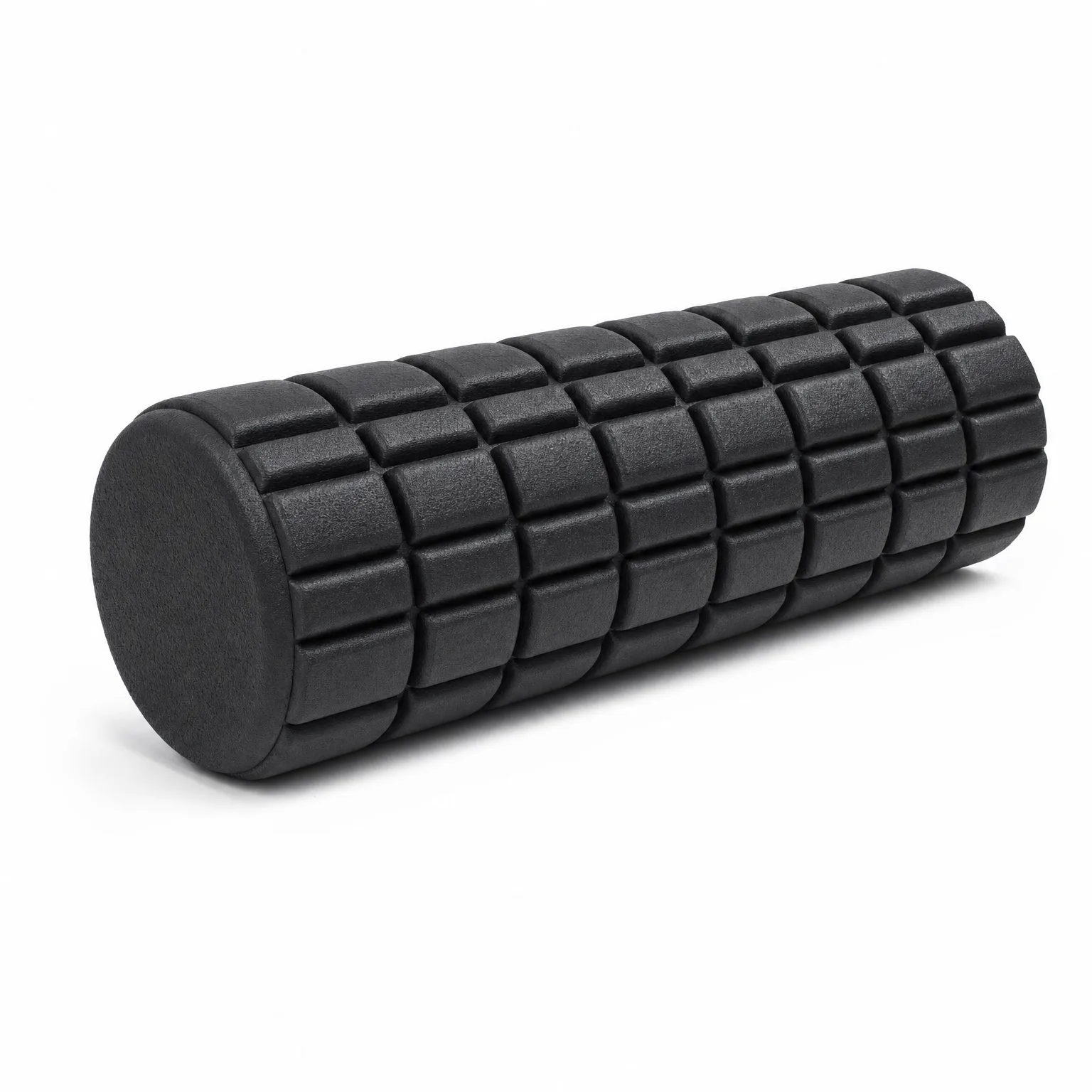
A firm foam cylinder you lie on and roll along a muscle for self-massage, usually during a warm-up or after training. -
Stability ball
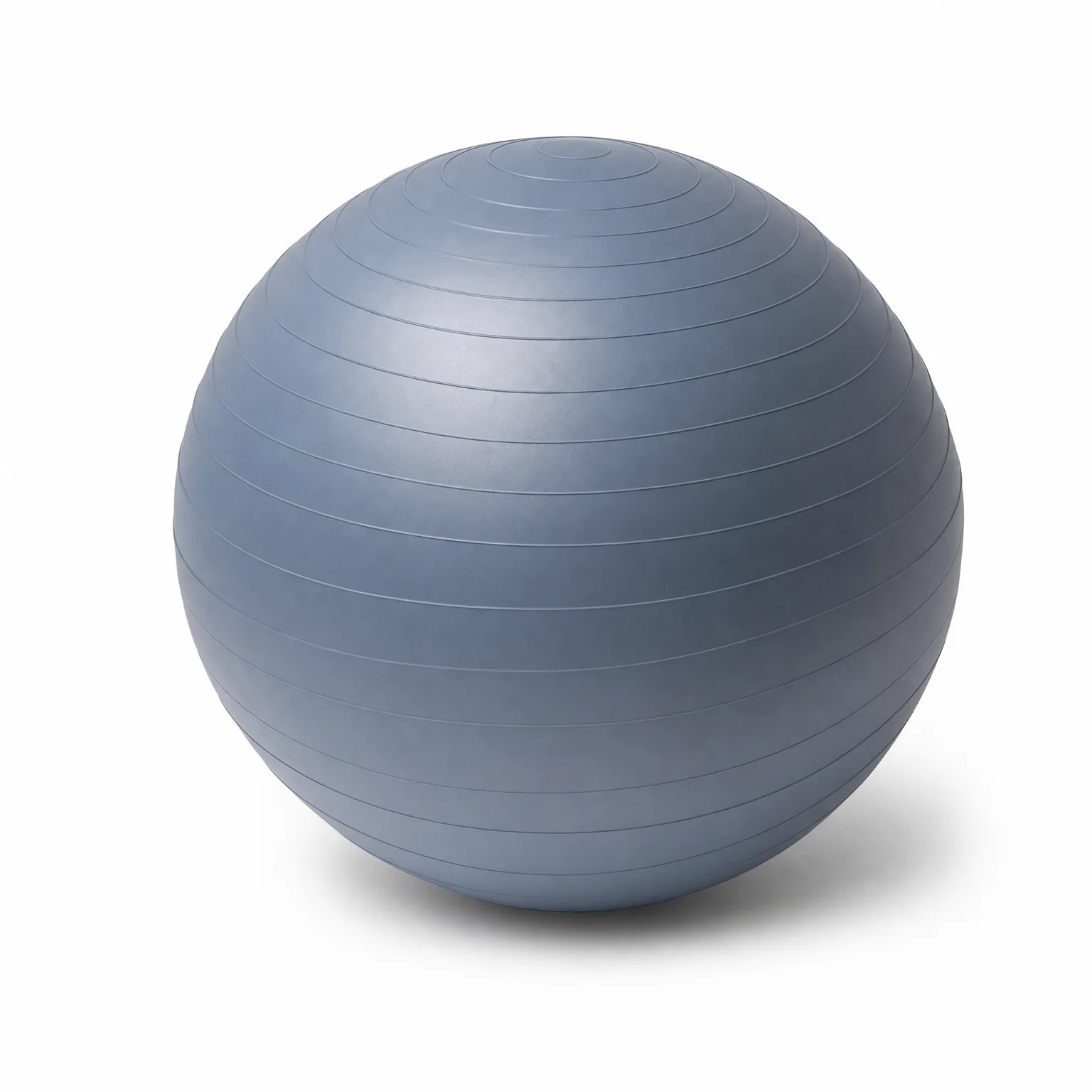
A large inflatable ball you sit, lie or lean on. The unstable surface is used for core exercises, hamstring curls and supported stretches. -
Yoga bolster
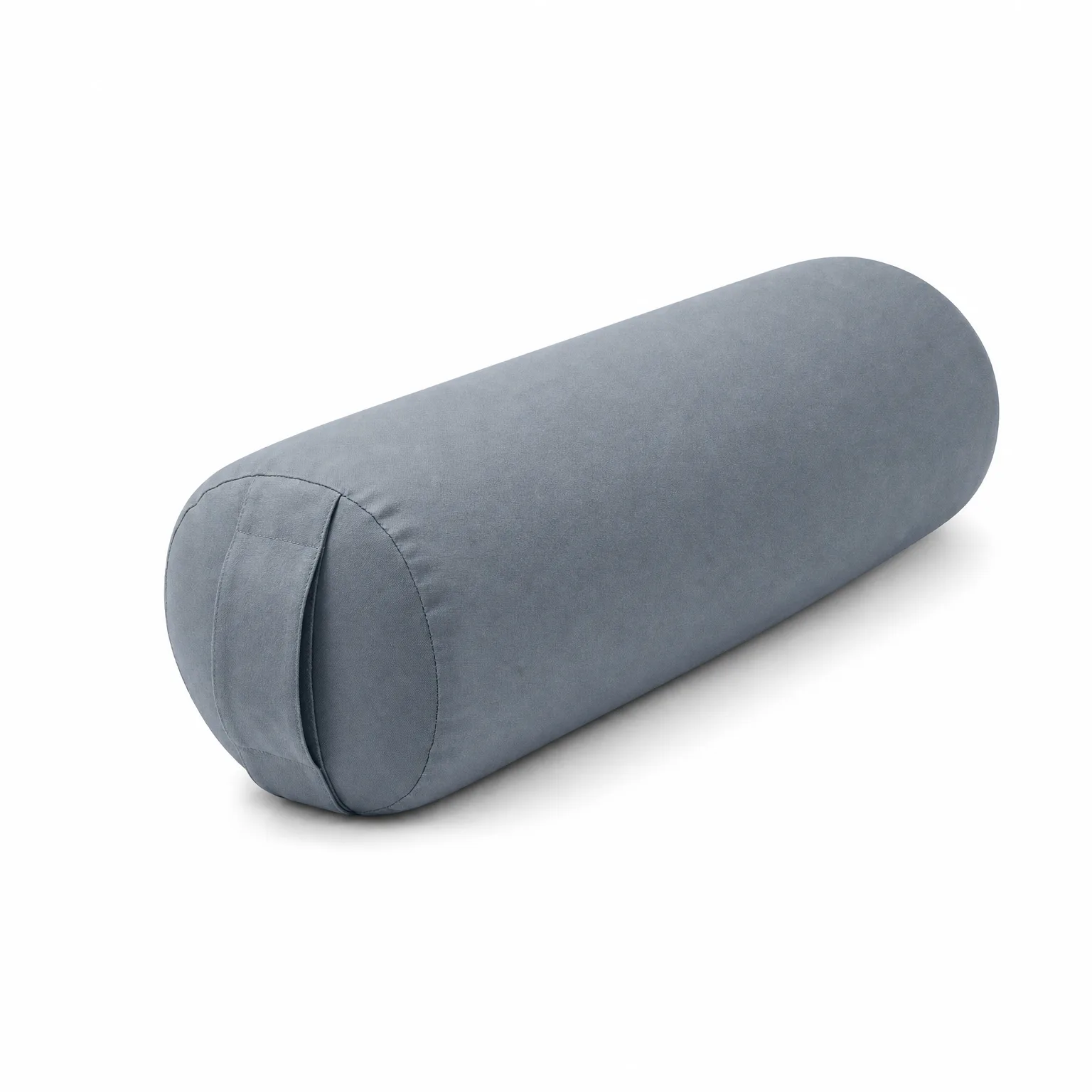
A long, dense cushion that supports the back, hips or knees so you can rest in a yoga pose or sit comfortably for a long hold. -
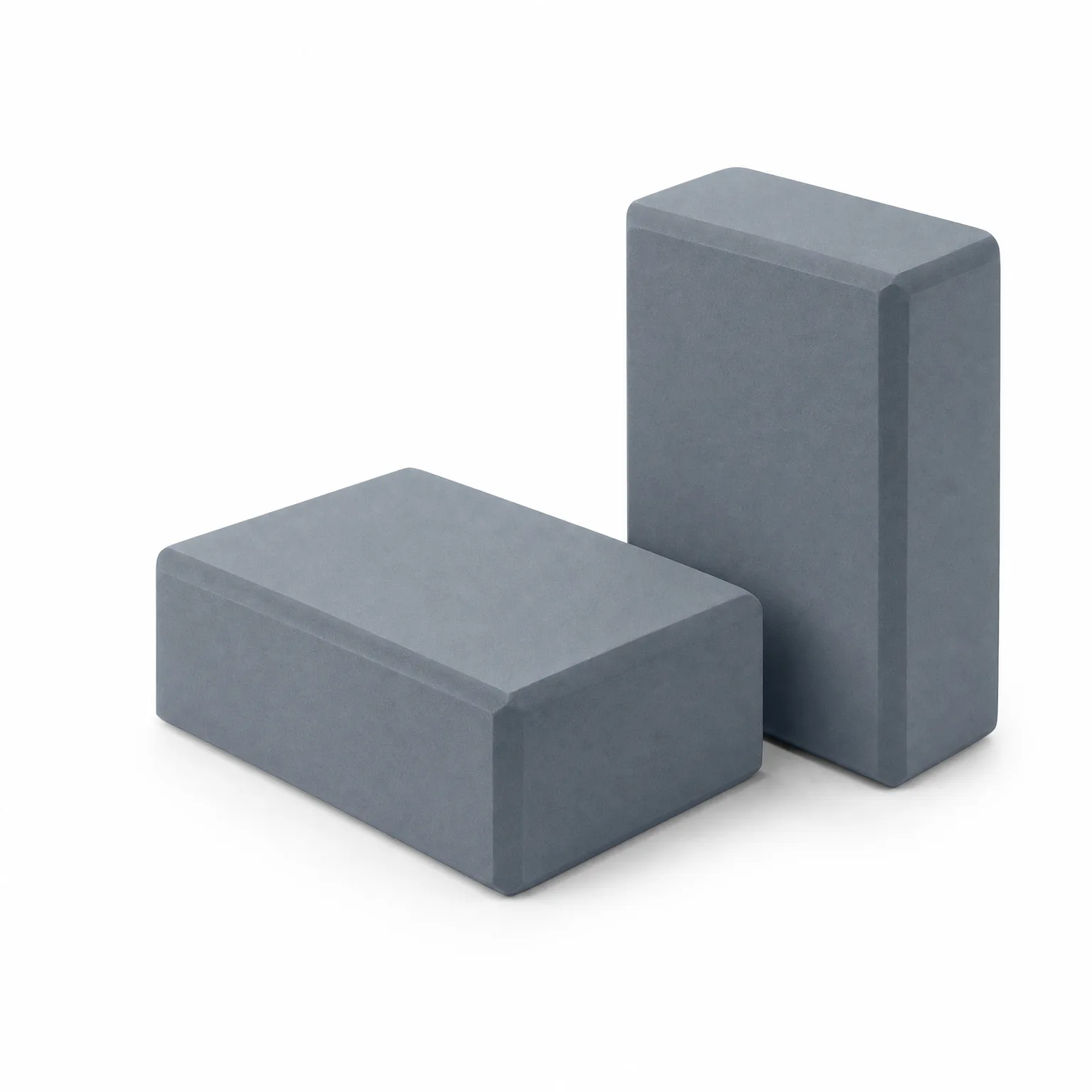
Yoga blocks
Firm rectangular blocks of foam, cork or wood that raise the floor to your hands or support the body in stretches and yoga poses.
Often used with
-

Exercise mat
A cushioned, non-slip surface for floor exercises, stretching and yoga. The first thing most people need to train at home. -
Yoga blocks
Firm rectangular blocks of foam, cork or wood that raise the floor to your hands or support the body in stretches and yoga poses. -
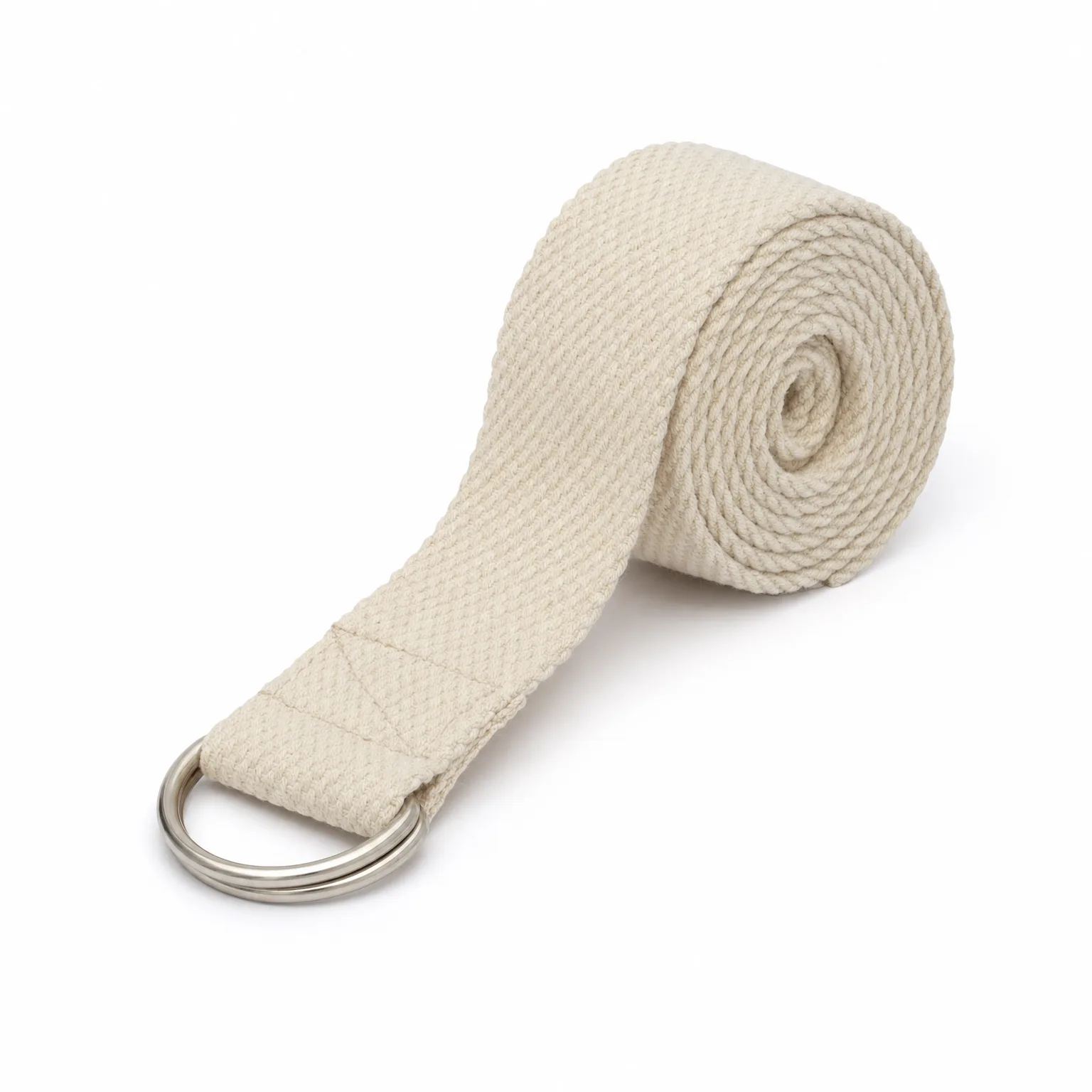
Yoga strap
A long, non-stretch cotton or nylon strap with a buckle that extends your reach in stretches, most often for the hamstrings.
Questions about yoga wheel
What is a yoga wheel used for?
Mainly to support the spine while you bend backward, which stretches the chest, shoulders, abdomen and front of the hips. People also roll the upper back on it and use it as an unstable support under the feet or hands for planks, pikes and balance poses.
What size yoga wheel should I get?
The standard 30–33 cm (12–13 in) wheel fits most adults. A smaller wheel of about 25 cm (10 in) gives a milder curve for shorter or stiffer people. Mini wheels of 15 cm (6 in) are for the neck, calves and feet, not for lying back over.
Yoga wheel or foam roller?
A foam roller is lower, wider and more stable, and is made for rolling pressure along muscles. A yoga wheel is taller and narrower, so it gives a deeper, more supported backbend and fits between the shoulder blades. If your goal is self-massage, choose the roller. If it is working toward backbends, the wheel is the more specific tool.
Is a yoga wheel good for beginners?
The basic supported positions are, if you start low, keep your feet on the floor and support your head. Go gradually: the wheel makes a deep backbend feel accessible before the body is used to it. If you have a history of back or neck problems, ask a doctor or physical therapist before using one.
Build programs around what your client has
This guide comes from OnlineFitness.app, the app online coaches run their clients in.
Free for life for the first 100 coachesNo card