Equipment Functional and conditioning
Balance disc
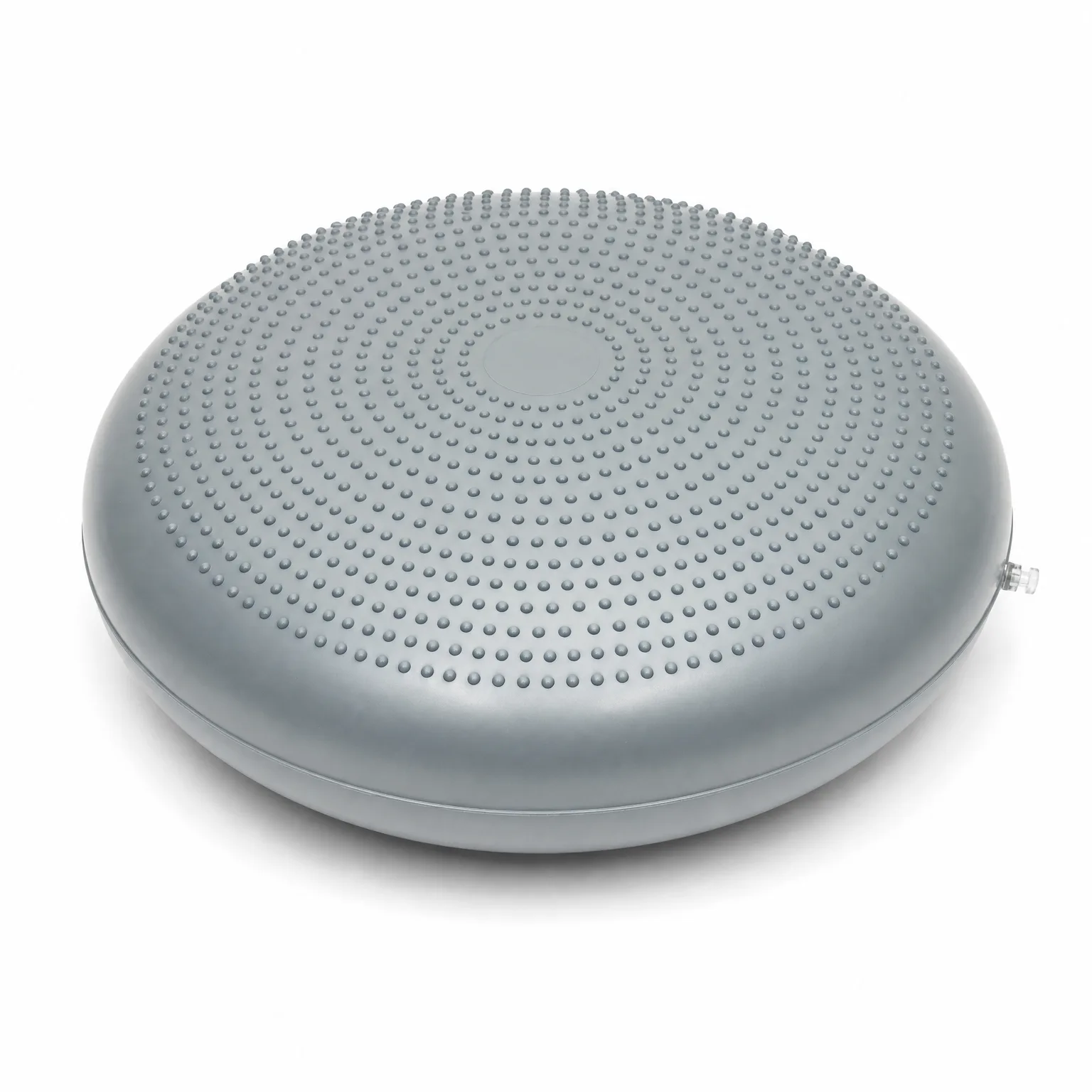
A small air-filled cushion that tilts in every direction. You stand, sit, kneel or put your hands on it to add wobble to an exercise.
In short
A balance disc is a round, air-filled rubber cushion about the size of a dinner plate and a few centimeters thick. The air shifts under your weight, so the disc tilts in every direction and the muscles around the ankles, hips and trunk work to keep you level.
It sits between the flat foam balance pad, which only compresses, and the large dome balance trainer. It is small enough to pack, its difficulty changes with how much air is in it, and it is the only one of the three commonly used as a seat on a chair or the floor.
- Category
- Functional and conditioning
- Where
- Home, Gym, Travel
- Level
- Beginner and up
- Space
- Fits in a drawer or a bag
- Typical sizes
- 33–35 cm (13–14 in) across and about 5–7 cm (2–3 in) thick when inflated; larger 45–60 cm discs exist
- Also called
- balance cushion, wobble cushion, stability disc, wobble disc, air cushion, inflatable balance disc, sitting disc
Muscles it works
- Main
- Calves, Tibialis anterior, Abs
- Also works
- Glutes, Quads, Obliques, Lower back
What it is used for
- Standing balance drills on one or two feet
- Sitting on it on a chair or the floor so the trunk has to hold you upright
- Push-ups and planks with the hands or forearms on the disc
- Squats and lunges with one foot on the disc
- Seated core exercises such as leg lifts and slow twists
Types
Standard disc. Round, 33–35 cm, usually smooth on one side and covered in small nubs on the other. Inflated with a hand pump through a needle valve.
Wedge cushion. A sloped, air-filled seat cushion. Made for sitting, less useful for standing work.
Balance pods. Small domes about 15 cm across, sold in pairs or sets. One per foot or hand, or laid out as stepping stones.
How to choose
Standard size covers most uses
A 33–35 cm (13–14 in) disc fits one foot comfortably, both feet at a squeeze, and most chair seats. Choose a larger disc only if you want both feet on it at hip width.
Make sure it comes with a pump
The disc is only useful if you can tune the air. Check that a needle pump is included, or that the valve takes a standard ball pump needle.
Check the material and rating
Thick PVC or rubber with a firm valve plug holds air for weeks. The load a disc can take depends on the manufacturer's rating, so check it if you plan to stand on it with weights.
Disc or pad
A disc moves more than a foam pad and can be made harder or easier with air. A pad is steadier and better as a first step or a knee cushion. Many people who start on a pad move to a disc later.
How to start using it
- Set the air first. Inflate until the disc is about 5 cm thick and you can still press a thumb in easily. More air makes a taller, rounder disc that tilts faster and is harder. Less air lets the foot sink toward the floor and is easier.
- Start seated. Put the disc on a firm chair and sit on the middle with both feet flat. Sit tall and try to keep the hips level for a minute or two. Then lift one foot a little and hold.
- Stand on it next to a support. Place the disc on a non-slip floor beside a wall or a sturdy chair. Step one foot onto the center, then the other. Keep the knees soft and the eyes forward, and hold for 20–30 seconds before trying one leg.
- Then add exercises. Once standing is steady, try slow squats on it, a lunge with the front foot on the disc, or push-ups with both hands on it. Keep the movement slow and the weights light.
Common mistakes
Overinflating
A drum-tight disc is a small ball that shoots out from under the foot. Leave enough give that the foot settles into it.
Using it on a slippery floor
On polished tile or laminate the whole disc can slide. Put it on a mat or carpet, and use it barefoot or in shoes with grip, not in socks.
Stepping on the edge
Weight on the rim tips the disc sharply. Place the foot or hand over the center, and step off backward under control.
Adding weight too early
Holding dumbbells before you can stand quietly on one leg turns a balance drill into a struggle not to fall. Earn each step: two legs, one leg, movement, then light load.
What to use instead
A foam balance pad covers the standing drills with less wobble. A dome balance trainer is the larger, harder version. A balance board gives a rigid, tilting surface. For sitting, an exercise ball does the same job with more movement. At home, a folded towel or a firm cushion on a non-slip floor makes a soft surface for standing on one leg.
-
Balance pad
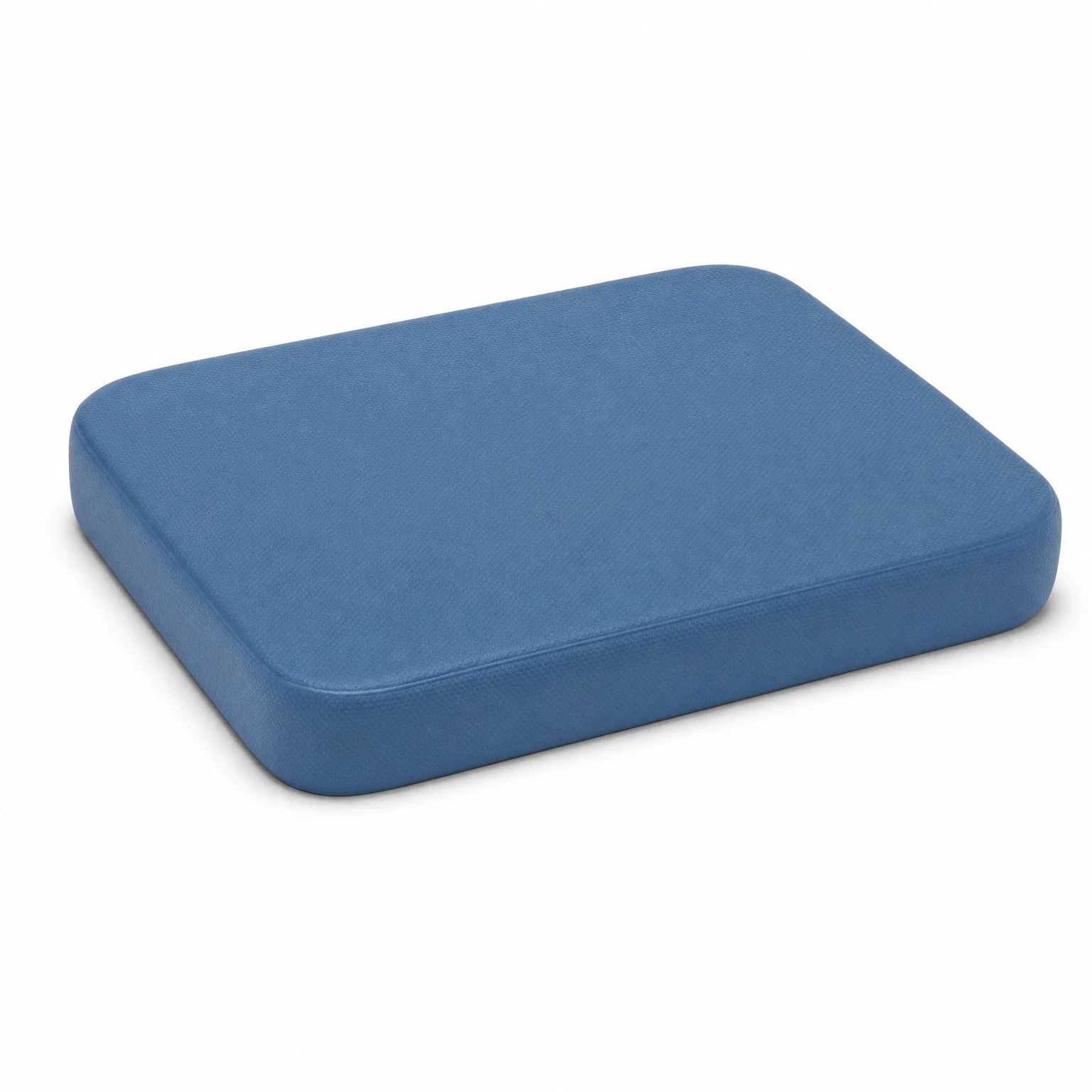
A thick rectangle of soft foam you stand, kneel or lunge on. It gives under the foot, so the ankles and hips work to keep you steady. -
Balance trainer
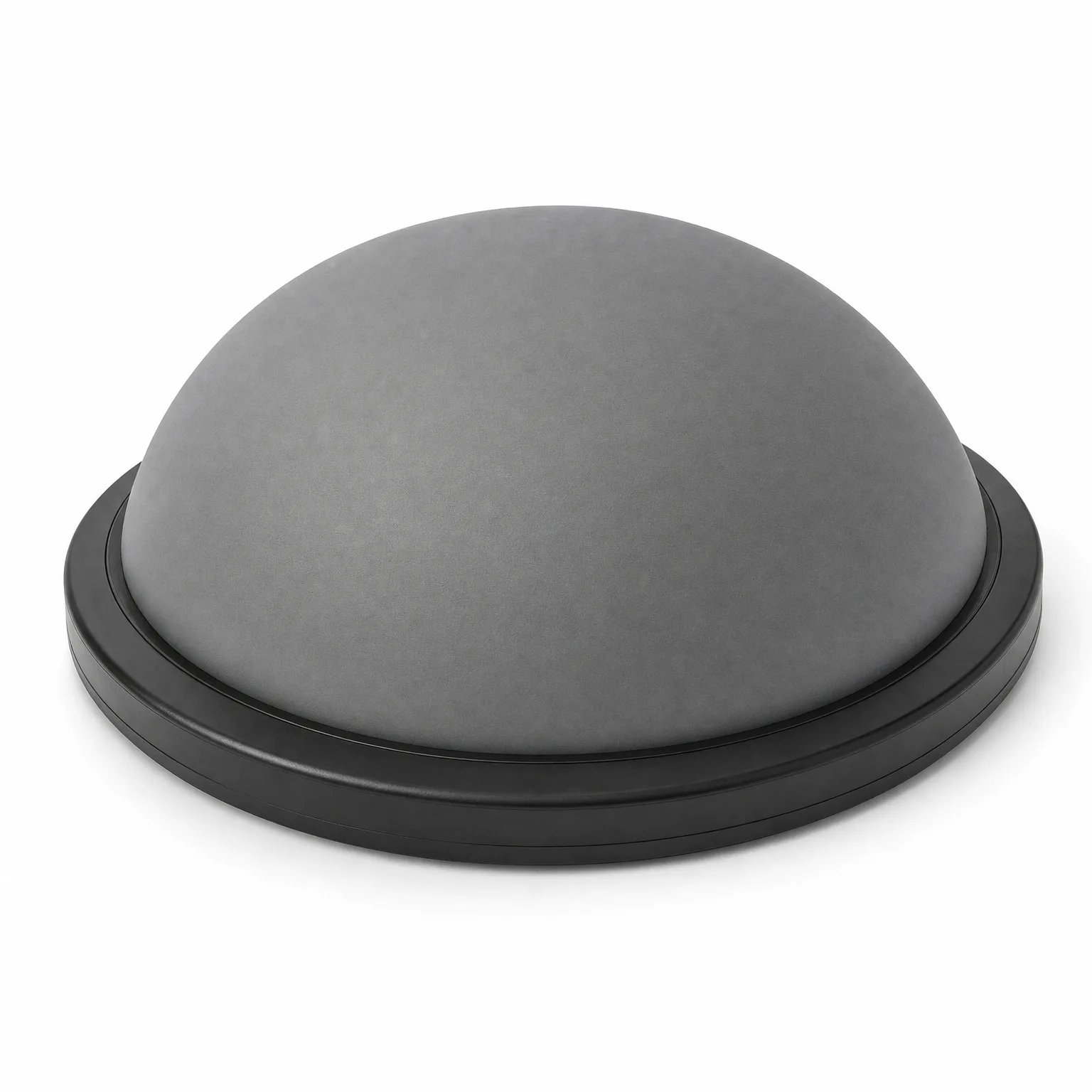
An inflated rubber dome on a flat rigid base. You stand, kneel or lie on it to make balance, core and leg exercises less stable. -
Balance board
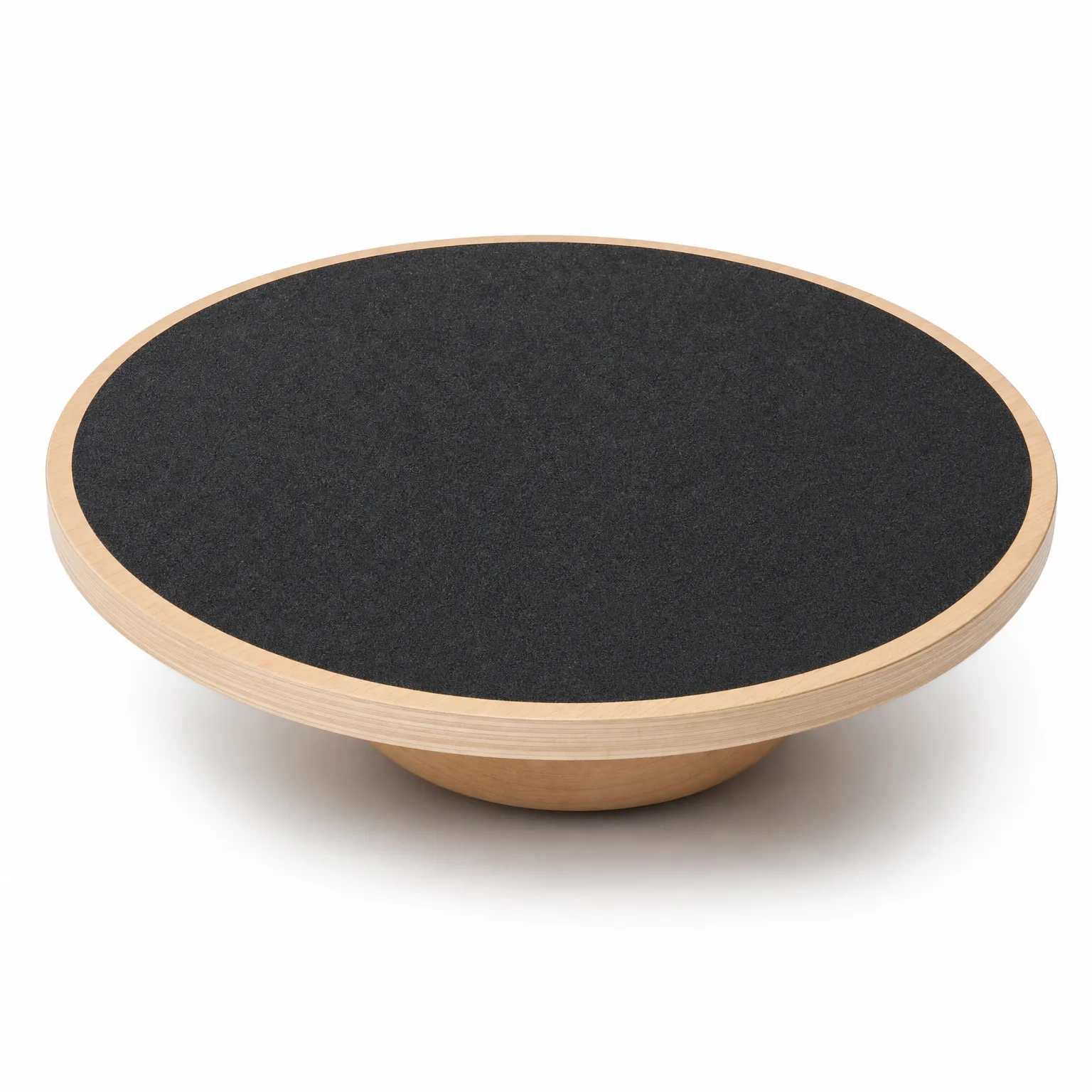
A flat board on a rounded base that tilts under your feet. Standing on it trains balance and the muscles around the ankles, knees and hips. -
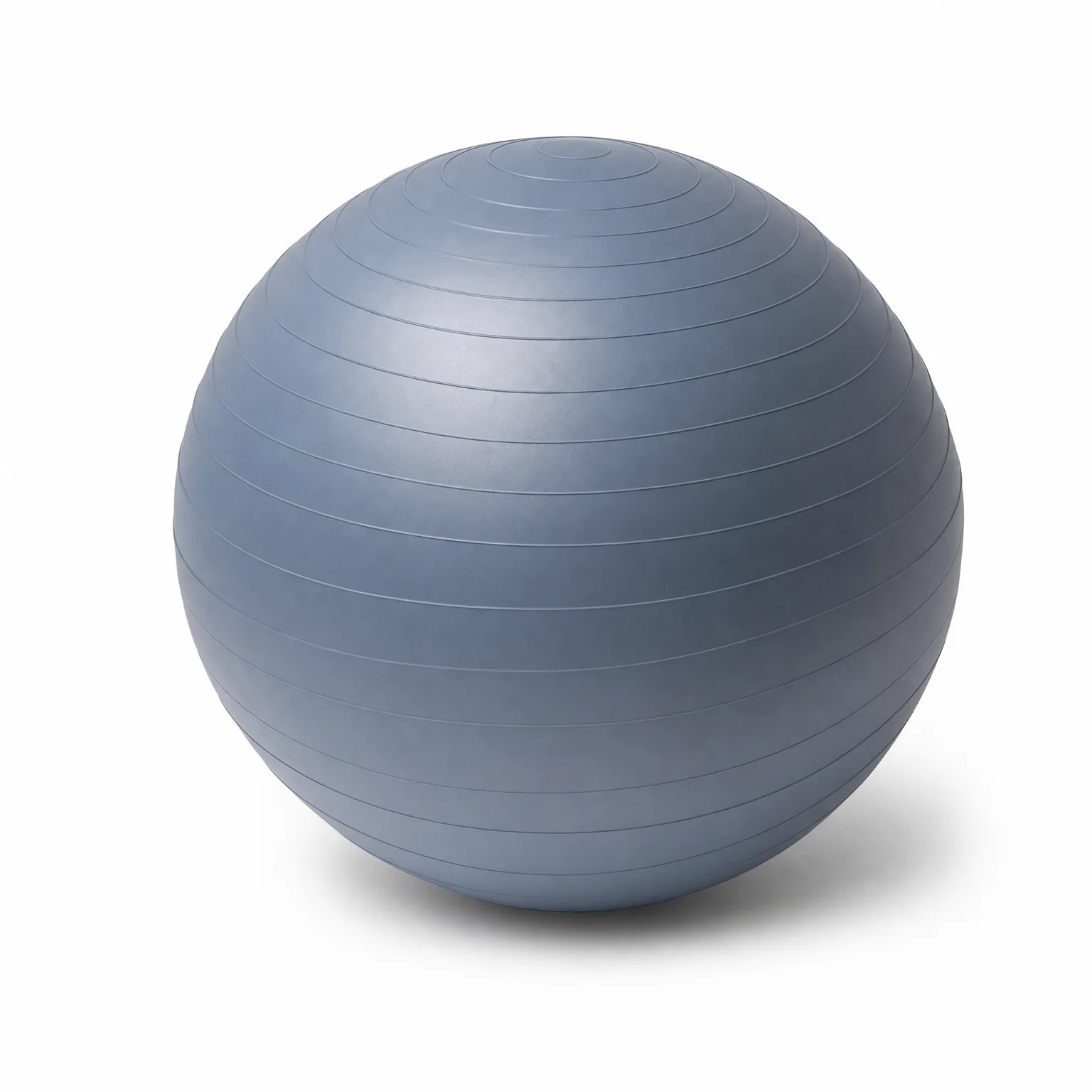
Stability ball
A large inflatable ball you sit, lie or lean on. The unstable surface is used for core exercises, hamstring curls and supported stretches.
Often used with
-
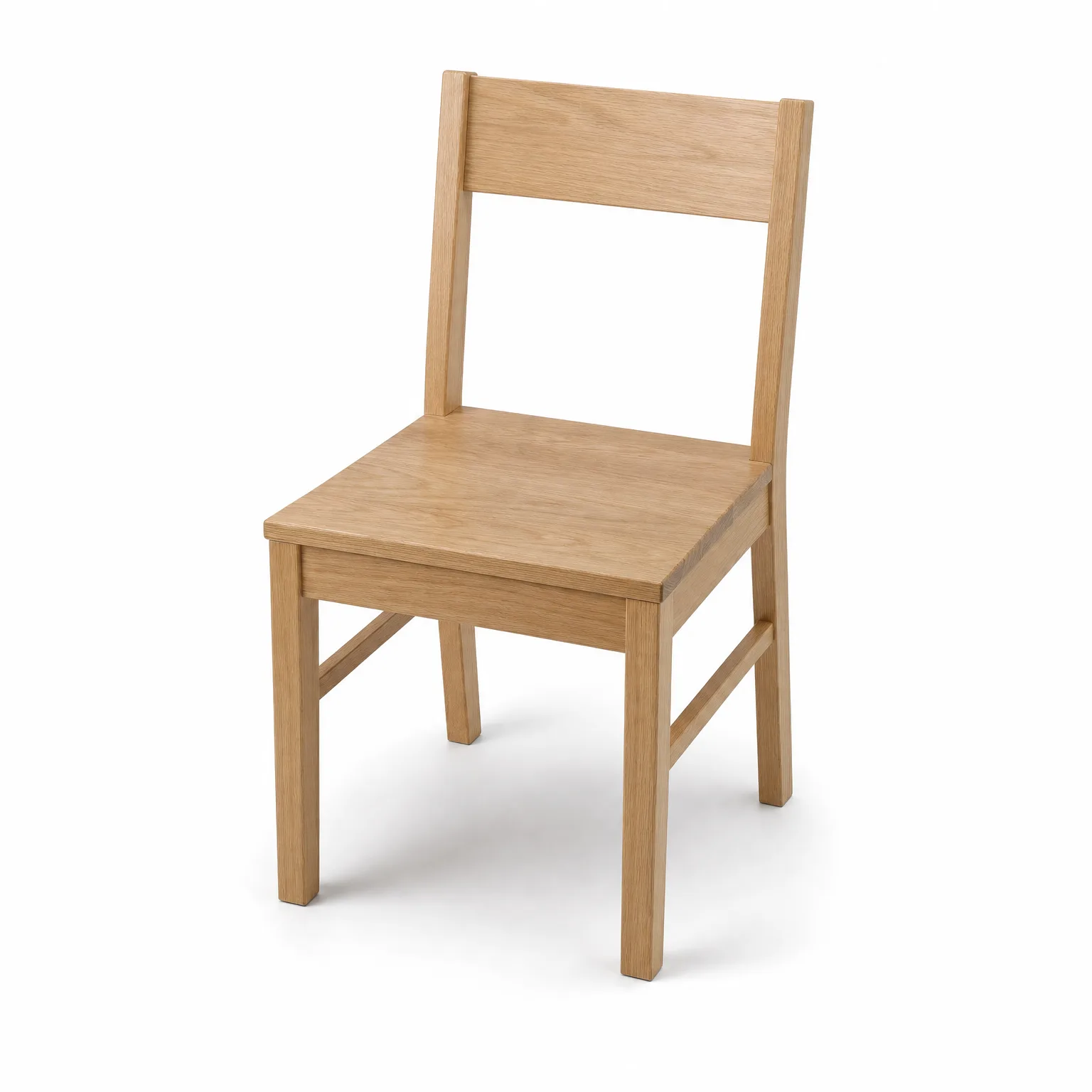
Chair
A sturdy household chair stands in for a bench, a low box or dip bars: sit-to-stands, step-ups, dips, split squats and incline push-ups. -
Wall
A clear stretch of solid wall works as support, a balance aid and a fixed surface to push against: wall sits, wall push-ups, stretches. -

Exercise mat
A cushioned, non-slip surface for floor exercises, stretching and yoga. The first thing most people need to train at home. -

Dumbbells
A pair of short handles with a weight at each end. One pair trains every major muscle group, at home or in a gym.
Questions about balance disc
What is a balance disc used for?
For adding instability to simple exercises. People stand on it for balance drills, sit on it to make the trunk work, and put their hands or feet on it in push-ups, planks, squats and lunges. It is also used as a seat cushion at a desk.
How much air should be in a balance disc?
Enough that it is about 5 cm (2 in) thick and your foot sinks in slightly without touching the floor. Add air for more challenge, let some out to make it steadier. Most discs feel right well below fully inflated.
Is sitting on a balance disc at a desk worth it?
It makes you shift and correct your position more than a flat seat does, and some people find that more comfortable than sitting still. Research on lasting benefits is limited. Use it for part of the day, not as a full-time replacement for a chair that fits you.
Balance disc vs balance board?
A disc is soft and moves a little in every direction, so it is forgiving. A board is rigid and tips suddenly over its pivot, which is harder and needs more room around you. Beginners usually start with a pad or disc.
Build programs around what your client has
This guide comes from OnlineFitness.app, the app online coaches run their clients in.
Free for life for the first 100 coachesNo card