Body bar
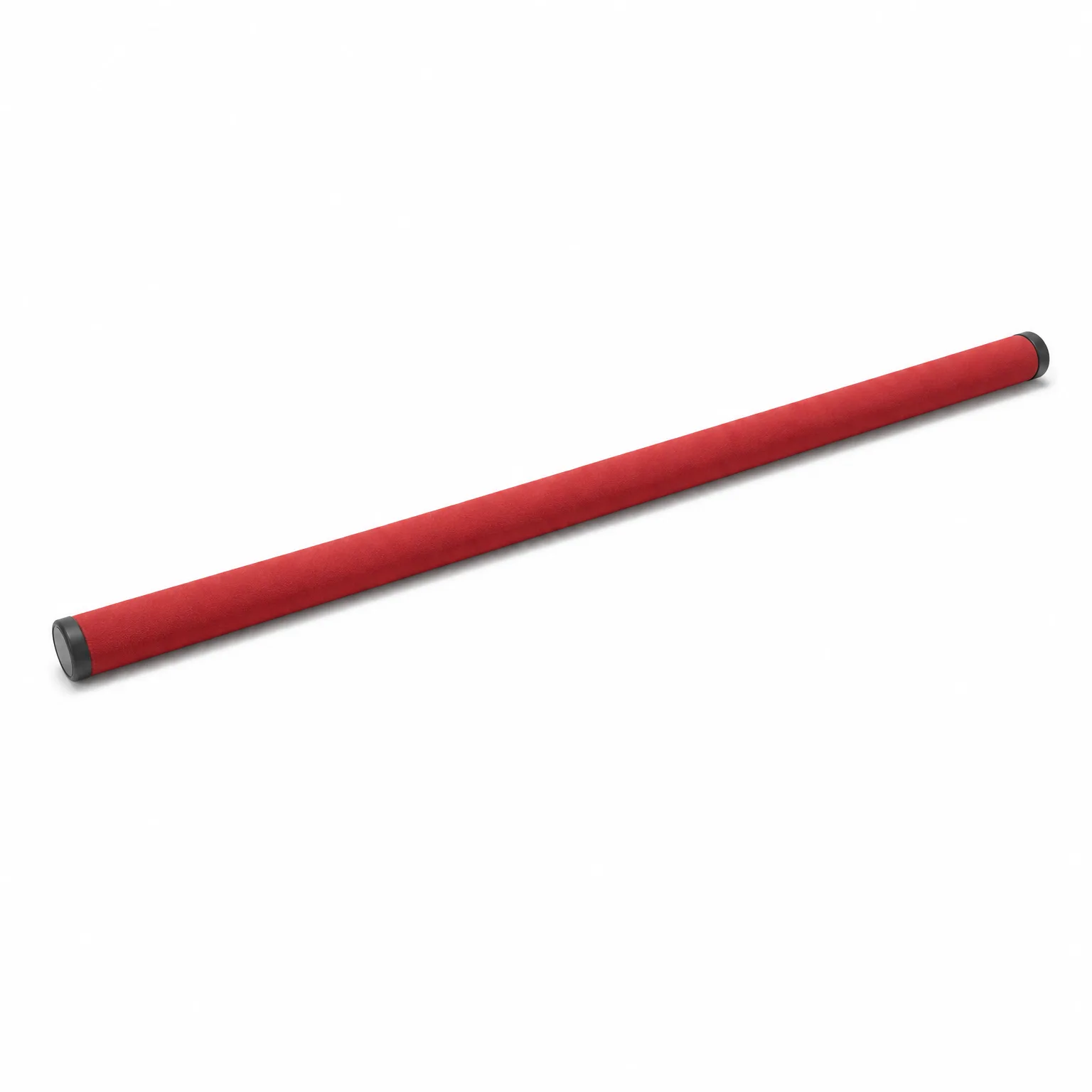
A padded, one-piece weighted bar of 1–12 kg used in group classes and at home for squats, presses, rows, curls and twists.
In short
A body bar is a straight steel bar with a foam or rubber coating and a fixed weight, usually between 1 and 12 kg. It has no plates and no collars: you pick the bar of the weight you want. It is used in group fitness classes and at home for high-rep squats, lunges, presses, rows, curls and twists, and as a light tool for learning barbell movements.
It suits beginners, class formats and warm-ups. The padding is comfortable on the shoulders and hands, and the bar can be put down on any floor. The load is too light for serious strength work on the legs and back.
- Category
- Free weights
- Where
- Home, Gym
- Level
- Beginner and up
- Space
- Needs a corner of a room
- Typical sizes
- Usually 1–12 kg (2–26 lb), up to about 16 kg (36 lb) in some ranges; about 1.2 m (4 ft) long, the heaviest bars longer and thicker
- Also called
- weighted bar, aerobic bar, weighted exercise bar, fitness bar, padded weight bar, workout bar, bodybar
Muscles it works
- Main
- Quads, Glutes, Front delts, Biceps, Obliques
- Also works
- Triceps, Hamstrings, Abs, Mid back, Side delts
What it is used for
- High-rep squats and lunges with the bar on the shoulders
- Overhead presses, upright rows and bent-over rows
- Curls and triceps extensions
- Standing twists and side bends with the bar across the shoulders
- Practicing the hip hinge, the squat and the overhead squat before using a barbell
Types
Standard weighted bar. A foam or rubber coated bar about 1.2 m long with rubber end caps, color-coded by weight.
Mini bar. A shorter bar of about 60–90 cm and 1–3 kg for one-hand exercises, small spaces and seated work.
Flexible bar. A bendable bar with weight at the ends that you shake or flex. A different tool: it trains through vibration, not through lifting a load.
How to choose
Choose the weight by the weakest exercise
In a class you use one bar for everything, so pick it for presses and curls, not for squats. Many beginners start with 3–5 kg (7–11 lb), and experienced participants use 6–10 kg (13–22 lb).
Two bars cover more
At home, a lighter bar for the arms and shoulders and a heavier one for the legs and rows work better than one in the middle.
Check the grip
Heavier bars are thicker. Make sure you can close your hand around the bar comfortably. The coating should be firm, not sticky, and not crumble at the ends.
Check the length for your space
A 1.2 m bar needs clear room on both sides for twists and overhead work. In a small room a shorter bar is easier to live with.
How to start using it
- Set your grip. For presses and rows, hold the bar a little wider than the shoulders with thumbs wrapped around it. For curls, hold it shoulder-width with palms up.
- Rest it on the upper back for squats. Place the bar on the muscles of the upper back, not on the neck, with hands wide and elbows pointing down. Squat and lunge as you would without a load.
- Work in longer sets. Because the bar is light, sets of 15–25 reps or timed sets of 45–60 seconds work well. Slow the lowering phase to make a light bar harder.
- Use it to practice technique. Hold the bar along the spine, touching the head, upper back and tailbone, and hinge at the hips while keeping all three points in contact. This teaches a flat-back hinge before you deadlift.
Common mistakes
Rushing the reps
A light bar makes it tempting to move fast and bounce through the range. Speed takes the effort away. Keep a steady tempo and full range.
Twisting fast with the bar on the shoulders
Whipping the bar from side to side loads the spine at the end of each turn and trains very little. Rotate slowly, and stop where the trunk can control the movement.
Resting the bar on the neck
A bar pressed into the base of the neck is uncomfortable and pulls the head forward. Set it lower, on the upper back.
Staying with the same bar for years
If 20 or more reps feel easy on every exercise, the bar no longer challenges you. Move to a heavier bar, or to dumbbells and a barbell for the legs and back.
What to use instead
A pair of light dumbbells replaces a body bar in almost every exercise and lets each arm move on its own. An empty technique barbell or EZ bar works for squats, presses, rows and curls if you have one. For practicing the hip hinge or overhead squat with no load at all, a broomstick or a length of plastic pipe is the usual stand-in.
-

Dumbbells
A pair of short handles with a weight at each end. One pair trains every major muscle group, at home or in a gym. -

Barbell
A long steel bar loaded with plates at both ends. The standard tool for squats, deadlifts, presses and rows with heavy weight. -
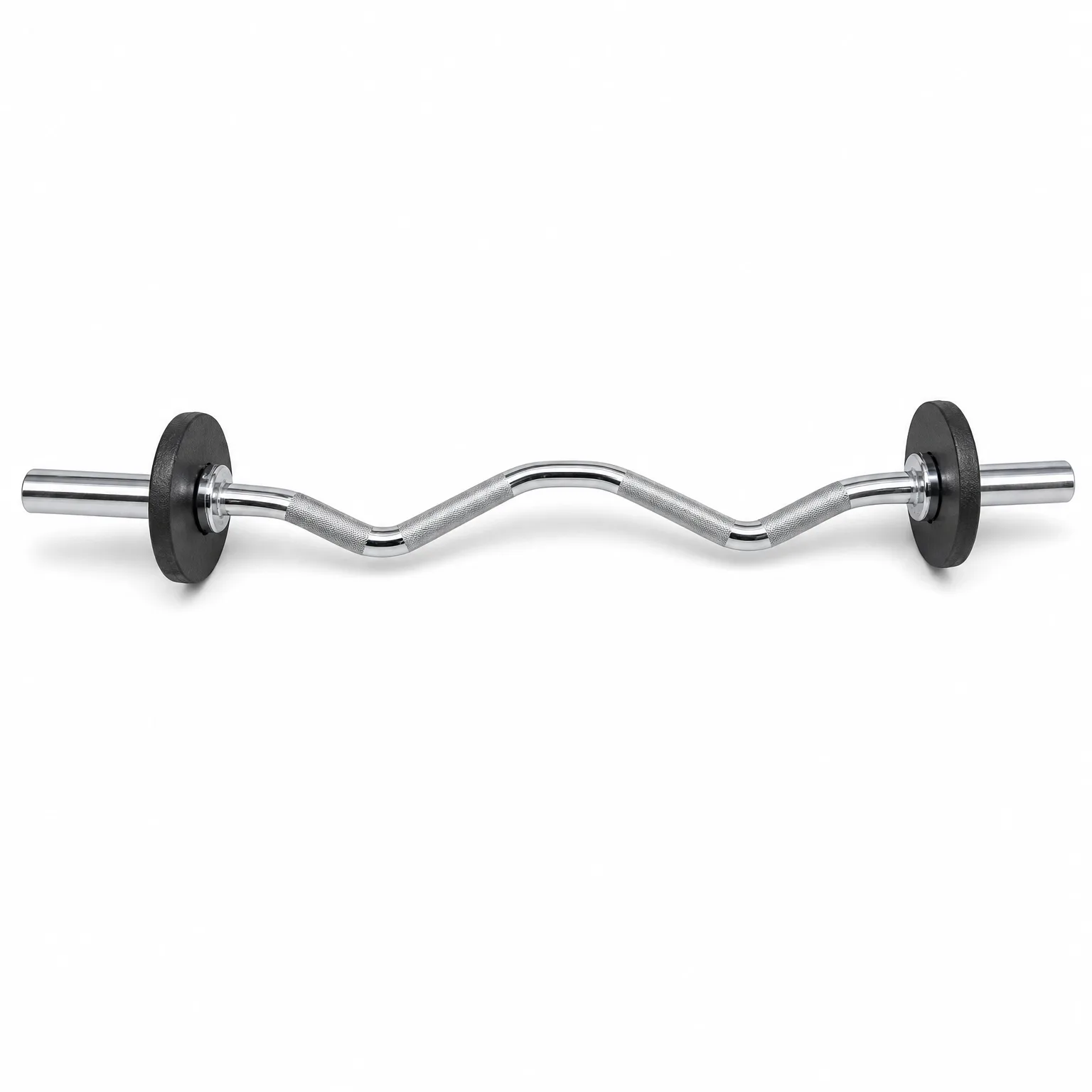
EZ curl bar
A short barbell with a zigzag grip section. The angled handles turn the wrists slightly inward for curls and triceps extensions. -
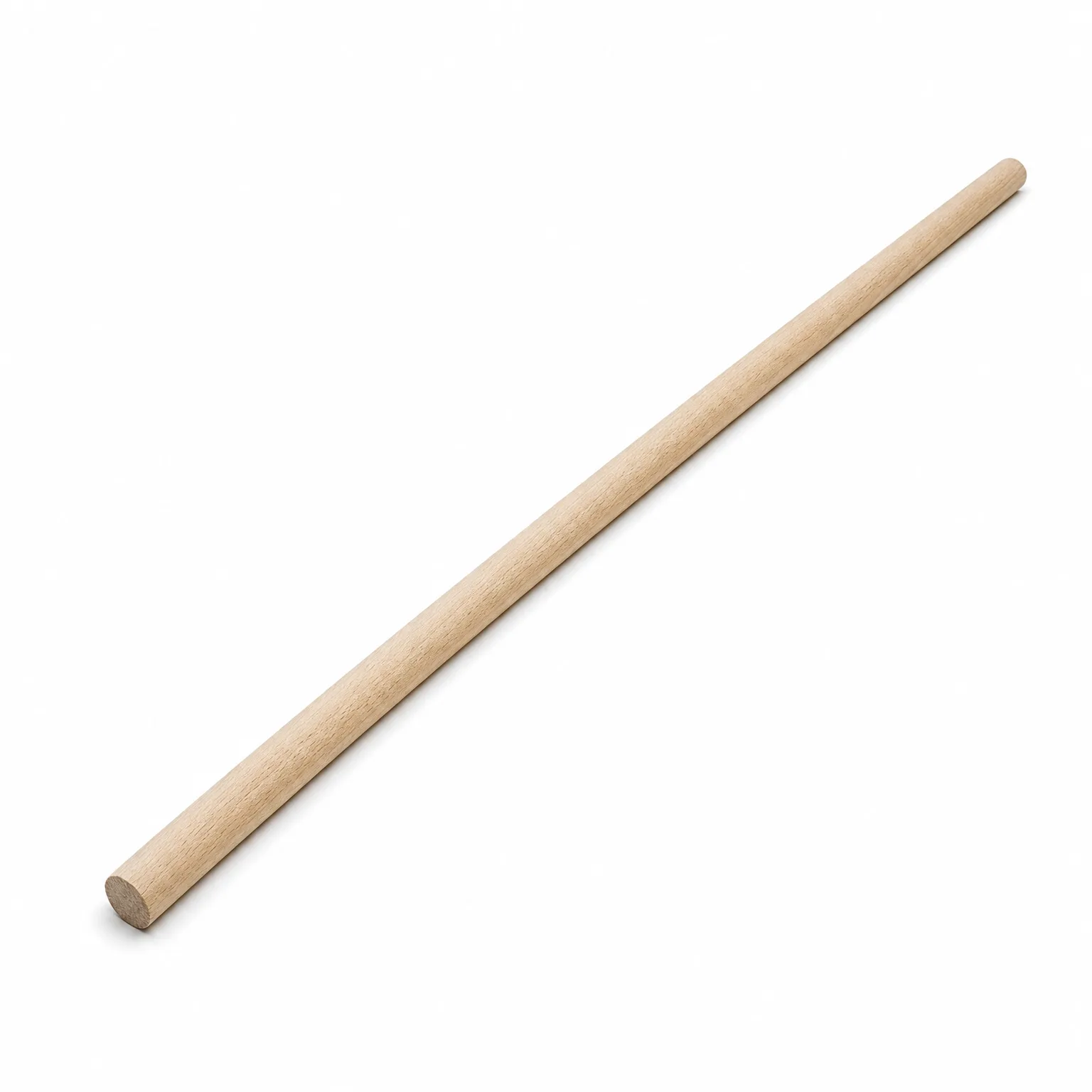
Broomstick
A broom handle, wooden dowel or PVC pipe is a weightless bar for shoulder mobility drills, warm-ups and learning barbell technique.
Often used with

Questions about body bar
What weight body bar should I use?
Pick the bar by your hardest exercise, usually the overhead press. Many beginners use 3–5 kg (7–11 lb). If you already train, 6–10 kg (13–22 lb) is more useful. You should feel the last reps of a long set without losing form.
What is a body bar used for?
For high-rep strength and conditioning exercises in classes and at home: squats, lunges, presses, rows, curls and twists. Coaches also use it to teach barbell movements before adding real weight.
Body bar or dumbbells?
A body bar keeps both hands on one load, which feels stable and is easy to follow in a class. Dumbbells allow more exercises, more weight and work on each side separately. For training at home, dumbbells are the more versatile choice. A body bar is a pleasant addition.
Can you build muscle with a body bar?
A beginner can, for a while, especially in the arms and shoulders, if sets are taken close to fatigue. Even the heaviest bars are soon too light for the legs and back, so progress there needs heavier equipment.
Build programs around what your client has
This guide comes from OnlineFitness.app, the app online coaches run their clients in.
Free for life for the first 100 coachesNo card