Equipment Benches, racks and bars
Landmine
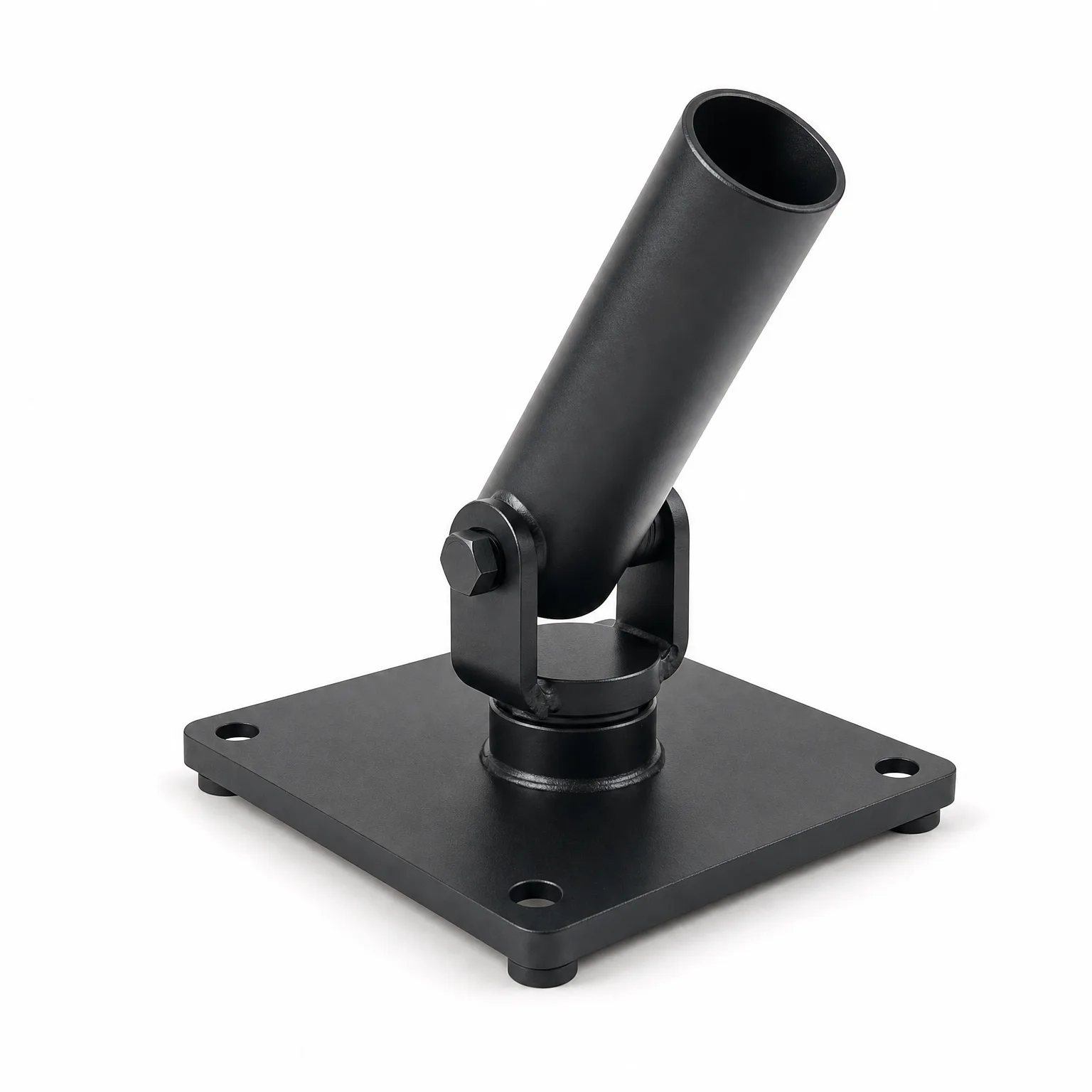
A floor pivot that holds one end of a barbell so the other end moves in an arc. Used for presses, rows, squats and rotations.
In short
A landmine is a metal sleeve on a pivot. One end of a barbell slides into it, and you load plates on and lift the free end. The bar moves in an arc instead of straight up and down, which gives a path halfway between a free weight and a machine.
It is used for landmine presses, T-bar style rows, squats holding the bar end at the chest, single-leg deadlifts and standing rotations. The angled press is a common choice for people who find pressing straight overhead awkward. You need a barbell and plates, so it suits people who already train with them.
- Category
- Benches, racks and bars
- Where
- Home, Gym
- Level
- Intermediate and up
- Space
- Needs a corner of a room
- Typical sizes
- Sleeve fits 50 mm (2 in) Olympic bars; some models take 25 mm (1 in) bars. Needs about 2.5 m (8 ft) of floor length
- Also called
- landmine attachment, barbell landmine, landmine base, t-bar row attachment, barbell pivot, landmine unit
Muscles it works
- Also works
- Triceps, Lats, Abs, Lower back
What it is used for
- Half-kneeling and standing landmine presses for the shoulders and upper chest
- T-bar rows and one-arm rows for the back
- Landmine squats, reverse lunges and single-leg deadlifts
- Standing rotations and anti-rotation holds for the obliques
- Thrusters and push presses for conditioning
Types
Rack-mounted. Bolts or pins onto the base of a squat rack upright. Stays fixed under heavy rows. The usual choice when you already own a rack.
Plate post. A small pivot with a post that drops into the hole of a weight plate lying on the floor. Portable and cheap. Stack a few plates on it so it stays put.
Free-standing base. A heavy plate or frame with the pivot on top, sometimes with pegs for extra weight. Works anywhere on the gym floor without a rack.
Handles for the bar end. Add-ons that slide onto the free end: a close-grip V handle for rows, a wide handle for presses and squats, a single handle for one-arm work.
How to choose
Match it to your bar
Check the sleeve diameter. Most landmines are made for 50 mm Olympic bar sleeves. Standard 25 mm bars need a matching or adapter model. A sloppy fit lets the bar rattle and wear.
Rack mount or portable
If you have a rack, a mounted landmine is the most stable and is always ready. Without a rack, a plate-post or free-standing model works, as long as you weigh it down enough that it does not lift during rows.
A pivot that moves freely
The joint should swing up and down and side to side smoothly, with no sticking points. Rotations in particular need full side-to-side movement.
Think about handles
You can row with a V handle from a cable machine hooked under the bar, and press holding the bar end itself. Dedicated handles are a comfort upgrade, not a requirement.
How to start using it
- Set up and load. Slide the empty bar fully into the sleeve. Lift the free end onto a low box or your thigh to add plates, and fit a collar. Plates of smaller diameter give more range in rows because they do not hit your chest as early.
- Learn the press half-kneeling. Kneel on one knee and hold the bar end at the shoulder on the same side as the back knee. Press up and forward along the bar's arc until the arm is straight, leaning slightly into it. Lower to the shoulder under control.
- Row with a flat back. Straddle the bar near the loaded end, facing away from the pivot. Hinge at the hips with knees soft and back flat, and pull the bar toward the lower chest. Lower until the arms are straight. The torso stays at the same angle for the whole set.
- Squat holding the end. Cup the bar end in both hands at chest height, lean slightly toward the pivot and squat down between your knees. The arc guides you back and down, which makes this a friendly way to learn the squat.
- Start light. Because of the lever, you lift only part of the weight on the bar, and the share changes through the arc. Begin with the empty bar for each new exercise and add small plates.
Common mistakes
An unsecured pivot
A light base or the bar wedged loosely in a corner can slide or jump out during a heavy rep. Weigh the base down or mount it, and check it before each set.
Standing too upright in rows
Rising with each rep turns the row into a shrug with momentum. Set the hip hinge first and keep the chest at the same height throughout.
Pressing straight up
The bar travels in an arc. Standing tall and pushing vertically works against that path and feels cramped at the shoulder. Lean in slightly and let the hand travel up and forward.
Twisting from the lower back
In rotations, swinging the bar side to side with locked hips puts the twist into the lower spine. Turn the hips and pivot the feet together with the shoulders.
Big plates on a row
Full-diameter plates reach the chest early and cut the range short. Use several plates of smaller diameter.
What to use instead
Without an attachment, the end of a barbell can be wedged into the corner of two walls, with a folded towel or an old shoe around it to protect the bar and the wall. This works for moderate loads. With no barbell, dumbbells and kettlebells cover one-arm presses, rows and goblet squats. A cable machine set low reproduces the angled press and the rotations.
-

Dumbbells
A pair of short handles with a weight at each end. One pair trains every major muscle group, at home or in a gym. -
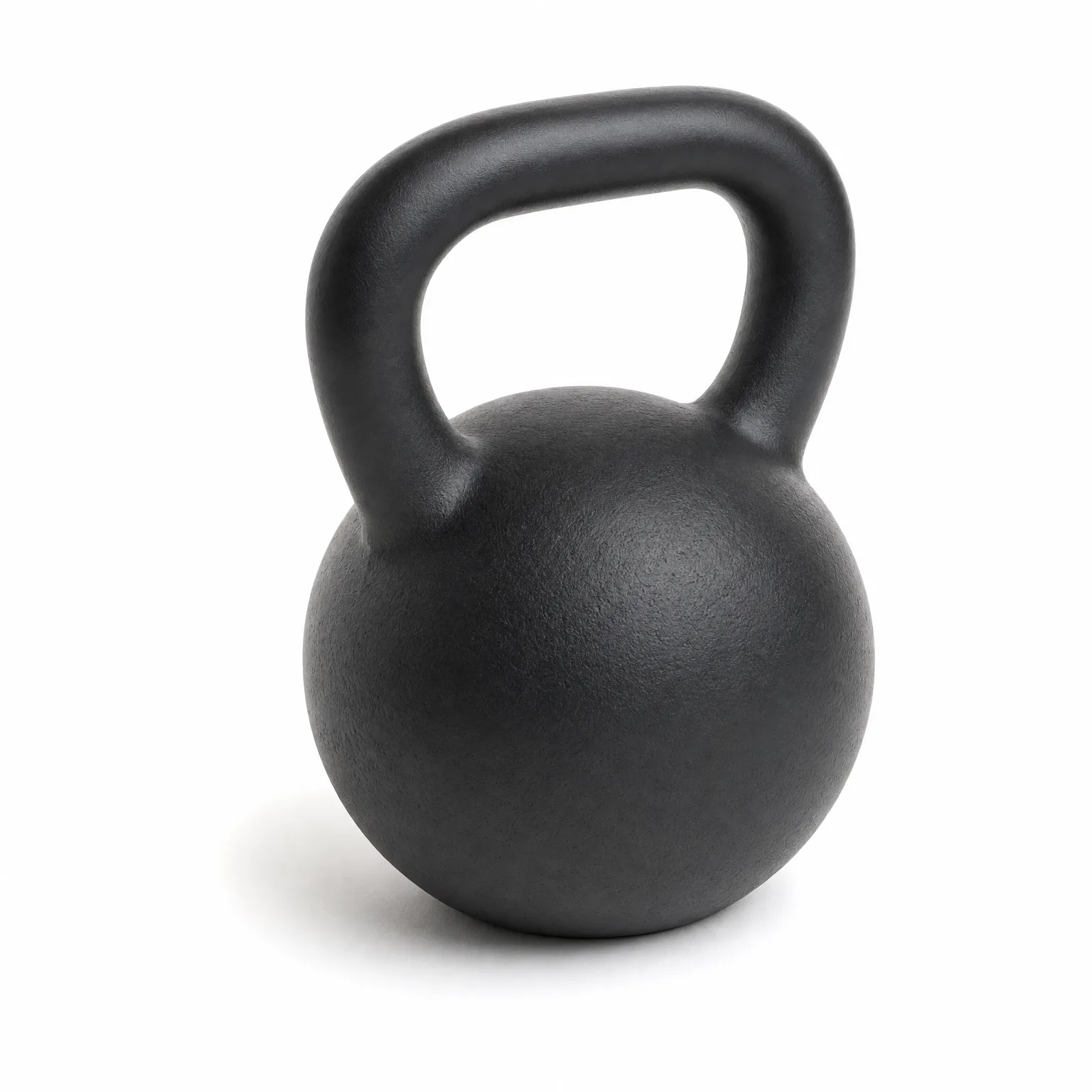
Kettlebell
A cast-iron or steel ball with a flat base and a handle on top. Built for swings, carries, squats and presses with one weight. -
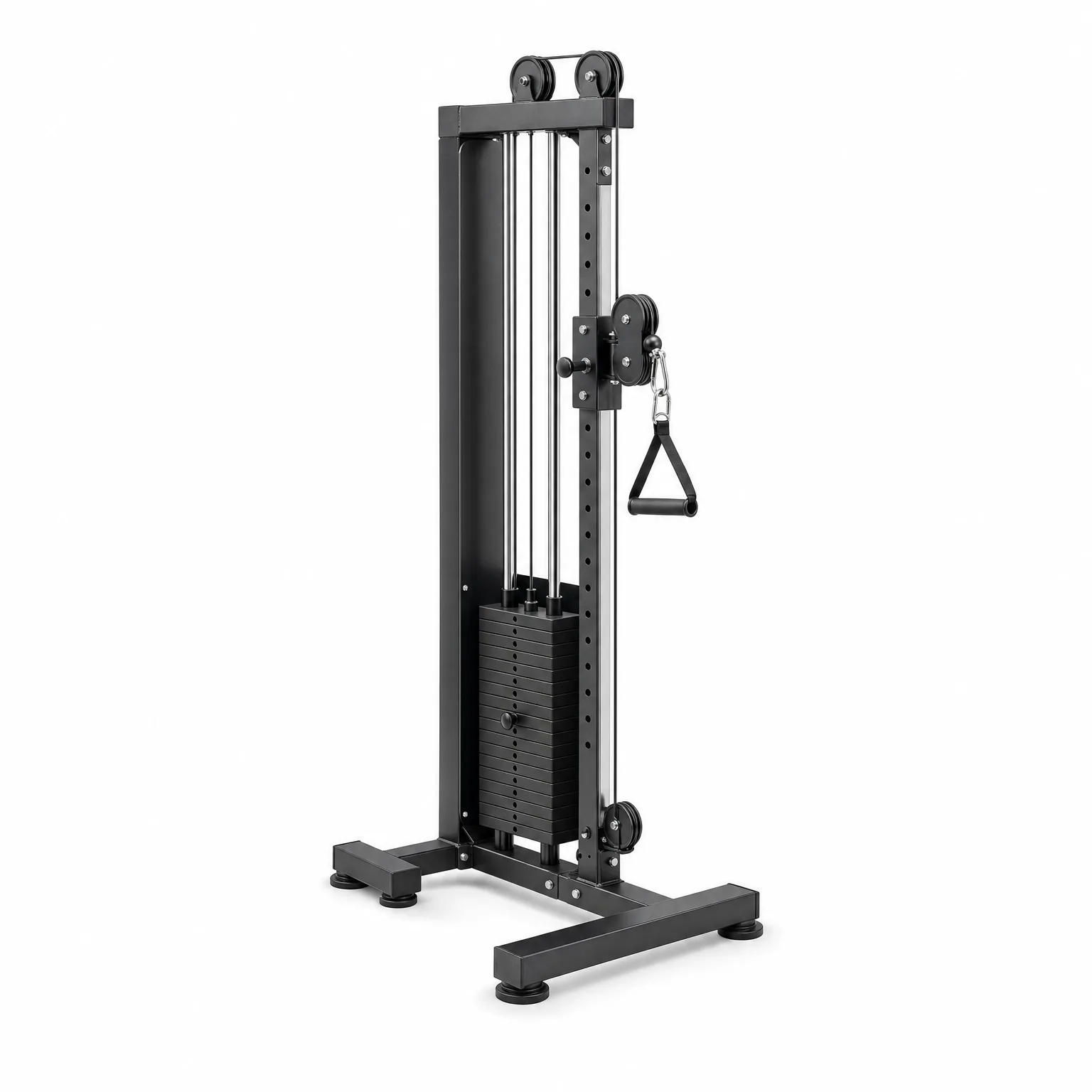
Cable machine
A weight stack on a pulley with a handle you can set at any height. It keeps tension on the muscle through the whole movement. -
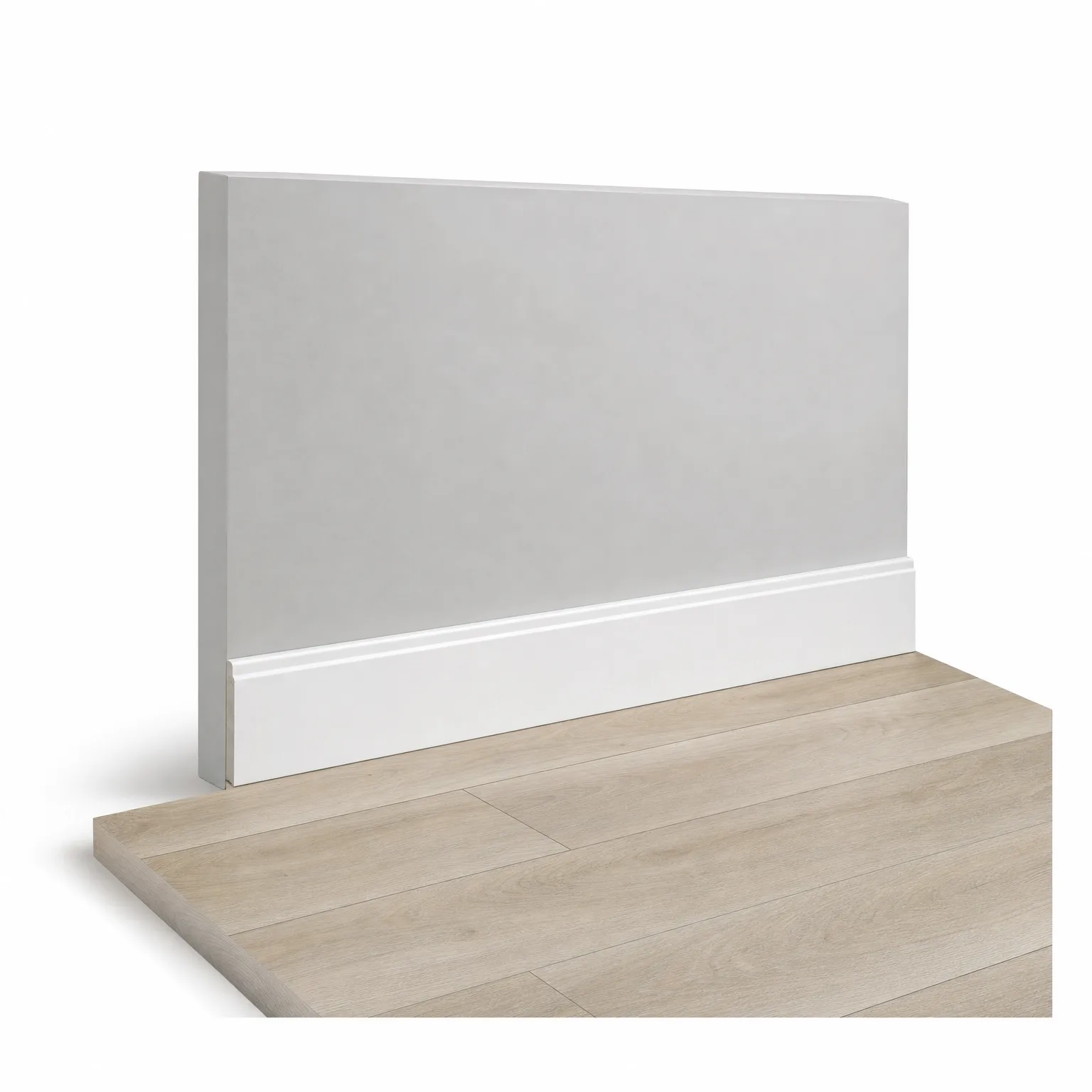
Wall
A clear stretch of solid wall works as support, a balance aid and a fixed surface to push against: wall sits, wall push-ups, stretches.
Often used with
-
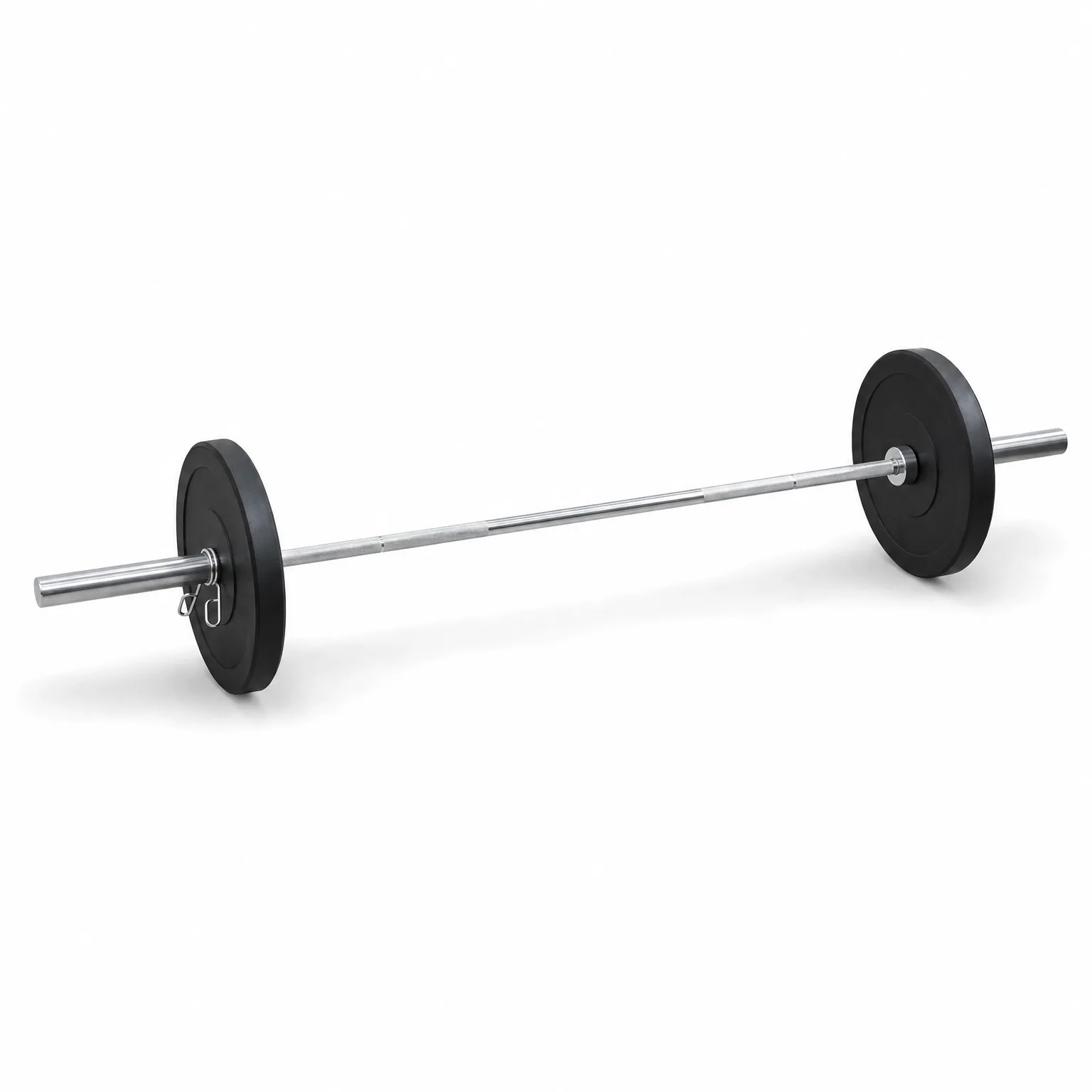
Barbell
A long steel bar loaded with plates at both ends. The standard tool for squats, deadlifts, presses and rows with heavy weight. -
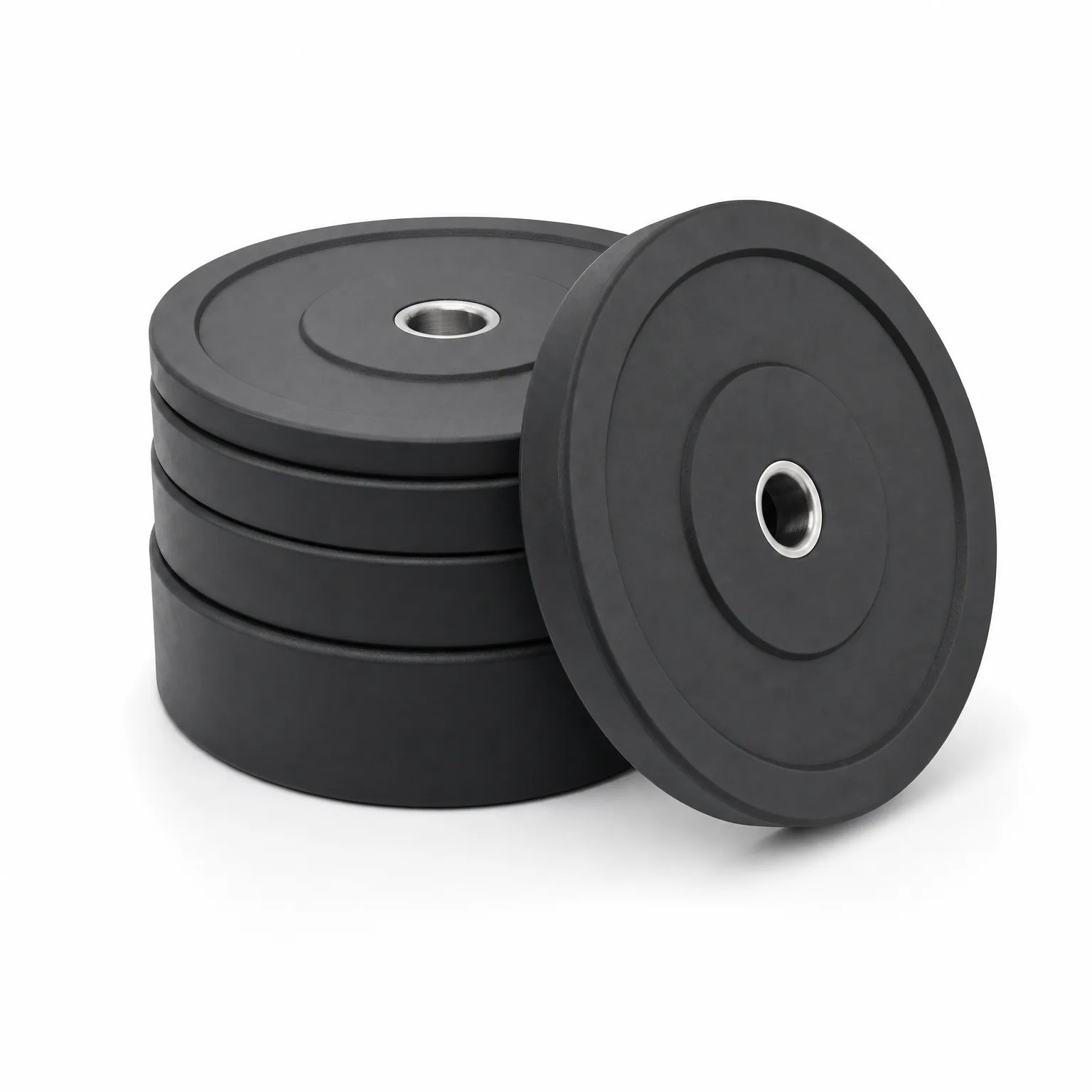
Weight plates
Flat discs that slide onto a barbell or machine to set the load. A single plate also works as a hand-held weight. -
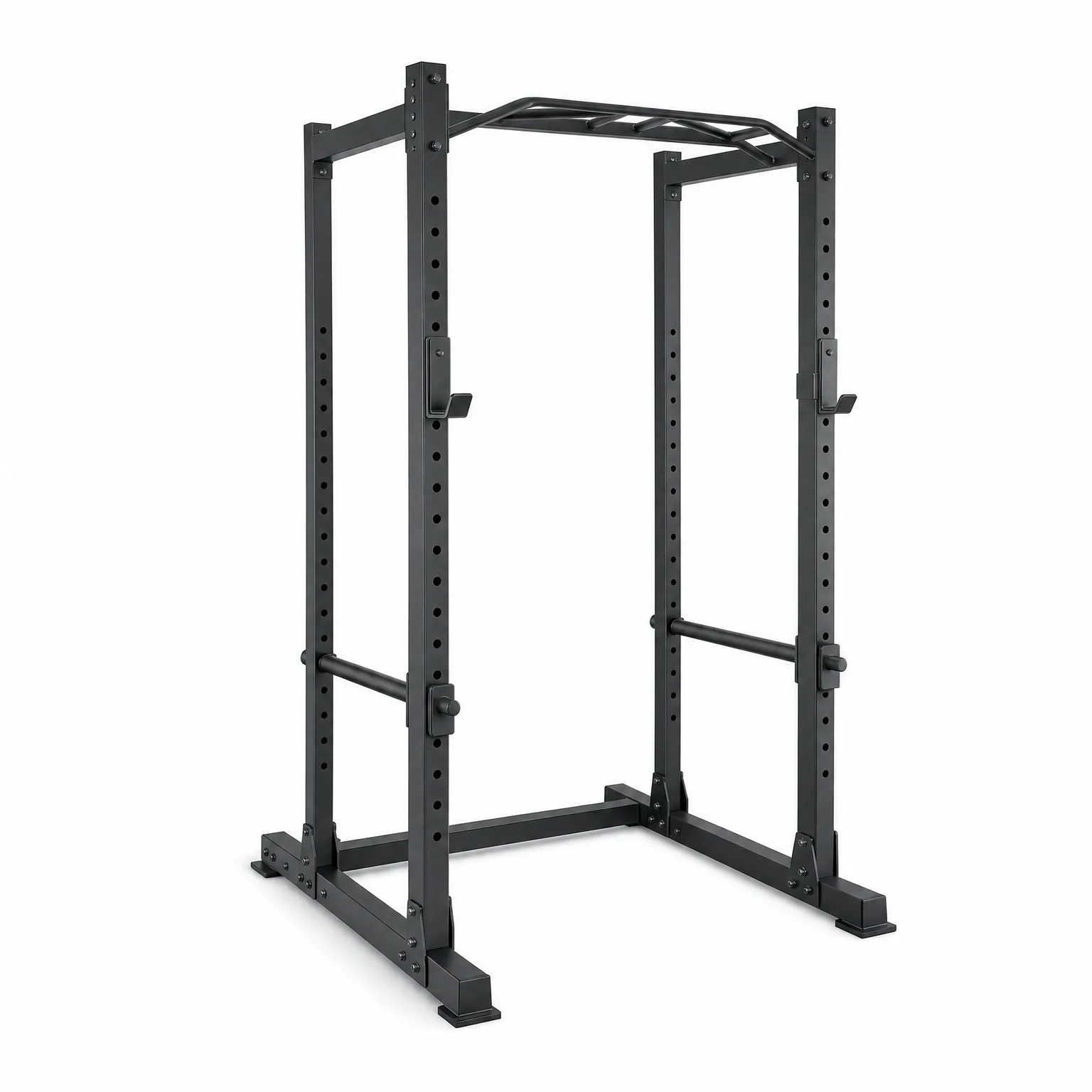
Squat rack
A steel frame that holds a barbell at the height you need and catches it if a rep fails. The base for squats and presses.
Questions about landmine
What is a landmine used for?
For barbell exercises where the bar moves in an arc around a fixed point: angled presses, T-bar and one-arm rows, squats and lunges holding the bar end, single-leg deadlifts and standing rotations. One bar and one attachment cover the whole body.
Can I do landmine exercises without the attachment?
Yes. Put the end of the bar into a corner of the room and protect it with a towel. It is less secure than a proper pivot and can mark the walls, so keep the loads moderate and check that the bar cannot slide out.
Landmine press vs overhead press?
The overhead press moves the weight straight up and needs full shoulder mobility. The landmine press moves it up and forward at an angle, which asks less range from the shoulder and works the upper chest more. Many people use it as an alternative or a step toward overhead pressing.
How much weight am I lifting on a landmine?
Less than what is on the bar. The pivot carries part of the load: roughly half of the bar's own weight and a smaller part of the plates, which sit near your end. The load also feels lighter as the bar gets steeper. Track the plates you load, not an exact number.
Build programs around what your client has
This guide comes from OnlineFitness.app, the app online coaches run their clients in.
Free for life for the first 100 coachesNo card